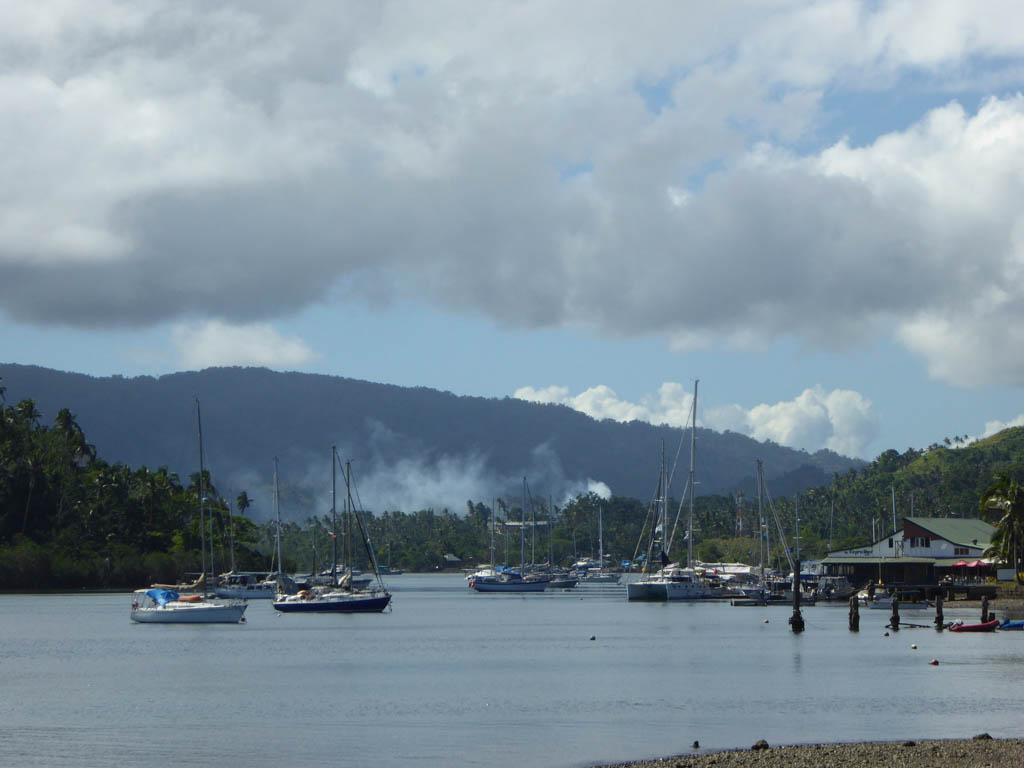
When we pulled into Savusavu after our four day passage from Tonga, we were happy to drop the anchor and get some rest. I had been very stressed about double-handing for four days and nights after having had the luxury of so many great crew during our recent passages. However, Jason chose an easy weather window and the trip was smooth (code name for I was not seasick). Jason seems to really enjoy the long passages. He was even starting to be glum about the finish line of the trip being near, despite his being a bit exhausted after so many miles.
Our time in Tonga had been dominated by rain, rain and more rain so the blue skies in Fiji were somewhat blinding. At our first Fijian landfall we were required to anchor in the quarantine anchorage, the only ugly spot in all of Fiji. I was more  concerned about bugs from the rusty freighter joing Two Fish, than about Two Fish infecting Fiji. Three hours and four officials later, all ferried from shore via our dinghy, we tied up to the dock at Copra Shed Marina. The Marina dock is just a small space for half a dozen boats, but it was very convenient and the price was right: same as a mooring ball! The first thing we learned was how to say “greetings” in Fiji. Bula! A lot of Bulas get exchanged in the busy core of Savusavu. It took us two weeks to stop confusing the Kava ceremony(sevusevu ), the largest town in Fiji(Suva) and our first landfall(Savusavu).
We were greeted by fellow yachties who gave us the lowdown on wifi data cards and food. The highlight from the food front was Grace Kitchen, the quasi-Korean religious sect who believe that the Great Famine will arrive and thus is setting up organic farms in Fiji to feed the people. No proselytizing, just fantastic bibimbap, kim chee and dumplings, and the sweetest cucumbers I have ever tasted. We came back more than once because the food was good and the employees were so enthusiastic. If we voiced any compliments, the entire staff would come forward to enjoy the praise, often bringing samples of other tasty treats.
-
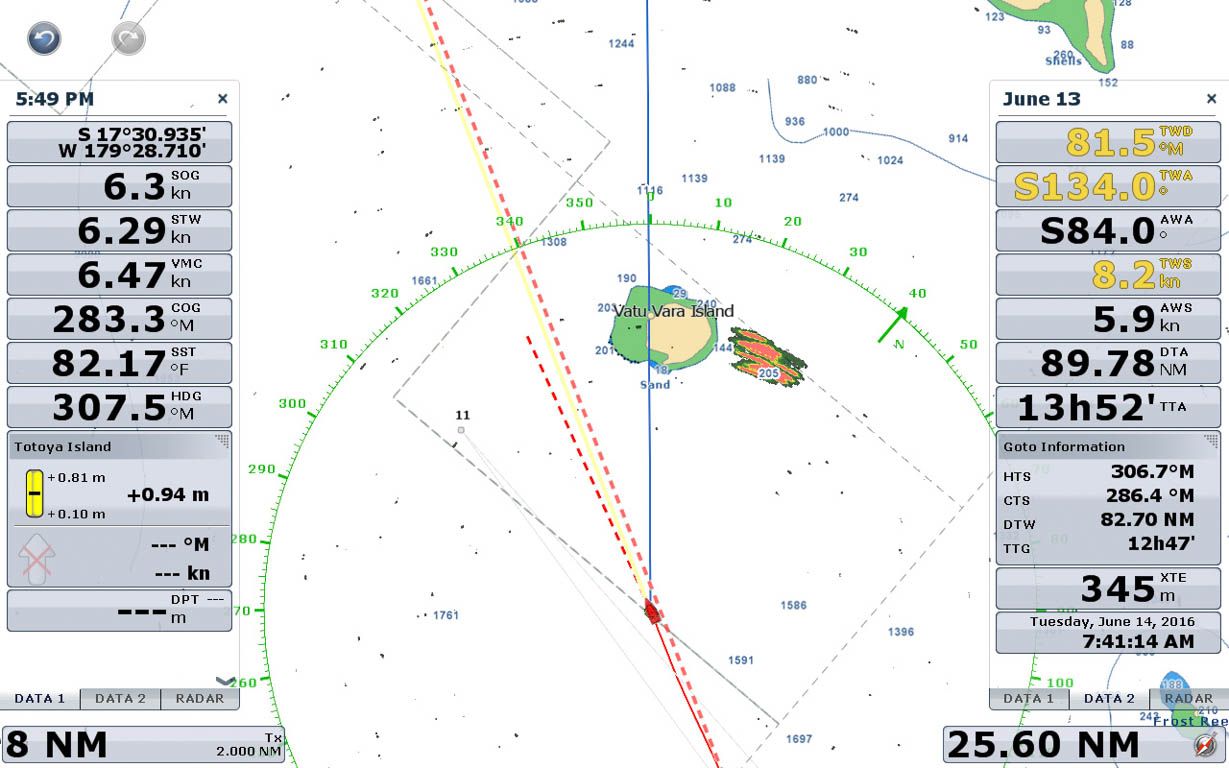
- 82 nm to Savusavu
-

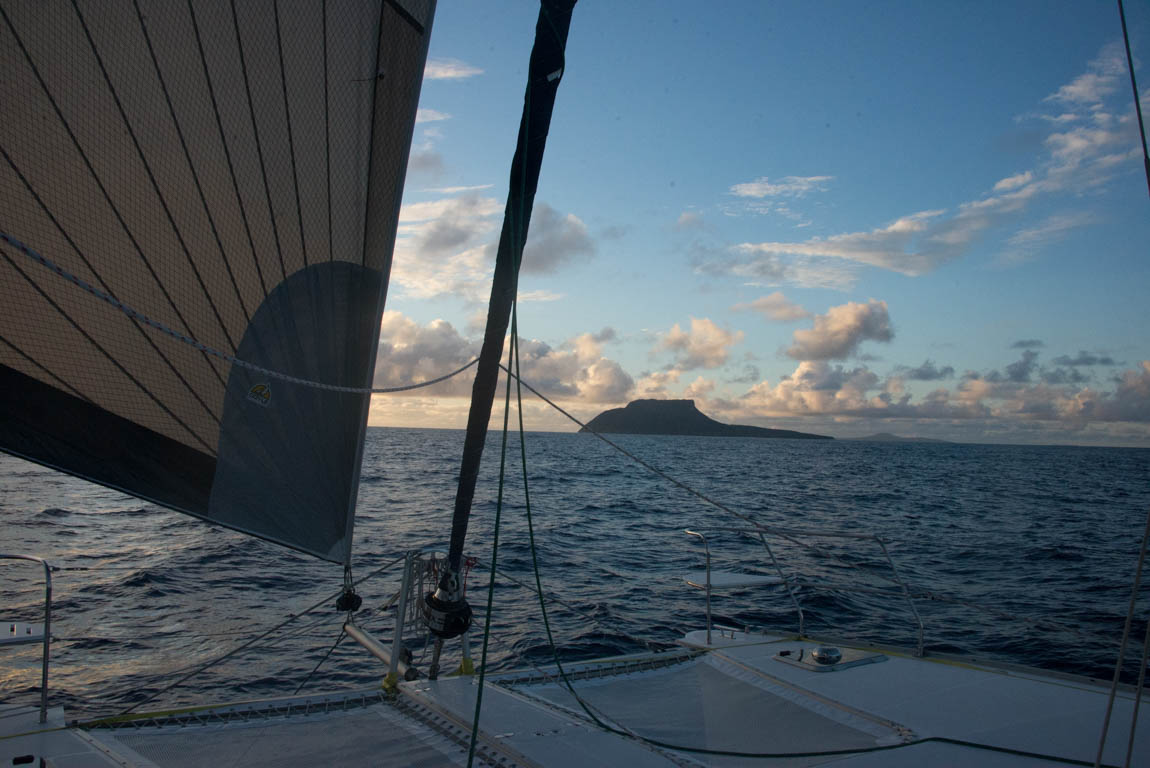
- Vatu vara
-
- Along the way

-
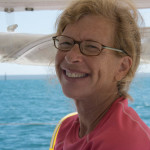
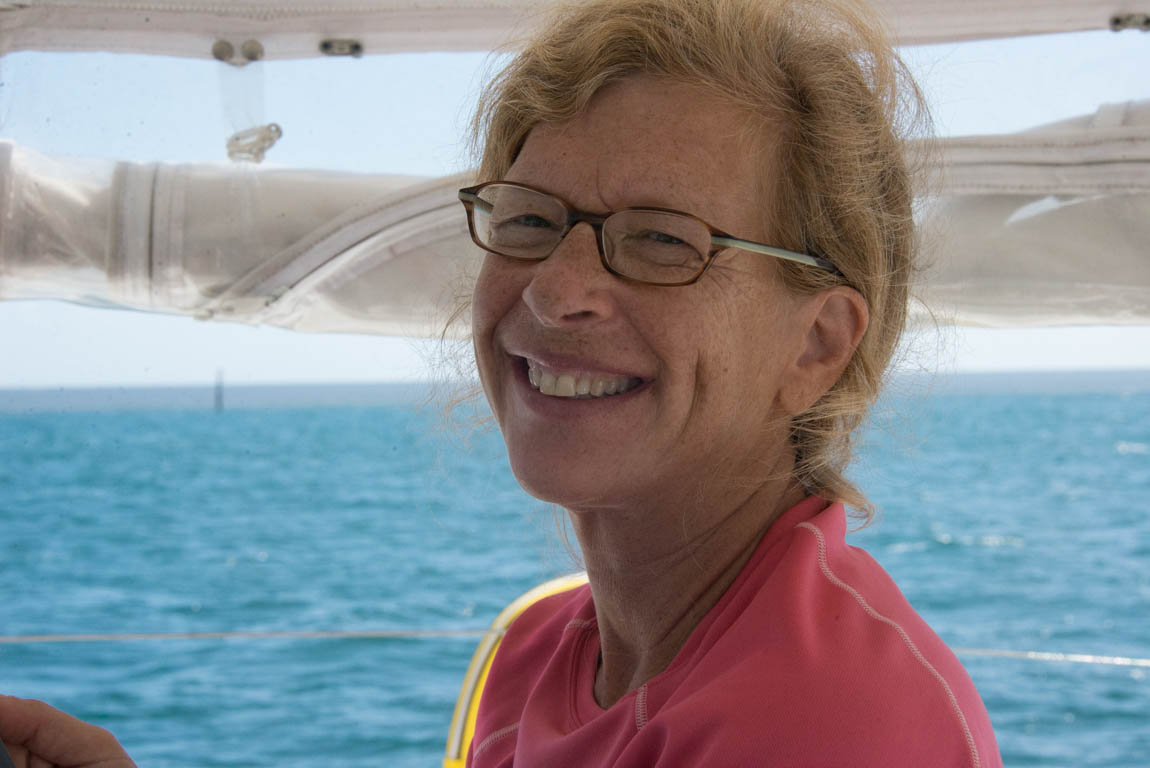
- Happy sailor
-
- Copra shed marina
Our trip to Savusavu was calmer than our friends’ trip had been a few days earlier, in unsettled weather. The wife heard a strange noise and woke up her husband. An indicator showed that the bilge pump was running. He opened up the floor board to discover massive amounts of water. The first check when you see water is to determine whether it is fresh or salty. Fresh indicates that a water tank has a leak and salty means the great blue ocean is entering the boat. They realized the source was that the prop shaft had slipped out of the boat. A three inch hole was inviting the seawater to come in at an alarming rate. After a very brief period of panic, they stuffed the hole full of odds and ends. A nearby fellow rally boat volunteered to escort them the last 100 miles. When they arrived in calm waters, they discovered the shaft was still attached to the boat and could easily be slipped back into place. Yikes! (FYI, the shaft stayed on because their shaft zincs were in place on both sides of the strut)
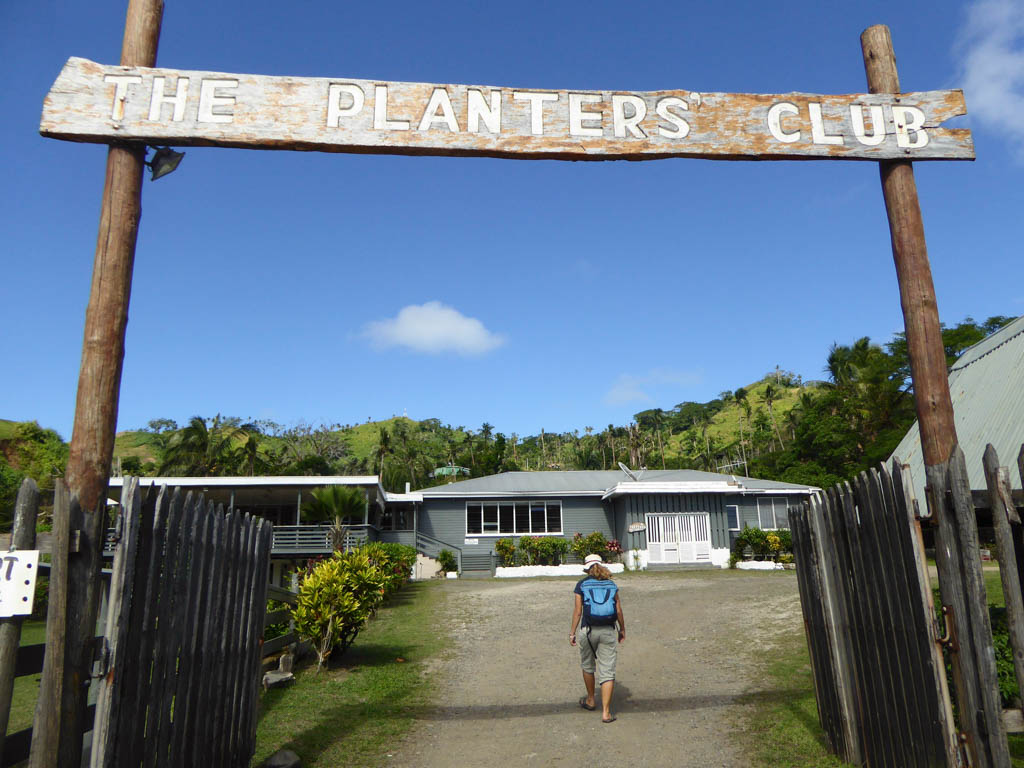
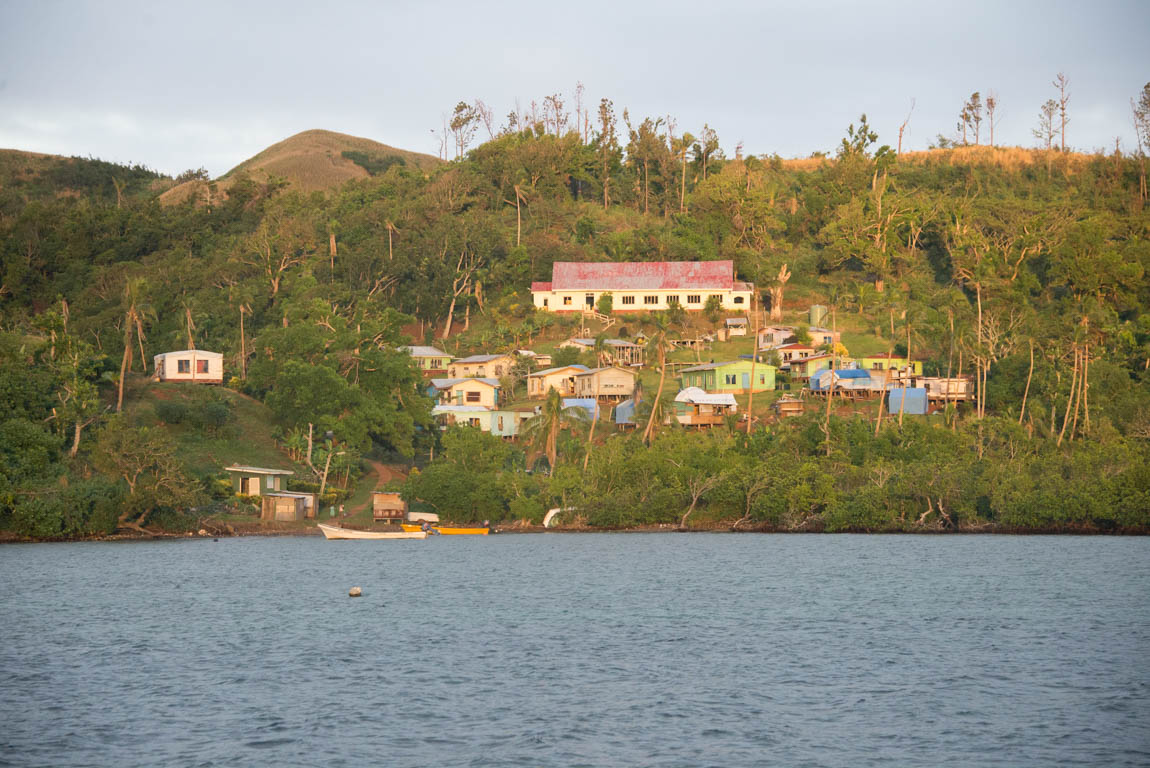
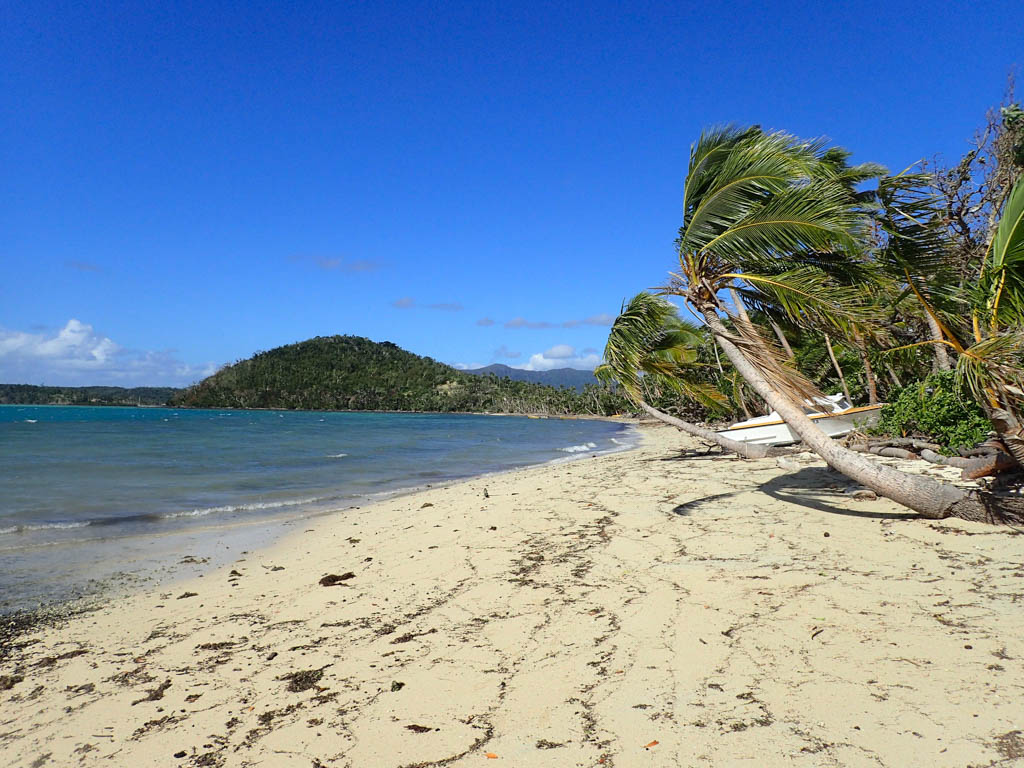
The Fijians have been visited by many interested parties over the last several hundred years. Even the US Navy has threatened them once or twice, but the usual Pacific suspects have been more prevalent. Cook came to the middle of the three island chains. His guide “hid” the location of the main island area. Today there are charts showing the best anchorages in Fiji, but maybe there are a few that they are still hiding from westerners? The missionaries traveled here to convert Fijians to Christianity. The Prince of Tonga also settled on the main island for a while. After a confederacy of chiefs was formed, the Kingdom of Fiji was established in 1871; a few years later, Fiji became a British colony-no referendum. One hundred years later, they received their independence and even left the Commonwealth. There has been some infighting between the various ethnic groups and the islands went through a tough period but good relations have been re-established. Unfortunately, Fiji still is challenged by weather events. During February 2016, Tropical Cyclone Winston claimed many lives and destroyed villages across the islands.
-
- Old colonialism
-
- Note tents post Winston
-
- Village Chief
-

- Evidence of prevailing wind
-

- Downwind behind reef
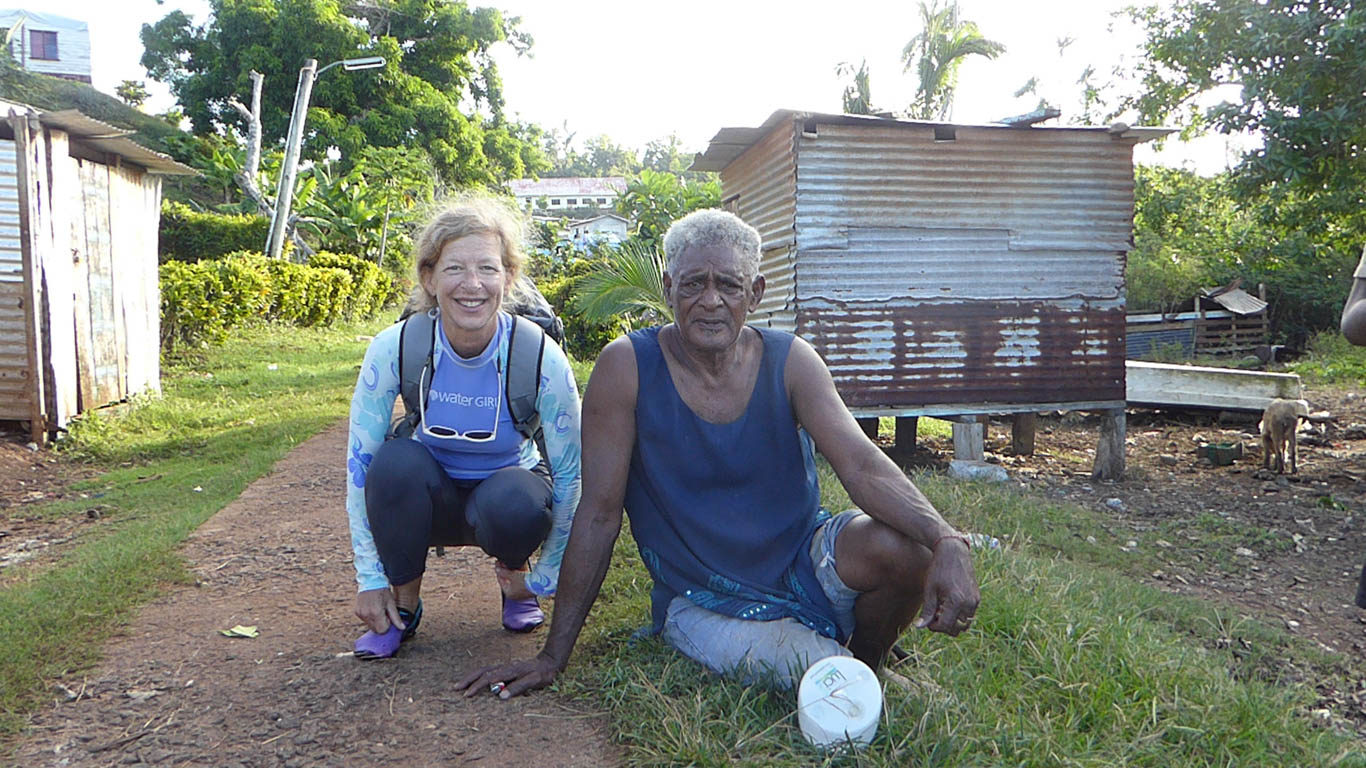
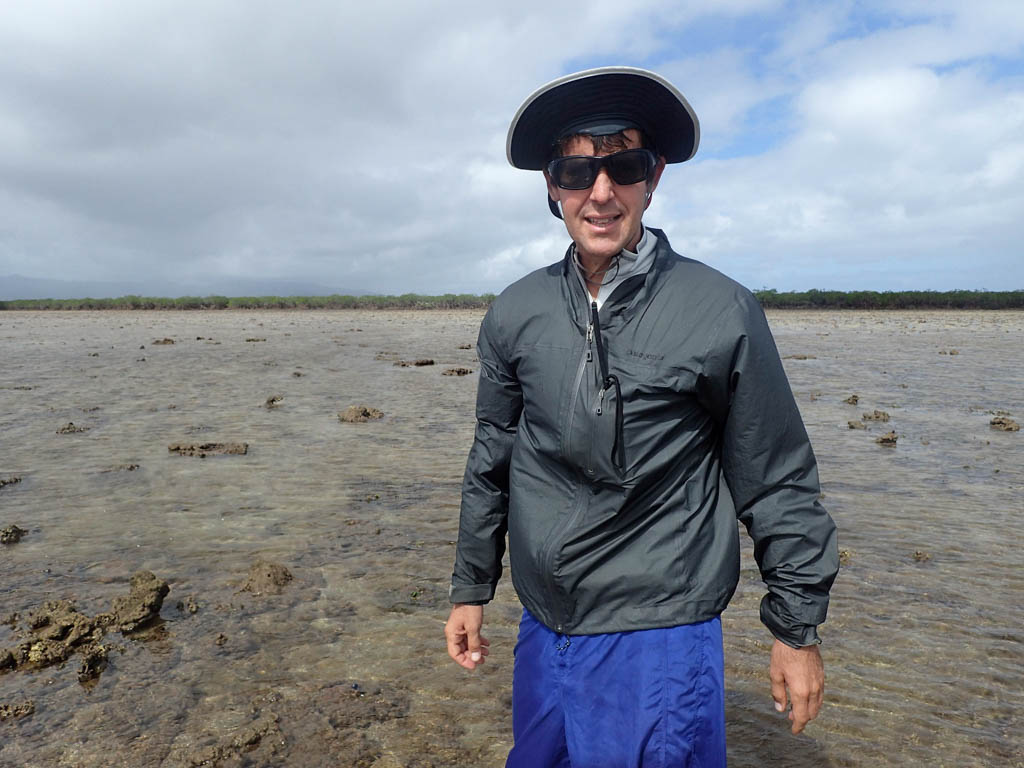
After a few days in Savusavu, we bought the requisite kava root for Sevusevu ceremonies and began our Fijian exploration. One of our stops was a small bay with a tiny village on one coast. As is the custom here, we paddled our kava root to shore to ask the village chief for permission to anchor in his bay. After wandering up a village path and through the small groups who were listening to the rugby broadcast, we found him. He welcomed us into his tent; as most of the village was taken out by the cyclone, there were not many freestanding houses left. He rolled out a mat and invited us to sit down so that he could formally welcome us. After he chanted the welcome, he fetched an old children’s map of the world and we showed him where else we had been on Two Fish. He apologized that he was not serving kava on a Saturday, but we were happy not to partake. After a  slight hesitation, he asked whether we had batteries on board for his flashlight. Jason paddled
  back to Two Fish, retrieved some batteries and a solar lamp. We were happy to provide something of value there.
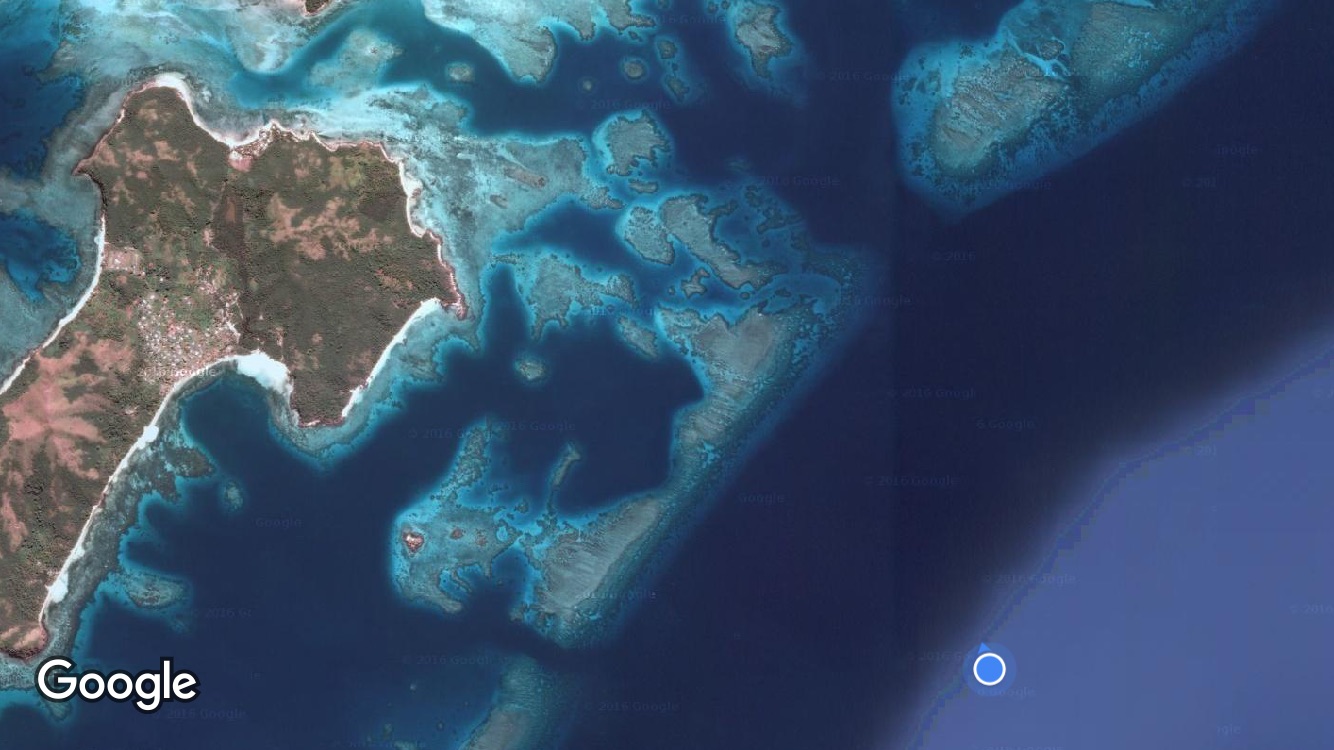
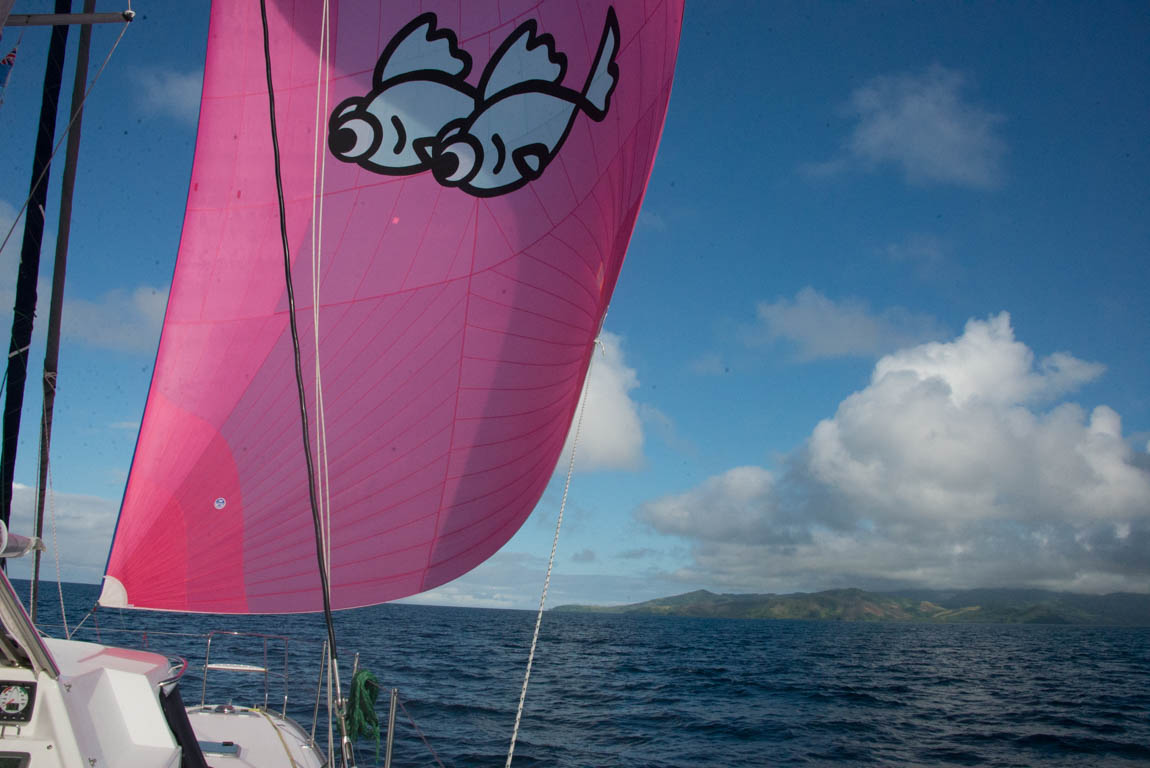
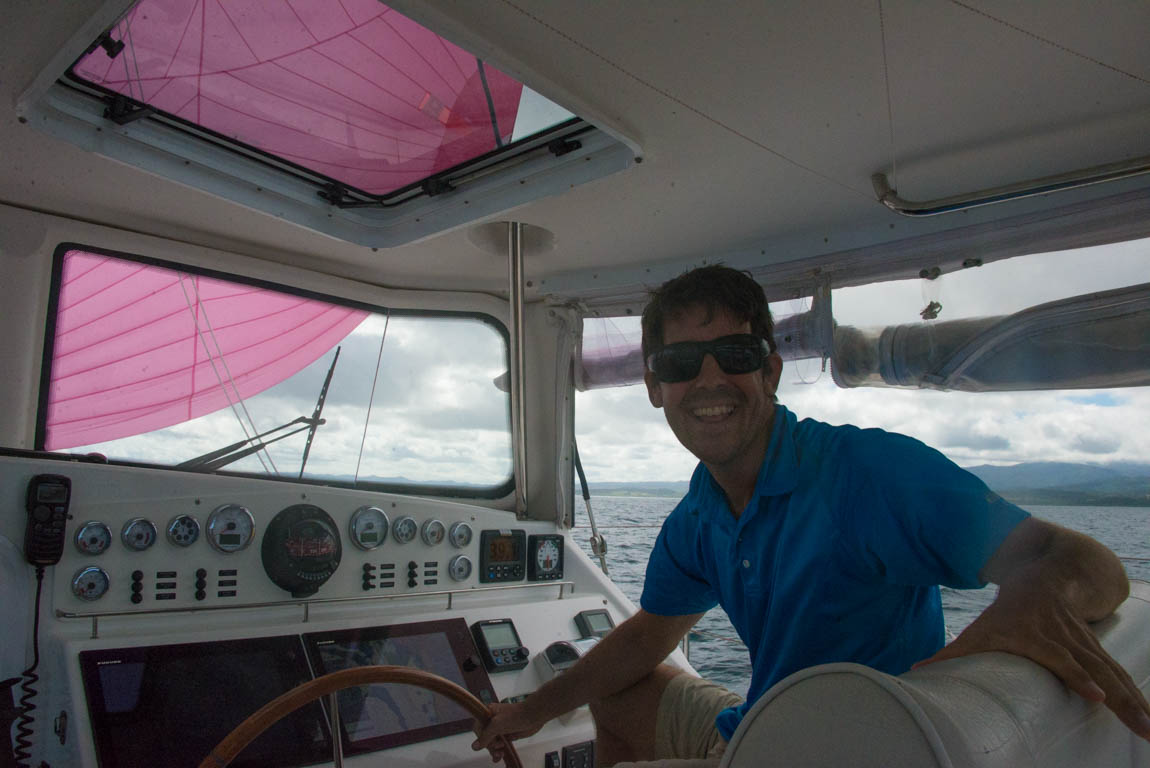
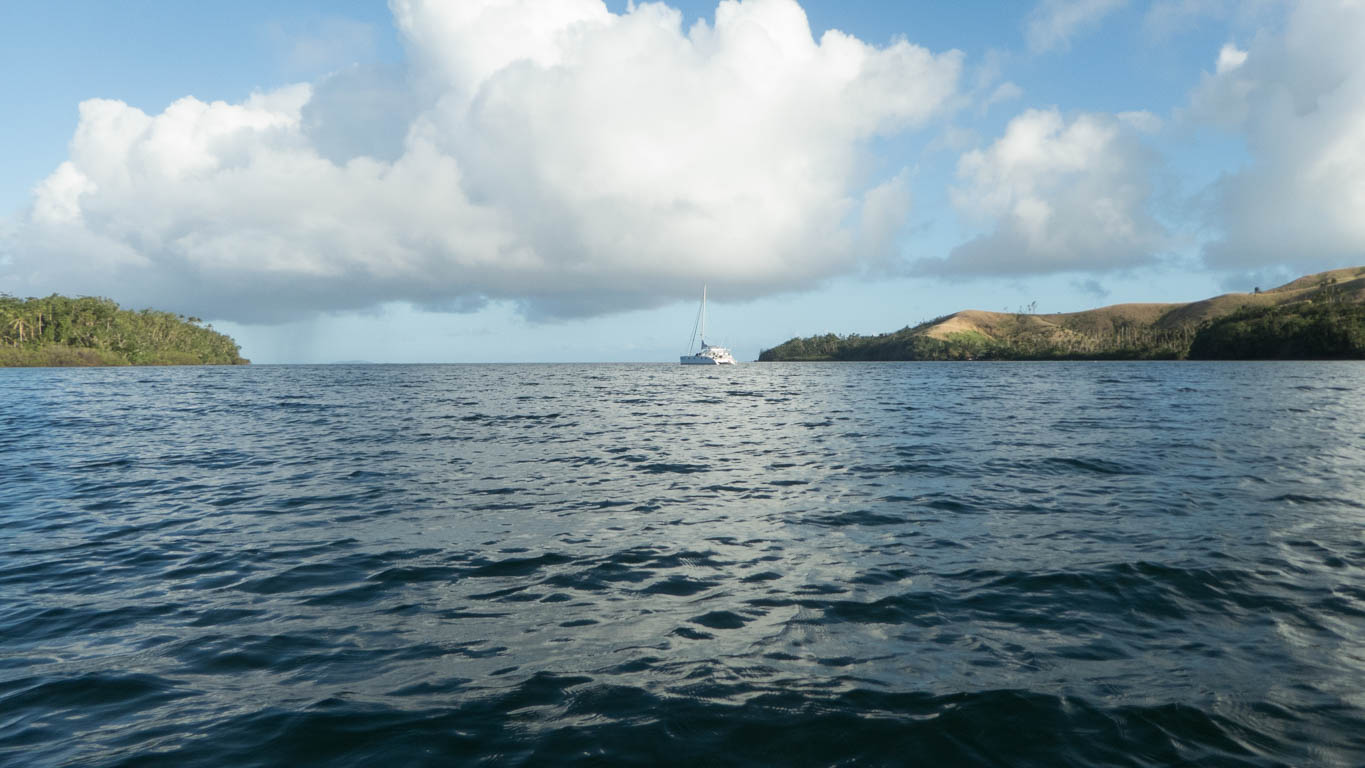
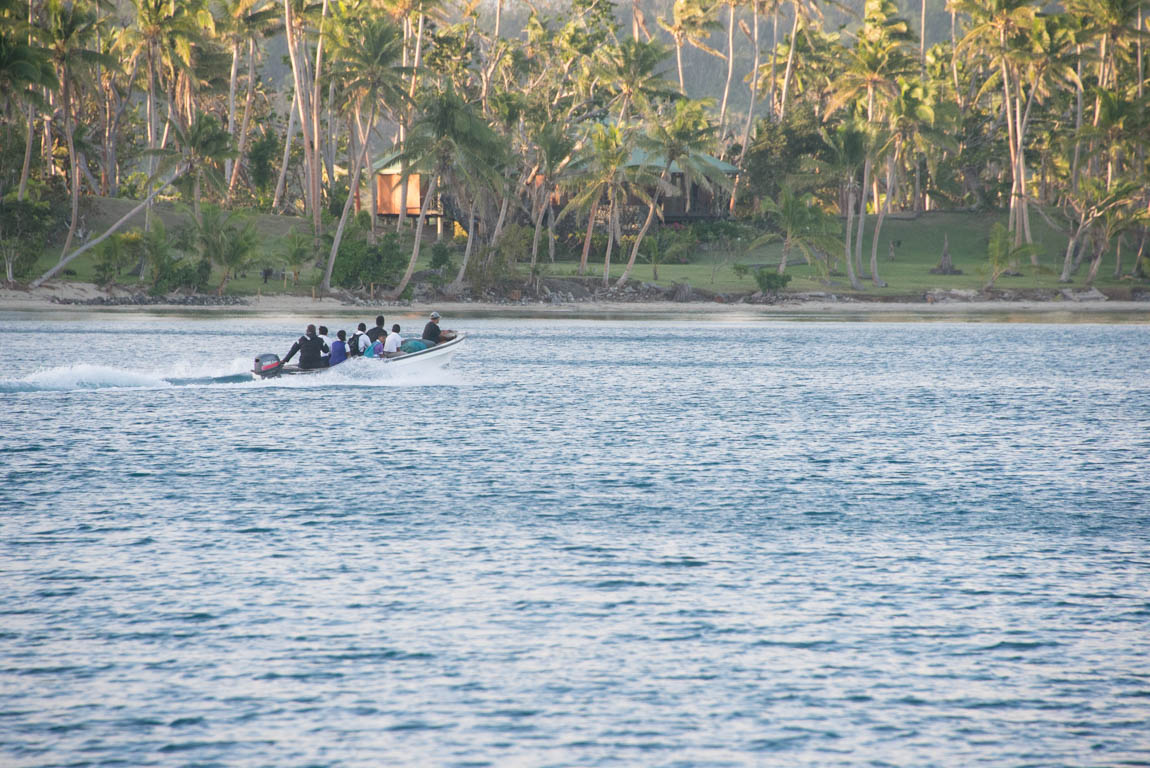
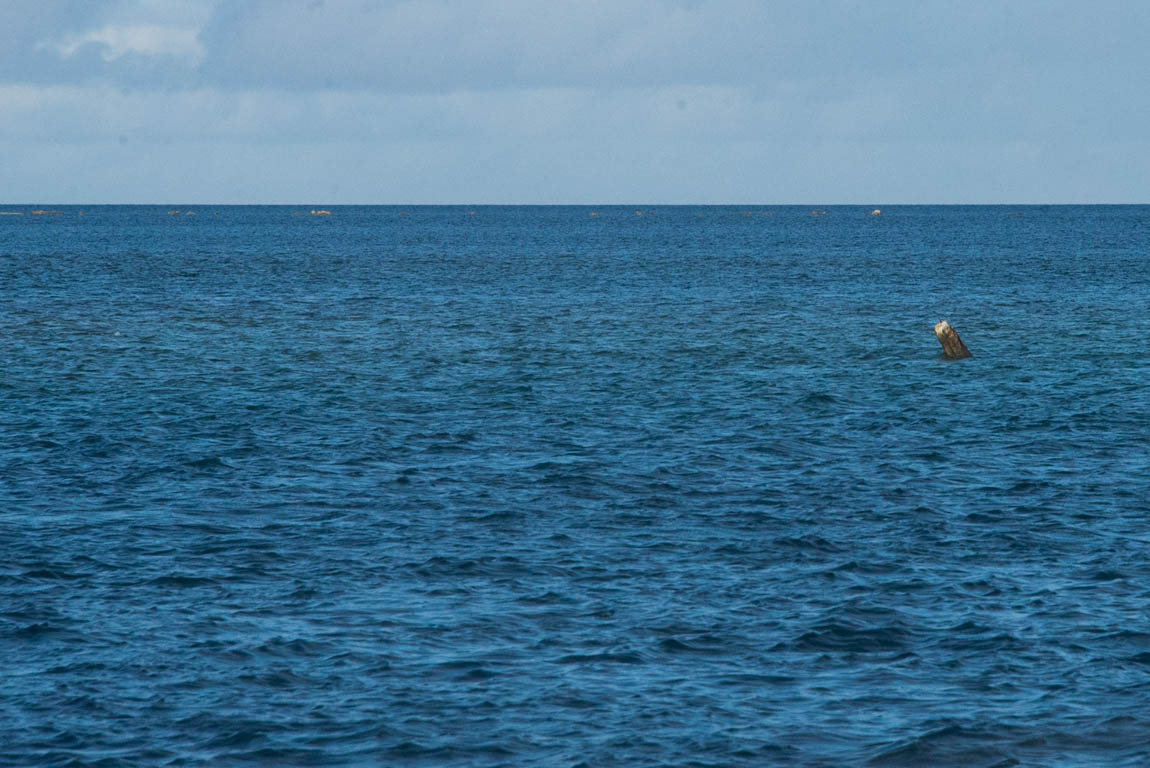
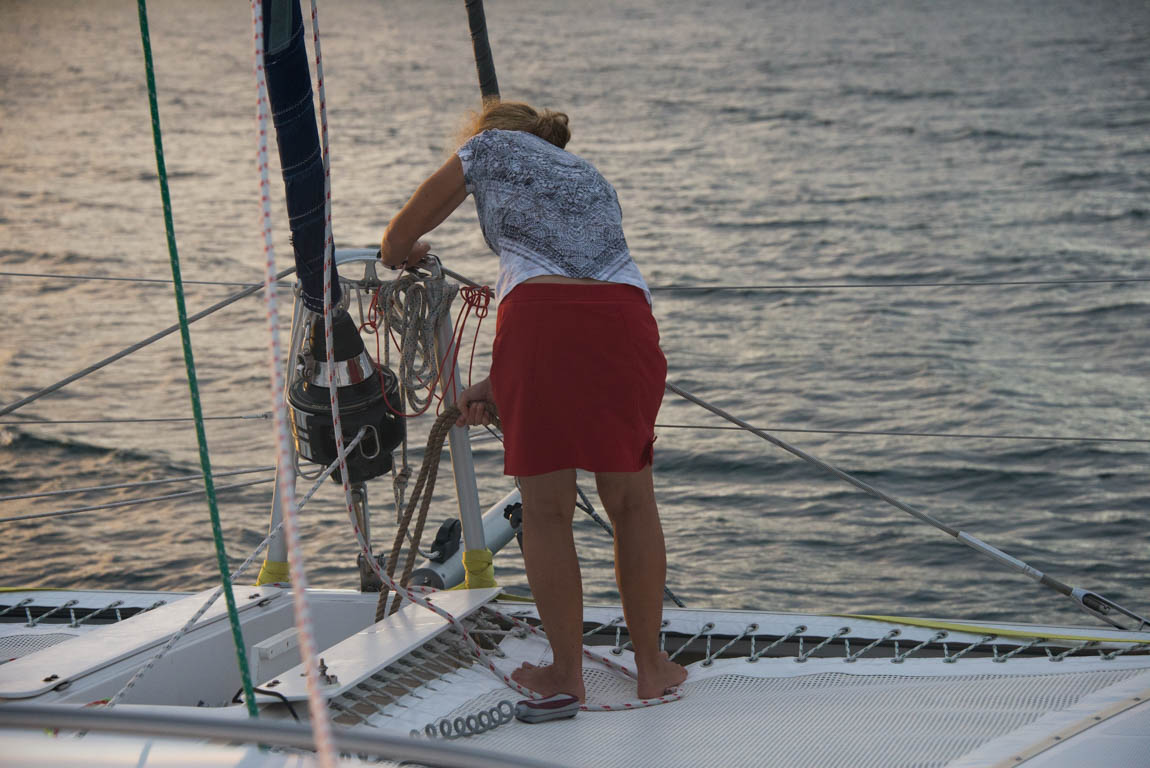
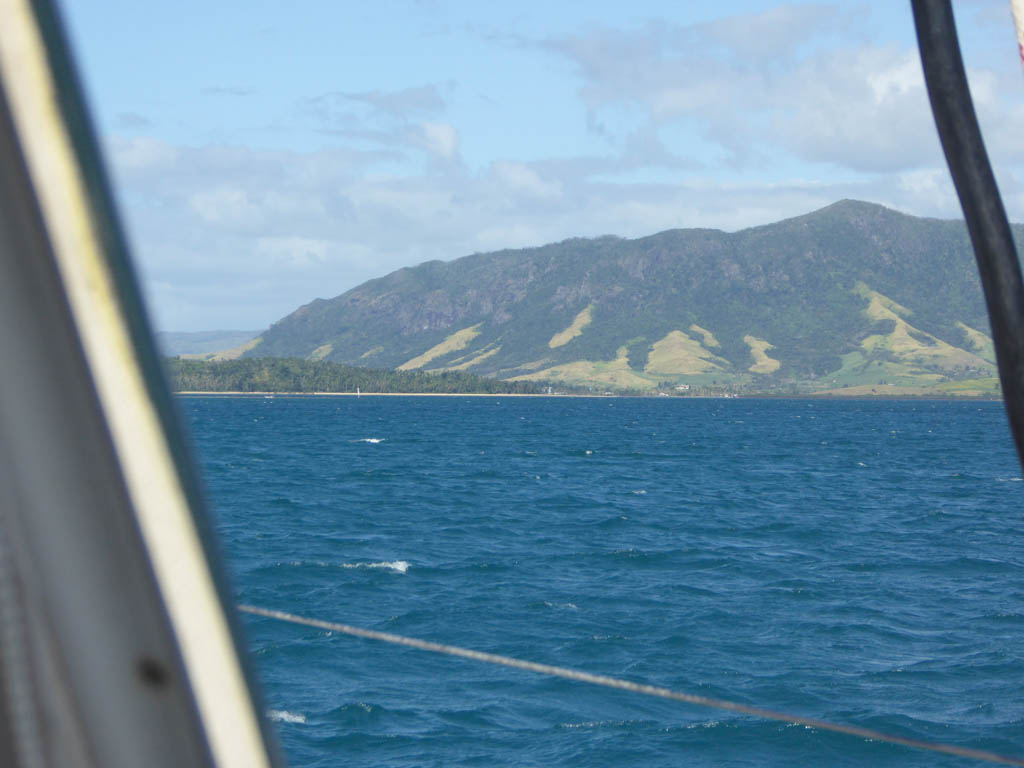
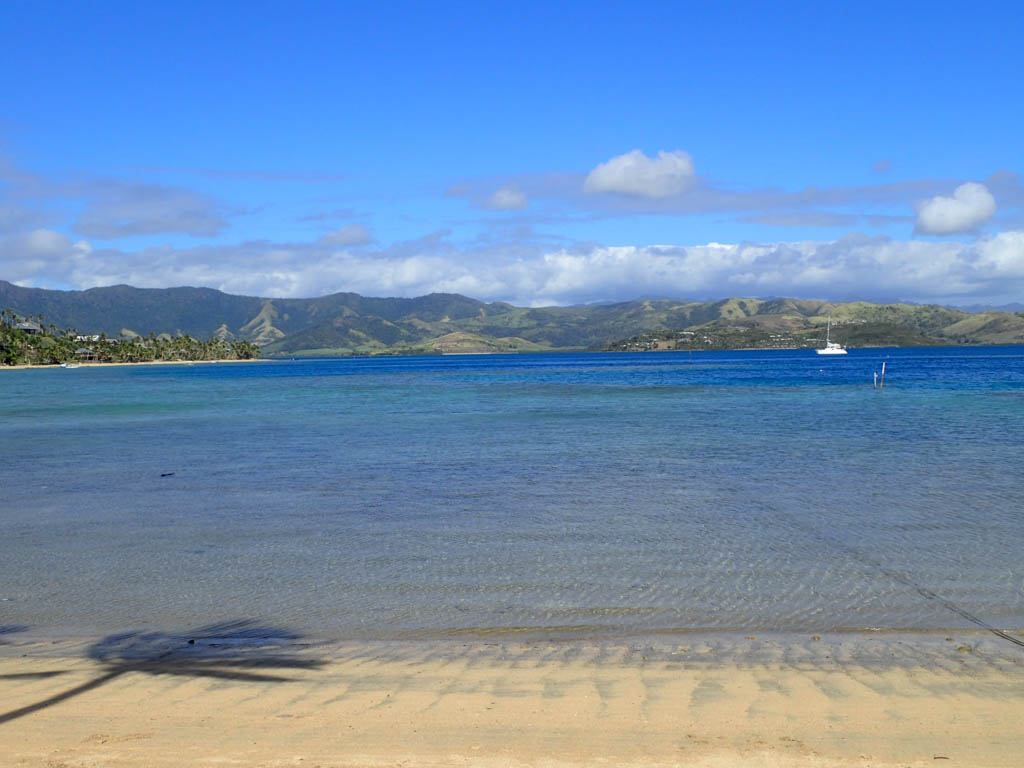
We sailed to Bua Bay at the North West edge of Vanua Levu and later along the coast of Viti Levu through the “Fiji intercoastal”, land on one side and invisible reefs on the other. Finding the channel markers is challenging, and nautical charts are not very accurate. Many navigational markers were taken out by Tropical Cyclone Winston and other storms. We transited using charts, offline satellite images and our eyes. The blue dot on the satellite photo above is Two Fish’s GPS location superimposed on a satellite image. Jason was grinning ear to ear as we sailed with spinnaker and full main, wing on wing in a narrow channel beside the coral. The anchorages are a bit deep (15 to 20 meters) so our other challenge in some small bays was to balance scope with distance to shore and rocks. The reward for our work was entering remote areas with no neighbors and plenty of interesting walks.
-
- Jason enjoying a sail
-
- At anchor
-
- Remote village transport
-
- Elusive channel markers
-
- Readying bridle
-
- Exploring shore
-
- Bua Bay
-
- Two Fish in the distance
-
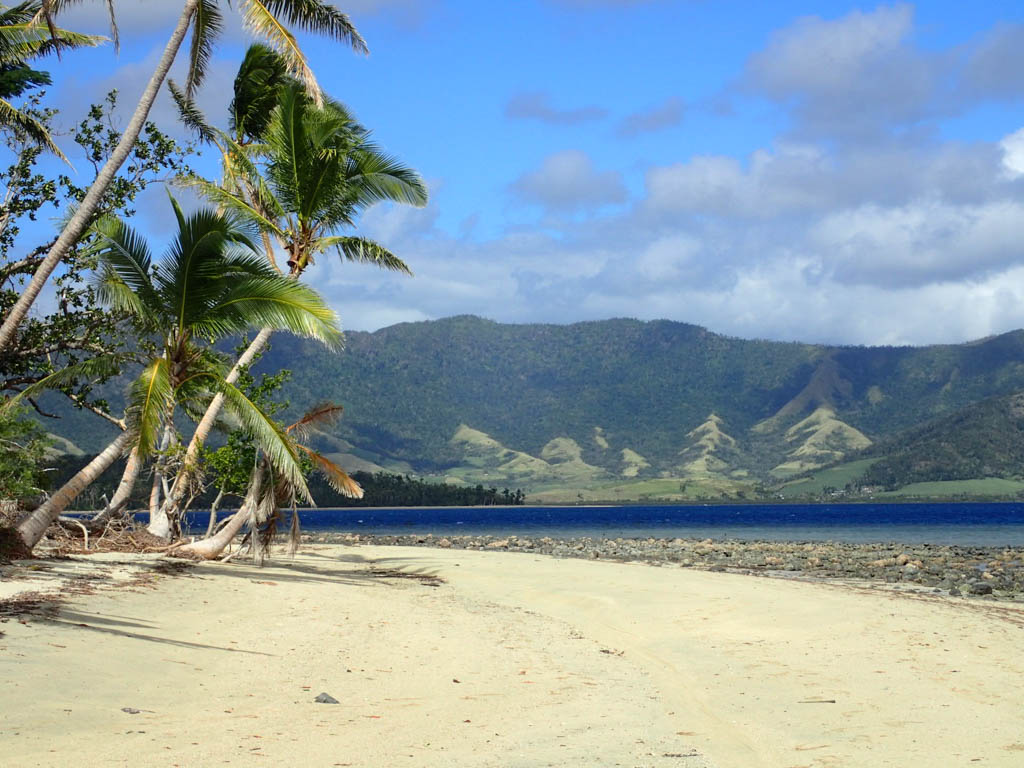
- Classic View
-
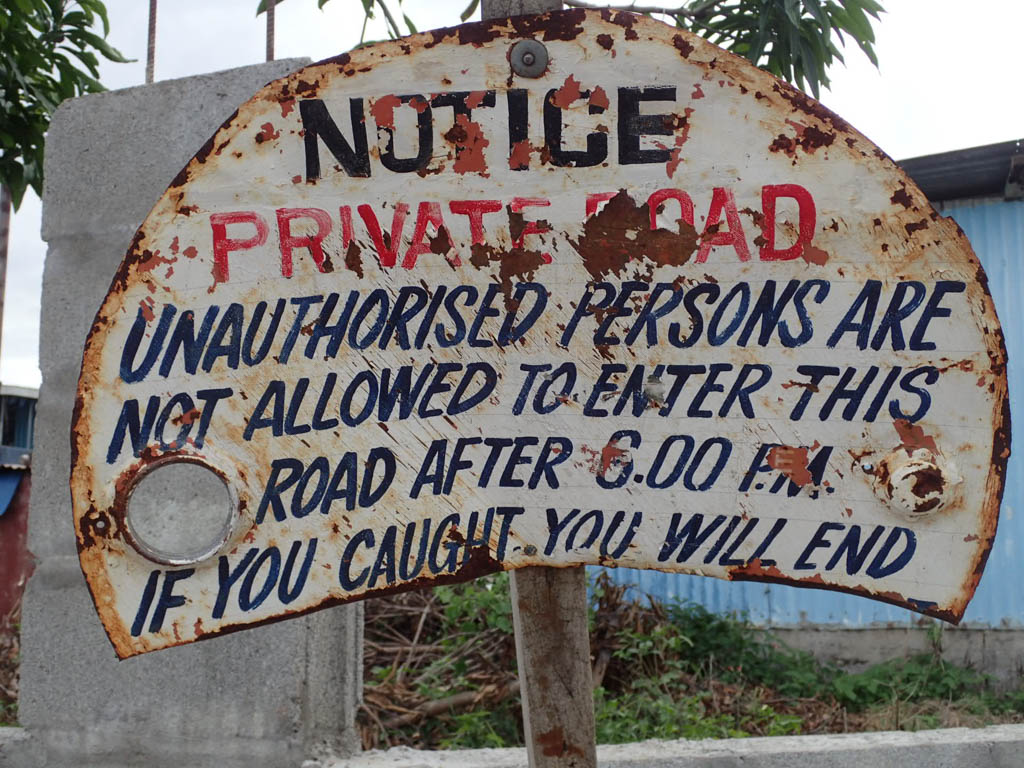
- Warning Heeded
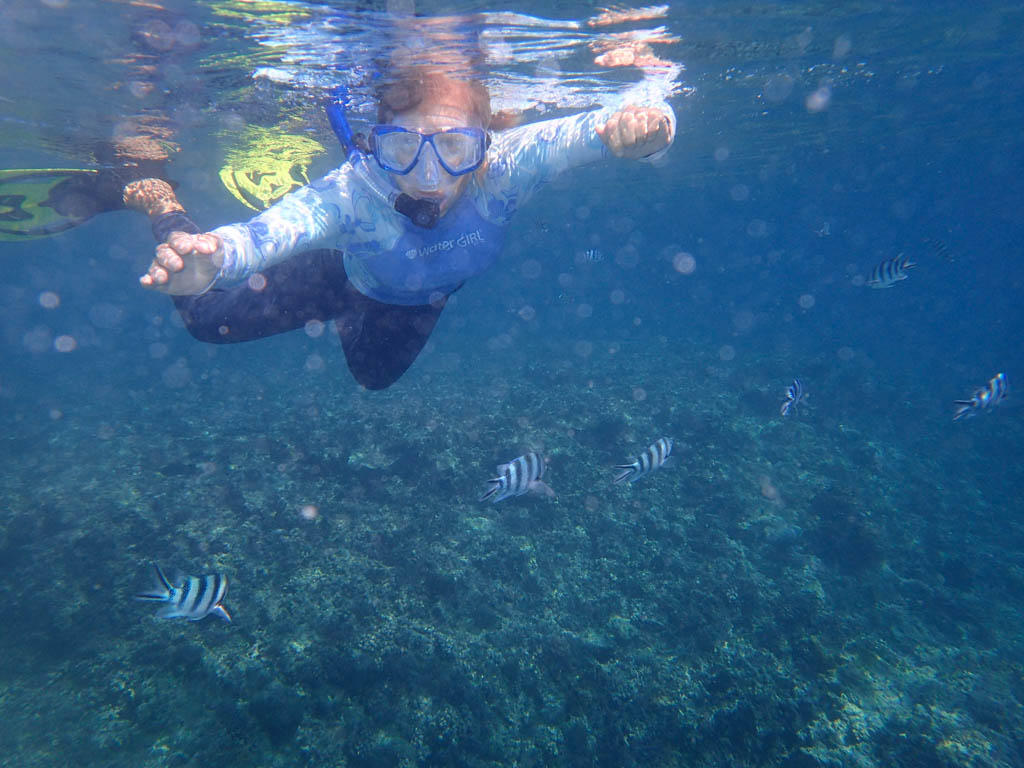
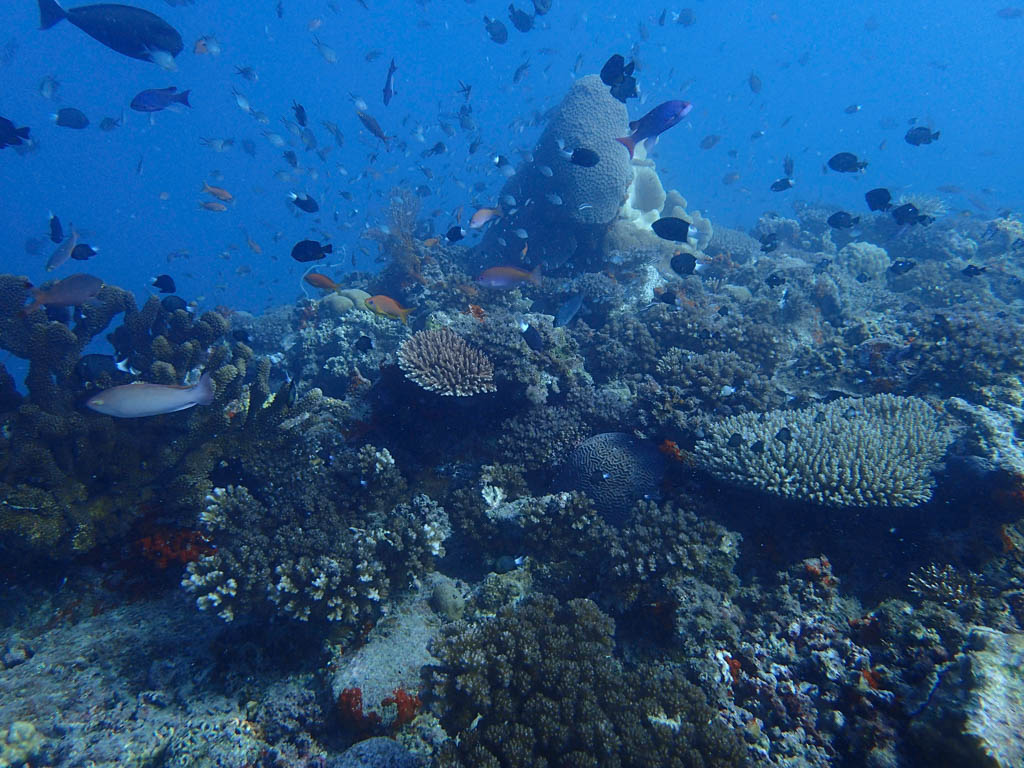
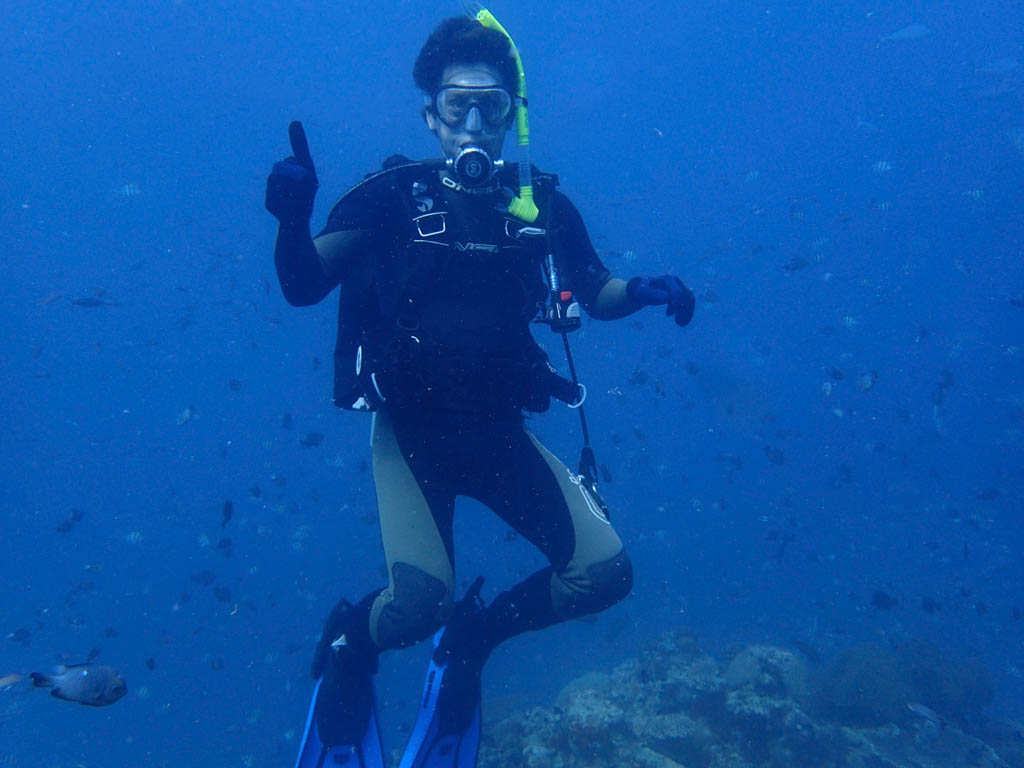
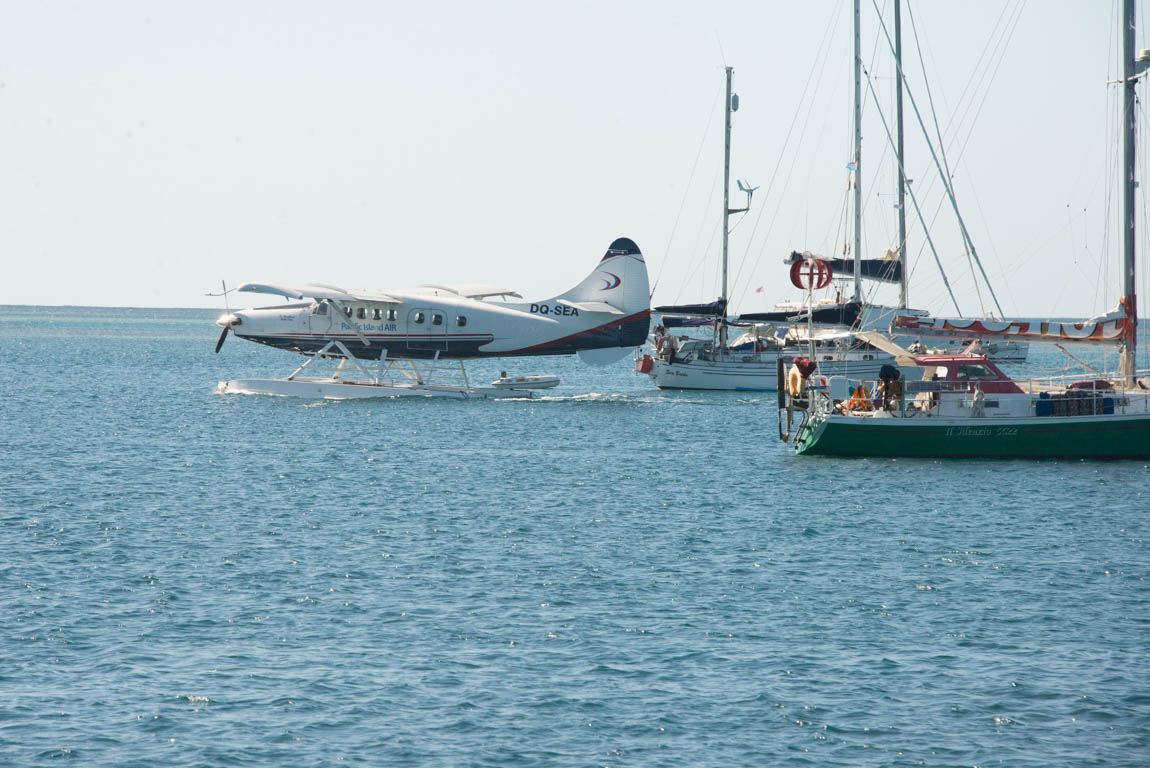
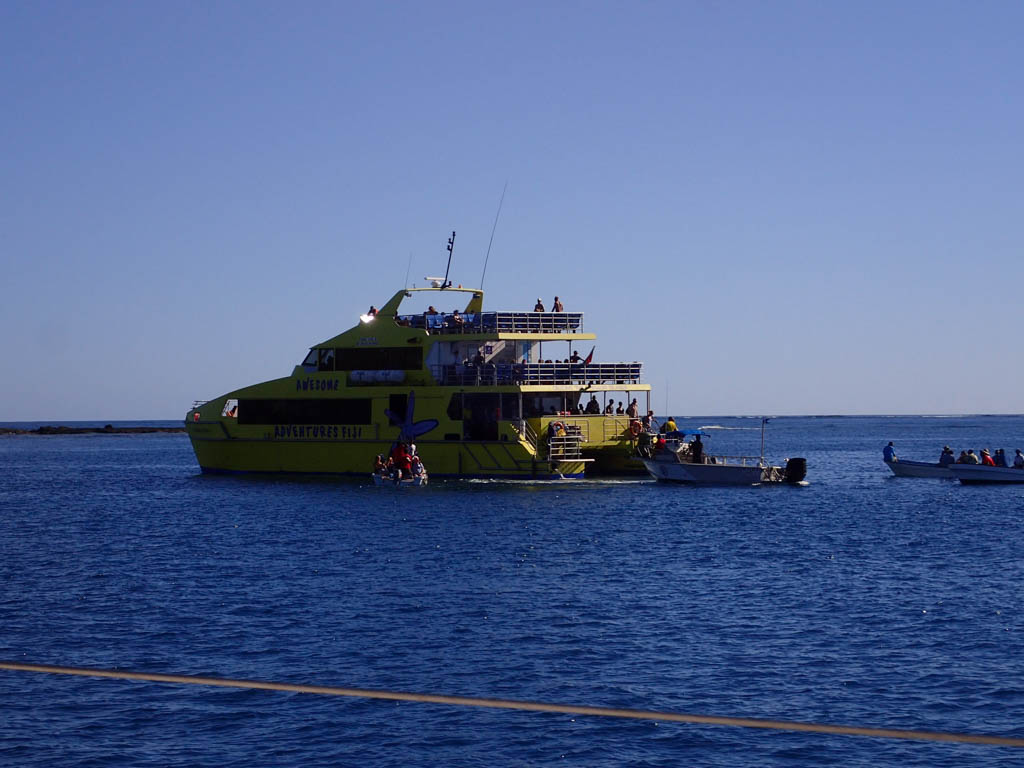
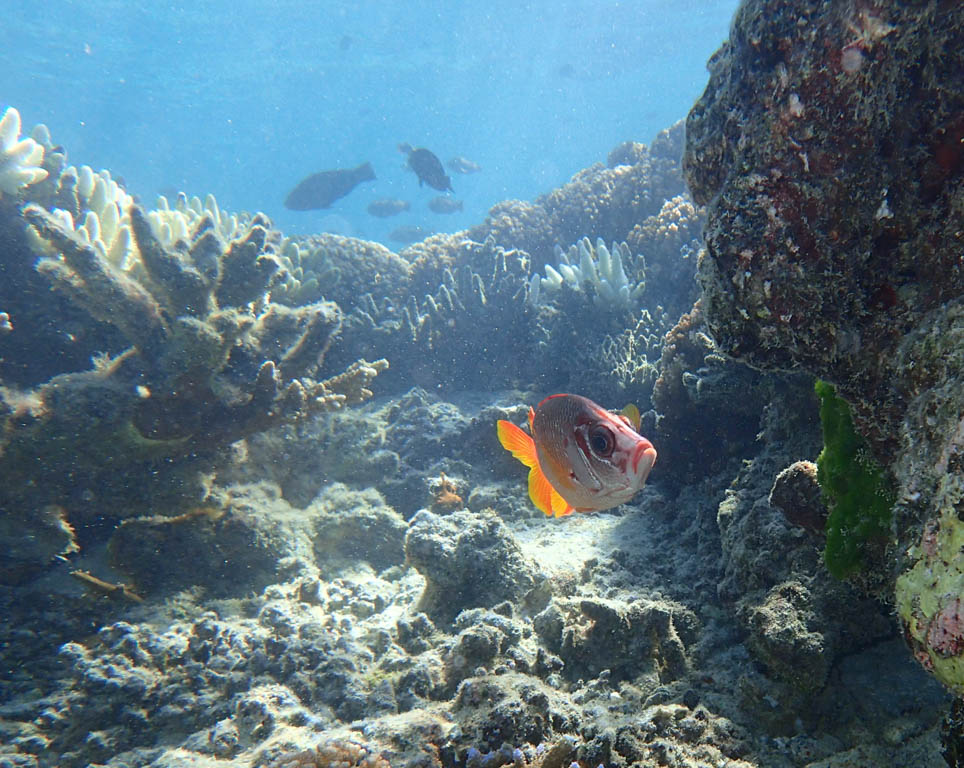
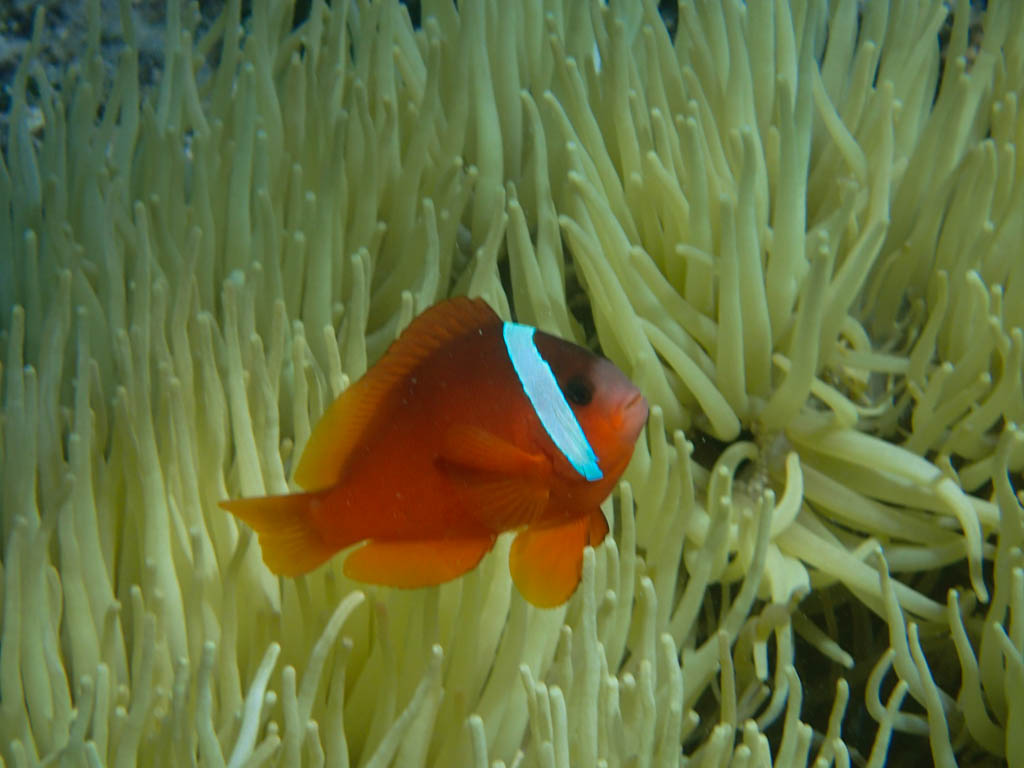
After a few anchorage stops, we headed out to the Yasawa islands. Every nation seems to have its Blue Lagoon and Fiji’s is wonderful. At Turtle Bay, we found an awesome snorkeling ground near the beach. The Yasawa Islands used to be accessible only by private yacht, but now backpackers and celebrities can visit. Backpackers come via high speed power cats; the hotels must pick the guests up from the ferry via small speed boats since the islands lack a ferry pier. The 1%’ers arrive by seaplane, right off the stern of the anchored boats. Both provide occasional amusement for the anchored boats.
-
- Snorkeling
-
- Close to shore
-
- Jason in his element
-
- Lagoon by air
-
- Lagoon by ferry
-
- Camouflage fish

-
- Classic fish
-
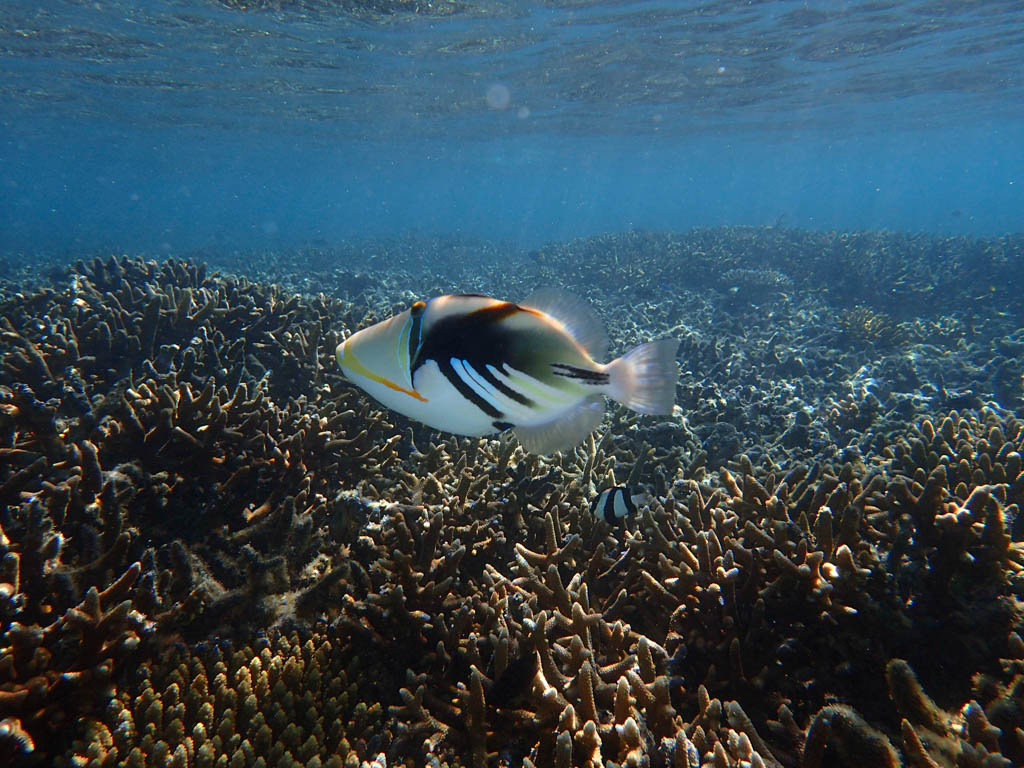
- Happy Fish?
-
- Clown Fish
-
- Another Paddle

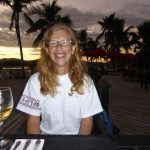
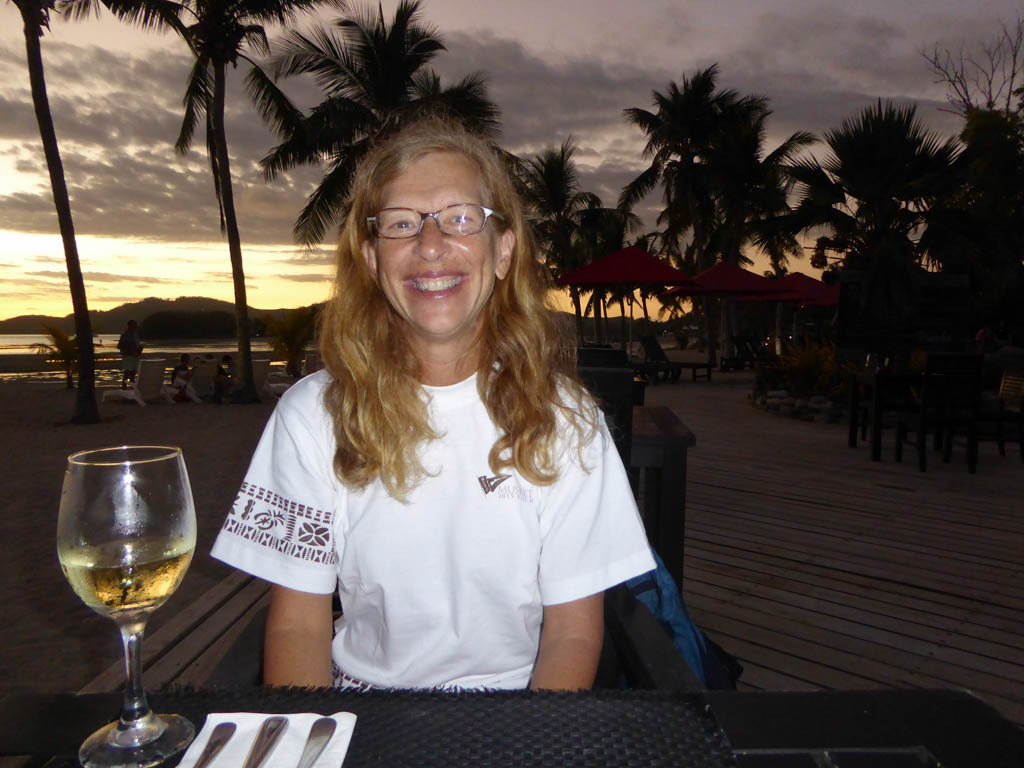
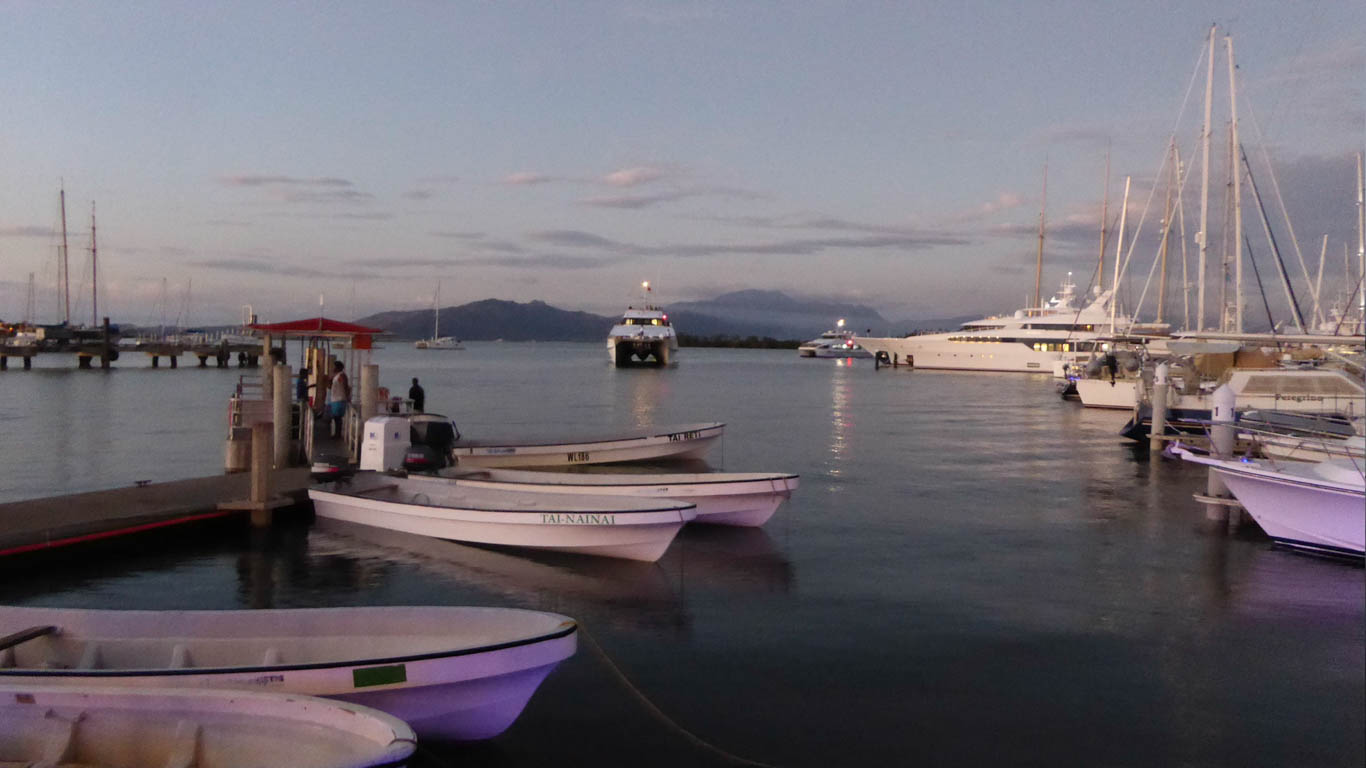
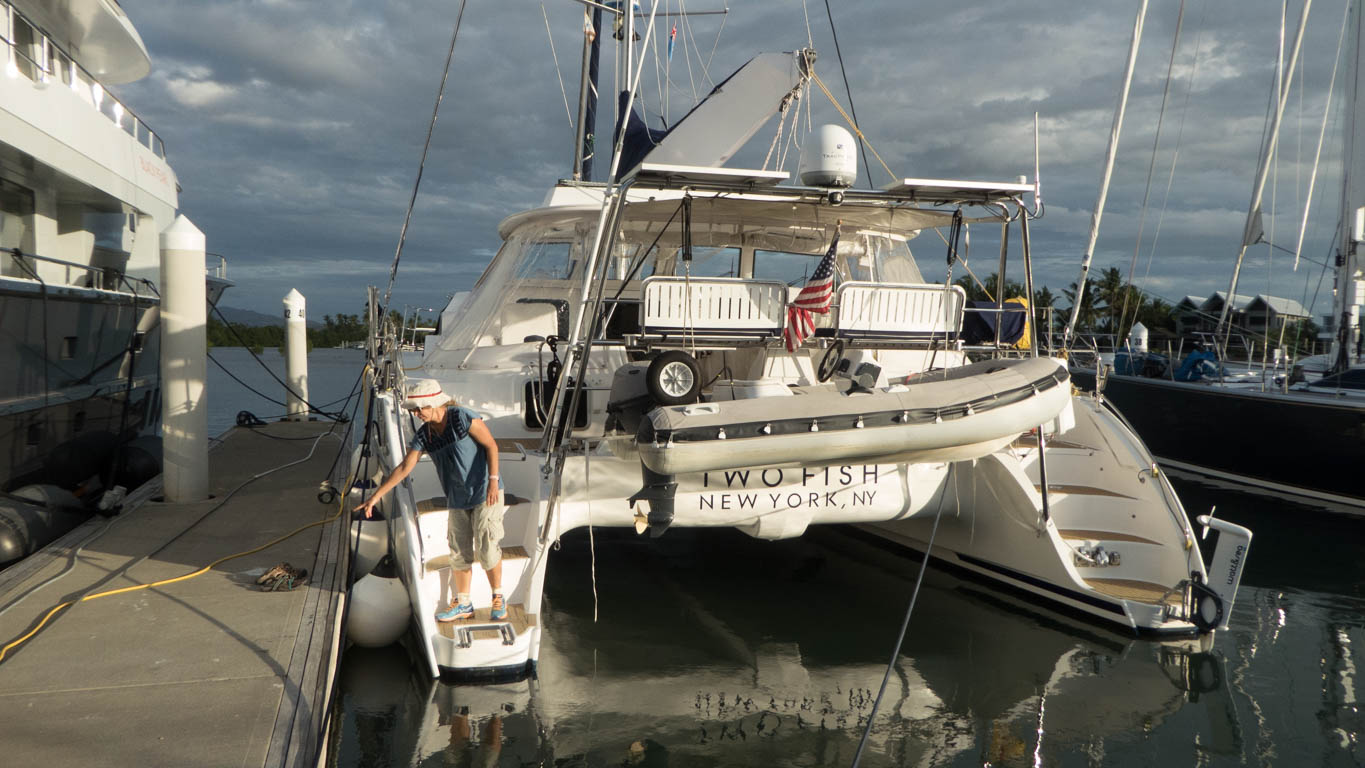
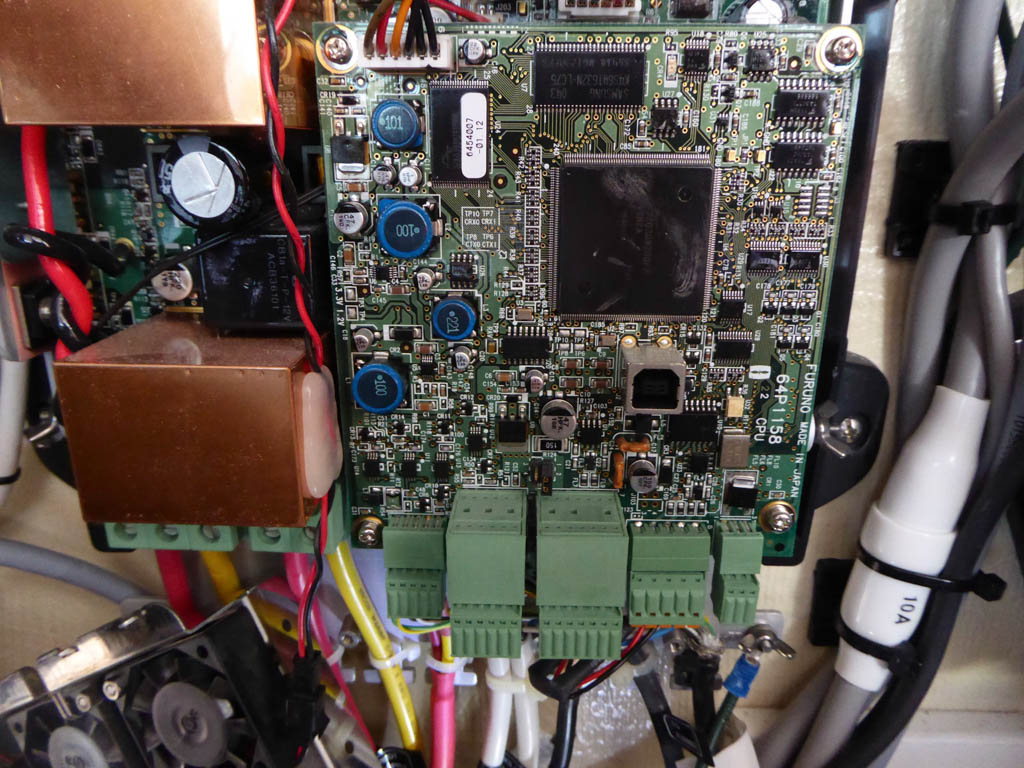
It was hard to leave, but we needed to re-provision, so we headed to Musket Cove resort and then onward to Port Denarau Marina in Nadi. We were given a berth among the megayachts; our yacht friends anchored outside the marina and used our excess dock space as a dinghy parking lot. For the first time ever, we had the luxury of refueling without having to move the boat. The megayachts fuel at their slips because it is cheaper and easier to run fuel lines to each slip than to build a larger fuel dock. For the rest of the day Jason kept using the word bunkering, large ship terminology for refueling. We used the extra time to take care of maintenance tasks such as updating our autopilot software. This task reminded me of the old days of computing since we had to connect a cable directly to the processor and keep our fingers crossed that the system would restart.
-
- Musket Cove
-

- Denarau
-
- Megayacht Dock
-
- Updating Autopilot Software
-
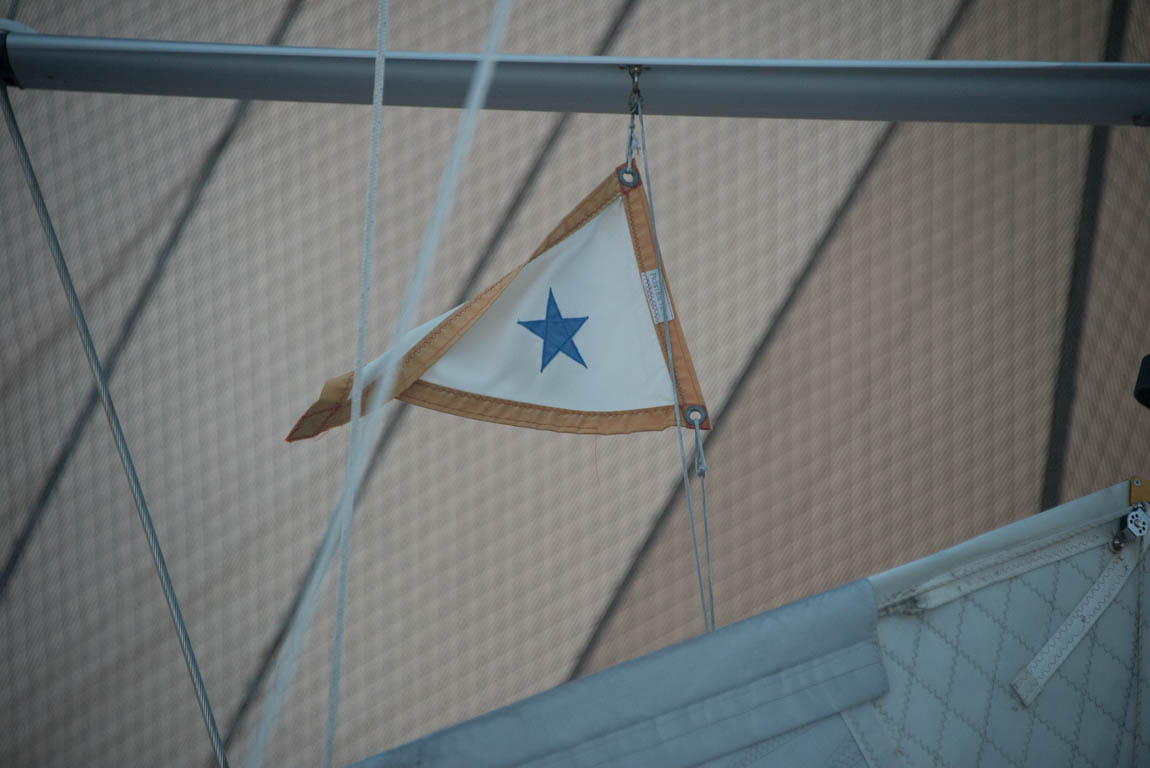
- Manhattan Yacht Club has travelled many miles
One of the things we love about Fiji is the range of experiences that we can have here. From unpopulated bays, to small villages, to resort lagoons and marinas, we can understand how other boats have spent multiple years here. At every stop, the Fijians we met were gracious hosts. The snorkel spots have been beautiful and the sharks have kept their distance. As our departure date neared, I was already planning for a return visit.


 Designed by Team Twofish. Powered by
Comments are closed.