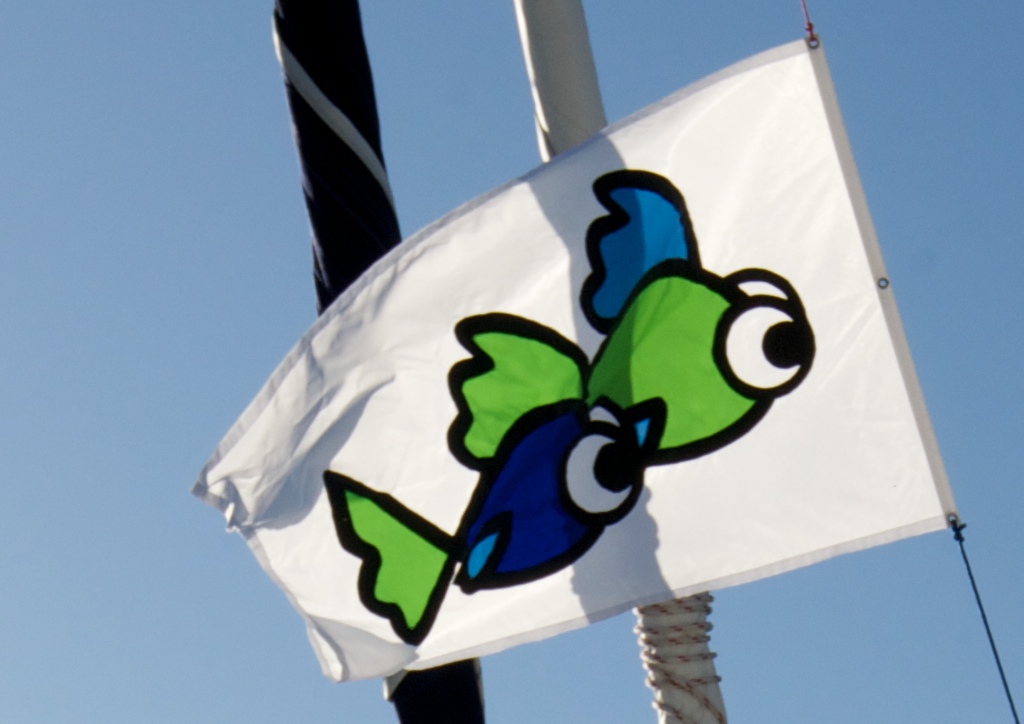
Two Fish “Battle” Flag

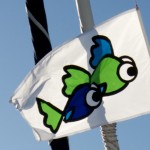
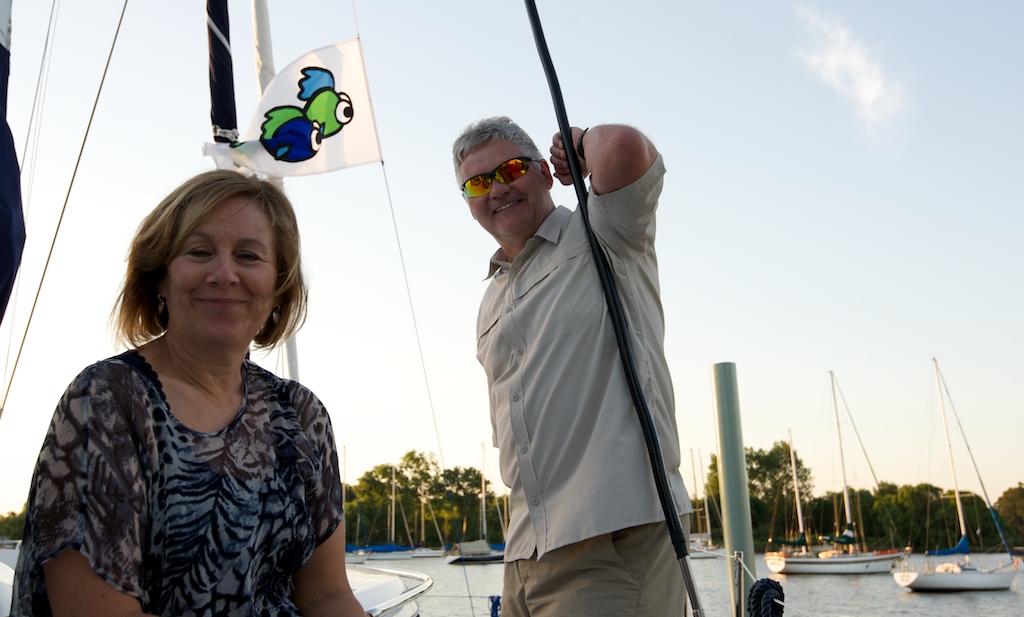
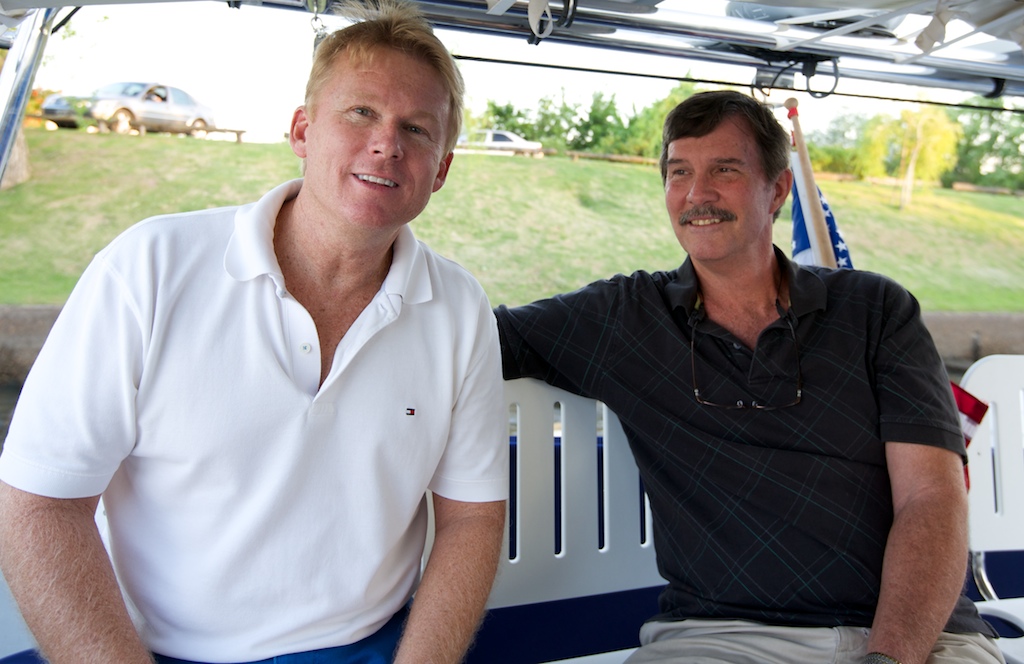
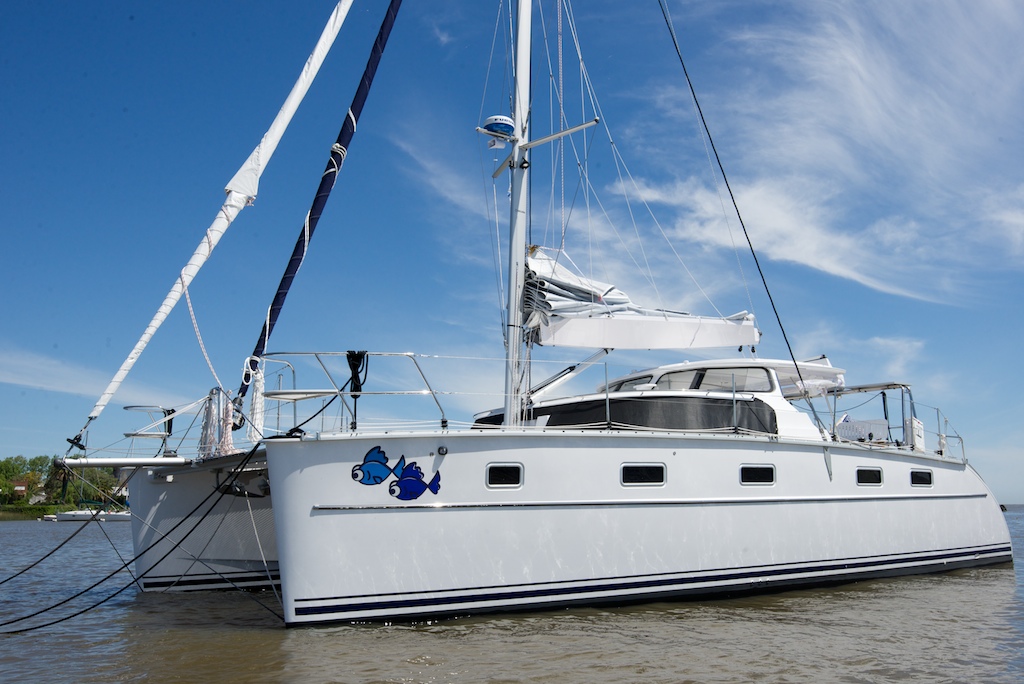
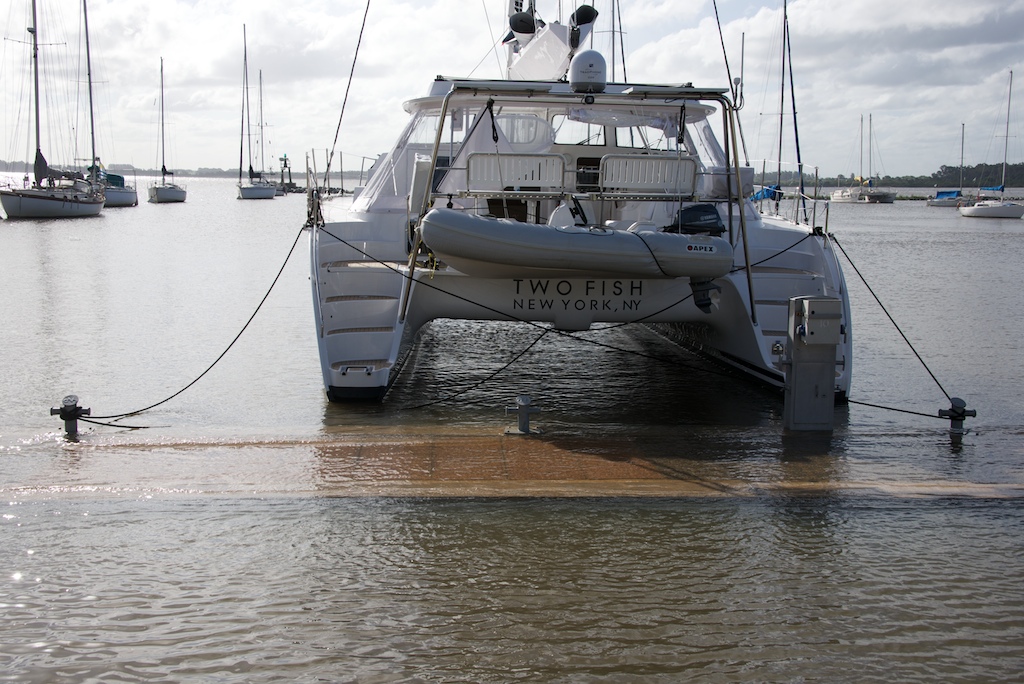
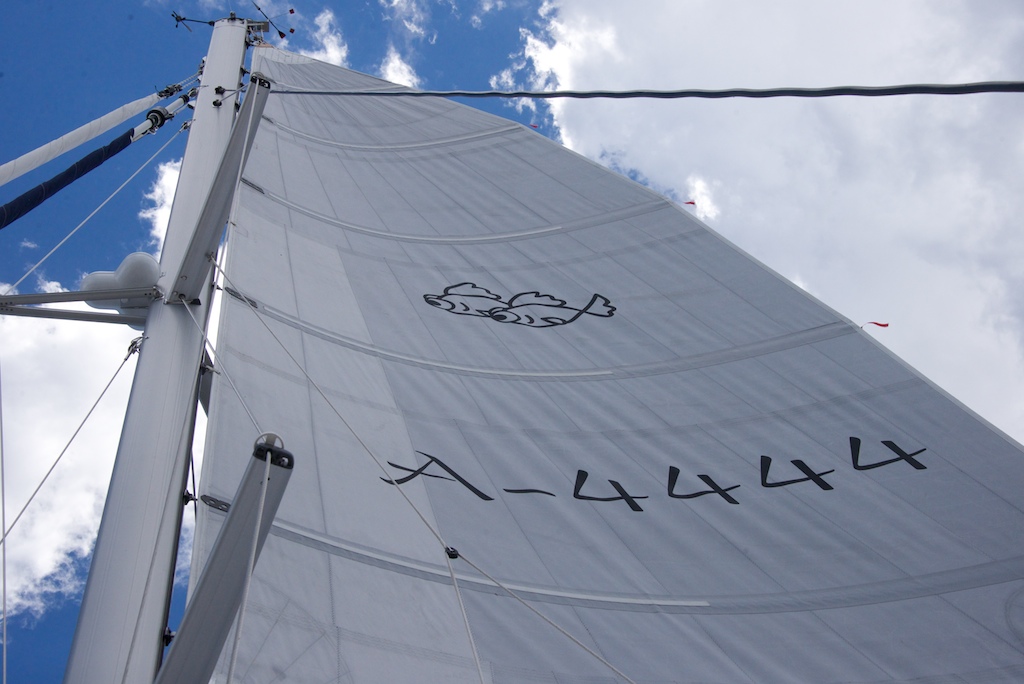
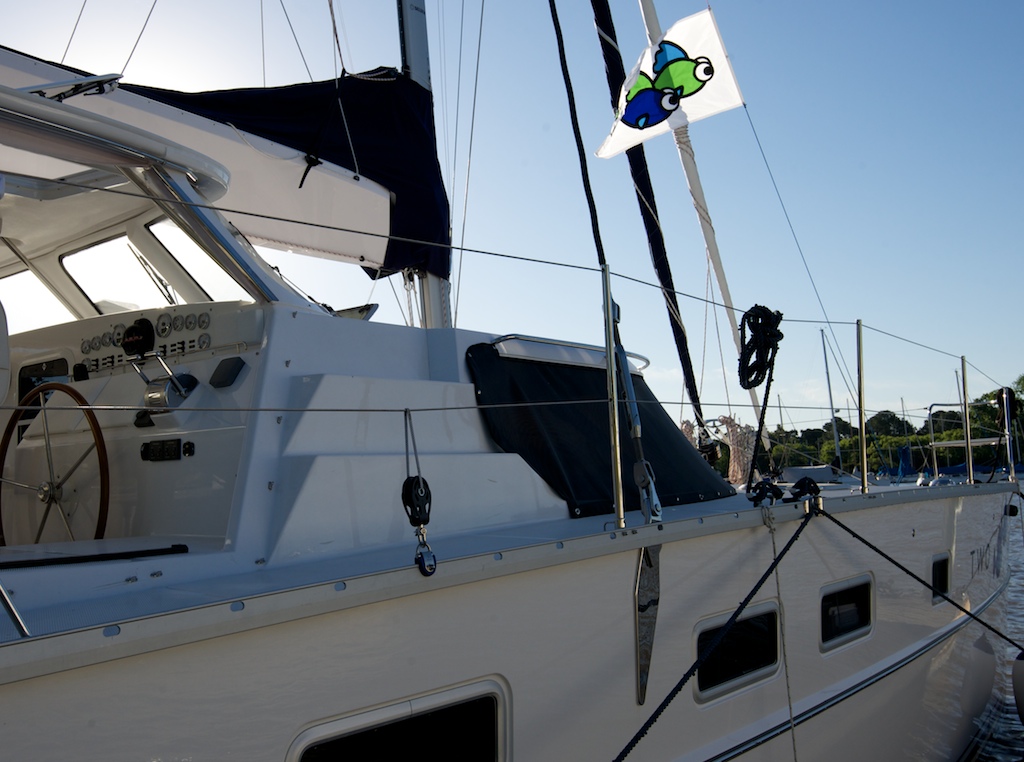
Two Fish has no intention of going to battle, but we now have a battle flag.   My Mom went over the top and “volunteered” to sew a Two Fish flag.  It was a Herculean effort that tested her eyesight and took many months to complete.   The secret to flag production is that you sew the next color on top of the existing layers, starting with the 4×6 foot white cloth and ending with the fins. Lots of work!   We are so thankful and will enjoy having my Mom’s work looking over Two Fish.

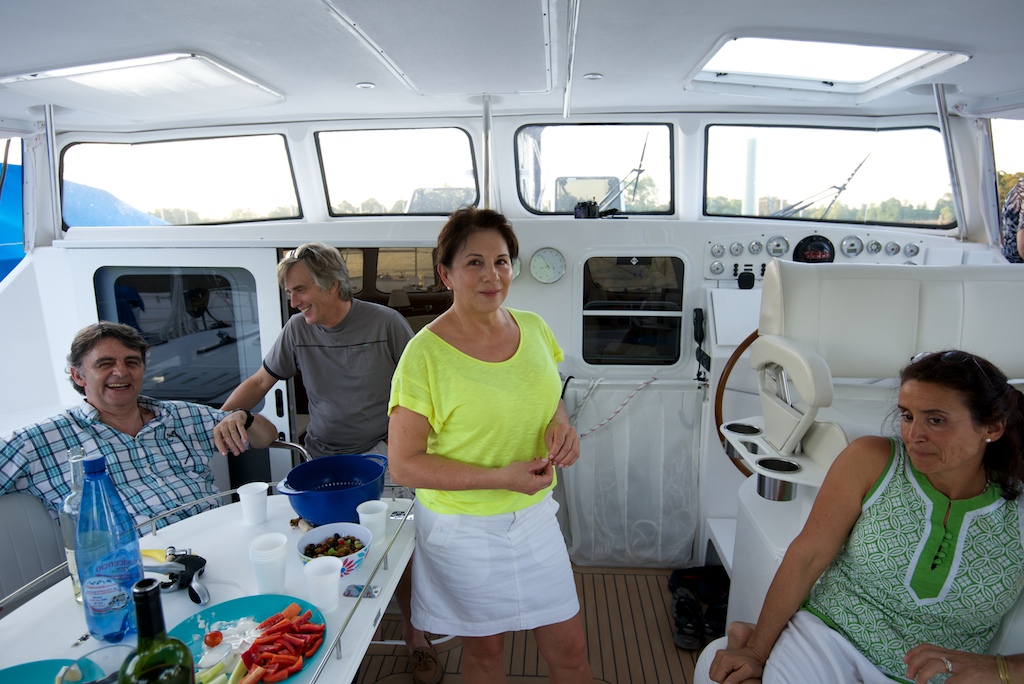
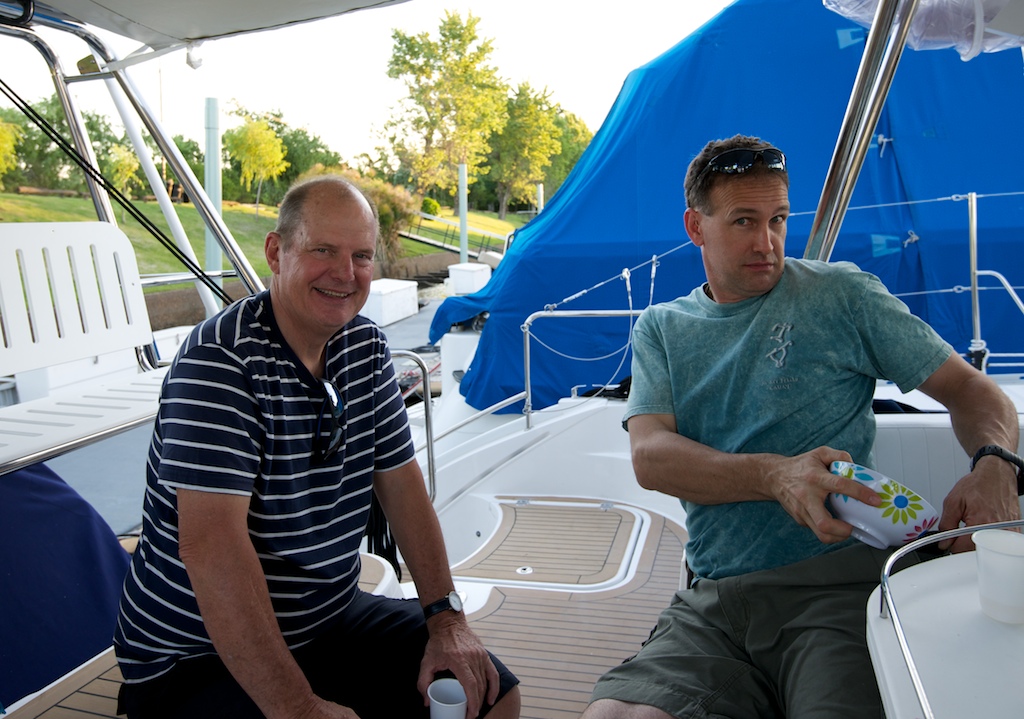
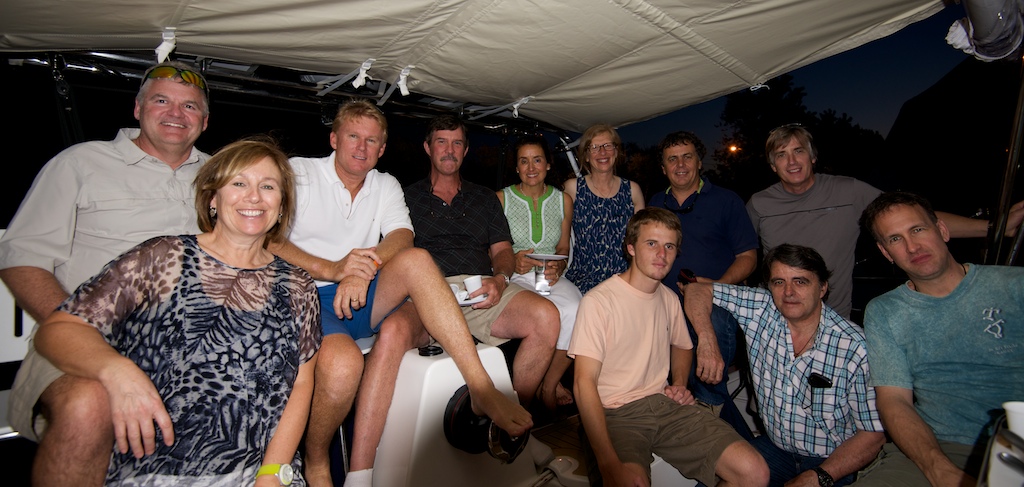
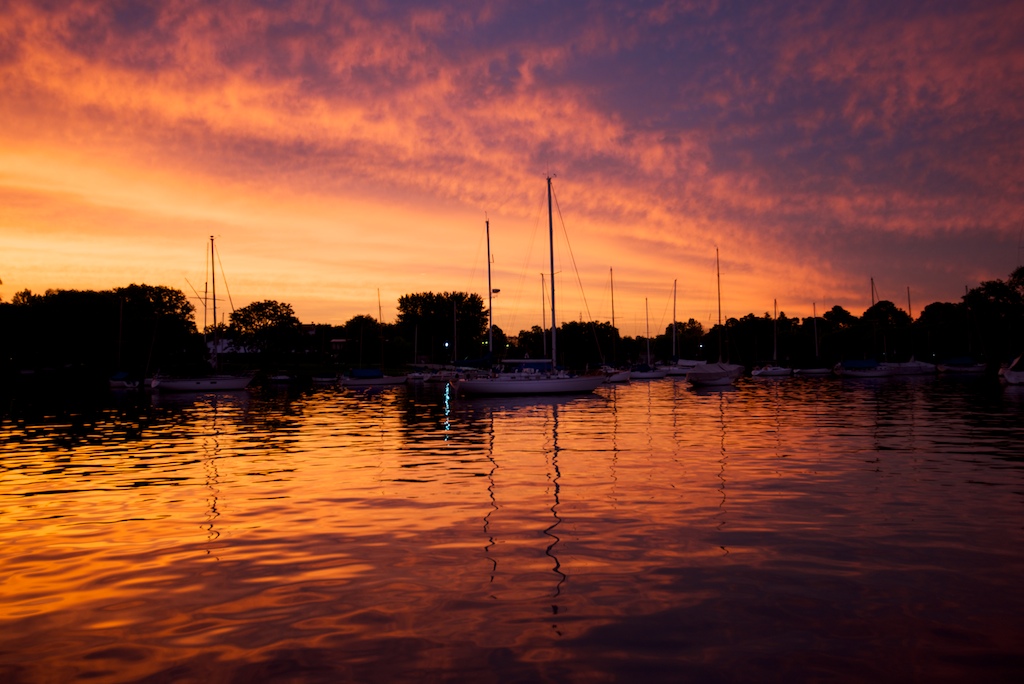
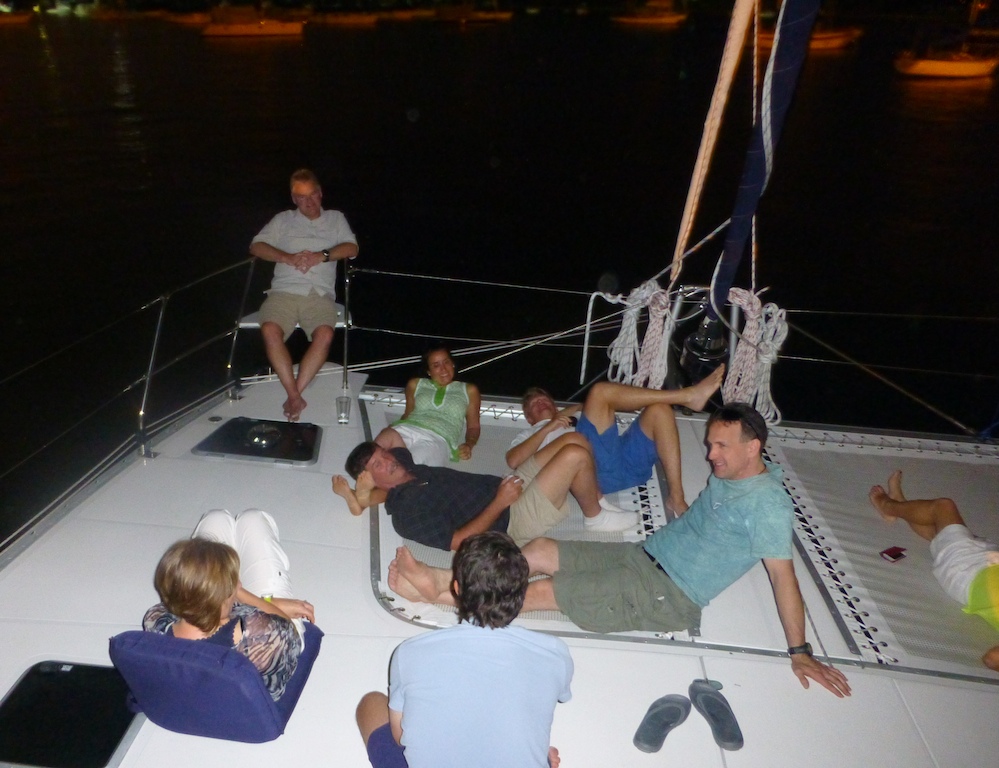
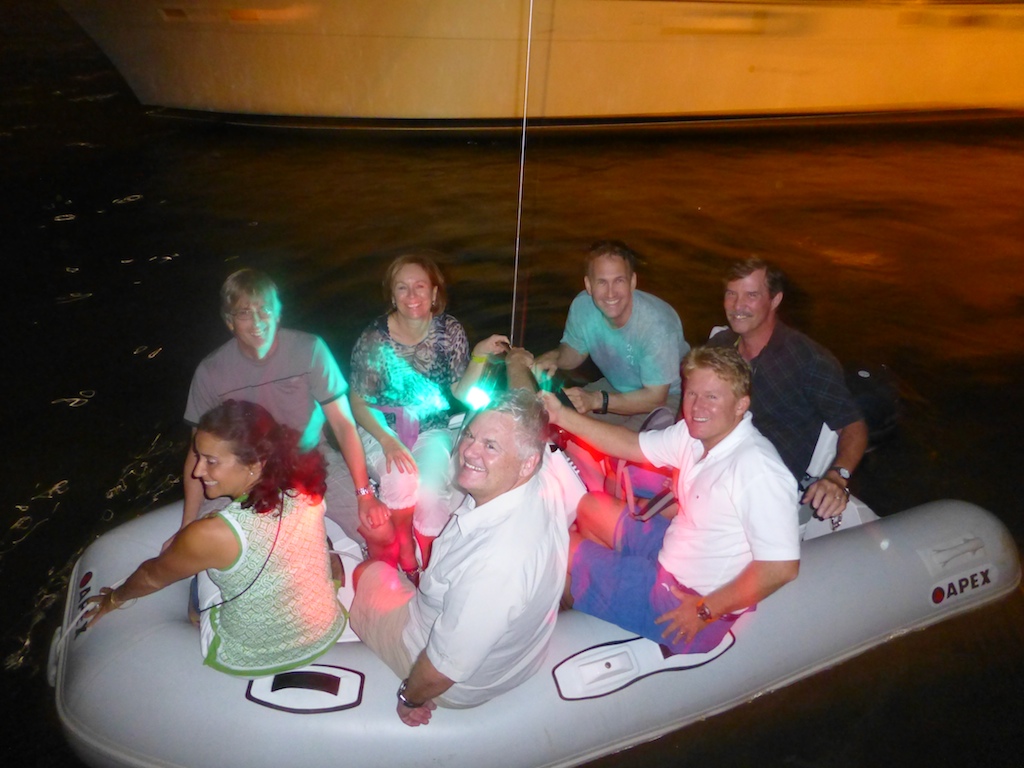
We raised the flag last week to start our boat party, beginning our new tradition.


Read full story  · Comments { 1 }

Putting a Boat in Park

The killer app for boats would be an ability to shift into park like a car.   Instead, one employs many lines, anchors, mooring balls and more to hold the boat in place when in a harbor.   On our cruise, we tried a variety of methods for putting the boat in park after the sailing day ended.

First, life at a dock  is a cake walk.   You attach the bow/stern lines to dock cleats, add a few spring lines for good measure and adjust your fenders.   Expect to lose sleep only when your neighbors’ late salsa music wakes you.

Mooring Ball

Mooring Ball

The next level up is a mooring ball.   This is an easy move in the BVIs where the balls are serviced regularly and have a friendly pennant line to make attaching to the ball a breeze.   In Uruguay, the balls lack the pennant line and are also impossibly heavy to lift, so we used a modified strategy.   Rather than grab the mooring ball from the bow,  I maneuvered the boat so that the mooring ball was near the stern steps and Gail gracefully attached a long line which could then be walked to the bow.  We hopped in the dinghy to attach to a second line to make a bridle.    This was also stress free – until 2 am when the tide ran out of energy to flood and switched to ebb.  This was when we realized that the mooring balls were not spaced properly for a 44 foot boat.   This news did not arrive via a friendly email but by a gentle thumping noise.   As I am a new boat owner, I leapt out of my skin and raced on deck to check on what was left of my stern.   Not even a scratch.   Gail used the boat hook to joust with the mooring ball  from the boat from 2 to 3am until she was releaved of duty by a change in the wind.   The sailboat companies do not list those early wake ups in the advertisements.

Anchoring is a topic about which volumes have been written.   Ask four sailors how to anchor and you will get 5 opinions.    Dropping and raising anchor has become much more civilized since the time of Nelson.   As long as your thumb is in decent shape, you should be able to press the up button on the windlass and from the depths will come pounds of chain, an anchor and sometimes unwanted mud.   No octopuses or treasure chests have come aboard Two Fish, yet.  The anchor can be raised from the bow or from the helm.


Mediterranean Moor

Mediterranean Moor

Where the fun really started for Two Fish was the Mediterranean moor.   A Med moor is like tight mens’ swimsuits – a European convention that the US has not embraced.   The boat crew drops the anchor and then reverses towards the sea wall, where stern lines are attached.   The result is that you can hop from your stern to the shore and buy a fresh baguette.   The sailing brochures fail to mention that this type of mooring can raise your heart rate when there is a crosswind and the marina staff are watching you as if it is the Sud America Football Cup.  Med mooring with a cross wind is like parallel parking a car except the spot is moving slowly away from you.  What is moving seemingly quickly towards you is another boat or, in my case, a metal barge.  Like most things in life, there is a trick to make Med moors easy.   Just drop the anchor upwind of your desired position on the seawall and the cross wind will put you in the correct spot.     The process for leaving a Med moor is to quickly lift anchor before contacting your neighbors.   Again a trick can help.   BUY VERY LONG DOCK LINES.   250 feet is a great line since you can go forward and raise your anchor while your stern is still attached.   Ah, Mr Crosswind I have defeated you again.

The next day, the mooring gods came up with a new trick.   The marina staff came by moments before our departure and dropped their maintenance vessel’s anchor and chain on top of our long and heavy anchor chain.   We waited patiently so as to be good guests.   The staff then realized their mistake and tried to rectify the error.   This is when Keystone Cops began.   The marina staff dinghy had a 6 hp engine.  Not enough power to pull two kegs but the determined dock worker had a plan to execute, even if the laws of physics were against him.  Newton be damned.   His plan was to use sheer arm strength to lift our strongly-set 75 pound anchor from the muddy harbor bottom.  Finally, he realized the futility of his mission and decided to duck their 3 pound anchor under our chain.   We were free to go.

Putting the boat in park is always an adventure.  Just think of this the next time you park your car at the mall.

Read full story  · Comments { 1 }

How much water is left in the tanks?

On land, when you have guests over to your house, they often enjoy the nickel tour.   They examine the kitchen, admire the living room and glance at the office.   Imagine if they went straight for your electrical panel or your water pump.   Boat guests do just that and it takes some time to get used to the change in personal space.   Cruisers are running little cities.   We produce water, manage its supply, run generators, and have small solar arrays.

The finite resources on board are water, diesel, electricity and food.   Diesel is often considered king as it can create electric power via the generator, which among other things powers the water maker.  In the muddy waters of the Plata our water can only come from a hose on shore – and we consume it at a brisk pace.   We use it to wash dishes, wash bodies (we have a nice shower) and supply our fresh water head.   Most boats use salt water to run their heads but this can bring smelly sea life onboard.    Without being strict on our consumption, one  of our two water tanks lasts about 2 days.  With our current easy access to water, we have been a bit profligate.  Kind of like the economy with easy money?

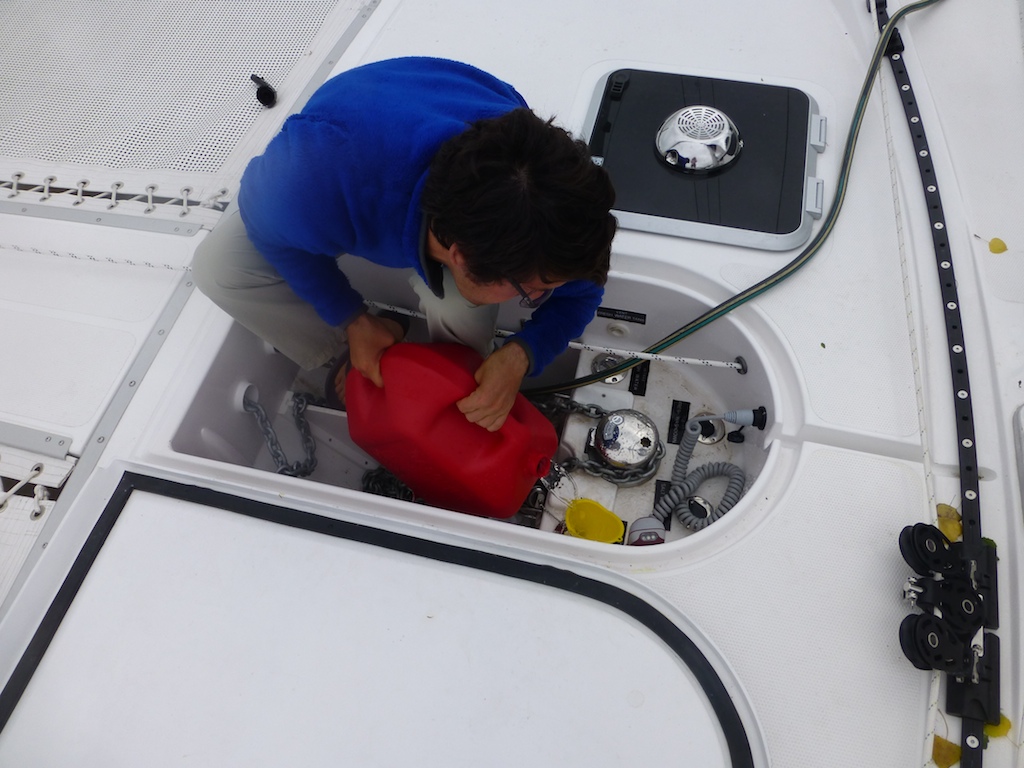
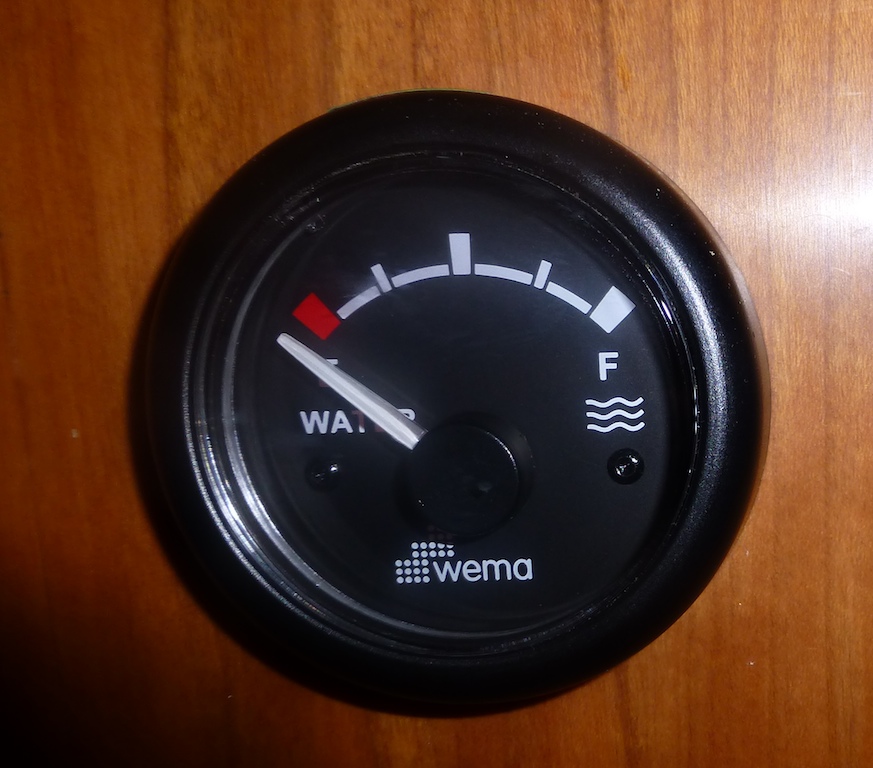
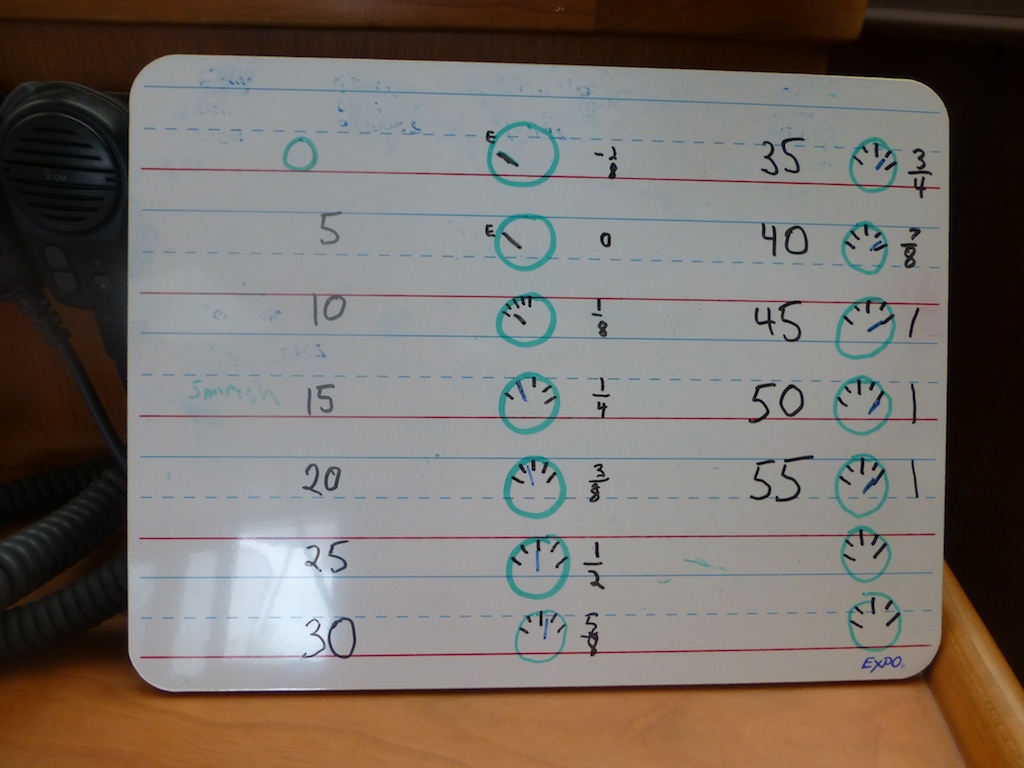
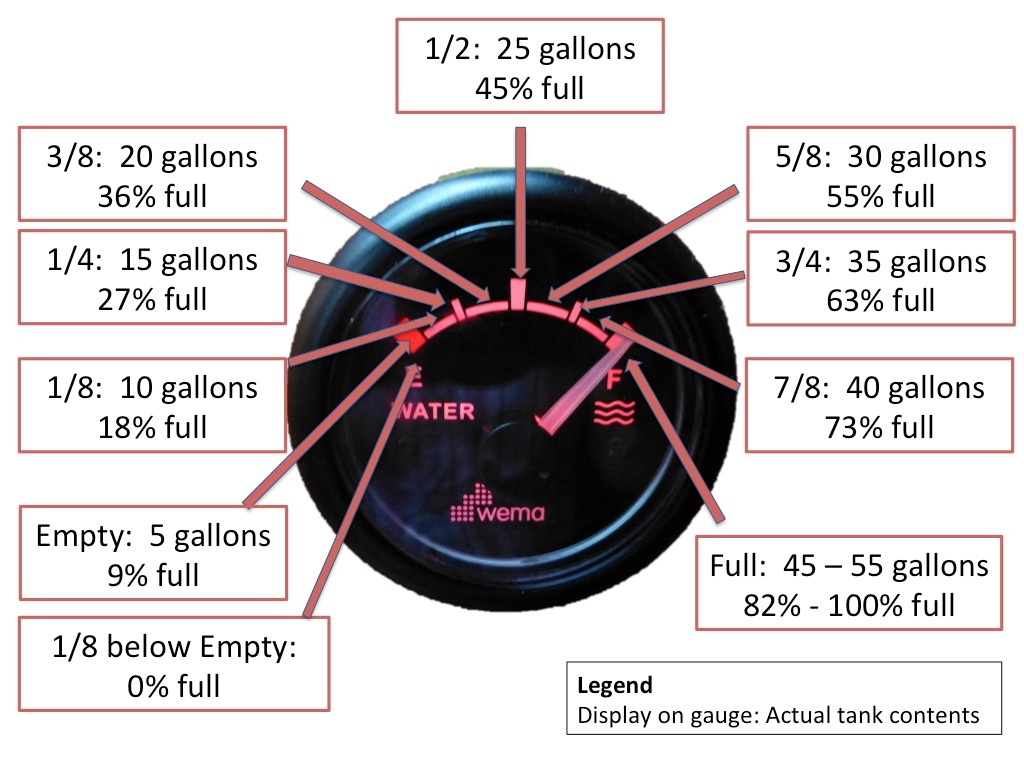
The water tanks follow the shape of the hull, so they are wider at the top than at the bottom.   I was curious to measure the accuracy of the water gauge.   So began an epic time-wasting mission.   With my starboard tank empty, I manually filled the tank using a 5 gallon jug.    I quickly discovered that the full gerry can weighs 45 pounds.   After each gerry was emptied, my reluctant assistant took a photo of the tank gauge.   45 minutes later and we discovered that the gauge is pretty good.   We were expecting the tanks to hold 60 gallons, but they held 55 gallons.    The position of the pick up ,can attribute to some of the missing gallons.  If you care, this drawing should help you obsessively manage your Antares water tanks.

Water gauge (Display vs Reality)

Water gauge (Display vs Reality)


Read full story  · Comments { 6 }

Asunción – where is that?

Having read the background info and found a flight, I announced to Jason that our next trip would be to Paraguay. I also told him that there were still strong Guaraní Indian influences. “Great”, he replied. “I haven’t had Chicken Tikka Masala for ages.” The Guaranís are one of the indigenous peoples of  Paraguay and while there aren’t many 100% Guaraní people left, the language is mandated alongside Spanish in school and 90% of the population can understand it.

Guarani/Spanish Partnership

Guarani/Spanish Partnership

Despite the lack of Vindaloo, we were happy to find that Paraguayans do like spicy food, something we miss in Argentina; I have read that Argentinians regard very spicy condiments as ruining the taste of good food.

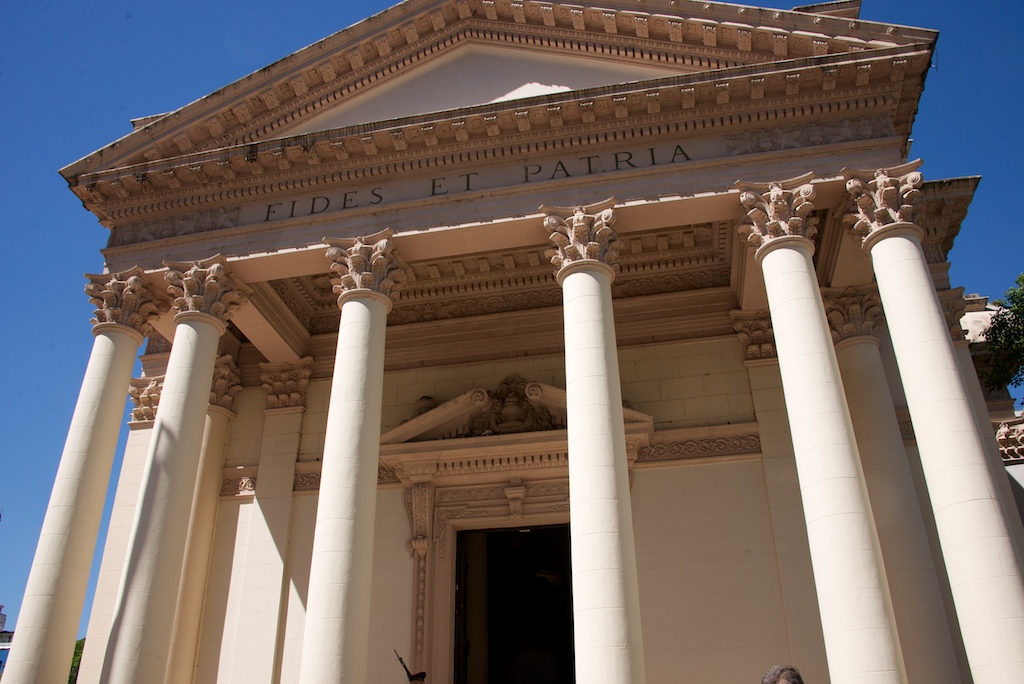
The Spanish landed in Asunción in 1537 and formed an alliance with the Guaraní. Jesuits subsequently brought the Spanish language but were enthralled by the sound of Guaraní so a Jesuit priest created the first Guaraní dictionary, helping to sustain the spoken and written language. Even in the 1600’s and 1700’s, intermarriage was common (as opposed to other colonizations which wiped out cultures), helping to sustain Guaraní.

Mother of Cities

Mother of Cities

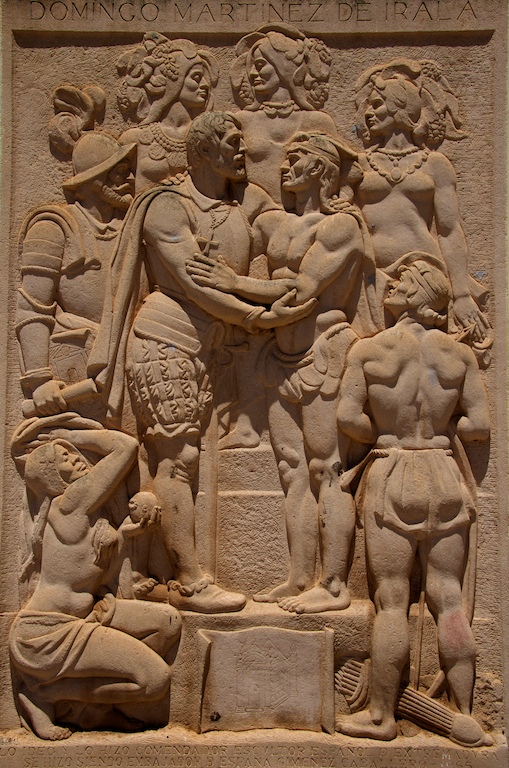
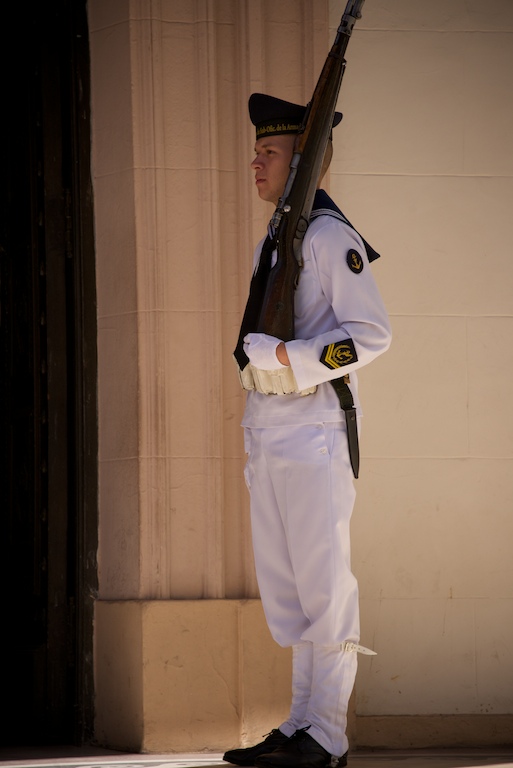
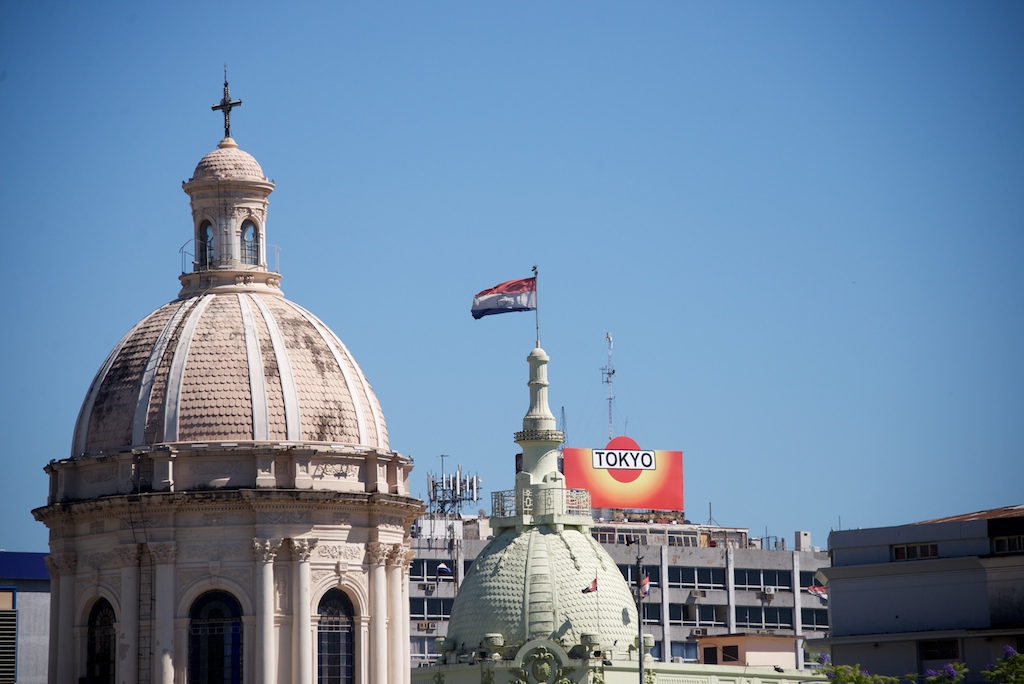
Asunción is known as “la madre de la ciudad” (the mother of cities) because it was the base from which many other centers were founded. Paraguay eventually declared independence in 1811 but shortly thereafter was under the influence of the supreme dictator for life, Dr. Francia, “El Supremo”. He closed the borders and no one was allowed in or out until 1840. The next dictator, Lopez, reopened the country but his son led the country into The War of the Triple Alliance, the country had a cholera epidemic, and he executed many of his countrymen. Eventually he was shot by one of his Generals. Fast forward to the Chaco War of 1932-35 with Bolivia; Paraguay won the war but lost many people. More dictators, and in 1954 Alfredo Stroessner (son of a German brewer) took over. Over his 35 year reign, the country harbored Nazis, killed its own people and was a center for smuggling. So it wasn’t until 1989 that the people of Paraguay could finally breathe a bit and the country could Asunción begin to free itself from history.

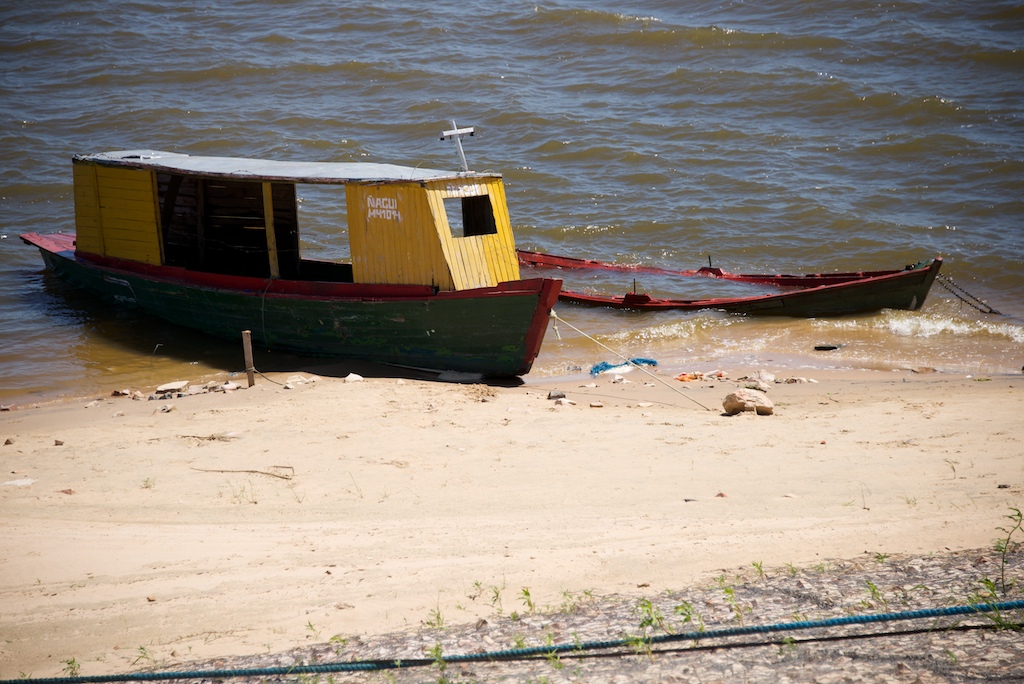
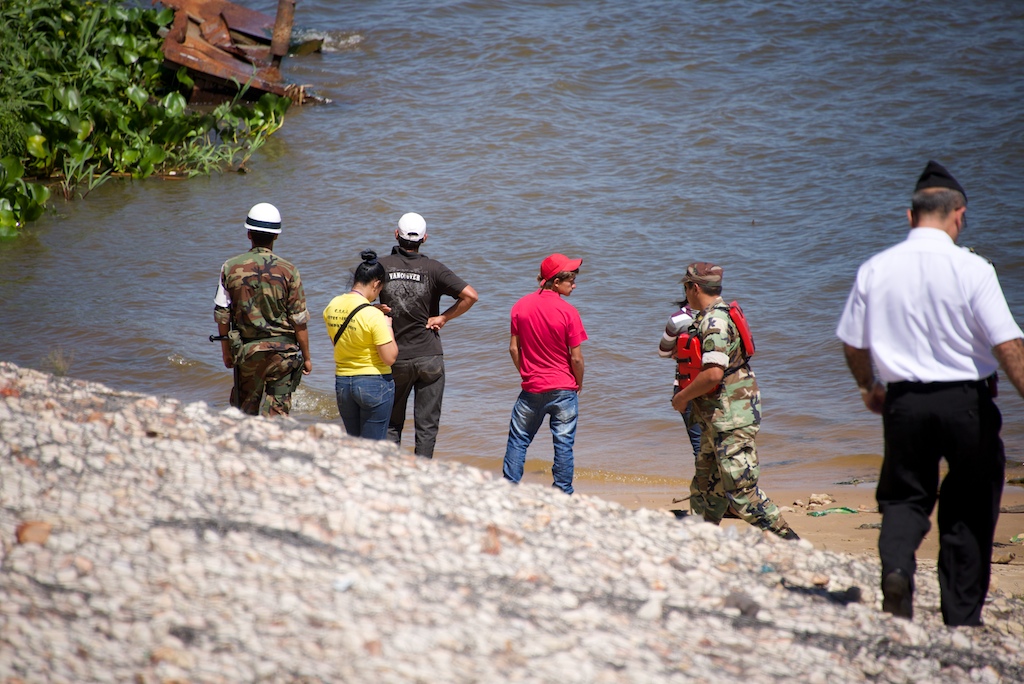
Since we only had one day, we did not get to see the countryside but we did get a flavor for downtown Asunción, which seems like a growing economy that is on the verge of becoming something bigger. The Paraguay river runs along the city and is a popular fishing spot. However, while we were there, the local police and Coast Guard seemed to be fishing for something in the river – smuggled goods? It must have been something since the local TV crew was there but we will never know as my Spanish has not yet progressed to the level of CSI: Asunción.

Terere

Terere

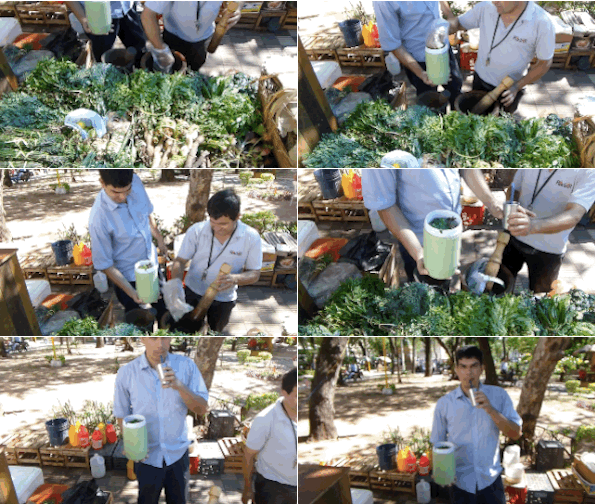
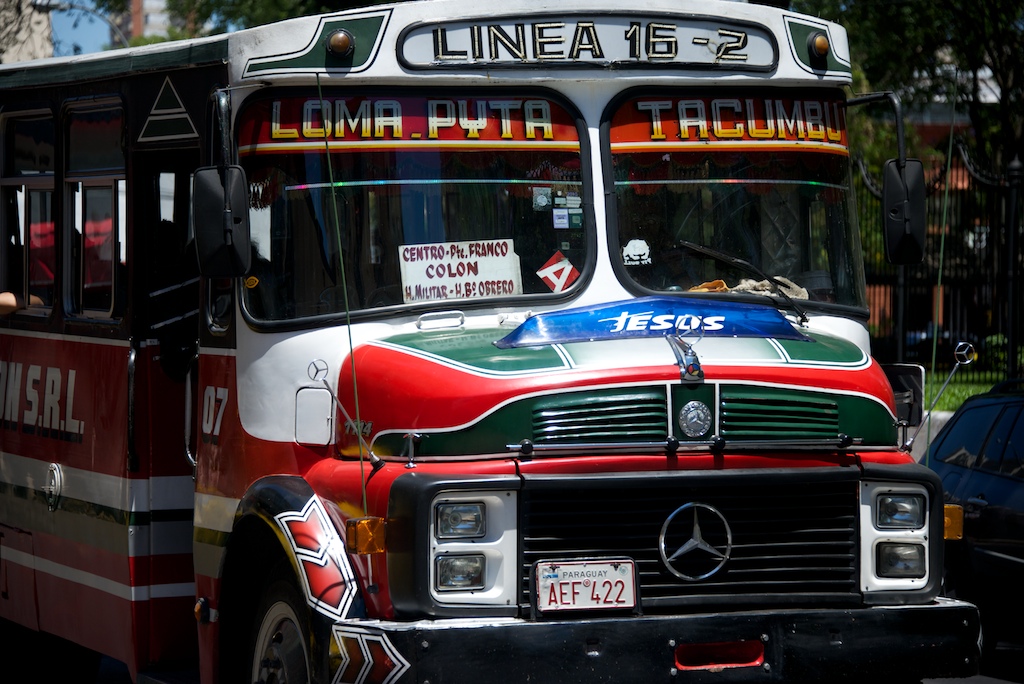
The popular drink in Paraguay is tereré which is mixed with herbs such as mint. On my first walk around the plaza, I was immediately drawn to the wonderful aroma of herbs being sold on the sidewalk. These guys showed me how they mix Terere. I also enjoyed looking at the colorful buses. The local joke is if you are walking somewhere instead of taking the bus, you say you are taking Linea 11 (11 looks like 2 legs).
We went to the municipal museum and the woman overseeing the exhibit tried to teach me a few Guaraní words. The language sounds very musical but I can’t remember anything she told me. It is a bit like Chinese, intonation really matters and if you don’t say something correctly you may embarrass yourself. Spanish is challenging enough for now.
Both museums that we visited appeared closed at first, but with a bit of persistence and a doorbell, someone was there to unlock the door and supervise the visit.

New Job?

New Job?

At the end of the day, we were happy we visited and learned a bit about the people, perhaps we should move there and take up trading?


Read full story  · Comments { 2 }

Patagonia in Patagonia

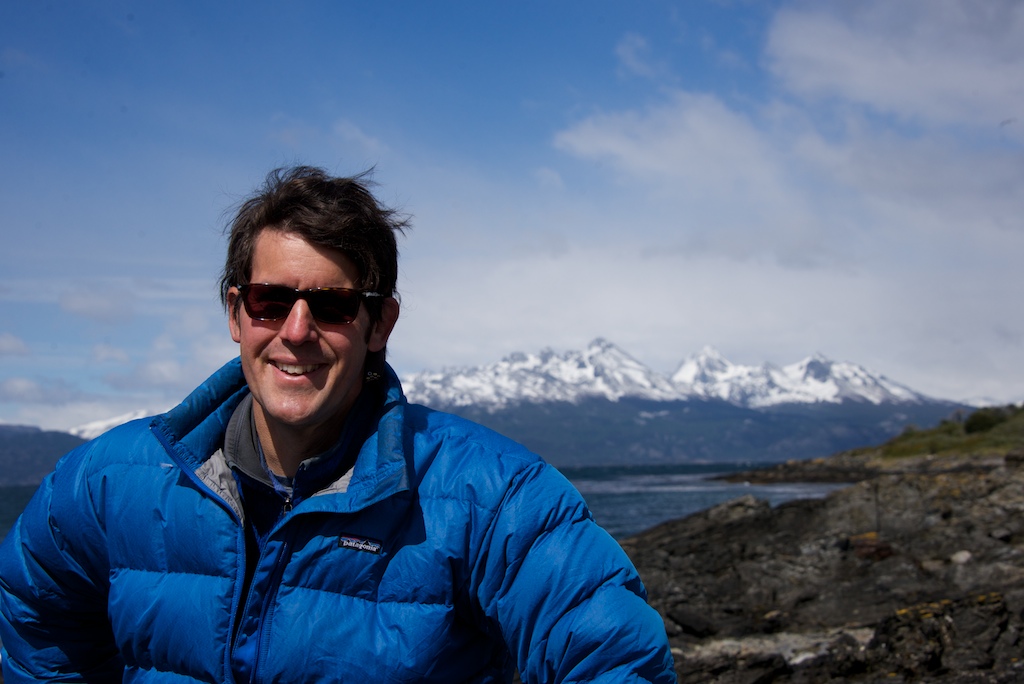
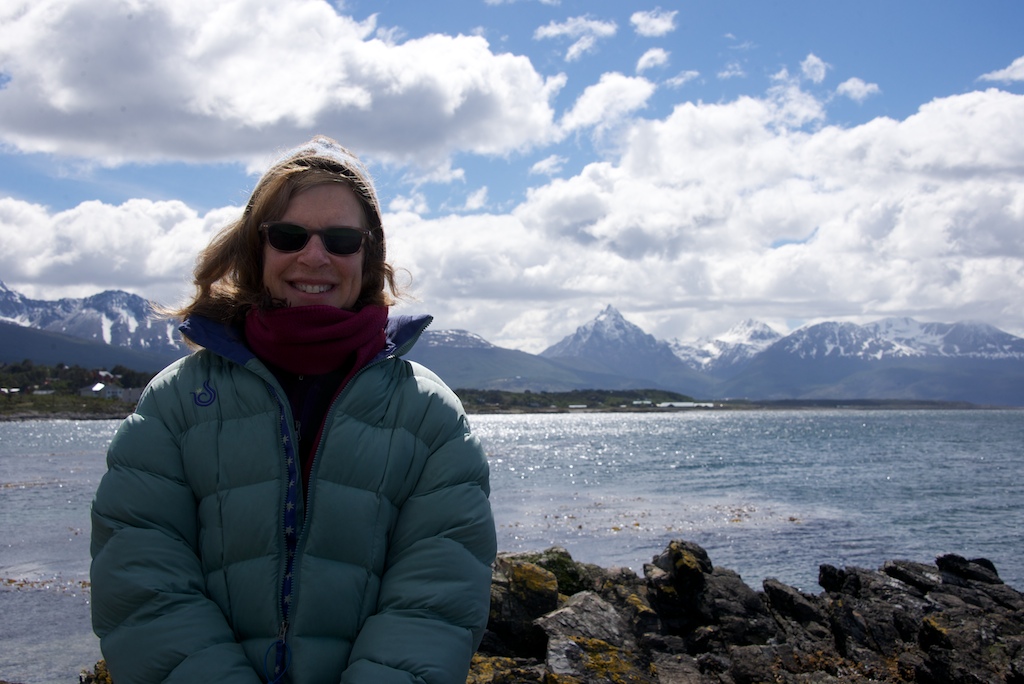
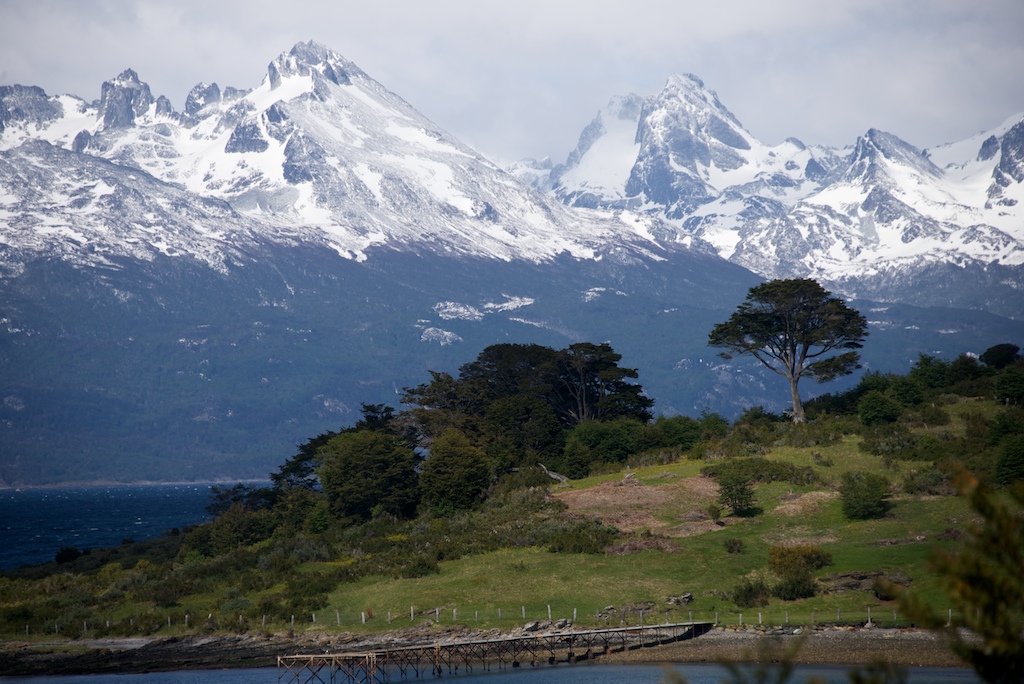
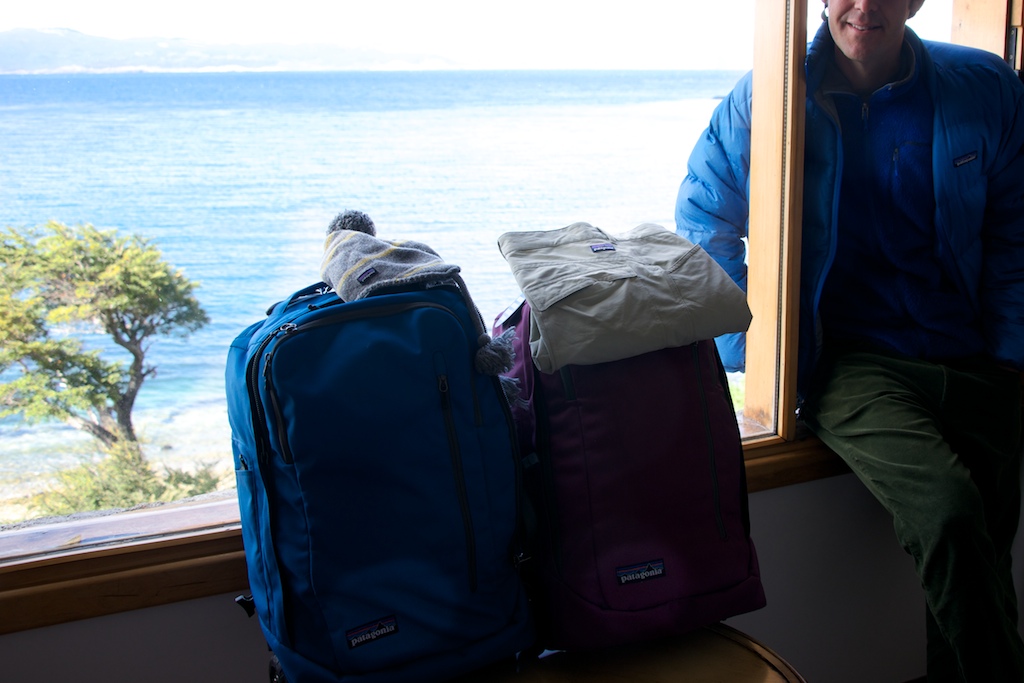
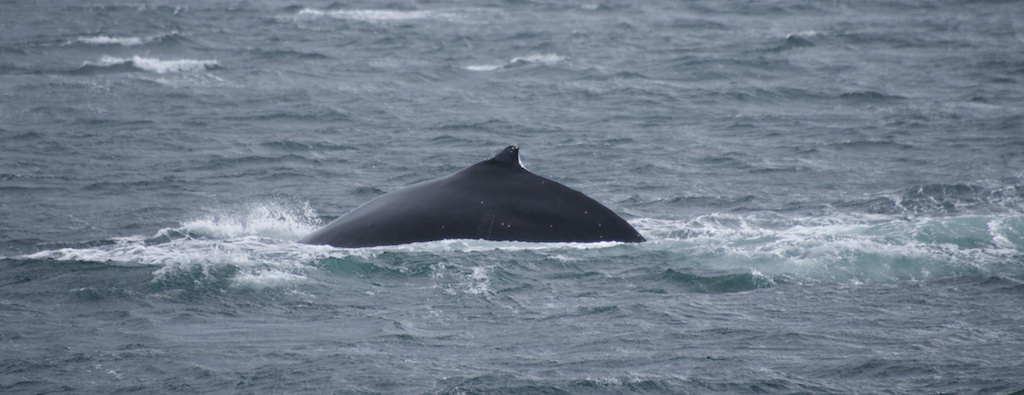
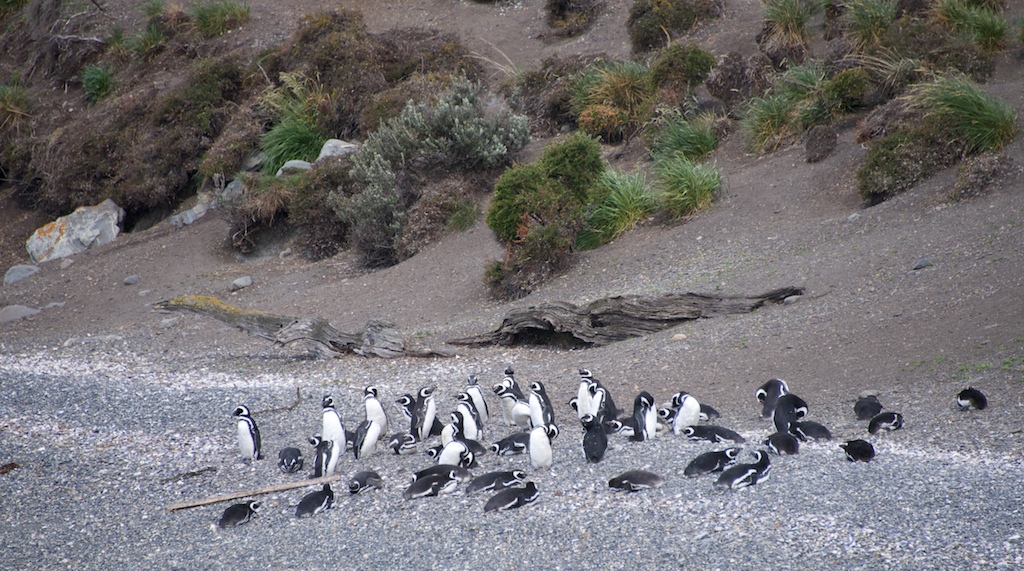
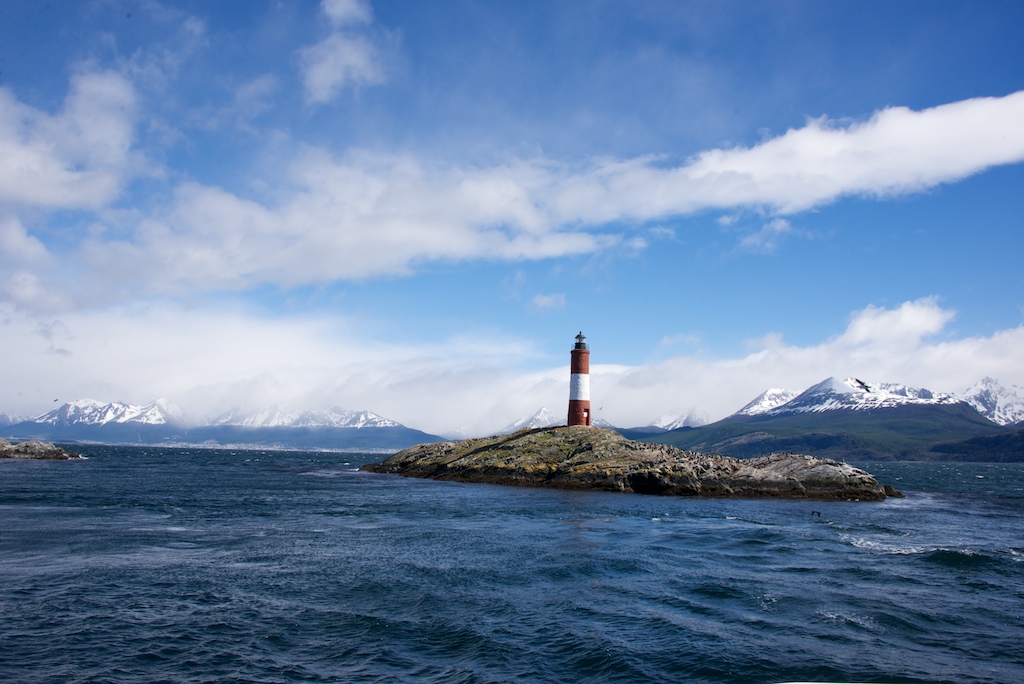
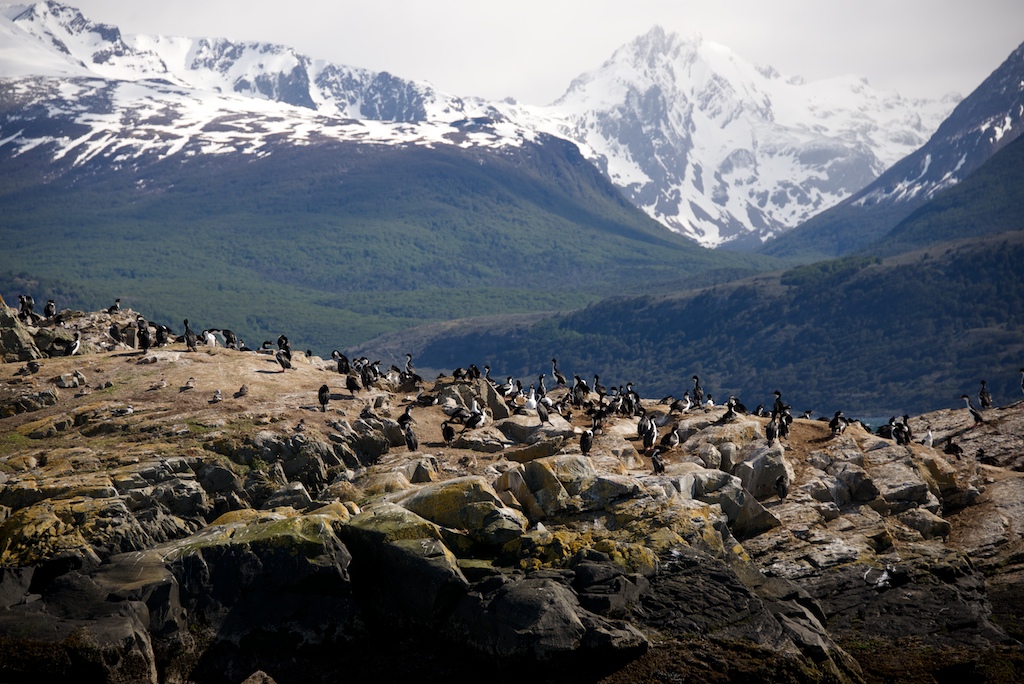
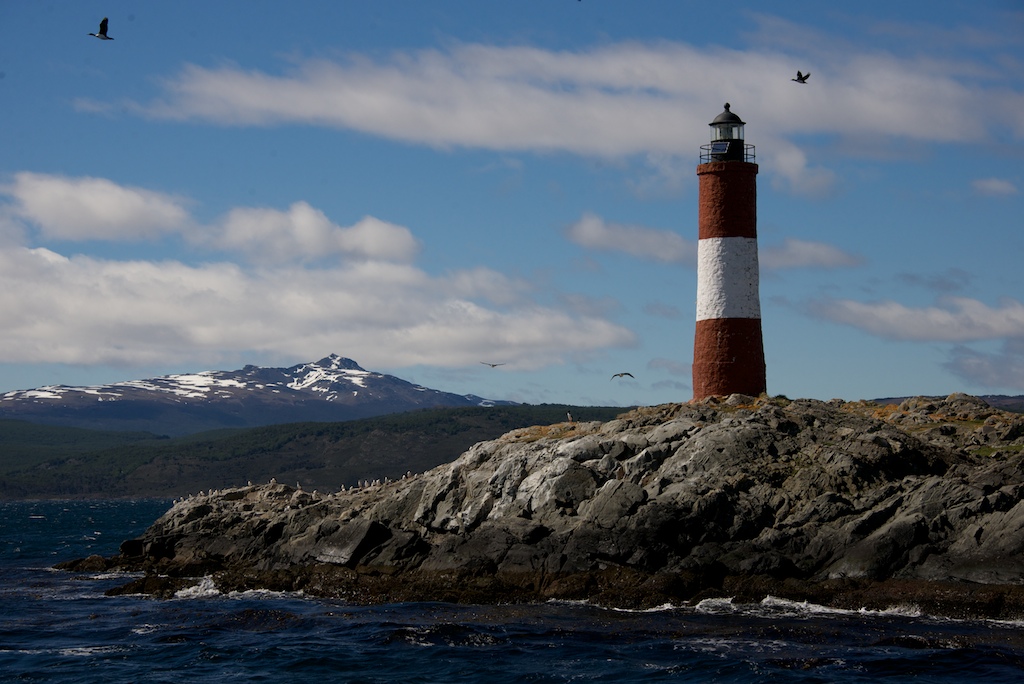
The chilling grip of Antarctica on Tierra del Fuego finally lessened enough so that we could pack up for Patagonia. Of course we used our Patagucci bags and winter gear. We didn’t exactly go camping but the extra warmth was definitely needed. The program for this day trip to Tierra del Fuego was to take a boat ride on the Beagle Channel. Maybe I watched too much Monty Python in high school, because I get really excited when there is a chance for an Albatross sighting. (Click here to watch it on YouTube).  No good photos of the one we spotted, so you will have to trust me that it was cool. We wondered whether one of the young Albatrosses we saw in New Zealand nine years ago might have been the bird that we saw. Jason’s video sums up the trip better than words can.

View of Beagle Channel

View of Beagle Channel

Read full story  · Comments are closed

Photos in Transit

Not much time for one of my long-winded posts; this might be welcomed by readers who prefer more photos and less history from the 1800’s.   The trip across the river Plate is known for strong headwinds and we were not let down.   We hid in Puerto Sauce for a night(mentioned in previous posts) which was a bit of a let-down since our previous visit provided us with a lifetime supply of paper mill smells.    I did very much enjoy the night approach to Sauce since I knew the harbor well but was still challenged while I try to regain my night vision.   I motored in slowly, except when cross winds required a bit of gusto.   I had to thread the needle between two anchored boats dancing at their moorings.   It felt very close in the dark of the night.   Guess what? In the morning it looked even closer.

We also have enjoyed leaving the silt waters of the Plata and seeing blue/green ocean water.   We can finally test our water maker!   Fingers crossed that it will convert ocean water into drinking water for our floating city.

I am surprised by the paperwork and radio work that sailing in this region requires.   Every port entry and exit requires a call to the control and 1 to 2 hours of paper work in a few different offices.    The staff are always friendly and the folks at Sauce were excited to see us again.  I tried not to let my face show that if I had had a choice, I might have chosen a different port.


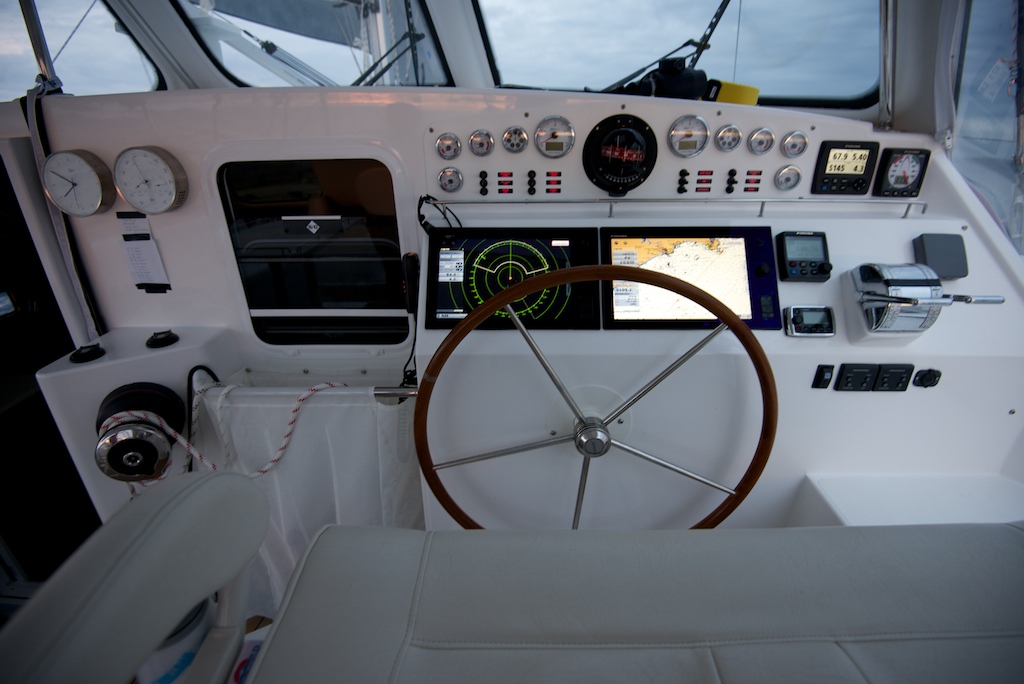
We are now at our planned stop in Punta del Este, a Yachting hub made more exciting by the finish of a popular sailboat race from Buenos Aires to Punta.   As we arrived at 2 am there were many racers also arriving.   Our radar helped us to avoid meeting them on the water.  The boats showed up easily with Sea Gain set to 40, the other controls left on automatic and range set at 1 mile.  I will soon figure out how to show two radars at once on the left screen.   This way you can be zoomed in to avoid small Brazilian fishing boats while keeping a broader view for storms.   All of the large ships have AIS so they appear on the chart.   Makes the dark night much less scary.

We will leave mid day and are expecting very light air for 20 hours.   Then the breeze will increase to 25-30 but will be from the south, giving us a comfortable and safe ride North to Rio Grande, Brazil.   This leg is about 2 days.    Water rationing?   Nope.   With 4 people aboard we have used 3/8 of our water over 2 days.   Food rationing?  Nope.   Everyone besides me does not eat a bunch during passages.   We have pre-prepared some pasta salads and other simple foods.

Keep following us on our tracker but keep in mind it often takes a holiday.   Do not panic when it stops publishing, we are still fine.

It is all North from here.  Expect to hear from us soon when we get to Brazil.


Read full story  · Comments { 6 }

40+ knots of wind … How did we do?

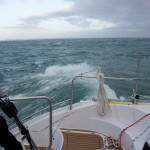
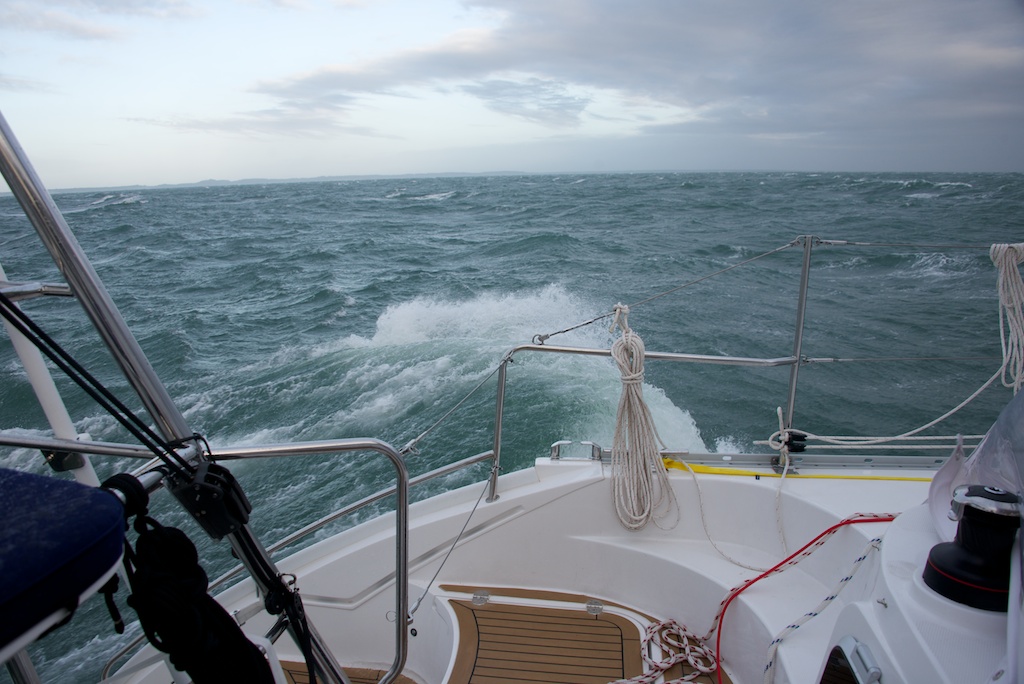
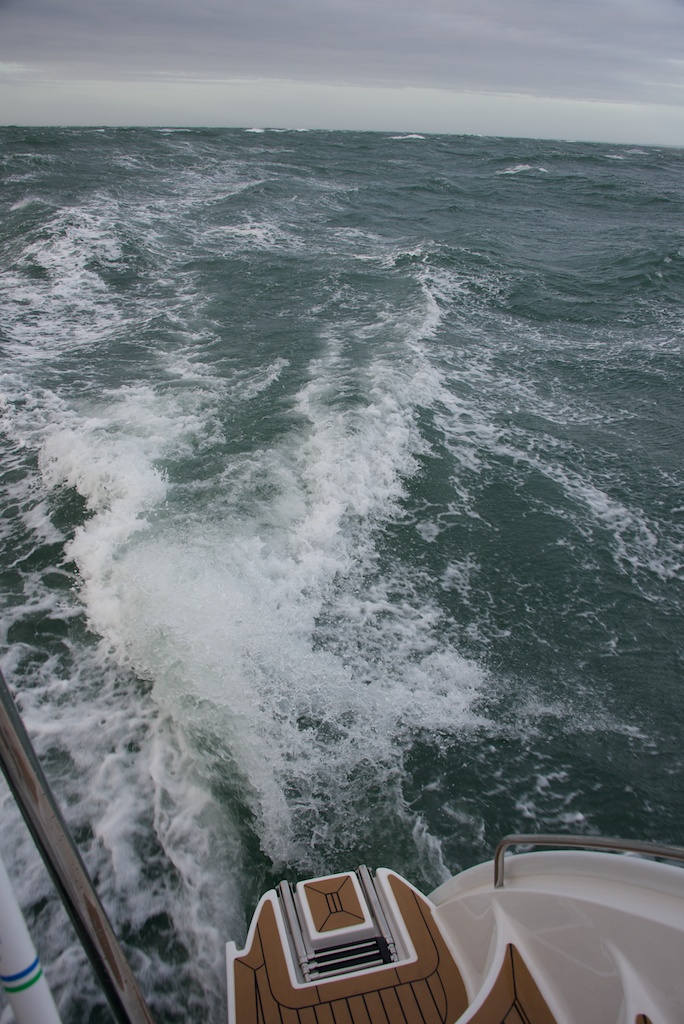
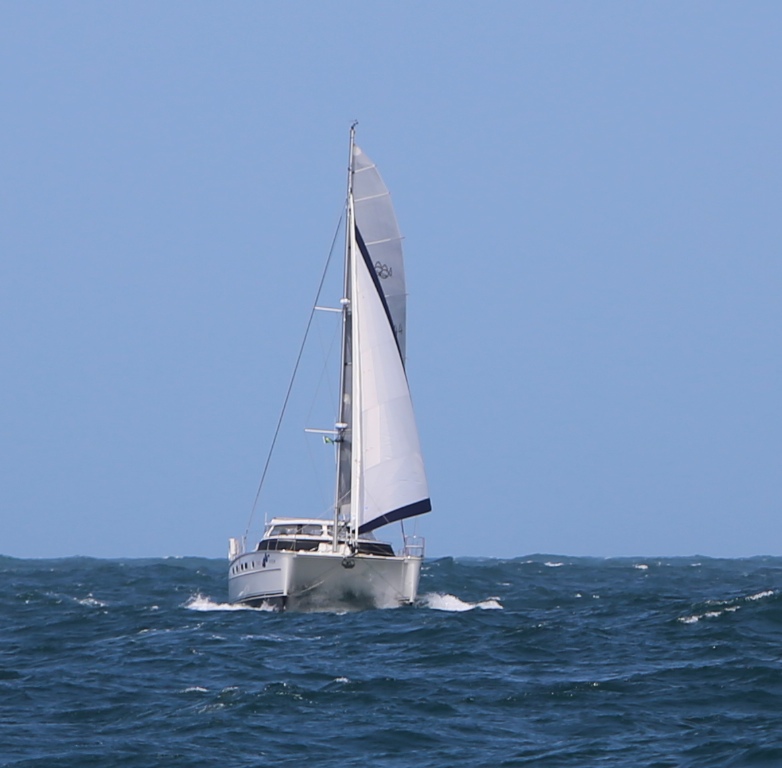
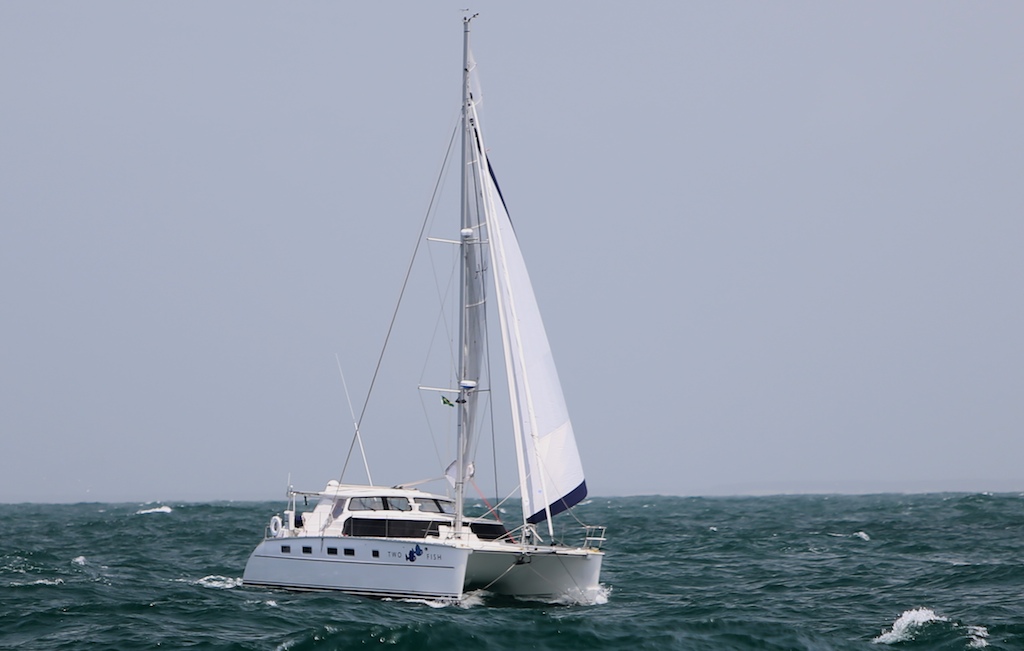
Because I am writing this post, we clearly survived.   Let me cover the numbers first.   Max wind speed was 48.6 knots.  The Beaufort scale (think Richter scale for sailors) describes a force 9 wind as “High waves whose crests sometimes roll over. Dense foam is blown along wind direction. Some branches break off trees. Construction/temporary signs and barricades blow over.”  We did not see any construction signs blow over but there is a paucity of  construction 10 miles off the Brazil coast.  We only had 40+ knots for 6 hour stretches so the seas did not build to Mr Beaufort’s level.

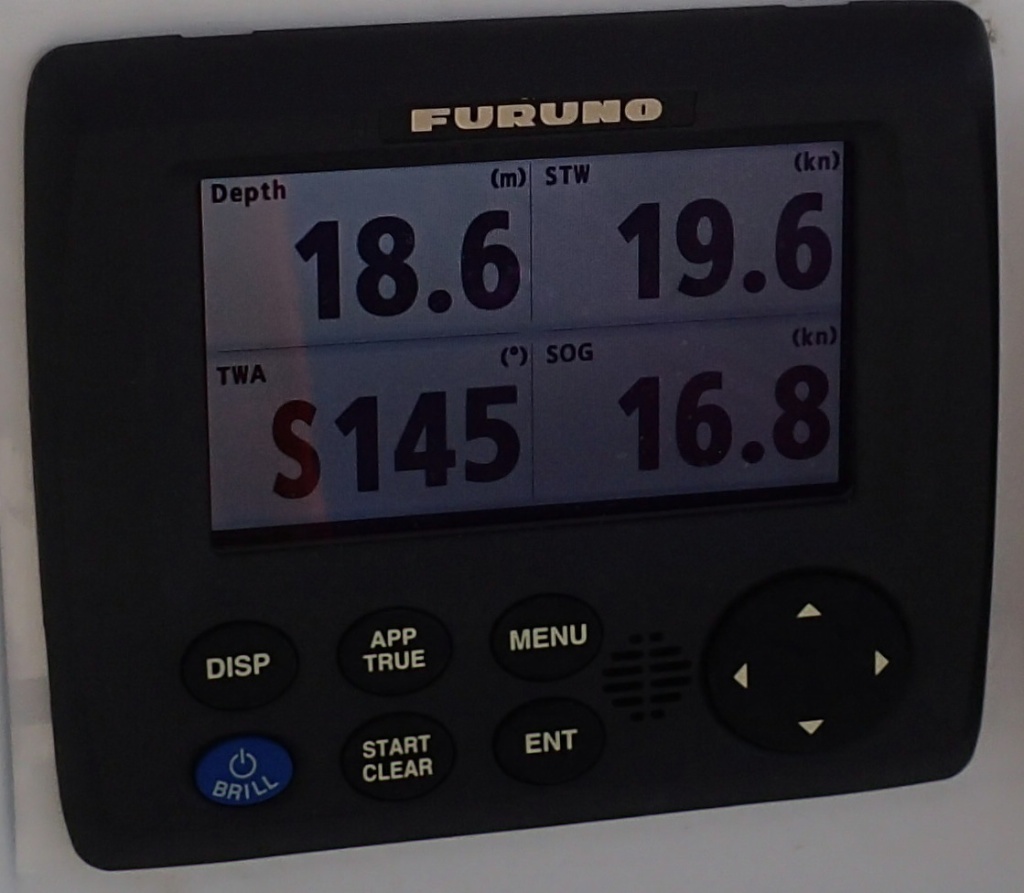
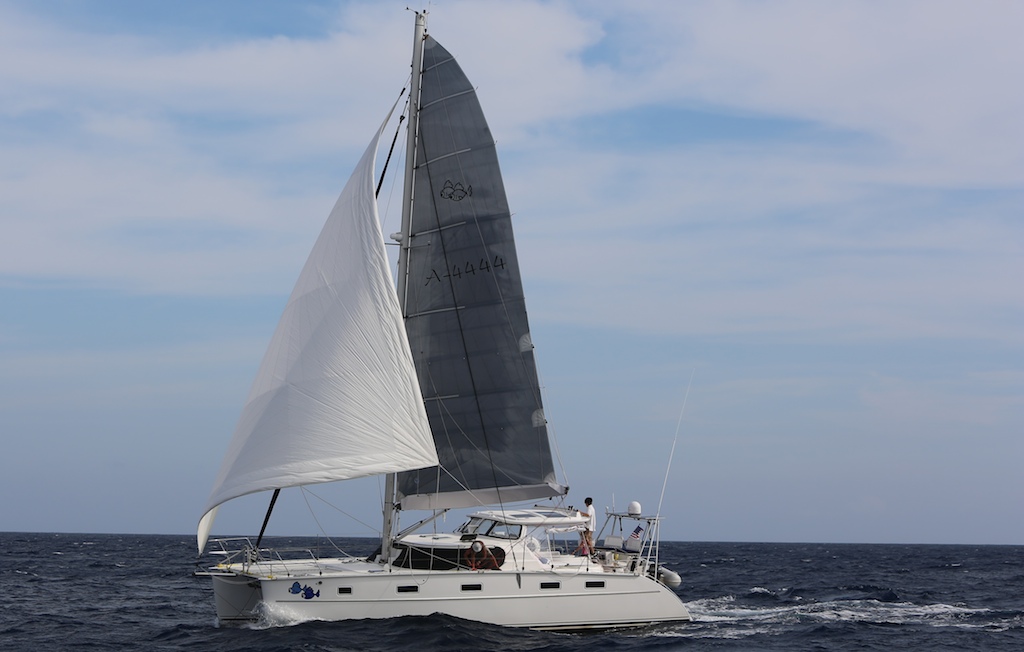
Two Fish’s max speed over ground (SOG) was 19.0 knots (fast enough for a ticket in a school zone).   The top speed occurred when I turned the autopilot off and hand-steered.  At the top of the wave, I let the boat descend into the trough and set my personal record.   There is so much buoyancy in the bows that the boat was never thinking about burying a bow.

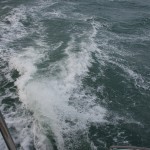
My first take-away from two days of near gale and gale conditions was massive confidence in the boat.  Inside the cockpit enclosure, it felt like 20 knots on a smaller boat.   However, it is not the wind but wild seas that sailors fear.  The professional skipper on our buddy boat, Live Wide, insisted that the wave heights to exceeded 5 meters, but I rated them at a more conservative 4 meters.  Two Fish has a reassuring motion in these following seas.  She never falls to hard into a trough and seems to lift herself gracefully over the wave sets.   Before this post drifts into a marketing piece for Antares, I must discuss the noises. Monohull sailors will be shocked by the loud noises that all catamarans produce in vigorous seas.   After 12 hours, I began to recognize certain sounds –   the whirring noise of the bobstays parting the water as the bows head down a wave is followed by the boat slowing down as it climbs up the next wave and the random slaps that the inner sides of the hull receive from opposing-angled waves passing under the bridge deck.   While under the master cabin bed working on the water maker, I watched the hull flex under the pressure of some of the waves.  All were within operating tolerances,  but it does take a few hours to be comfortable with the experience.   Gail’s reaction to the cacophony of new sounds was to bury herself face down in bed.   After 20 hours, I pried her out of bed and she did a portion of my watch.


TECHNICAL MUMBO JUMBO

ENCLOSURE:   My first thought was not to keep an enclosure up on any boat in over 30 knots.   Years ago I delivered a boat from NY to Florida and we kept the enclosure on up to 50 knots; however, I spent the entire time concerned it would rip away.   On the Antares in 45 knots true (37 kn apparent) there was no sign of stress.  I think this is because the enclosure was part of the initial design.   The enclosure was so solid it was tough to know that it was blowing hard.    I was wearing my PFD (lifejacket) but with the enclosure up, this was probably overkill.   Some other day I will discuss the Spinklock PFD with AIS.

SAILS:   We had two different set-ups in 40+ with true wind angles of 140-165.  The first time we had only a two-reef main.   This would not have been my first choice, but it was very easy to handle.  The full length battens kept the shape nicely and the preventer line rigged from the end of the boom to the mid-cleat created stability.   This set-up would be good for breaking waves as the main is much higher than the genoa.   For our second encounter, we had the genoa at 1.5 reefs.   The genoa leaves you prepared for further windspeed increases, but the sail often loses shape as you sail down waves.

WEATHER HELM:   The main-only set up had about 9 degrees of weather helm.  This is not ideal for speed, batteries and steering gear.   The helm was more neutral under genoa.

ROLLER MAIN:    Our buddy boat, Live Wide, has the furling main so we had multiple chances to compare this to our slab reef main.  The roller main is probably better than the tradition main when the breeze exceeds 40 knots.   This is because the roller allows for easy deployment and can be furled to a smaller size than the double reefed traditional main.   The two reef main on the traditional rig is about the size of the genoa.   Too large for over 40.   Several more experienced owners have wished that the boat had a third reef or a deeper second reef.   Too early for me to weigh in on the topic.

REROUTE JIB SHEETS:   We found that having the sheet led to a block forward as a barber hauler and then to a second block attached to the aft cleat was ideal for this wind condition.   The barber hauler block allows for a nice sail shape and the aft block gives a sheeting angle that protects the enclosure.   It is key that this block comes from the cleat as the sideways load would be too much for the toe rail.   The downside of this set up is a sheet cutting across the stairs.

CHAFING:   We were careful to protect the main from chaffing on the spreaders.   We did observe chafe on the preventer line and main sheet blocks.   The cause was using undersized line for the preventer and temporarily over-trimming the main sheet.

FOOD: Lots of Jamon y Queso on Pan. Second round we pre-thought a bit more and made some Pasta Salads to keep in the fridge. For Gail it was strictly a Quaker granola cookie diet.
 

Read full story  · Comments { 5 }

Keeping Watch, or, Is Someone Moving my Market?

A while ago, early in the morning, I (Gail) was on my first solo watch. I began thinking about some of my friends back home and started writing an email to tell them what I was doing. Usually, these emails in my head are one-way conversations. This time I wrote it down.

When on a passage for multiple days, someone needs to be on watch at all times. This is like today’s world of 24-hour markets where someone  always needs to be holding the trading book. But how do you know where to go, or what to look out for? At the start of a passage, the Navigator (or in market lingo, the Chief Investment Officer) will set a series of waypoints. The Navigator does this based on experience with the area, weather predictions, and knowledge of the boat. This is like your Strategic Asset Allocation. But how do you track your performance? The boat has a compass and GPS, just like the pricing  functions needed for Asset Allocation; GPS is your instantaneous pricing and the compass needle is your allocation.

Suppose you have a few asset classes and are trading (or using your rudders to steer) to maintain that allocation using an automated trading system (usual conditions such as continuous pricing, liquid assets and homoskedasticity apply). On the boat, the autopilot serves this function. It is programmed to either follow a course (allocation) by steering the boat at a steady angle to the wind, according to a compass direction or heading towards a waypoint. Strategically and tactically, you can not just stay on autopilot and walk away. You need your Network (Eyes and Ears), Bloomberg Terminal(Chartplotter/Radar), Financial Times(Weather Reports), and S&P 500(GPS).

Like market news, the weather report’s value depreciates over time; it is something you would like to get often. We can fetch weather reports by downloading electronic GRIB (gridded information in binary form) files while offshore. The fastest way is when we have a working cell modem but this only works within a few miles of the shore, near towns. Cell modems are like having your servers right next to the exchange using fiber optics. In Brazil, it also requires a Brazilian SIM card, which is like having a local banking license since it requires a Tax ID. The next best way is to use our KVH satellite phone, which is like DSL. The slowest method is to use our Iridium satellite phone; this is like a 2400 baud Hayes Modem – painful but it can come through when needed. What if I don’t know how to interpret this weather info? I can look to my Market Strategist, aka a Weather Router, who looks at all of the data and gives me an interpretation of where and when I should sail that is specific to my situation.
We also have a Radar and AIS, which appear on our chartplotter, and like your Bloomberg terminal tells us current news of interest. Radar sends out radio waves that reflect back from other objects, such as ships, buoys and land. I just looked at my Radar screen. A new entrant in the market? Will she be a problem? Is she following the same Asset Allocation as I am? Will that crowd the market? Maybe I should change course or delay action so as not to be affected by her. I slowly steer the boat a bit to the right.
AIS (Automatic Identification System) is another thing we watch. We broadcast our ID via AIS so that other vessels can see us. We also have a radar reflector to make it easier for other boats to see us.
Just like anything else, using your brain and taking your head out of the boat/screens is the best way to confirm what is going on. Sometimes you also need to pick up the phone. We can use our VHF radio to do this. Fortunately, in the ocean, as opposed to financial markets, your counterparties are best served by full transparency and if you hail them, they will tell you exactly what they are doing. I am not sure how the existence of Sunspots will affect this equilibrium state.
Now I am watching the other boat follow its path away from me. I readjust my Tactical Asset Allocation back to the Strategic Course and we are back on our way.
Next week’s lesson: Volatility Trading, or, Using Sails.

Read full story  · Comments { 6 }

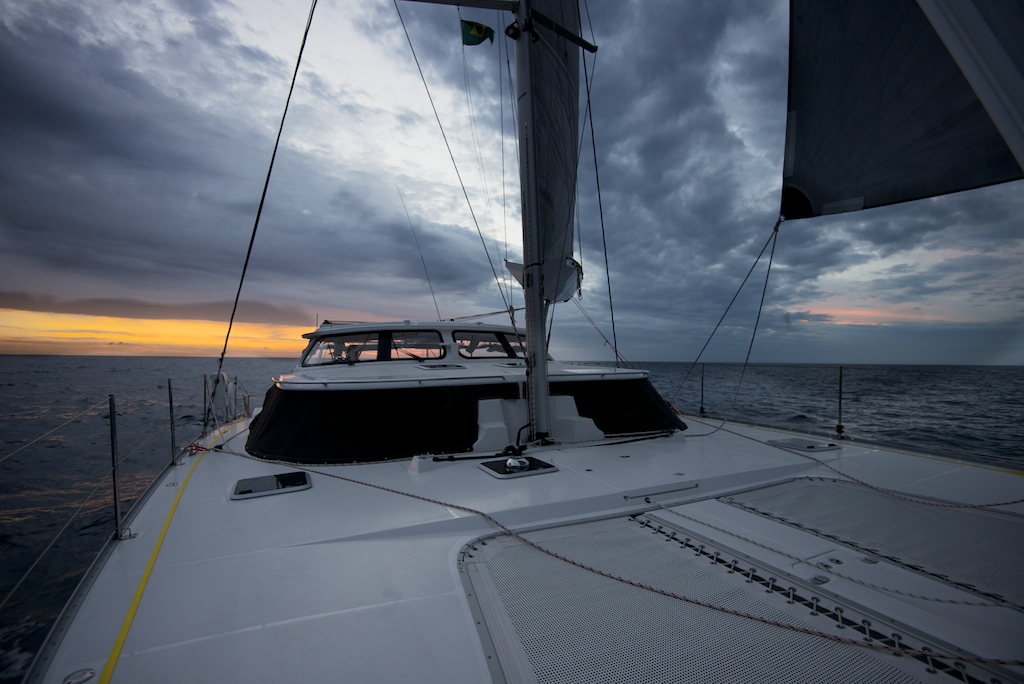
Photo Tour of the boat

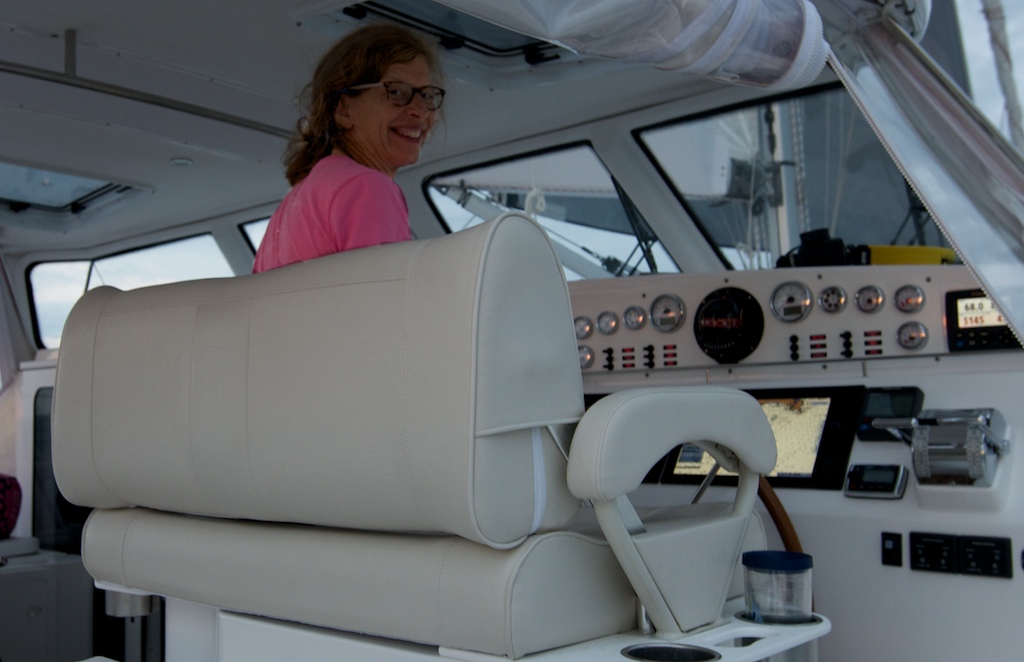
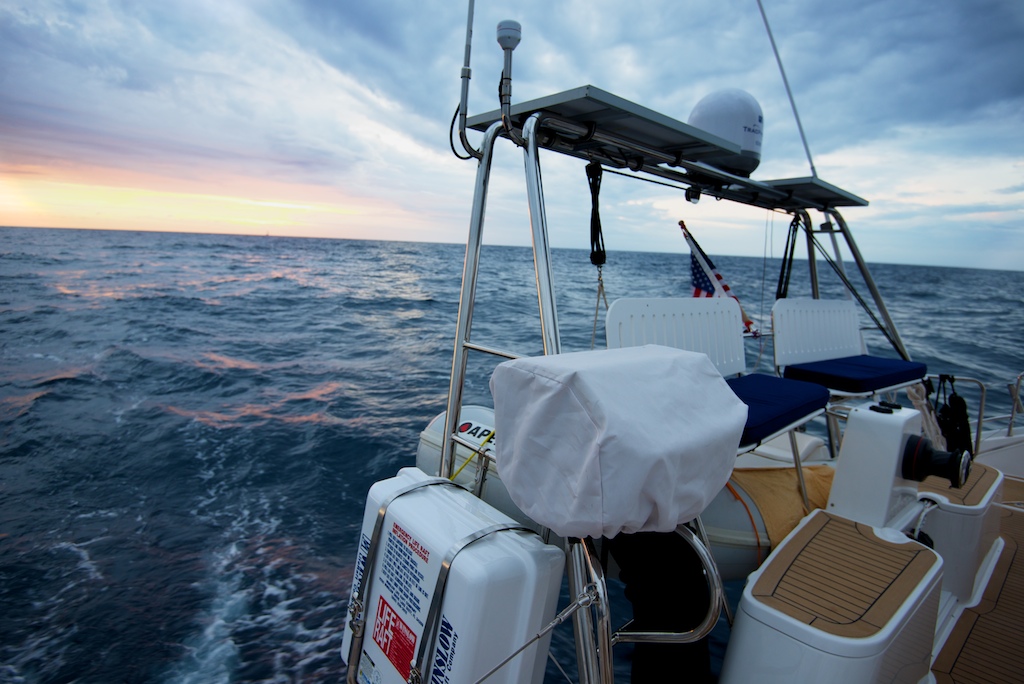
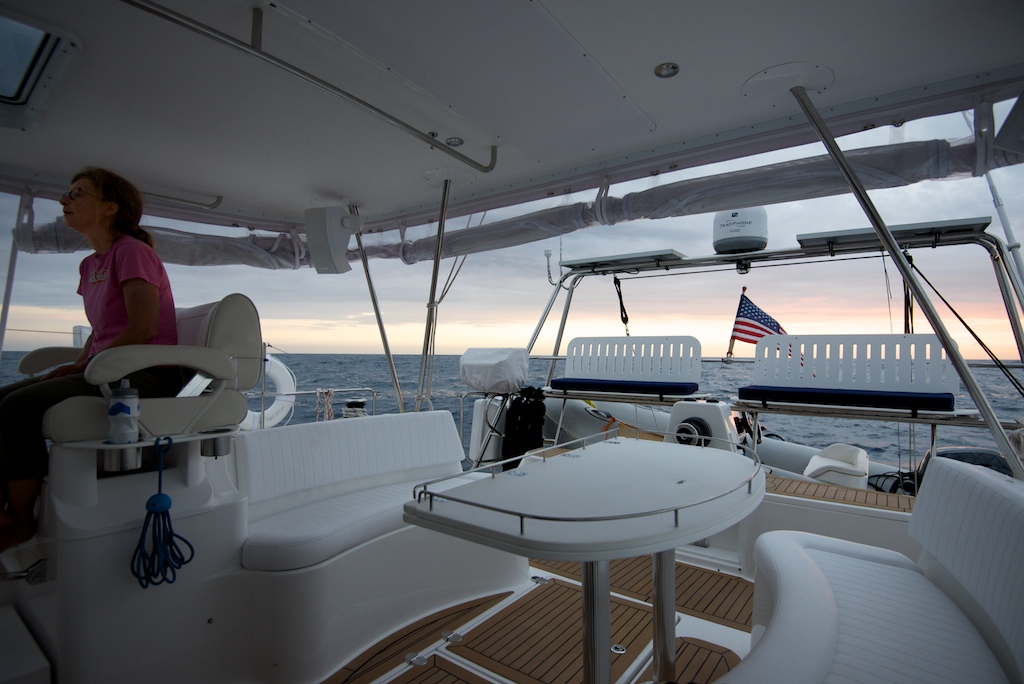
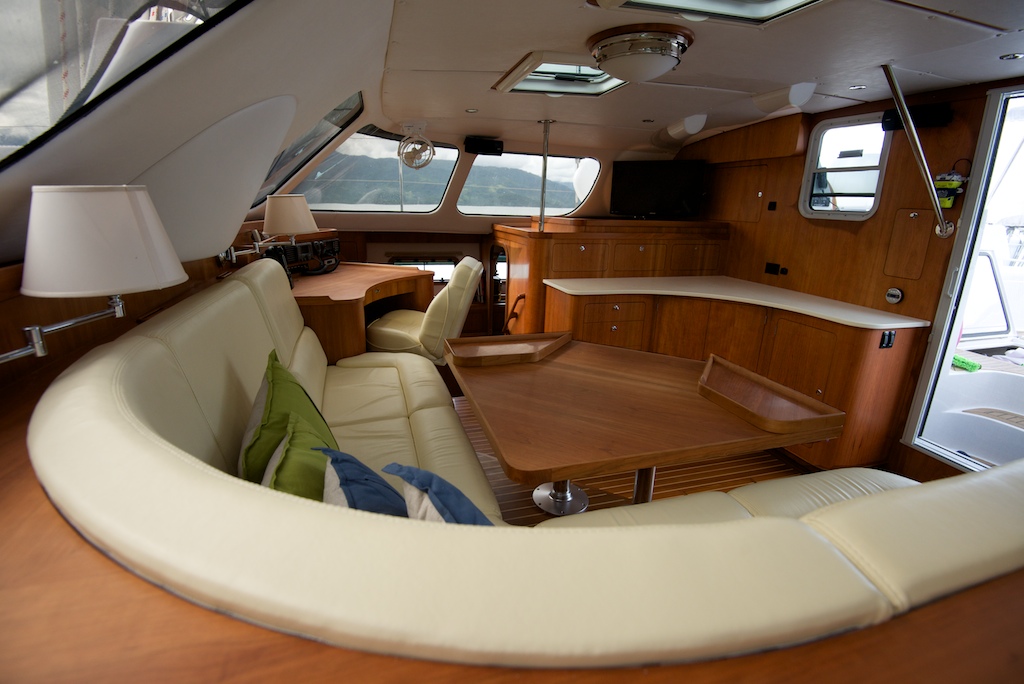
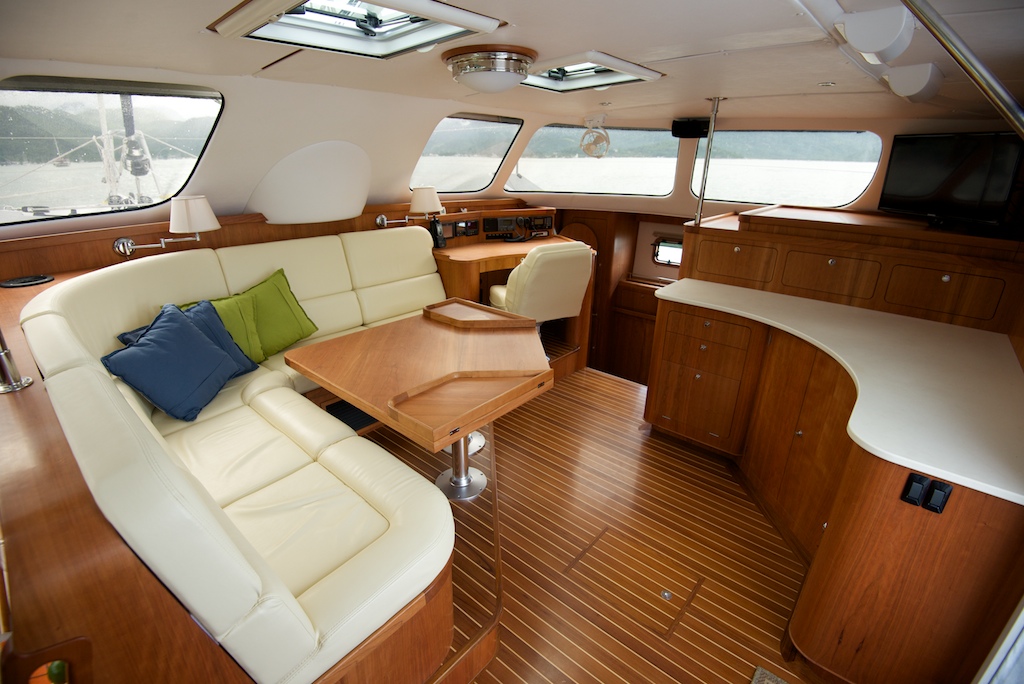
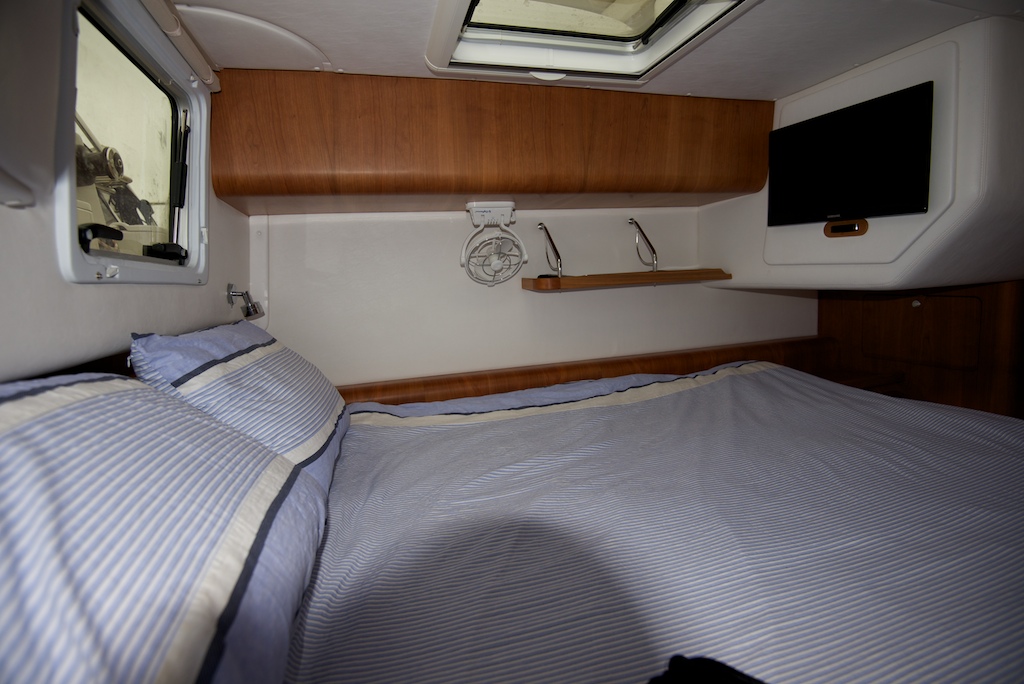
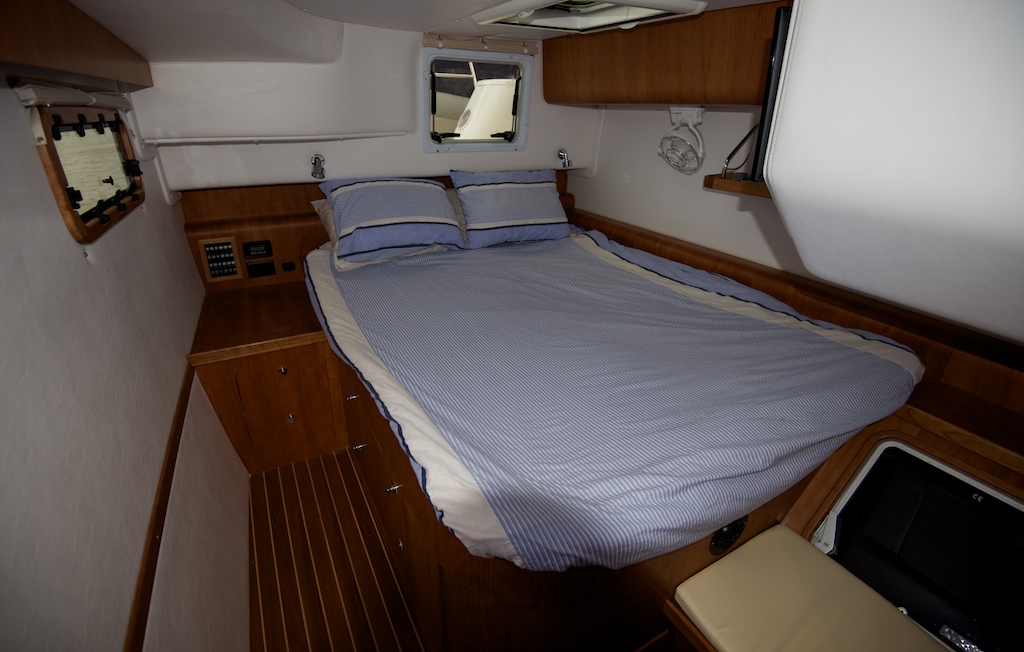
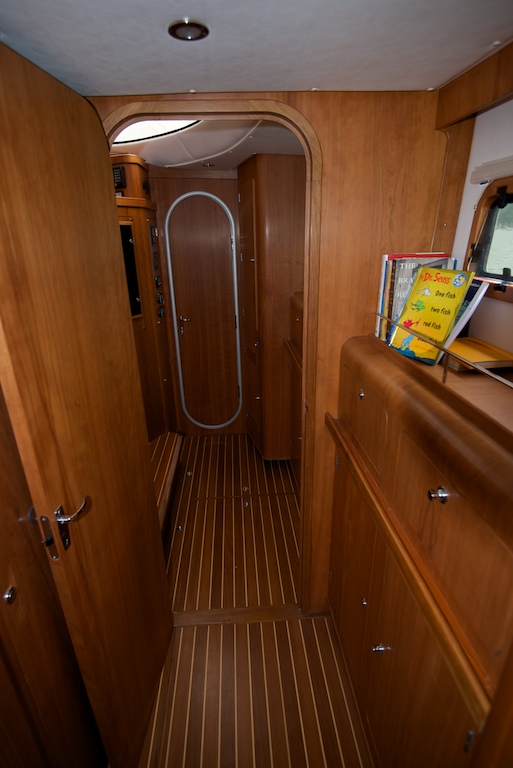
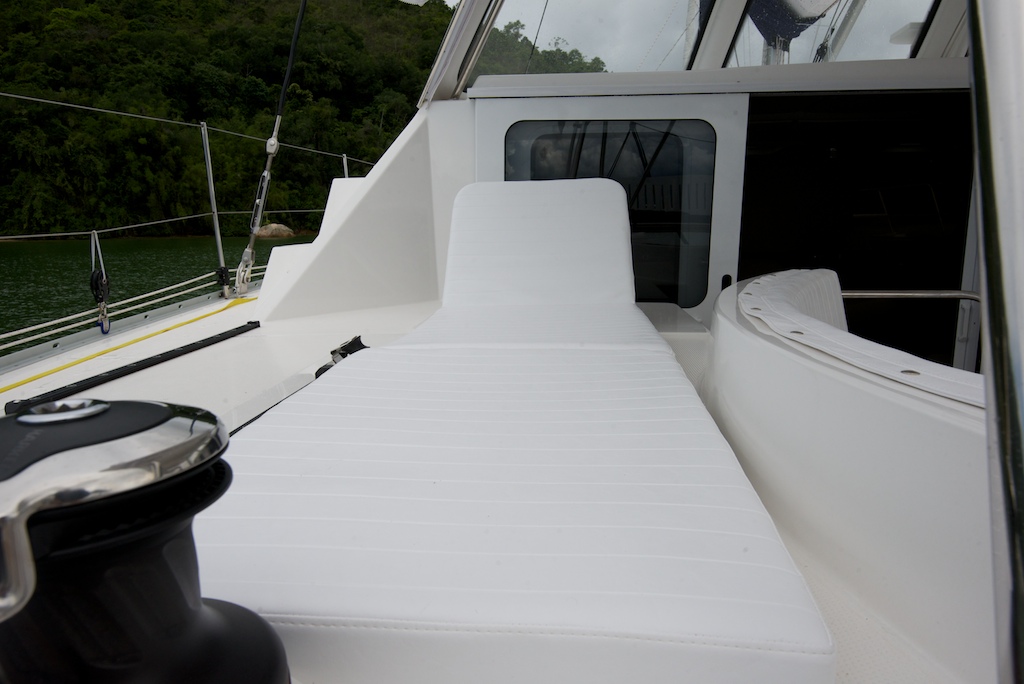
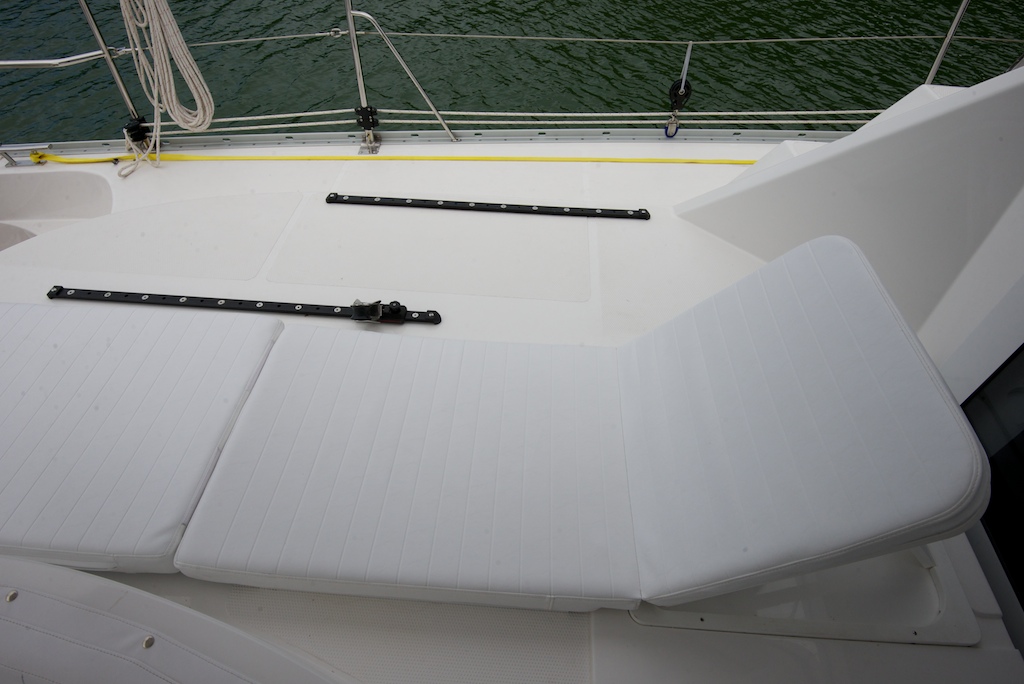
In response to requests from our readers to see more photos of the boat, I have posted a few photos.   It did require cleaning the boat and finding internet.  Both are tough jobs.   My tips for cleaning an Antares are to get on your hands and knees.   I use swiffer cloths for the wood and no soap.   (Yes, I am shocked that I am sharing cleaning tips, but this is the new Jason. Sorry, no photos.)   The second tip is to keep shoes off the boat.  Not even on tip-toes.   To fight bugs, we have dunked our fruit and vegetables in the ocean before they came aboard.   Bananas seem a great place for a village of odd bugs to live.
Another cleaning quandary is how to rid the boat of the new boat smell.   The boat closets leach a strong freshly made fiberglass odor.   It is so strong that cracker stored without a lid will taste like fiberglass.   Our solution is to air out the cabinets when in calm harbors.   Smarter tips from our readers?


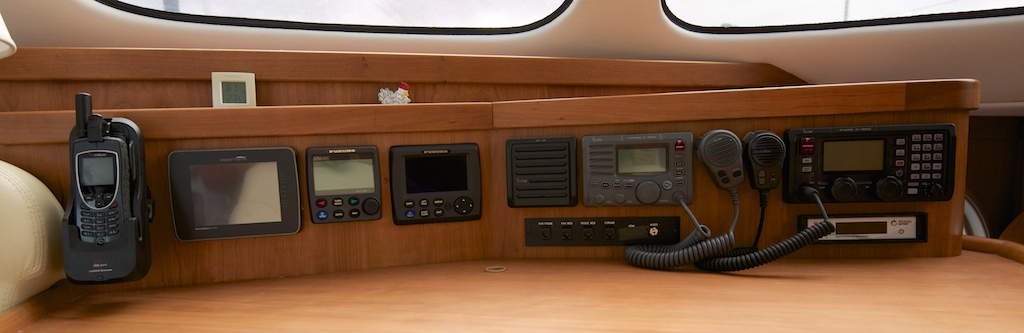
Nav station

Nav station

Here is the photo of the navigation station.   We use it as the office desk while at anchor.   There is a great view of outside through the windows.   I kept an eye on Gail while she paddle-boarded from here yesterday.   What are all the electronics?   Left to right:

Iridium Extreme Satellite Phone:  Primary use: emergency phone,  Secondary use: very slow dowload of weather files.   The phone is in a cradle to access an outside antenna, but it can be used like a cell phone from the life raft if the worst happens.

Vesper AIS:   Primary use:  brains for our AIS.  This nifty device listens for short radio messages in electronic format from other boats with their location, speed, name etc.   It then puts this data on the network so all electronics can use it to avoid contact.  It also sends out data about Two Fish.    Vesper or Furuno brand AIS?   Vesper looks much cooler but needs an anchor alarm application ASAP.

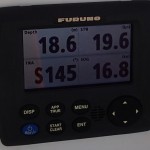
Furuno Autopilot:   You can steer the boat from inside using a little knob.   Would not try this for docking but in cold weather, away from other big objects, it is a great option.

Speaker for Single Side Band radio:  Yup, it is a speaker.

VHF radio:   Used for chatting with nearby boats.   Everyone should be listening to channel 16.   And then we switch to another open chanel for longer chats.   “Huge supertanker, this is Two Fish”   “Two Fish this is the Super Carbon”  “Please continue on 71”

SSB radio:   Should be useful for long distance communication.   We have not tried it yet.
Black strip with white writing in second row:   Various places to plug in to the other satellite phone (KVH v3), TV, stereo and such.

White object in second row:   Modem for the SSB.   We will try that soon.


Read full story  · Comments { 4 }

Two Fish is hooked by a fishing line


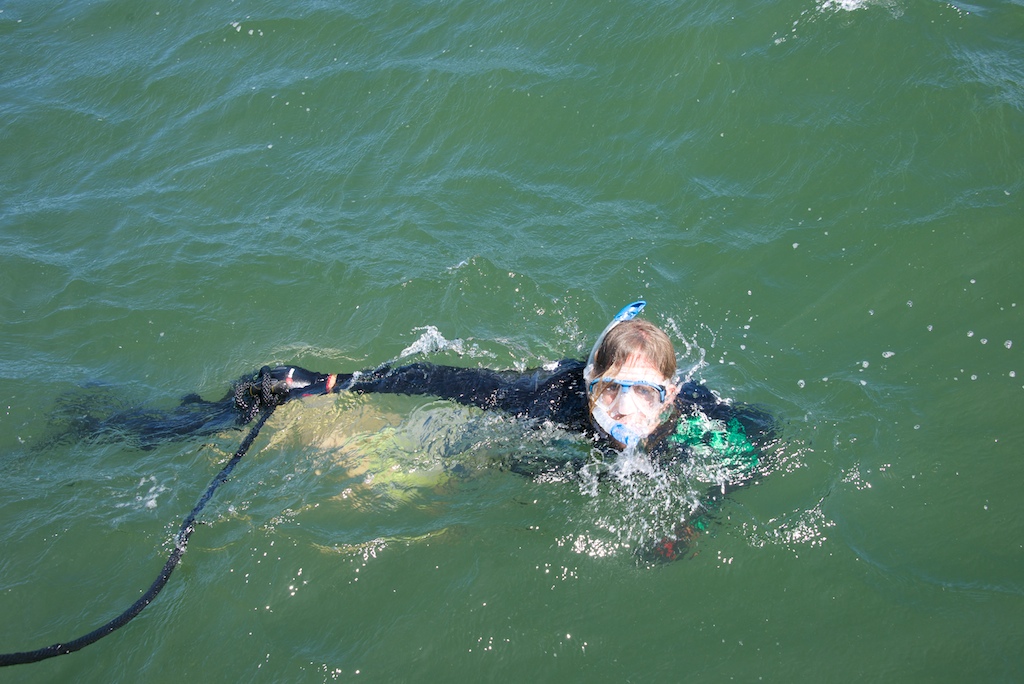
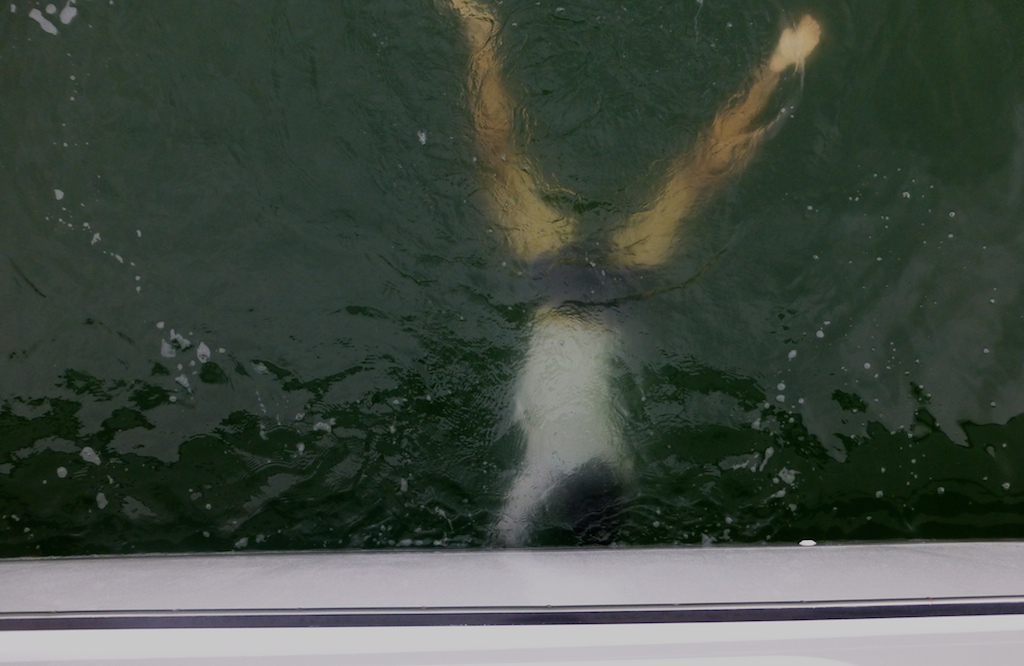
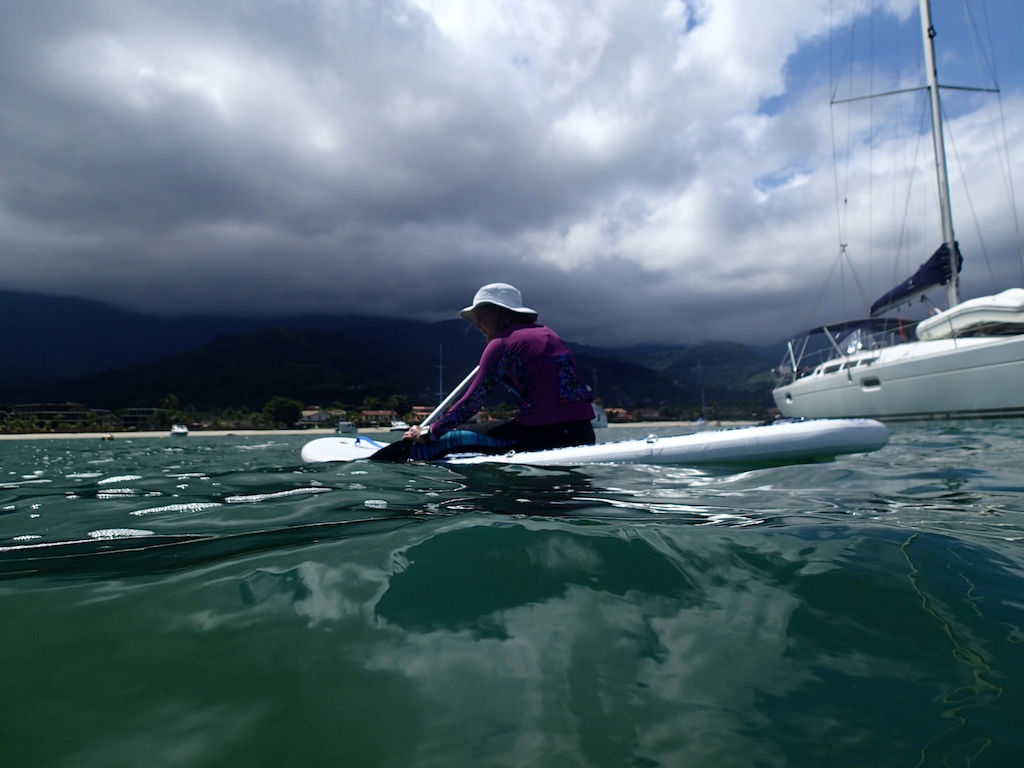
At the end of one of my almost daily swims, I grabbed a scrub brush to clean up Two Fish’s water line.   She still had the brown tint of the Rio Plata and some orange by-product from the engine exhaust.    The proper technique is to use the paddleboard and our suction cup clamps as a sturdy platform to vigorously scrub the topsides. However, my focus was on goofing around more than on proper boat work.  The less efficient technique that I employed was treading water, and swiping at the boat with the brush.  My apologies to graduates of the nautical sanitation engineers college.
During the scrubbing of the waterline, the “two of everything” on a catamaran became tiresome.   While scrubbing away, I felt like I was cleaning a grossly over-sized MacMansion (a 7,000 square foot suburban home).   Two 44 foot hulls equal an 88 foot yacht .   This was just a passing thought, as I was enjoying thrashing in the water like an over-the-hill water polo player.   I kicked hard to reach parts of the topsides that were a few feet out of the water only to have gravity pull me back.  Overall, the topsides are in good shape – no dings yet in the gelcoat from poor docking.    It will happen someday – like a first ding in a new car.

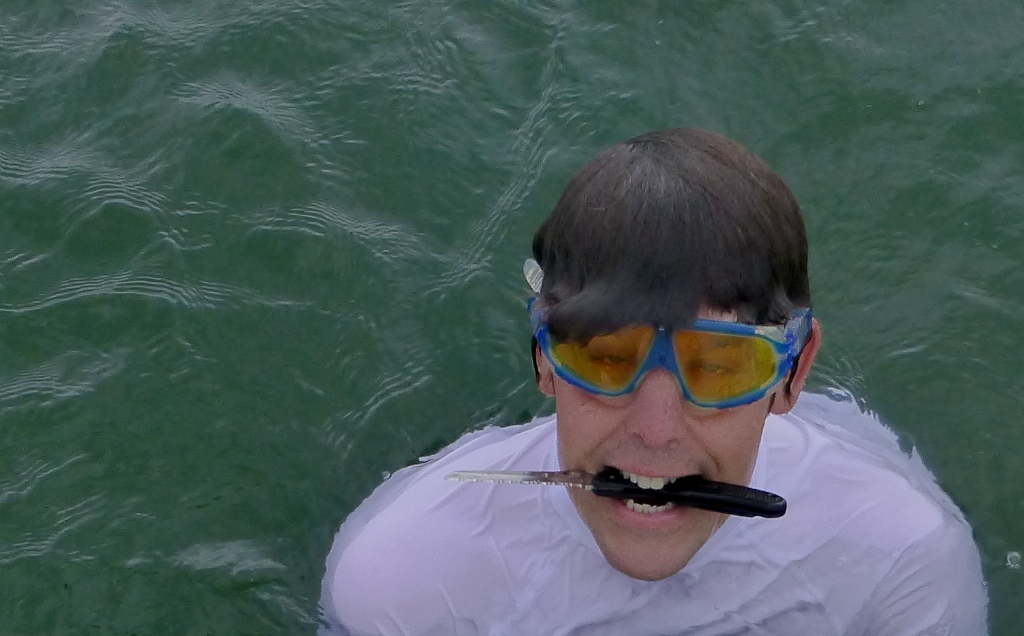
As I was finishing up my cleaning project, I chose to dive under the boat to check the propeller.   We have 4-blade feathering props.   While sailing, the blades feather to create less drag.  I was greeted by a bird’s nest of small diameter polypropylene line wrapped around the prop shaft.    I was excited – a real job that requires swimming.

In order to set the right tone, I informed Gail of the importance and potential danger of the mission.   She cobbled together gear to help increase my chances of surviving unscathed: gloves, a folding knife with a serrated blade, and a dive line (Gail rigged a line from the toe rail abeam to the propeller for my use while descending).   All was set for a scene from a Bond film as I could use my knife to cut an enemy’s air supply.  Without frogmen to distract me, I made short work of the festooned prop shaft.   My technique was to cut the line with the blade facing away and then try pulling at the mess to remove loose bits.   I had two concerns – one rational and the other crazy.   Crazy was my fear that the engine could come alive and in no time the propeller would become a Cuisinart producing a fresh batch of Jason burgers.

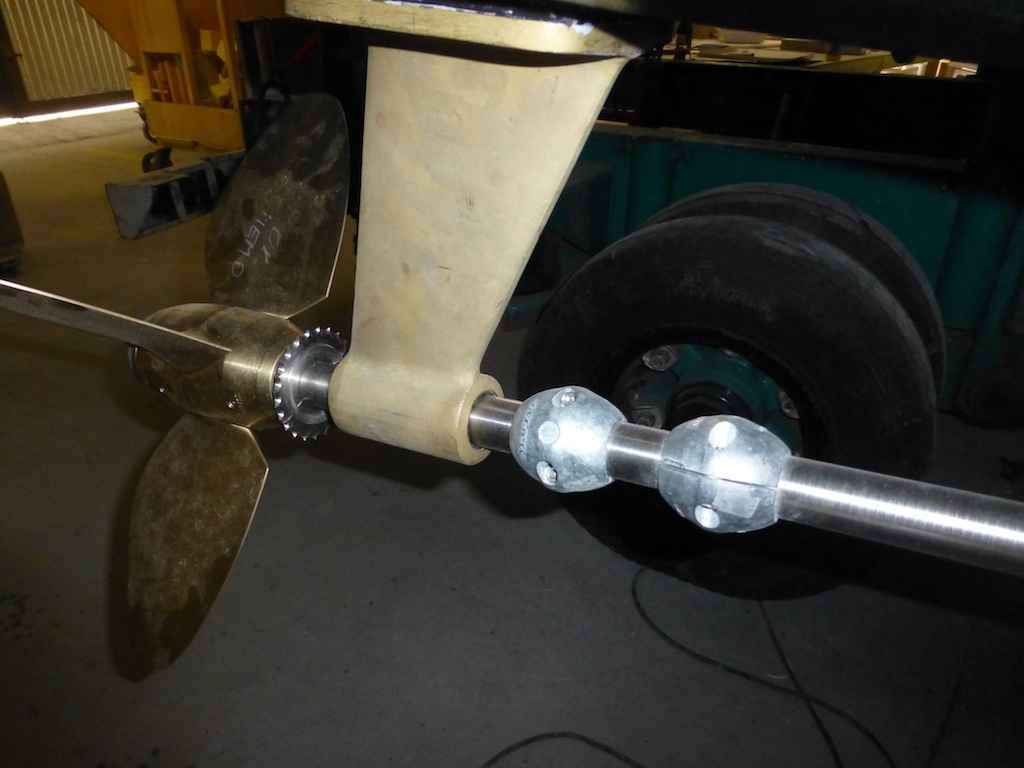
The less dramatic risk that had a real probability was my concern of cutting myself on the Shark Shafts.   We had Shark Shafts installed on both prop shafts.  The Shark Shafts are after-market serrated knife rings added to our propeller shafts to cut lines away that might otherwise foul the prop.   Do we like them?  Without a video camera down by the prop, we will never know their efficacy.    While diving, I wished they were not there.  When Two Fish first hooked the fishing line, did the Shark Shafts cut enough of the line to keep the props running fine?   Instead of a mid-ocean repair, all I had was an at-anchor clean up?   There was evidence that something sharp had damaged the fishing line.  Shark Shafts are like a flu shot – you never really know if they worked.

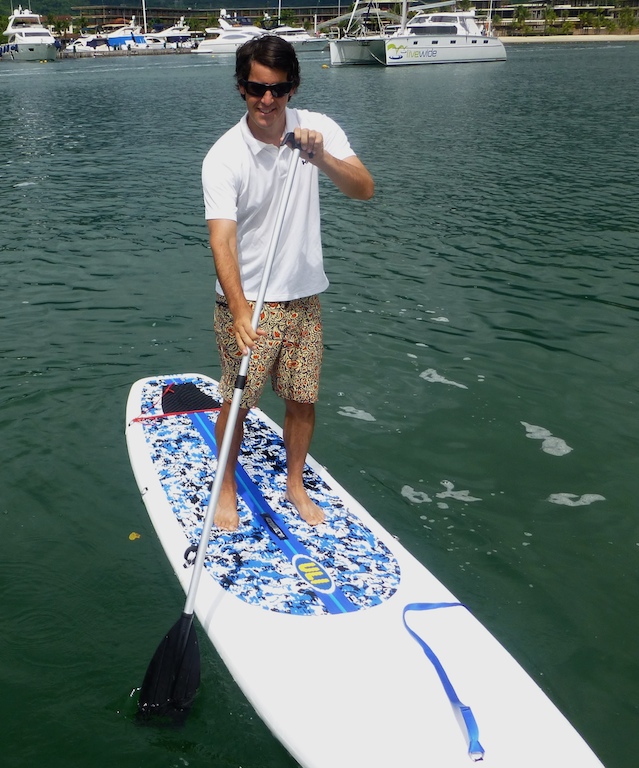
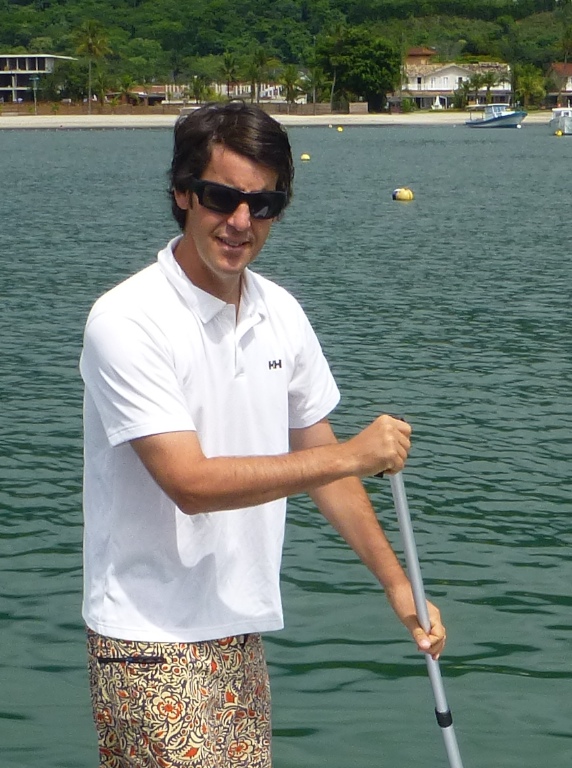
A few paddle board photos to end the post.

Read full story  · Comments { 4 }