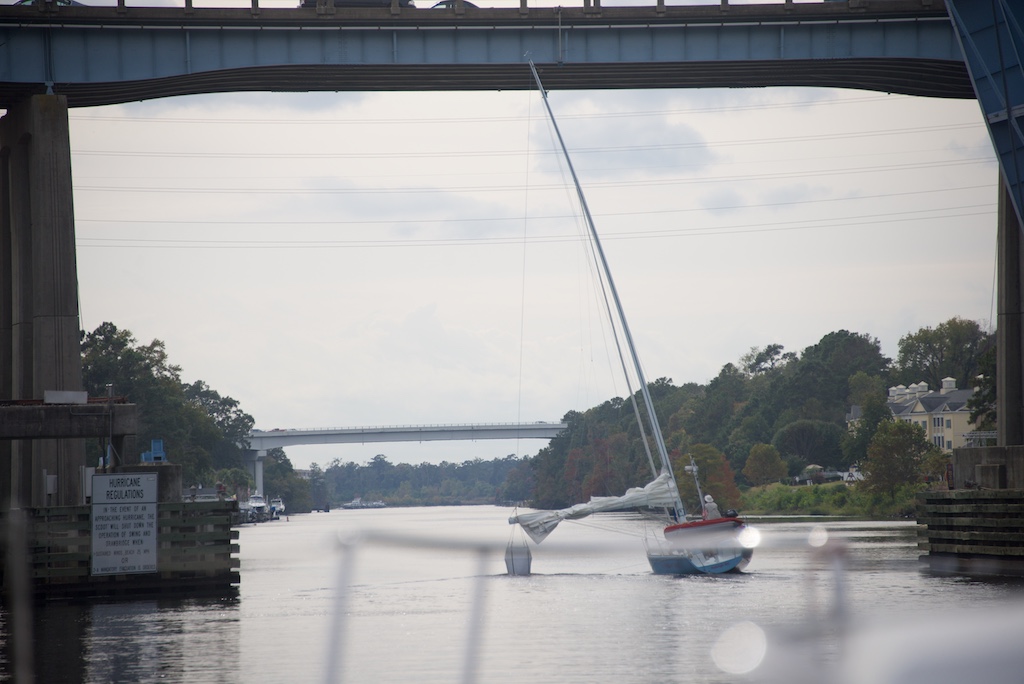
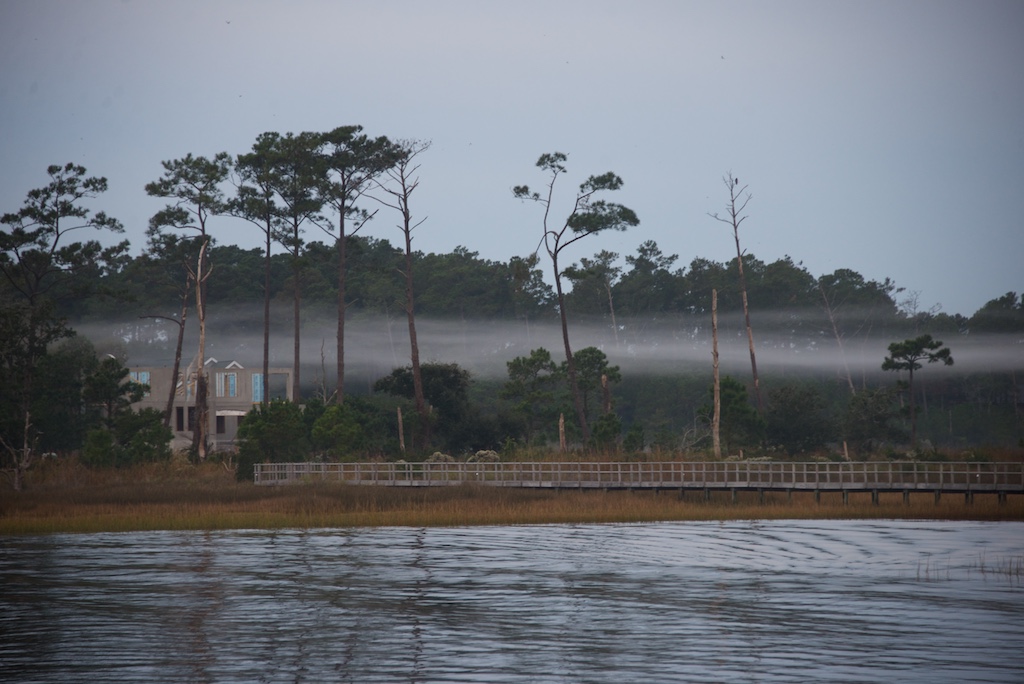
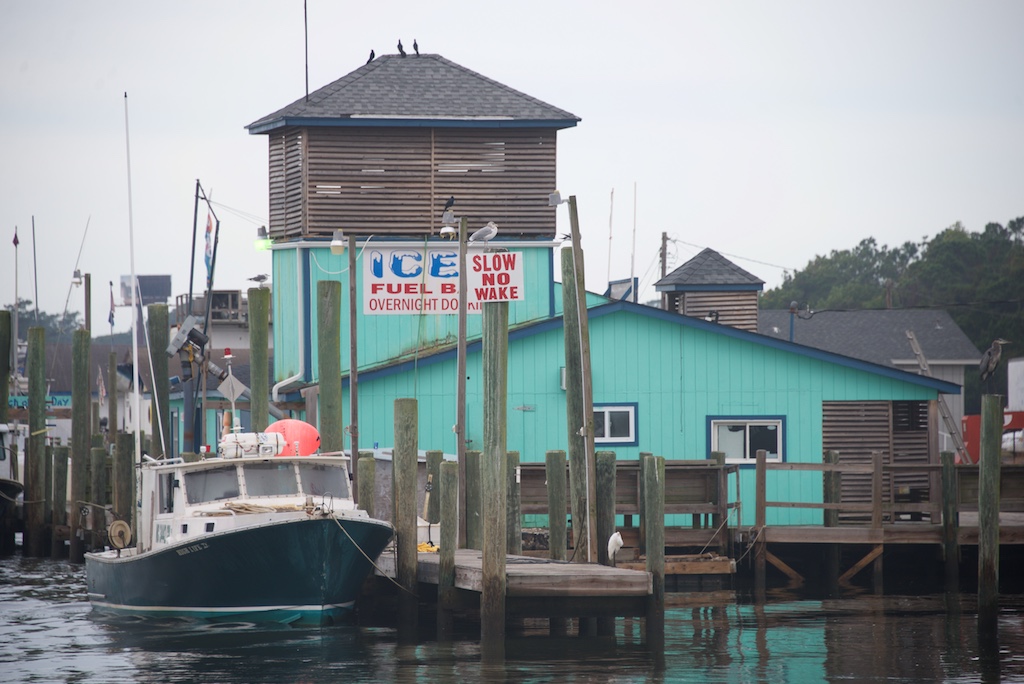
Charm City – Baltimore

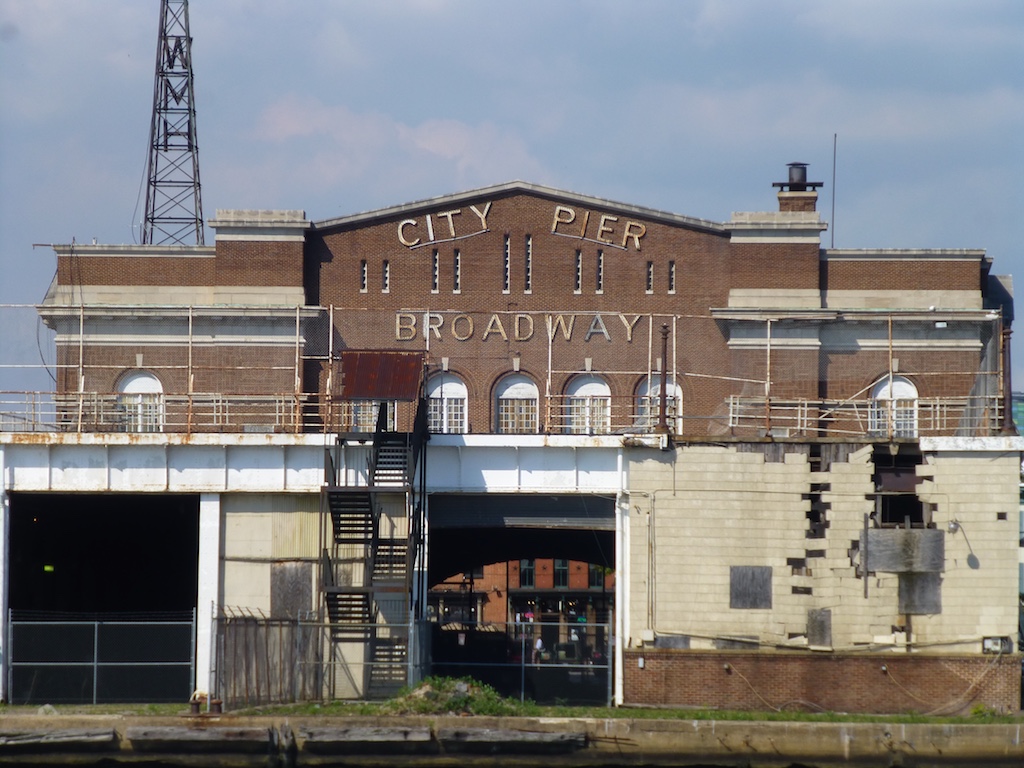
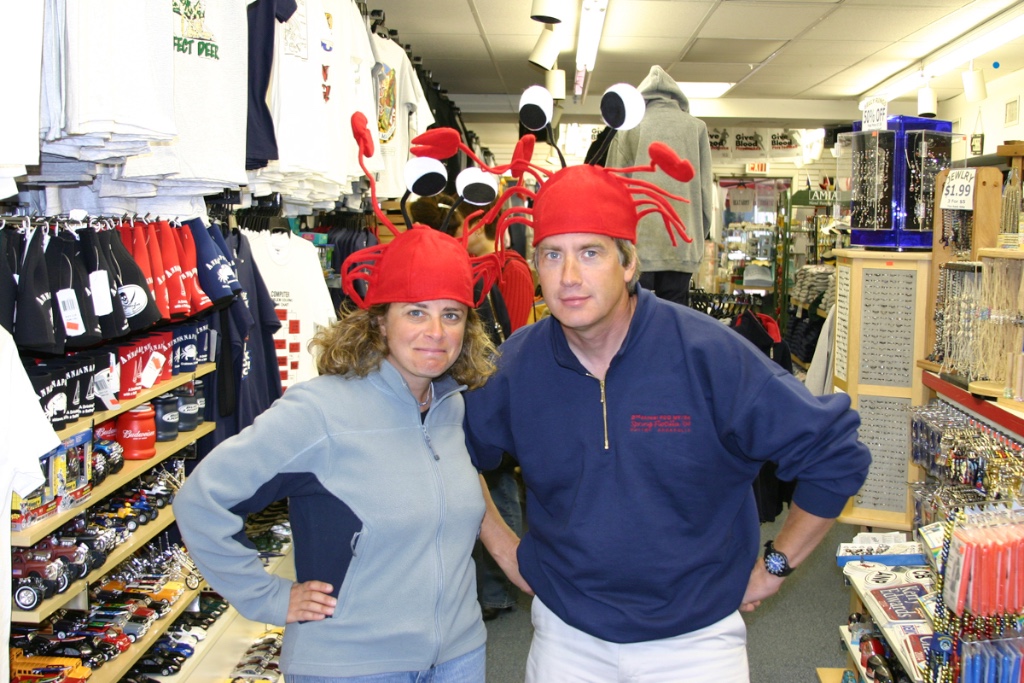
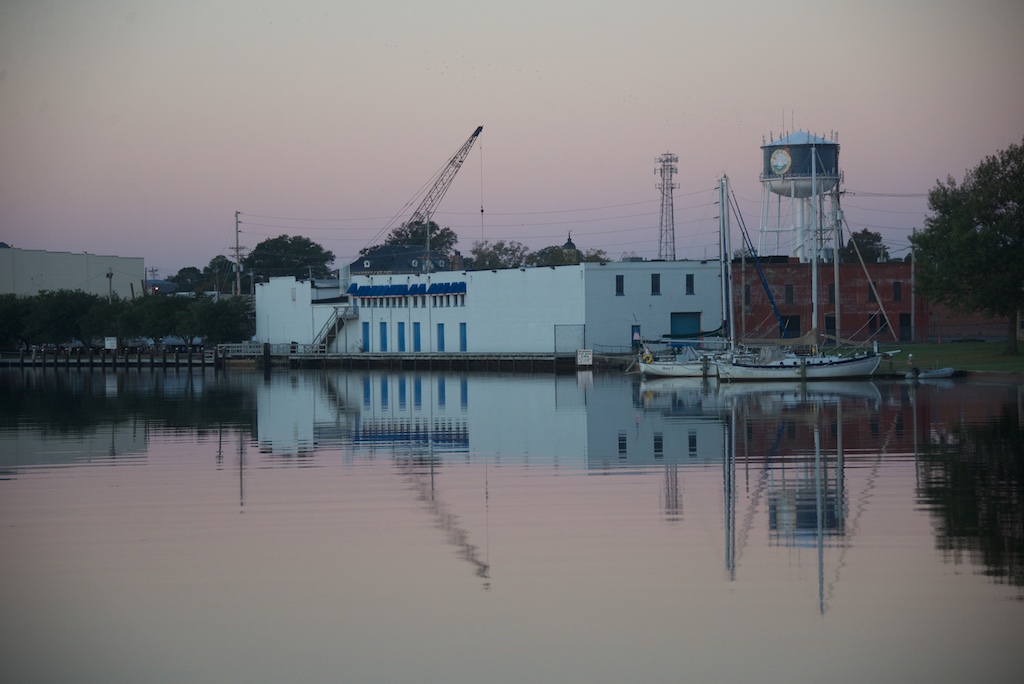
In an attempt to bolster the image of Baltimore, city officials branded it “Charm City” in 1974. The news reports the next day were filled with garbage strikes, police walkouts, and general looting. Town fathers would have to wait to earn their new name. The label did not catch on with the locals, but the Baltimore we encountered was charming. As much as I try to pretend I am now a cruiser with no home port, I am still a New Yorker. Those of you who hold some disdain for stuck-up New Yorkers can extend that feeling to me. I think that the biggest complement I can offer a city is “I could live here.”, when I am really just admitting that I have a hard time imagining residing anywhere other than New York.

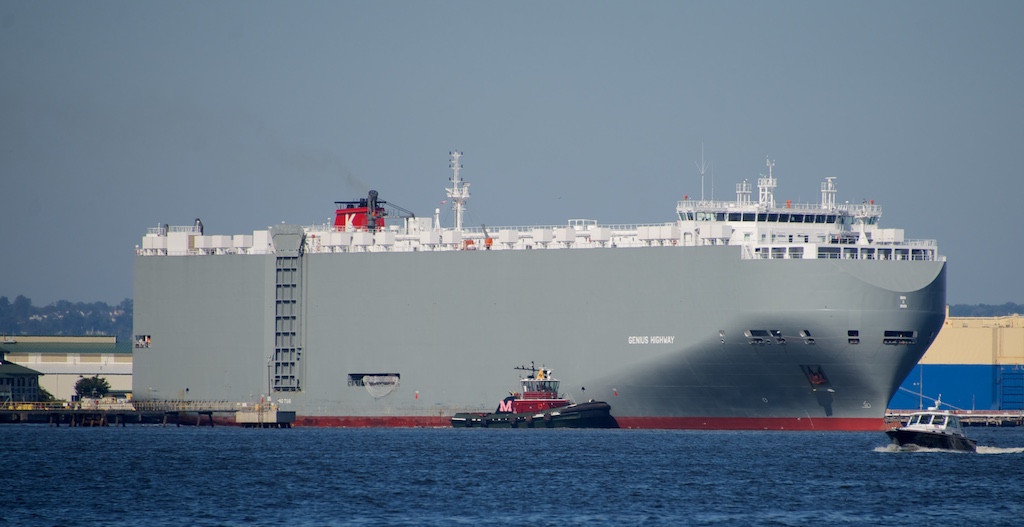
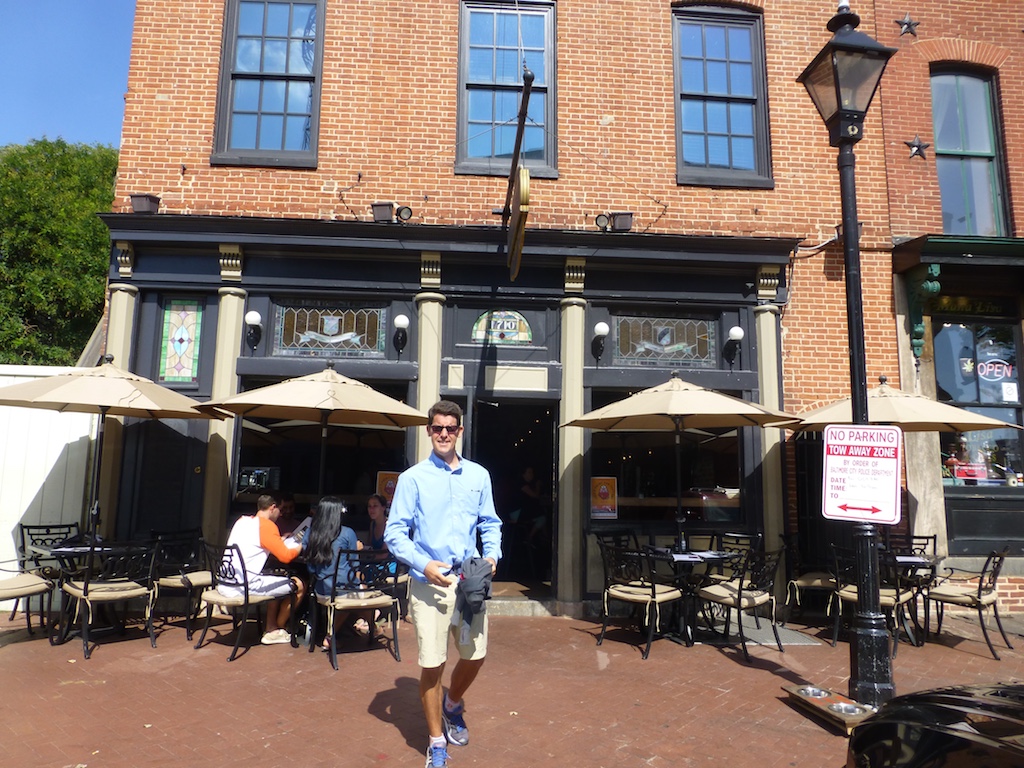
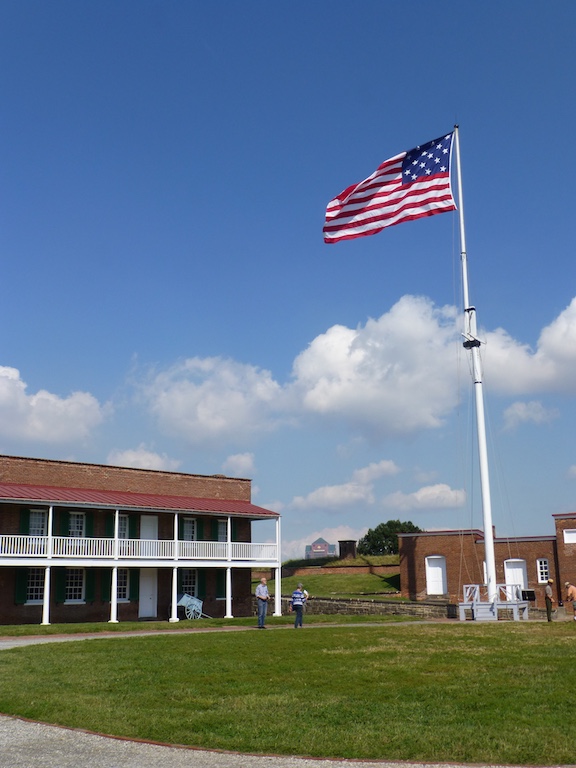
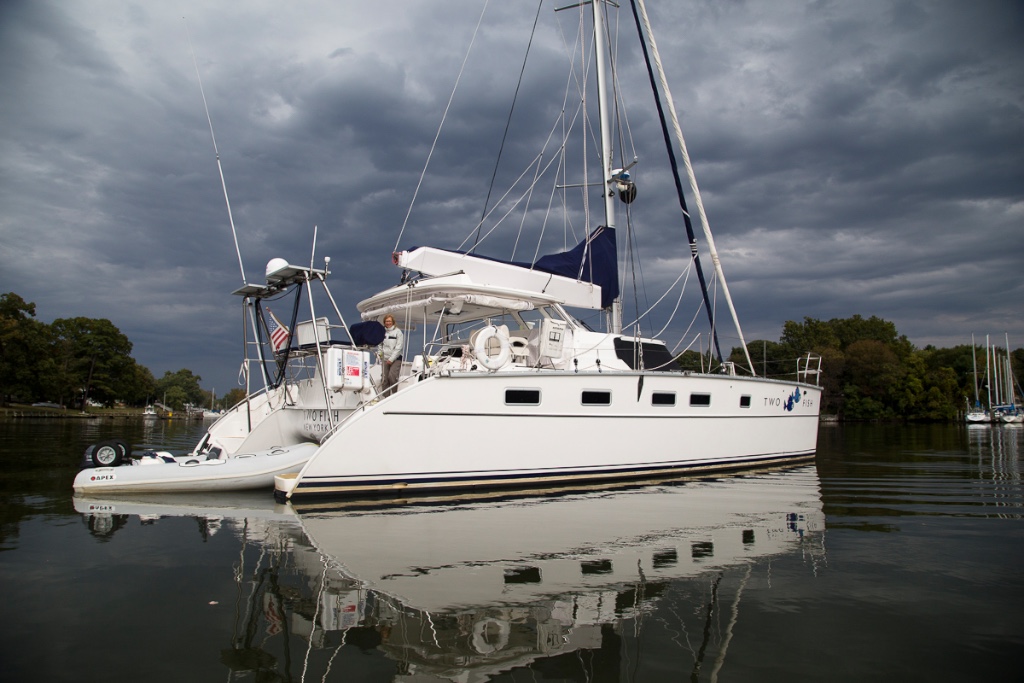
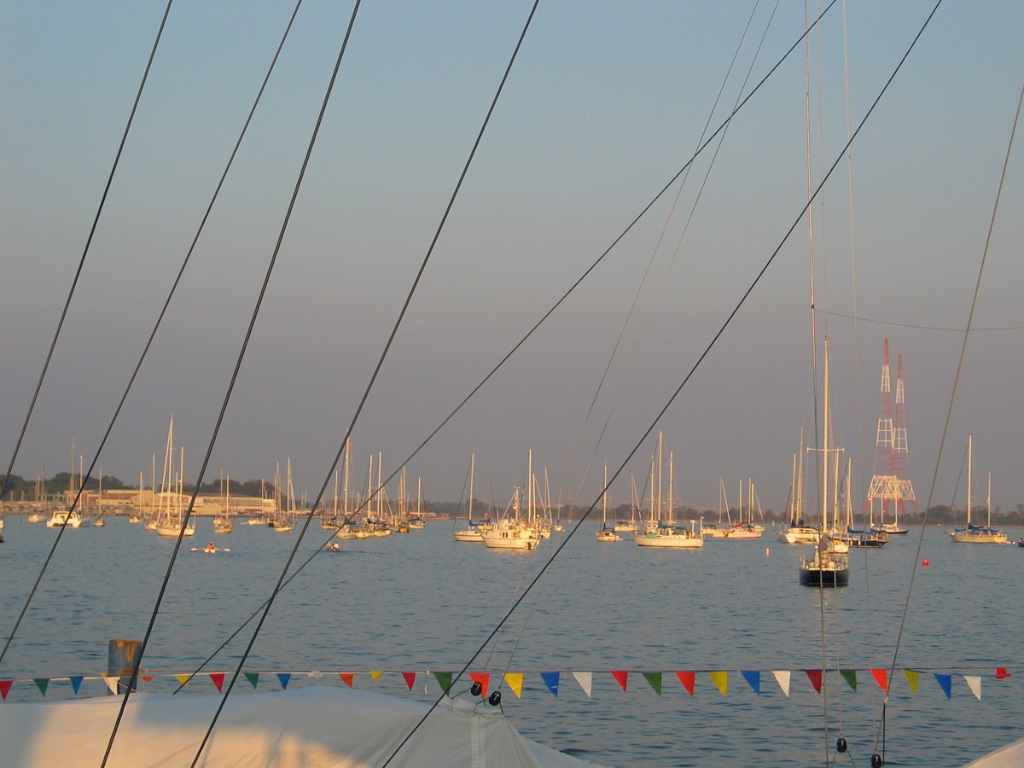
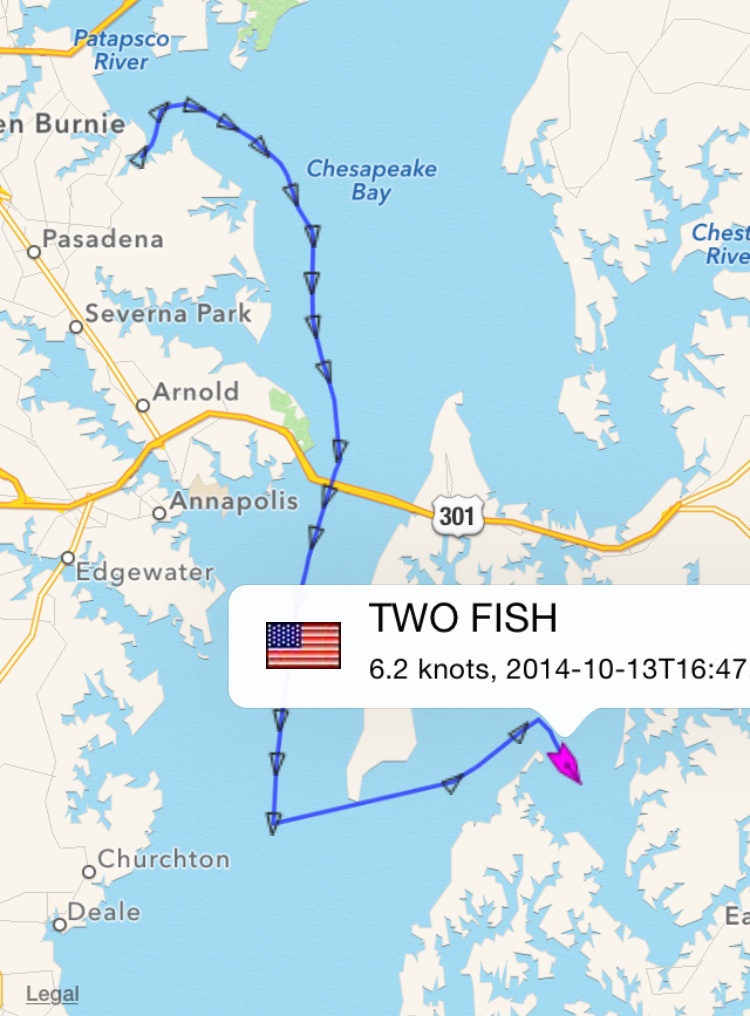
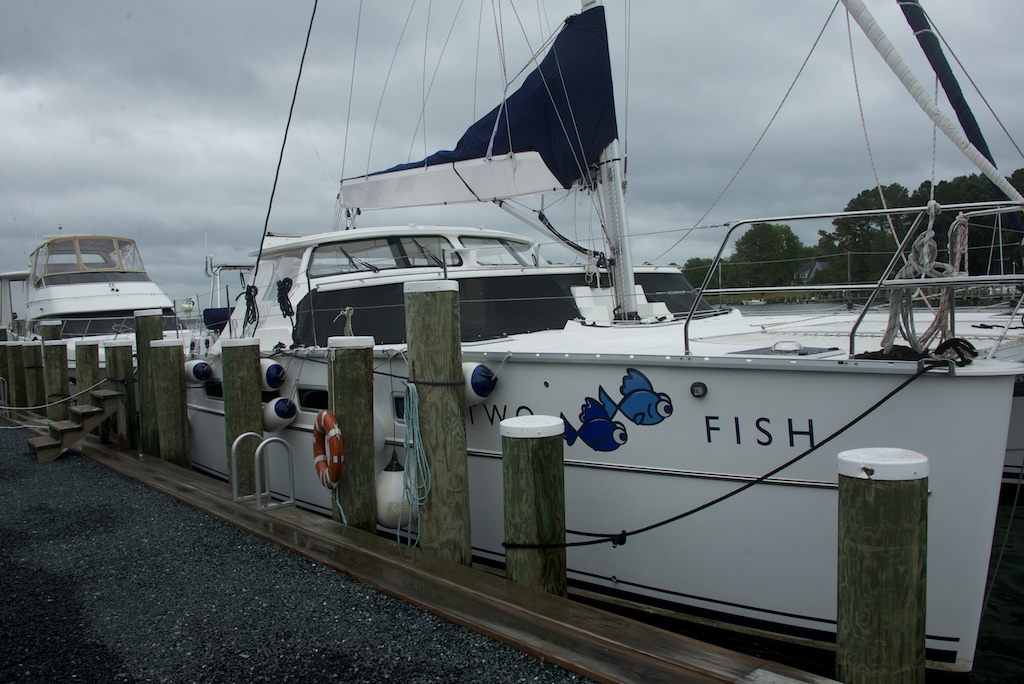
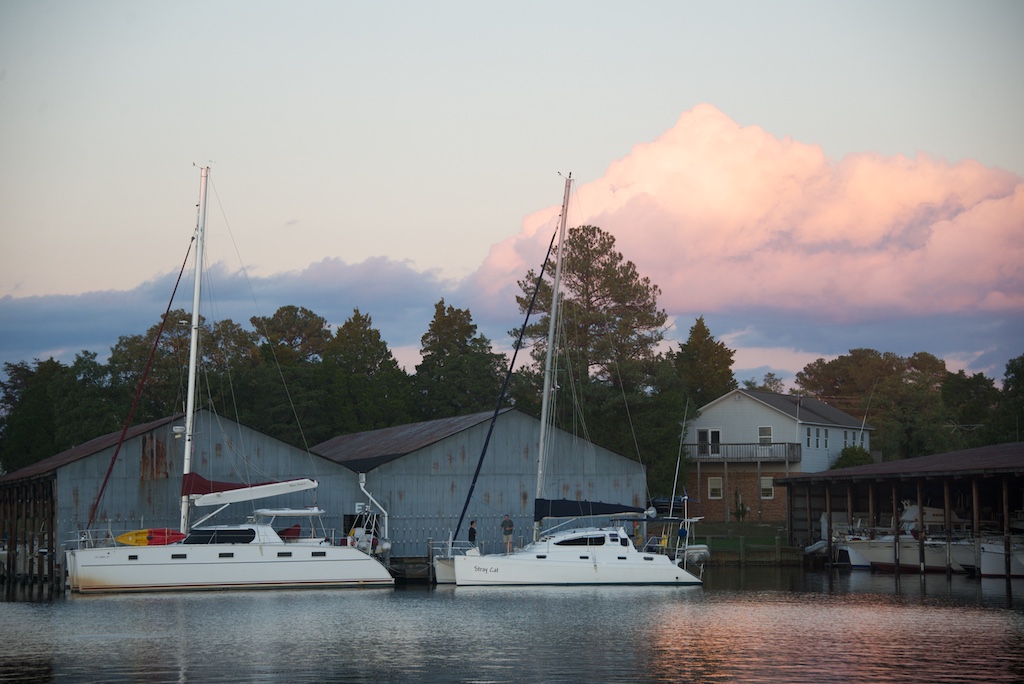
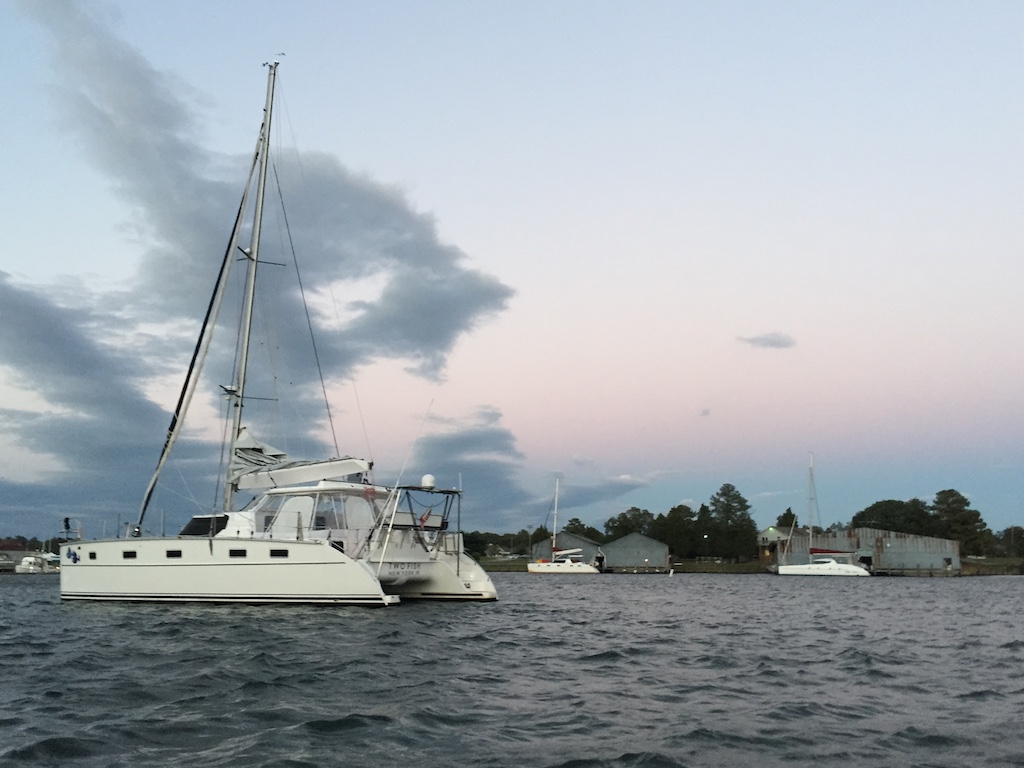
We arrived in Baltimore while some large cargo ships were jockeying for position. Most of them responded to hails or announced their intentions on the VHF radio. The 800 foot roll-on/roll-off ship “Genius Highway” was trying to be stealthy, or as stealthy as a floating skyscraper can be.   Her AIS was indicating that she was turning to starboard, but we saw her turning to port.  We hailed her to find out her intentions.  No answer.  She then made some more unexpected moves, so we hailed again.  Her reply was hard to understand-the captain said he was going to a place not labeled on our chart.  So we slowed down and watched her do the unexpected.  She maneuvered closer to Two Fish, but Jason was able to keep us a safe distance away.   Reminds me of some cars on Long Island.   We tucked Two Fish away at Lighthouse Point and, with the help of Uber and the water ferries,  visited Fort McHenry, City Museums and Fell’s Point. Cruisers are waiting for the invention of the fold-able car, but, until that day we have used Uber.   Uber is a taxi hailing app for the iPhone which works wonderfully.  The best part was that our first few rides were in luxurious vehicles.  We realized we had the deluxe car option selected and changed back to normal.  In other towns, we have rented cars from Enterprise whose pick-up and drop-off service is valuable for cruisers.

Enjoying the town

Enjoying the town

Now back to my list of great city requirements.  My first requirement for a liveable city is great restaurants, preferably with fish tacos on the menu.

Second is water access. Third is walk-ability. Fourth – sports teams. Fifth – arts. Baltimore hits all of these points. For sports teams, I found myself rooting for the Orioles in the playoffs, but I could never support the Ravens. Yes, I could live in Baltimore. Now for some tourism.

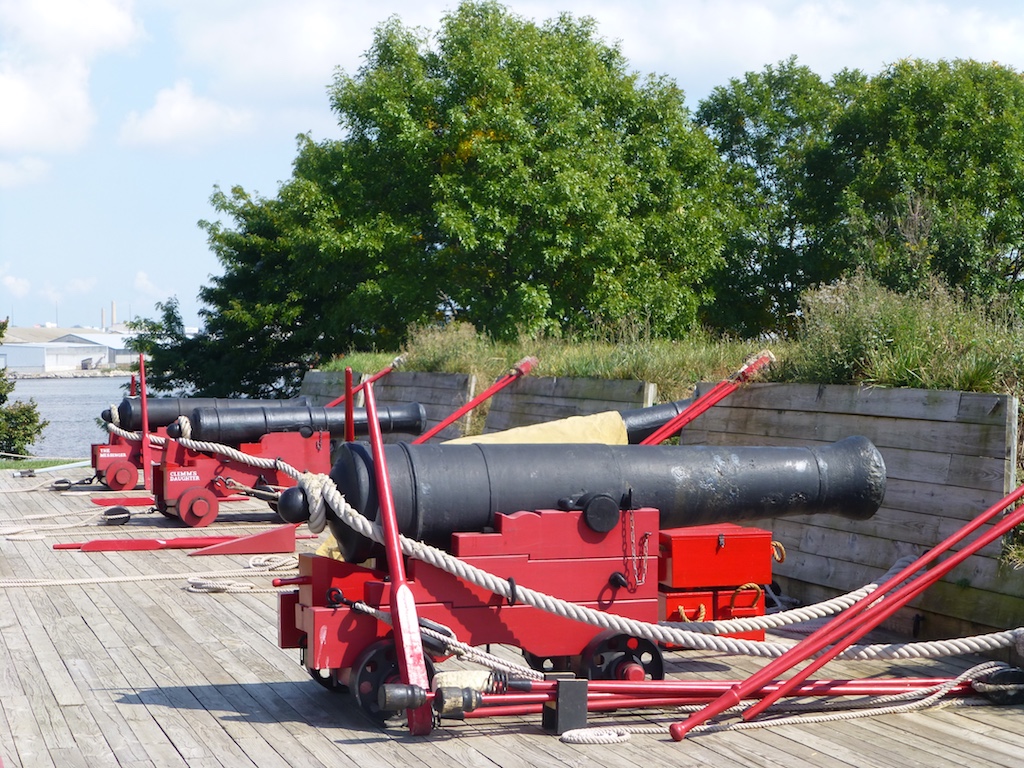
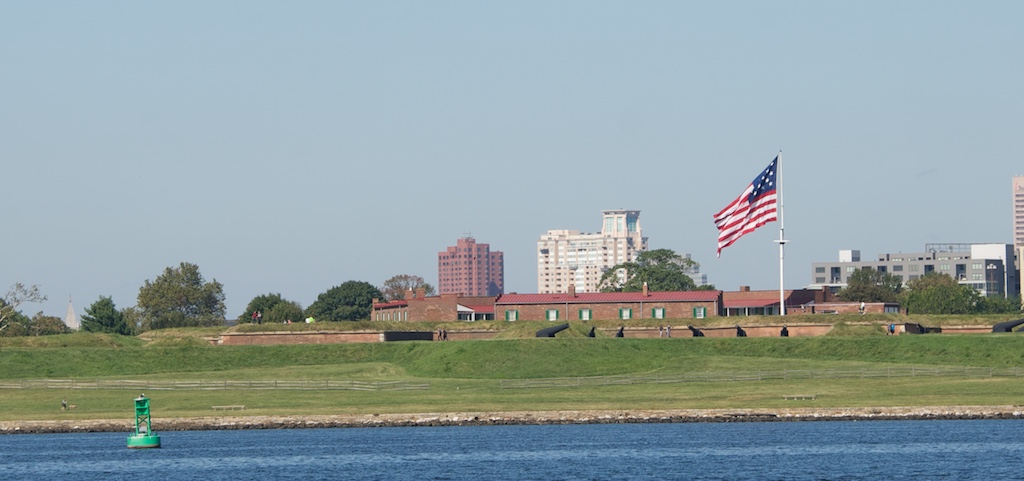
For those of you who haven’t visited Fort McHenry, it was an important defense point against the British in the War of 1812.  The British had invaded the Chesapeake by land and sea and were on their way to Baltimore.  Francis Scott Key was aboard a schooner that was behind the British enemy lines.   I always had the image that he wrote the US national anthem while imprisoned in a dark dungeon, but the truth is much more comfortable.  He had a formal supper with the British aboard his boat.  After retiring for sleep, with a bit of sherry racing through his veins, he wrote  “In Defense of Fort McHenry”. Set to the tune of an old pub drinking song, it was later renamed “The Star-Spangled Banner”.

nattyboh

Natty Boh

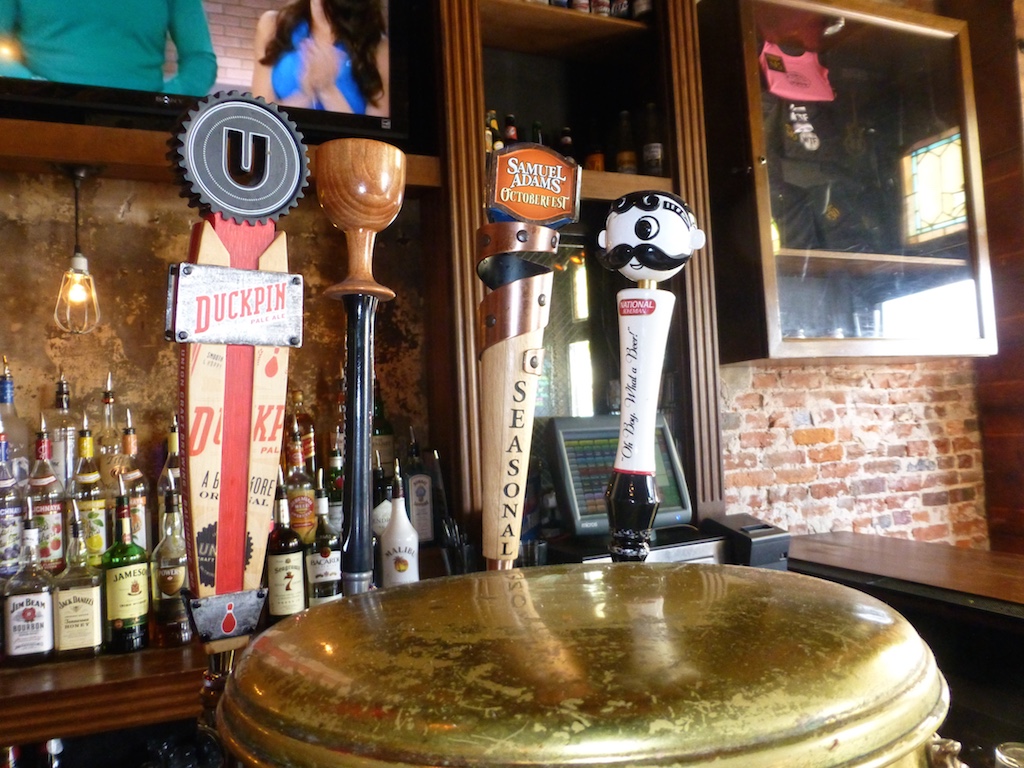
Best meal of the stay was lunch at Milk & Honey Market. Who can pass up Kohlrabi Soup and a Spicy Tofu Sandwich? The nearby Washington Monument was scaffolded but we enjoyed the nearby Walters Art Museum. We were helped in our exploration by locals Eric & Carla, who introduced us to Fell’s Point and the Ginger(color not flavor) Beer at Max’s. We also tried the local beer, Natty Boh, mostly because of the omnipresent logo.

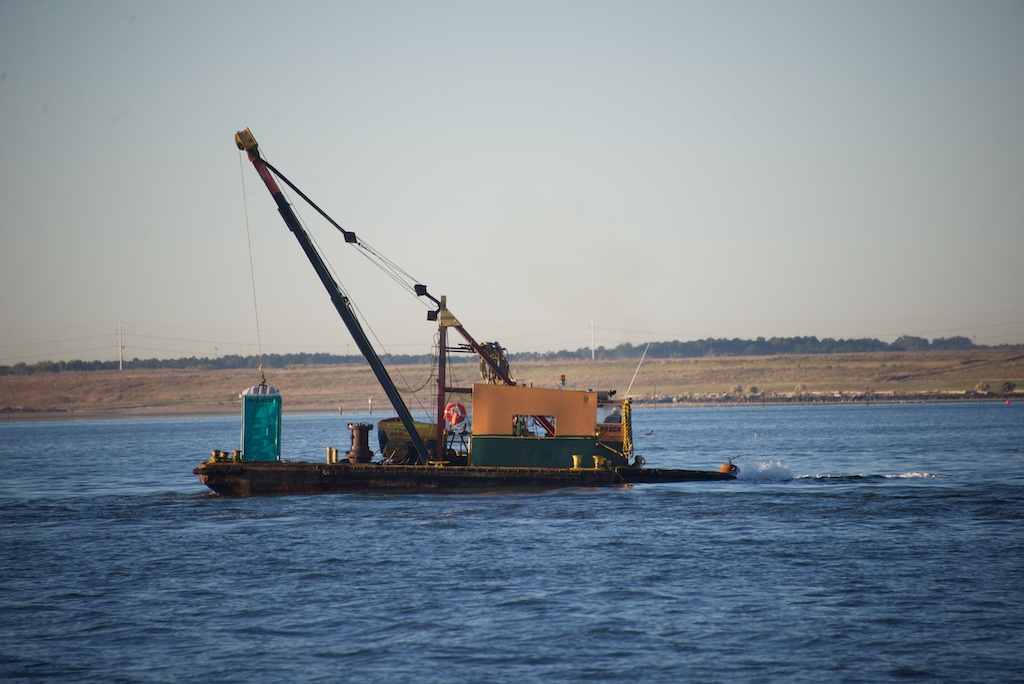
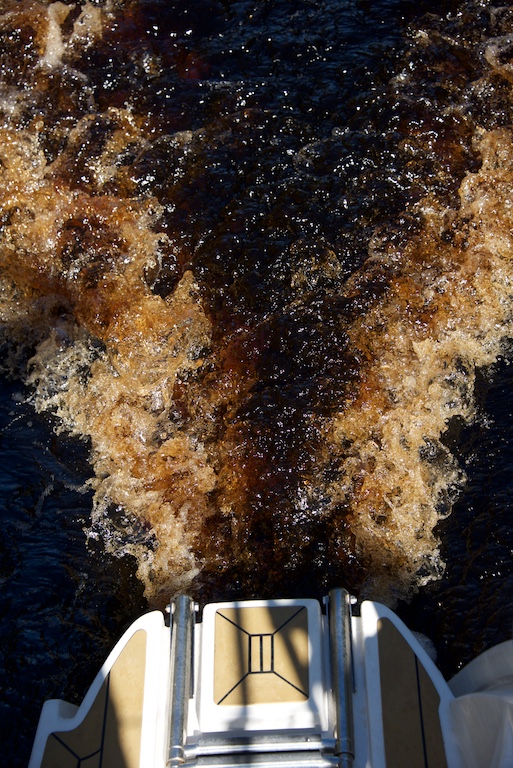
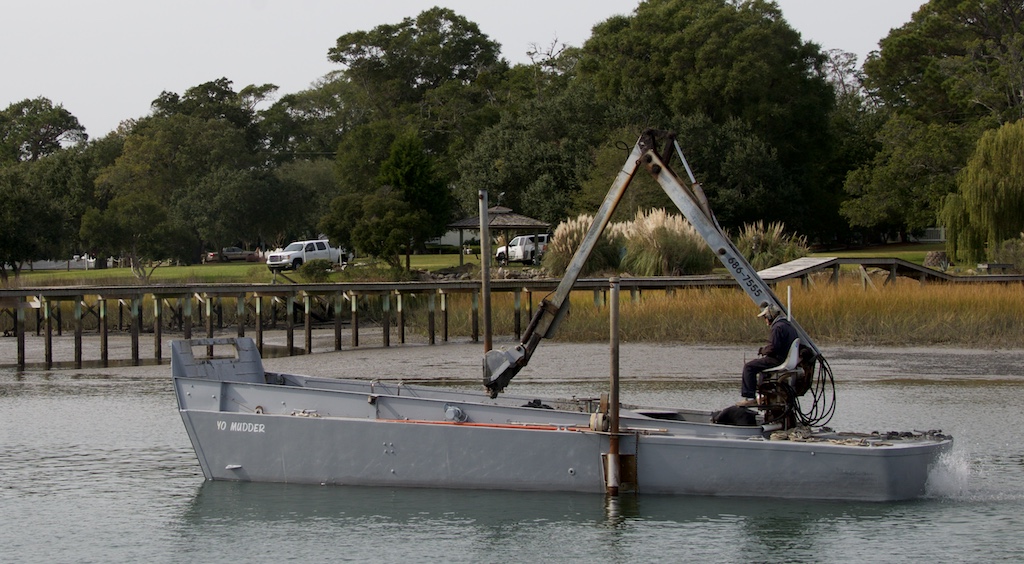
Our neighbor for most of our stay was the Pride of Baltimore II. She is a large clipper ship, modeled after Chasseur, an 1800s clipper, part of the privateers that preceded our Navy.  In fact, her dinghy was named Chasseur. Unfortunately, Charm City’s waters are a bit polluted and debris-filled, despite the efforts of the local trash sweeper boat, so Two Fish urged us to move on.  The trash sweeper boat, like a DJ, does take requests and did a special clean up near Two Fish to remove our growing soda-pop bottle collection.   The freshly washed topsides became covered in a stubborn brown slime that Jason would hose multiple times a day with no success.   Oddly, the subsequent waters of the Dismal Swamp seem to remove Baltimore slime.   The fenders required some hand cleaning. Not a ton of volunteers for that job.

We took Margy and Monty for a test sail after being asked to bring them on a test sail by the Antares Factory.  They were great crew and helped us sail Two Fish to Rock Creek.  The winds were predicted to get up to 40 knots during the night so we wanted a good anchor set.   After a day with no issues it took us four tries before our anchor would set properly.  As we picked up for the third time, Margy asked “How many times does it usually take you?”.   This would be the first time that we need 4 tries.   The creek bed was finally conquered.  We invited a bunch of friends over for movie night, and enjoyed the comfy seats and home theater set up on the boat. The movie was “10 Items or Less,” starring Morgan Freeman.  Definitely 2 thumbs-up for the movie and for the lighter than predicted breeze.

Read full story  · Comments { 0 }

Another Boat Show

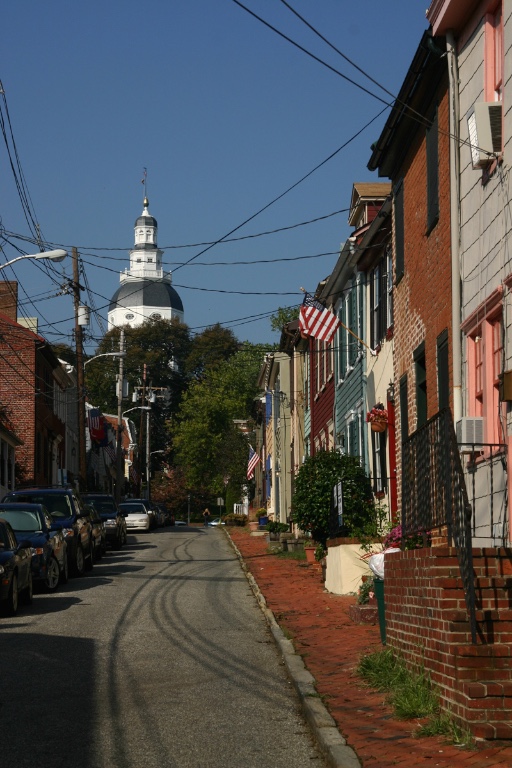
From the time we started researching boats, until we boarded Two Fish, we were boat show groupies. (See posts Miami 2011, Miami 2012, Miami 2013, and Annapolis 2011. No post but we did visit Annapolis again in 2012). This would be our first time as boat owners so it was also my first time realizing I had no more space for most of the cool stuff on offer.

We enjoyed meeting Rod Johnstone, the designer and originator of J Boats and the Uncle of Gunboats. He patiently explained to me the reason for the flicker at the top of the J70 mast; it keeps the backstay away from the large roached main. We don’t need that, since Two Fish doesn’t have a backstay.

We also took advantage of the time by grilling the reps for Furuno, Max-Prop and other dealers. Furuno told us how to turn off our fishfinder via the TZ Touch screens and Max-Prop confirmed our need to grease the props a few times a year.

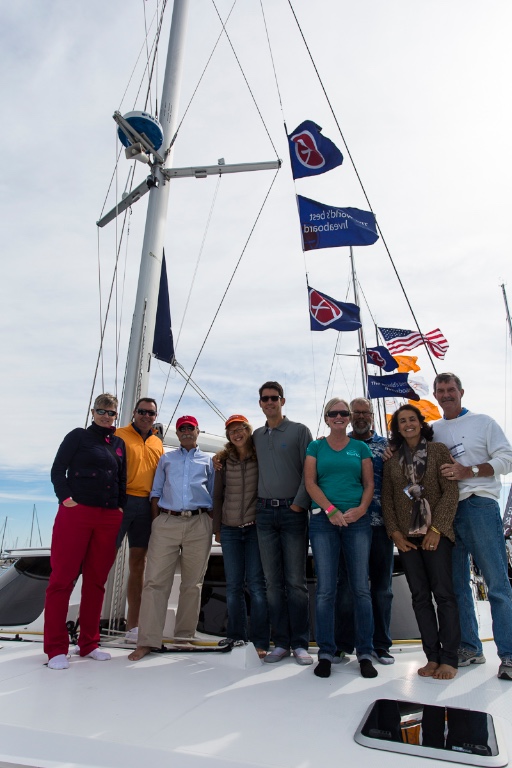
I think the Vesper rep was glad that we were finally able to stop bugging him about when the Vision would be out. He was excited to see how much we liked the product but was surprised to hear that we don’t take advantage of the filter feature.  We also finally got to meet in person our Facebook friends Holli and John on Shiloh. Thanks to Eric for keeping us up past our bedtime and drinking with the local cadets. Breakfast at Chick and Ruth’s Deli helped us get going the next day.


Read full story  · Comments { 0 }

Two Fish at the Museum

Two Fish was eager to move along after our long stops in the Upper Chesapeake.  Our pace is slowed by weather, visitors and  cool places to explore.  The cooling weather is a constant reminder that we need to keep heading South, even if we are having a fun time.   Jason’s need to be at sea is also a force that causes the anchor to be weighed or the dock lines cast.

Sail to St. Michaels

St. Michaels

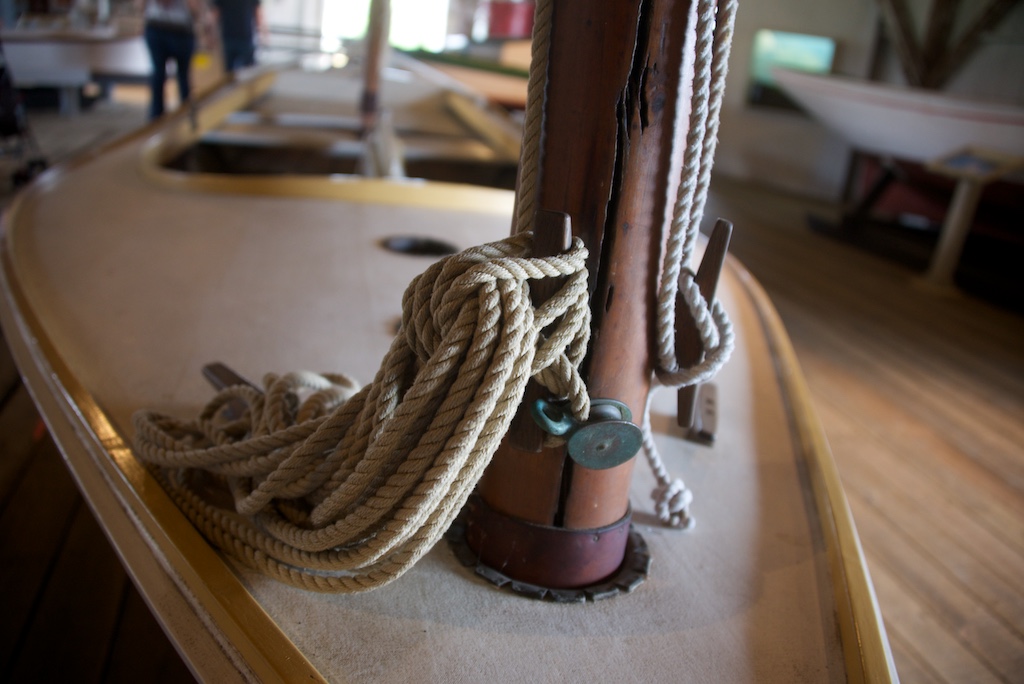
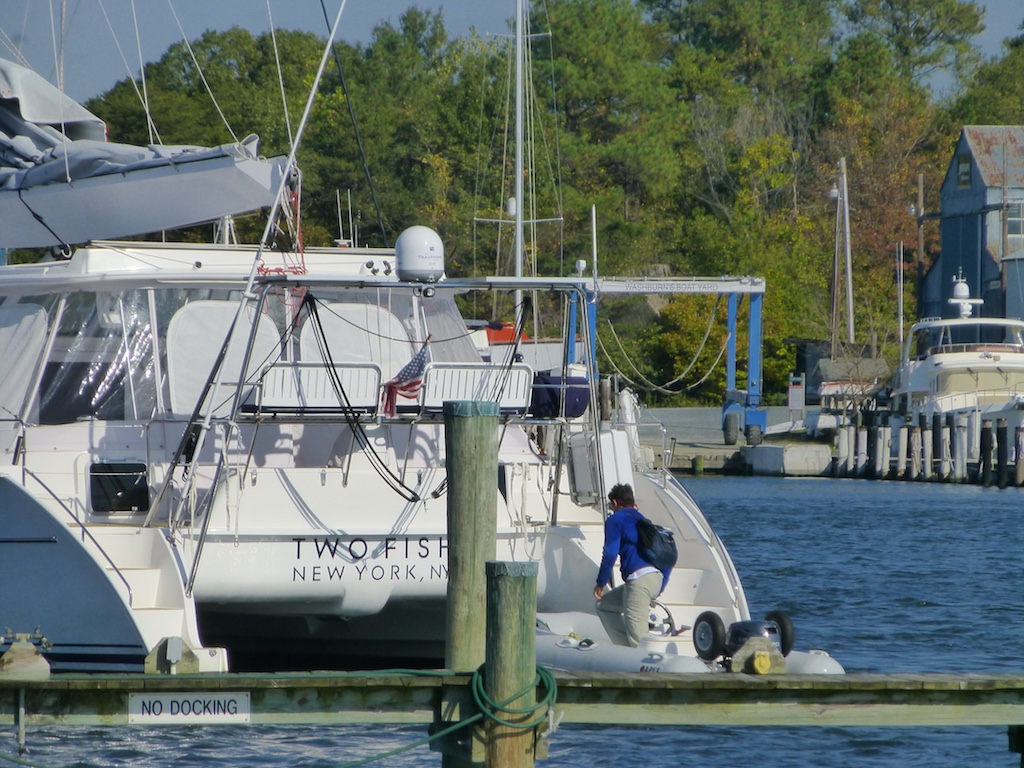
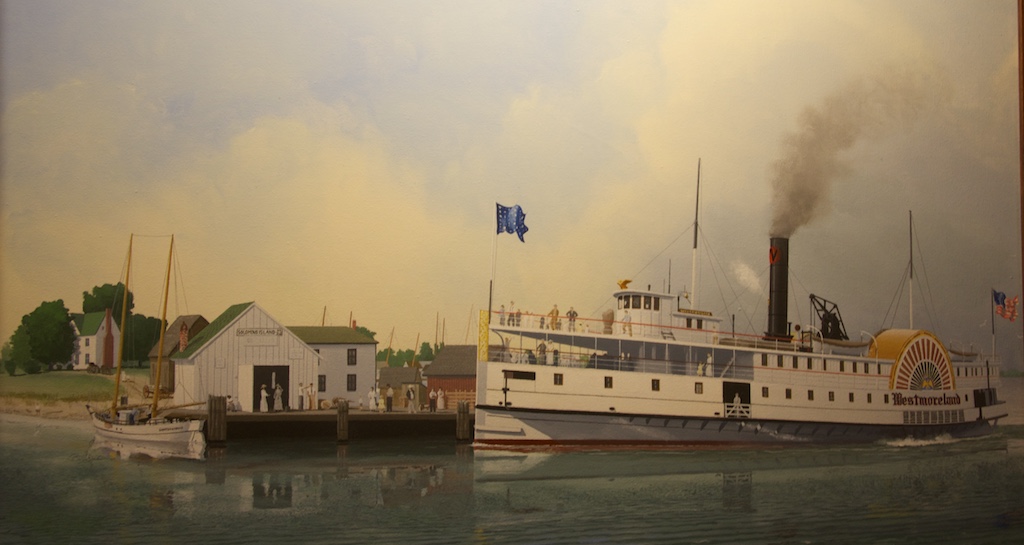
Being Maritime Museum addicts, our next stop was the dock at the St. Michael’s Maritime Museum. St Michael’s is a great little town for cruising – nice harbor, walking distance to restaurants and grocery and friendly people. As a bonus, since we were docked on the museum grounds, we were able to wander in and out of the exhibits over several days. As much as we enjoyed the walk-on/walk-off aspect of the pier, we always have to be a bit more careful tying up to a pier, since the boat’s contact points will change with the tide and we would like to keep her gelcoat on.

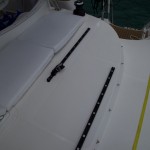
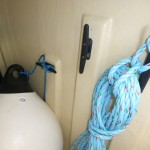
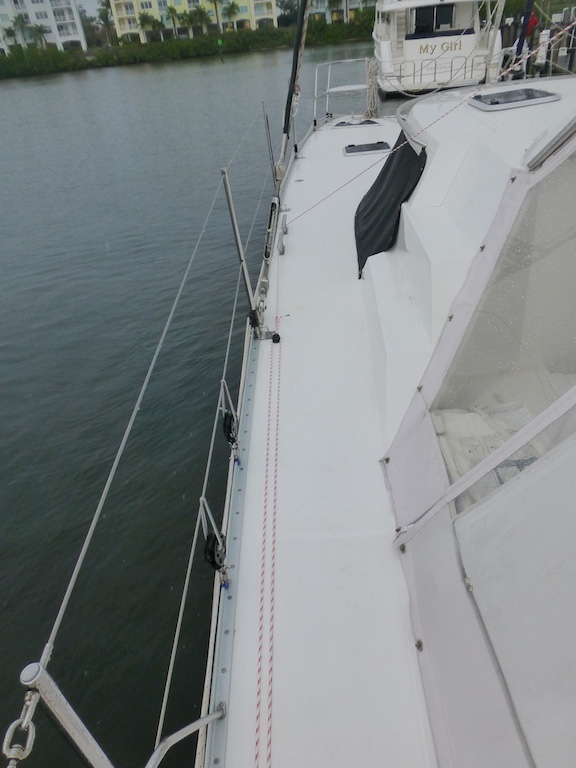
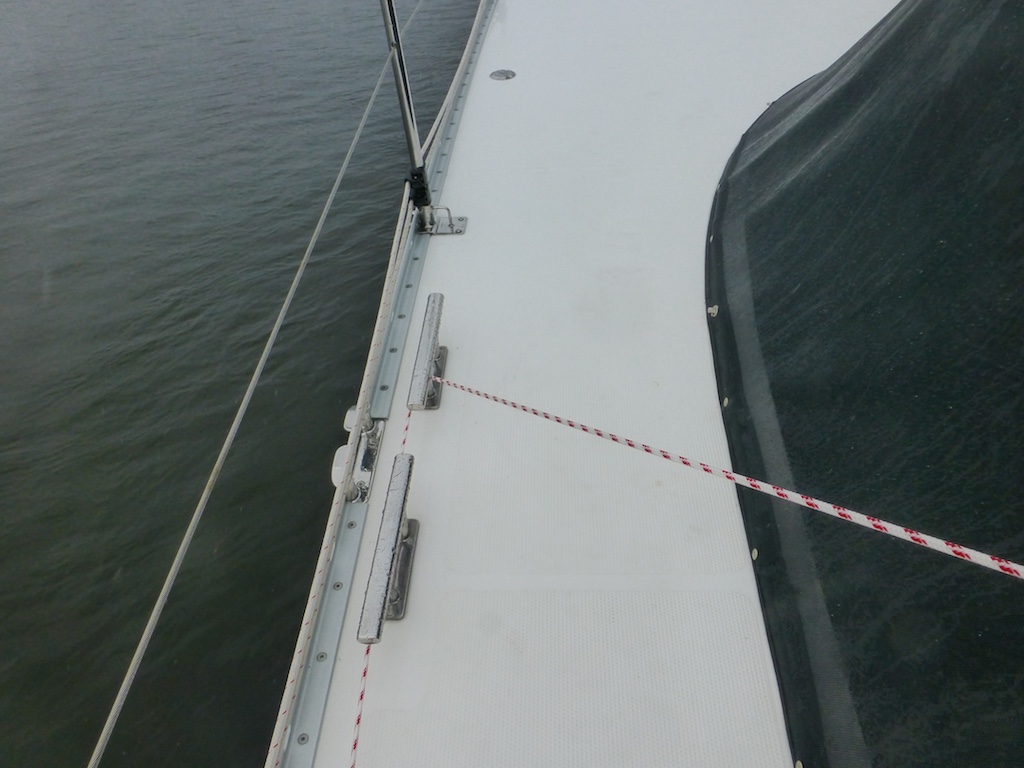
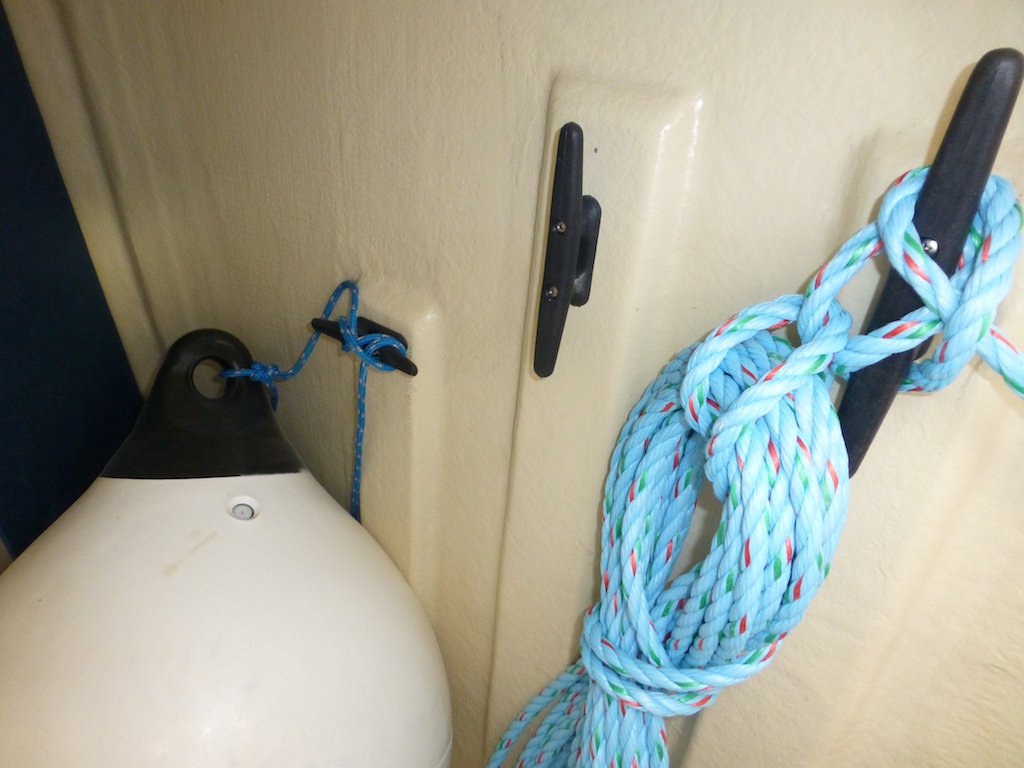
Here are a couple of tips we have learned about tying up.   The bow line should be a bit loose to allow boarding via the stern of the boat.   A tight bow line pulls the bow towards the dock and forces the stern away.   Try to find a cleat for the bow line and stern line that is directly abreast of the boat’s cleat.   These lines will pull the boat closer to the dock.   At midships use two spring lines.   One leading forward from midships prevents the boat from going backwards and the one leading backwards prevents the boat from moving forward.   The dock cleats should be chosen so they are 15 or more feet from the midship cleat.   If you are on a dock with pilings that stick out, then make the springs very tight and the boat will not move forward or aft.   If you are on a pier (fixed dock) then find out what the tidal range is.   All four lines should be 3 times longer than the tide.   This means that on a pier, the bow and stern lines will not be lined up with the nearest cleat.   They need wider angles to survive a tide cycle.   In these cases, adding lines from the outside cleats to the dock will hold the boat close for boarding while still allowing for the tidal changes.  Fenders can be attached vertically or horizontally depending on the situation.  We have also discovered the power of the ball fender and have two on board for docking. Maybe a full post on this topic later.

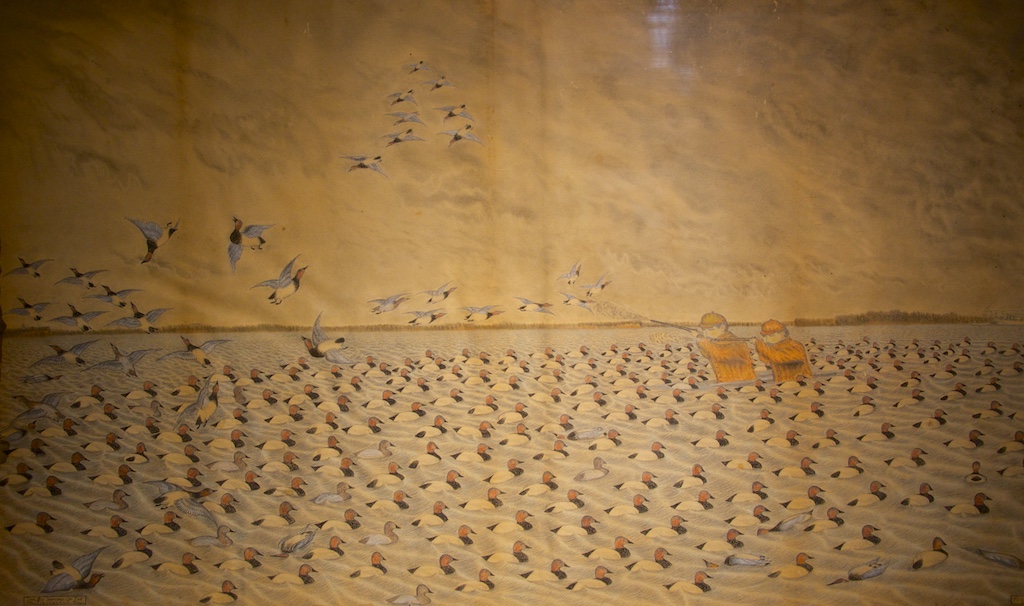
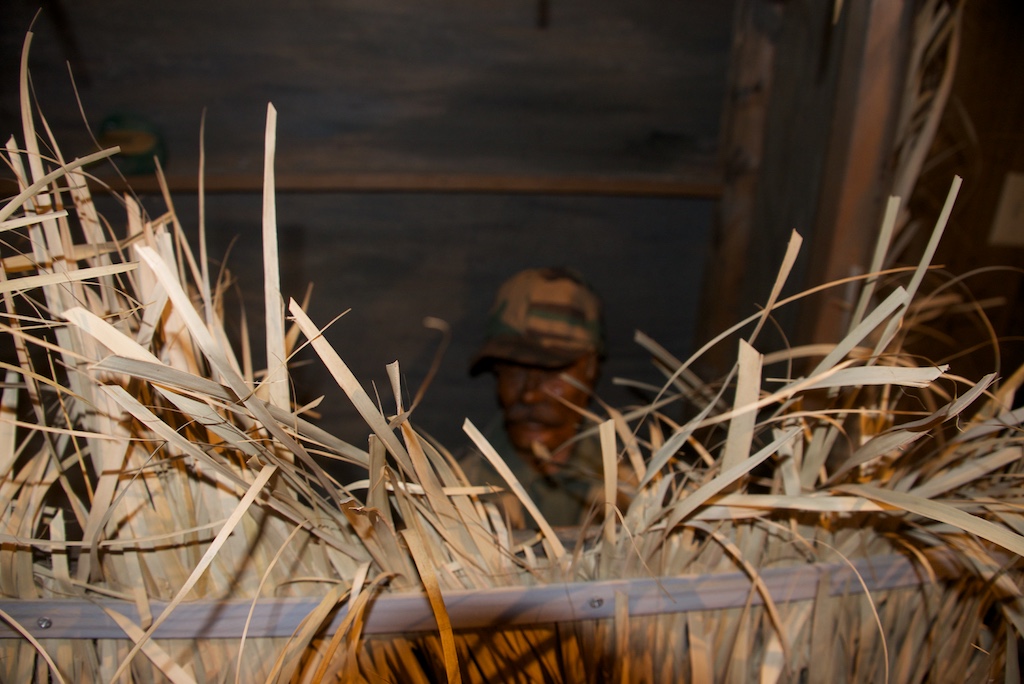
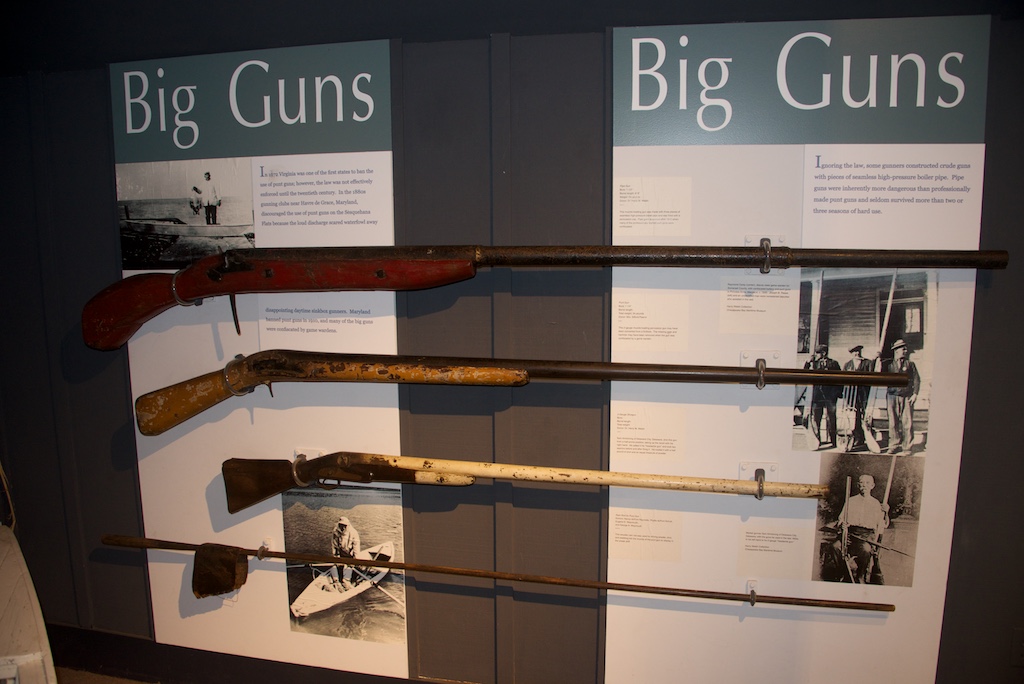
Some visitors thought that we were part of the Marine Museum, but we told them they would have to pay extra for the traveling exhibit. My only disappointment at the museum was the Waterfowl exhibit. Jason had promised the exhibit would be full of Retriever facts and photos, but instead it was filled with guns and bird decoys. He had been fooled by the statue of a Chesapeake Bay Retriever outside the exhibit building.  I learned that the Chesapeake Bay Retriever was descended from two Newfoundlands, rescued from a ship and subsequently bred with local hounds and spaniels.

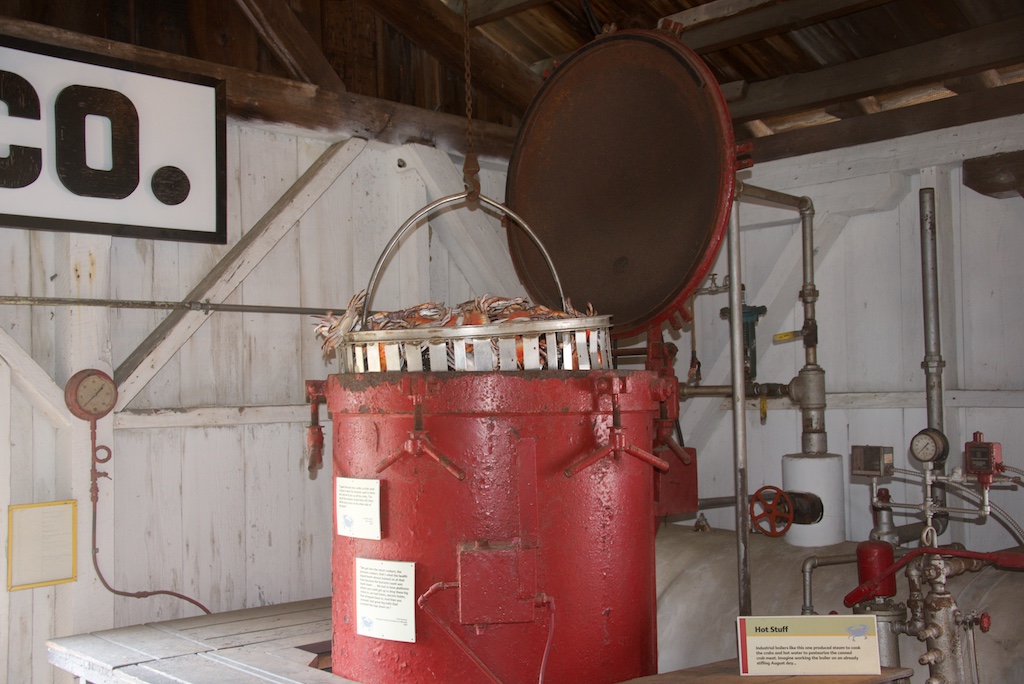
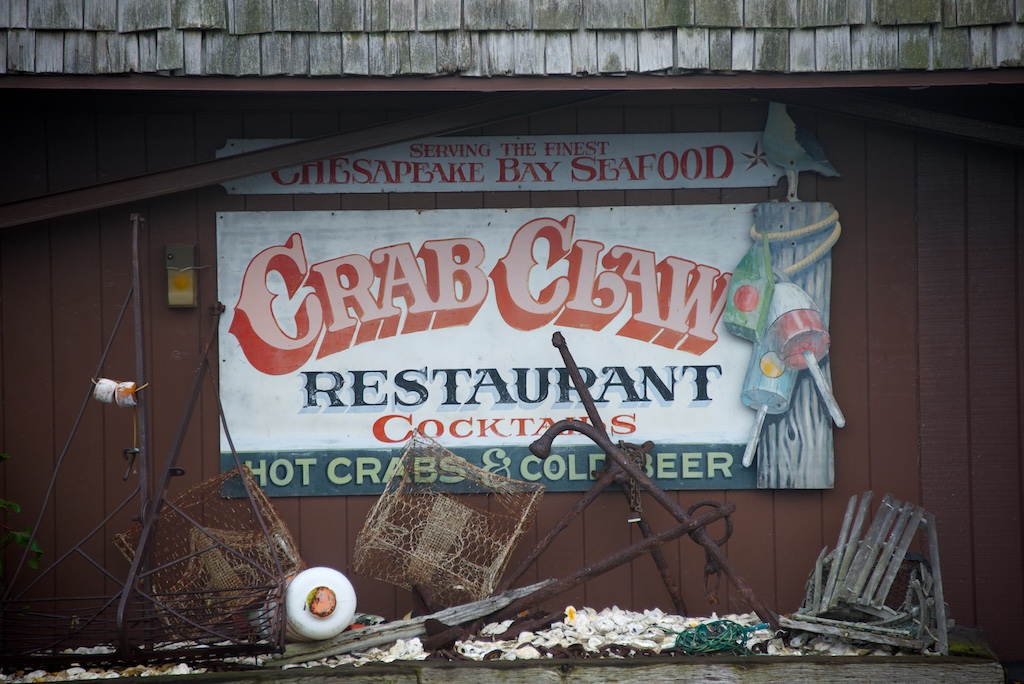
We did not visit the local crab house because it wasn’t supposed to be great.  Also I was maintaining my crab ban in order to hasten the removal of the annoying crab pots from the bay.

Read full story  · Comments { 0 }

Gale on the Chesapeake

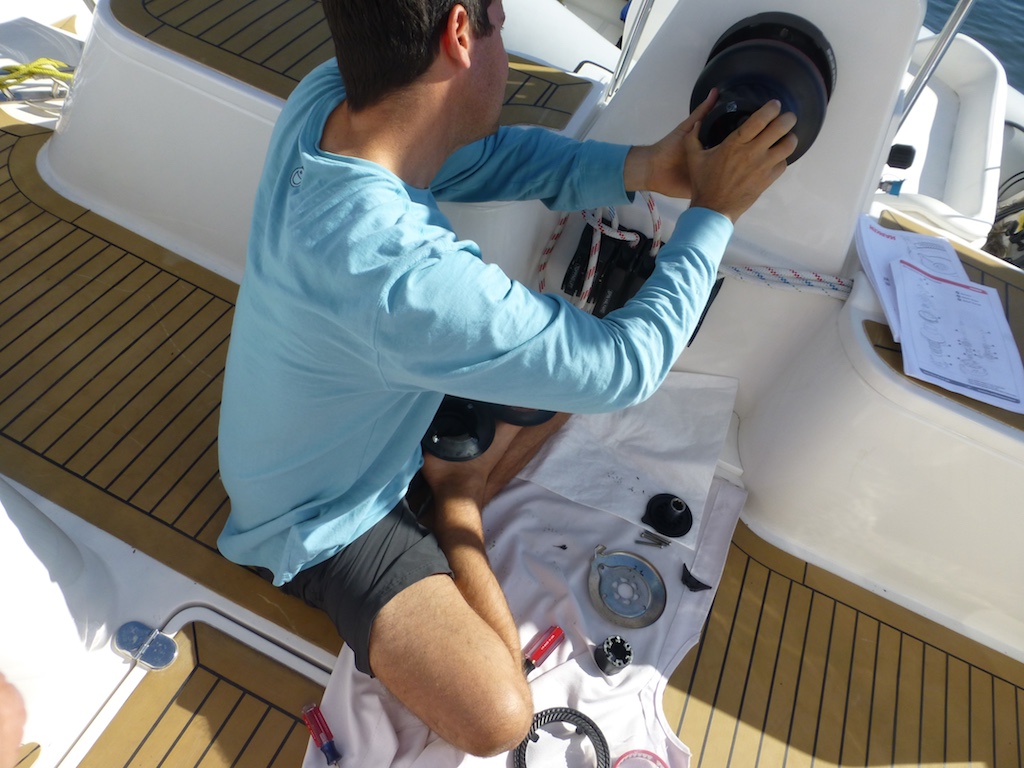
After a pleasant trip across the bay, we grabbed a mooring ball at Solomons, and got some rest, especially well-deserved for Jason. I had a  cold, and he took the bulk of the helming for the day. The only exception was when I managed to shred the self-tailer on the winch, while raising the mainsail. The good news was that we had broken it once before and knew what parts to order.

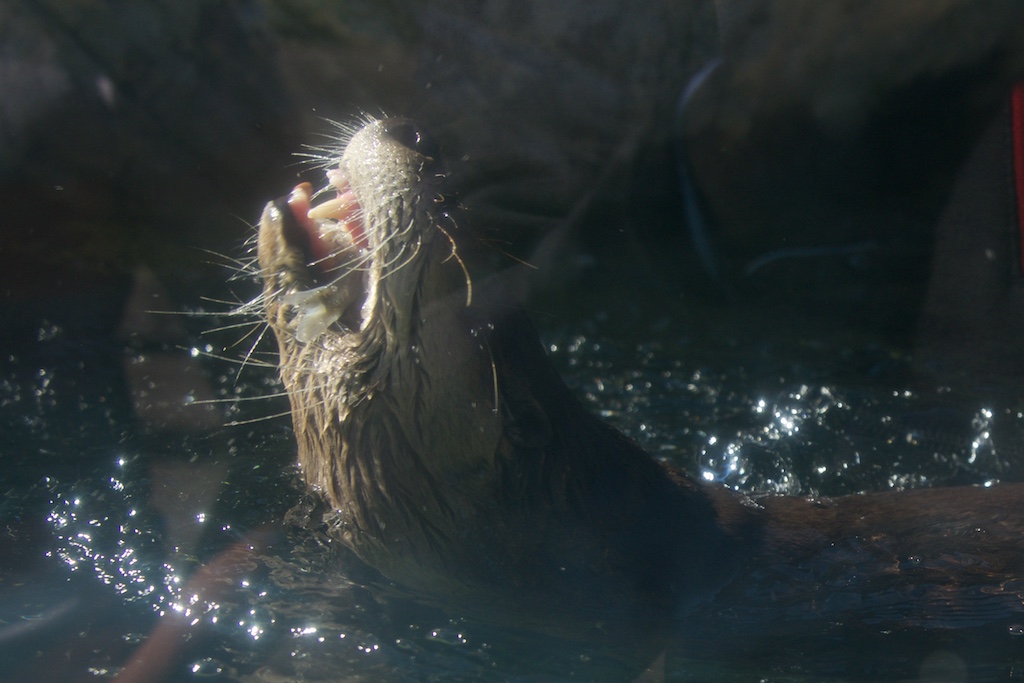
We enjoyed the hospitality of our mooring ball at Zanhiser’s and marveled at the number of Canadian boats. Each evening 4 or 5 would arrive and each morning they were gone. Was the whole country emptying? Clearly, some Snowbirds were moving South with a bit more purpose than we were. We saw numerous Catamarans, including sister ship Blue Dawn. Two Fish could finally feel that she wasn’t the beamiest boat in the basin. We visited the local Calvert Marine Museum; the highlight was watching the otter eat his lunch, including a boiled egg for dessert. Solomons’ current name derives from a businessman who bought up most of the town in the early 1800’s and established a cannery; be sure not to call it “The Solomons”. The town used to be connected to Solomons Island by a bridge, but the water has been filled in over the years, leaving just a bit of the original wooden structure.


Sailing Again!

Sailing Again!

We waited for some good weather for our sail to Deltaville – there is always some debate on Two Fish as to what that means. Based on the forecast, I thought I could be okay with a couple of hours of gusts to 25 with the wind dying down as the day went on. We rarely saw 25 as most of the day was in the low 30s with a gust to 39. I visited my traditional windy spot – the master cabin – as Jason steered us downwind through the waves. At one point, I heard “Do you want to know how fast we are going?”.  I responded that the less I knew about speed the better.   The master cabin can become the denial zone.  Jason ignored my request for silence, claiming he could not help himself.  “15.7 knots. I stowed some canvas as the water was stacking up by the bow in the big puffs.”


Needless to say, I was happy to anchor in Deltaville. After navigating through the tricky channel, we found a great spot in the Western arm of Jackson Creek. If you visit via boat, take care to follow all channel markers and check their numbers to make sure you find all of them, especially the first two.  They must have bought the markers on sale, since they do not match.   Looks like a bachelor’s sock drawer full of mismatched reds and greens.

Anchoring was easy for us in the Chesapeake.  There are many places to drop hook. In most cases, the 33kg Rocna set very well on the first time.  We had to thoroughly wash the chain with our sea water pump during weighing to remove profuse quantities of mud.  At the bow, I would do an odd dance of pressing the up button on the windlass, operating the hose, removing the beehiving chain and directing Jason at the helm.  He would be doing very little at these times. Oh, to be Captain.   Frequently my sailing gloves and my jacket would acquire mud stains after weighing anchor.   Jason offers a deluxe service and washes them at our next sighting of a hose. We like a lot of space and were able to choose creeks with enough space for Two Fish.

We took the dinghy ashore, passing two Antares on the way: Blue Summit and Echo.  Echo (nee Barefeet) was owned by our former crew, Chris and Erin. While there was not much within walking distance, the people were very friendly – we were even offered a ride by a passing motorist, after she confirmed that we were sailors.

Read full story  · Comments { 1 }

Two Fish meets the Revolutionary Era

Before starting down the Inter-Coastal Waterway (ICW), we had one more stop to make. Encouraged by another Northwesterly on its way towards us, we reversed into a tough spot at

All headed to Hampton

All headed to Hampton

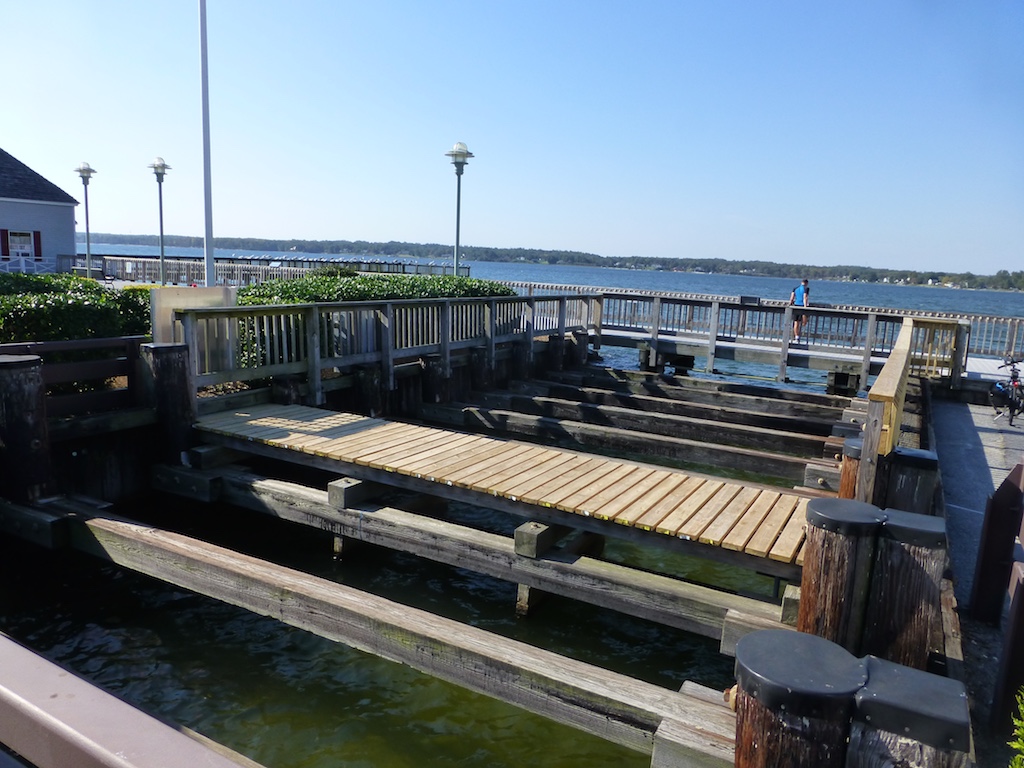
the Hampton Public Piers – crosswinds, currents and dolphin pilings aren’t our favorite companions.  We did learn a new docking trick.   We had to back into this spot but the side dock was short, so the bow is tied up to a piling.  Our initial idea was to loop a line on the piling while we passed it and then back into the slip.  This is a silly idea in the cross-current as the boat is forced to slow down at the wrong time.   The best way to enter this type of slip is to reverse in all the way at a decent speed to fight the cross-current.   Next, attach the stern on the up-current side.   Then motor forward to attach the boat to the piling.   We are living and learning.  Our clumsy arrival was rewarded with  shelter of the Hampton Parking Garage which kept the 25+ knot winds away from Two Fish. Hampton also has some good restaurants and it is a fun meeting point for fellow boaters heading south.

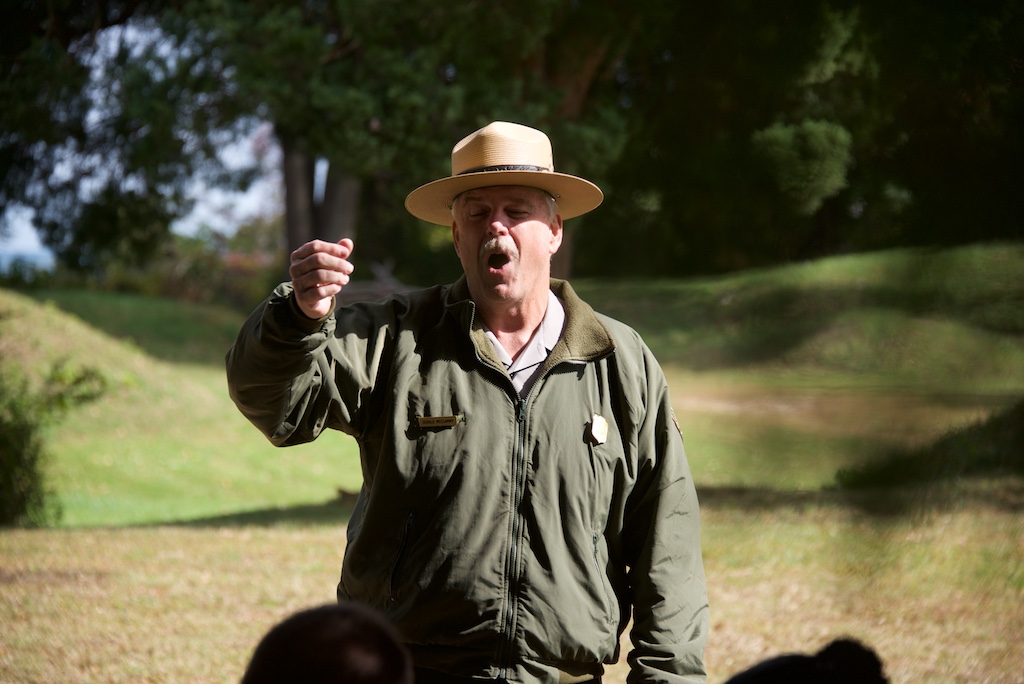
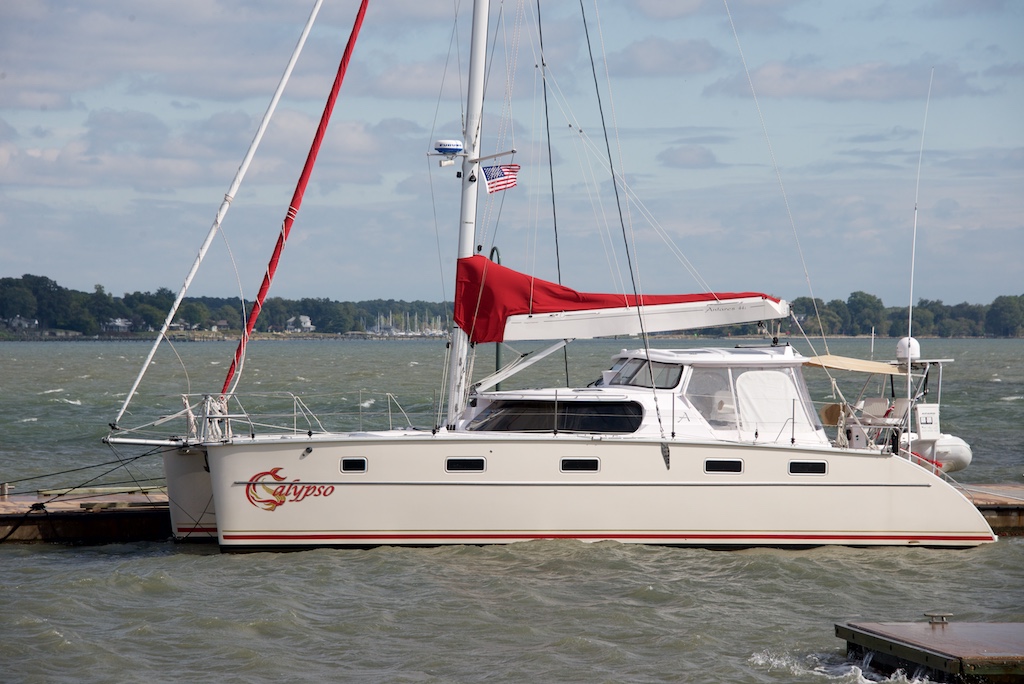
Yorktown was just a half hour away and the bonus was that Calypso was docked there. We enjoyed Ranger Rick’s walk – meant for the folks in the Financial Department at Langley but he let us tag along. I tuned out a bit to wonder when I would get lunch, but Ed, Maite and Jason seemed to be absorbing all of the data. I did learn how much we owed the French for leading us against the British on the battlefield.  In the decisive battle of Yorktown the French brought more troops, lost more lives and brought the only Navy.   Why?  Because they hated the English.   Not much has changed.


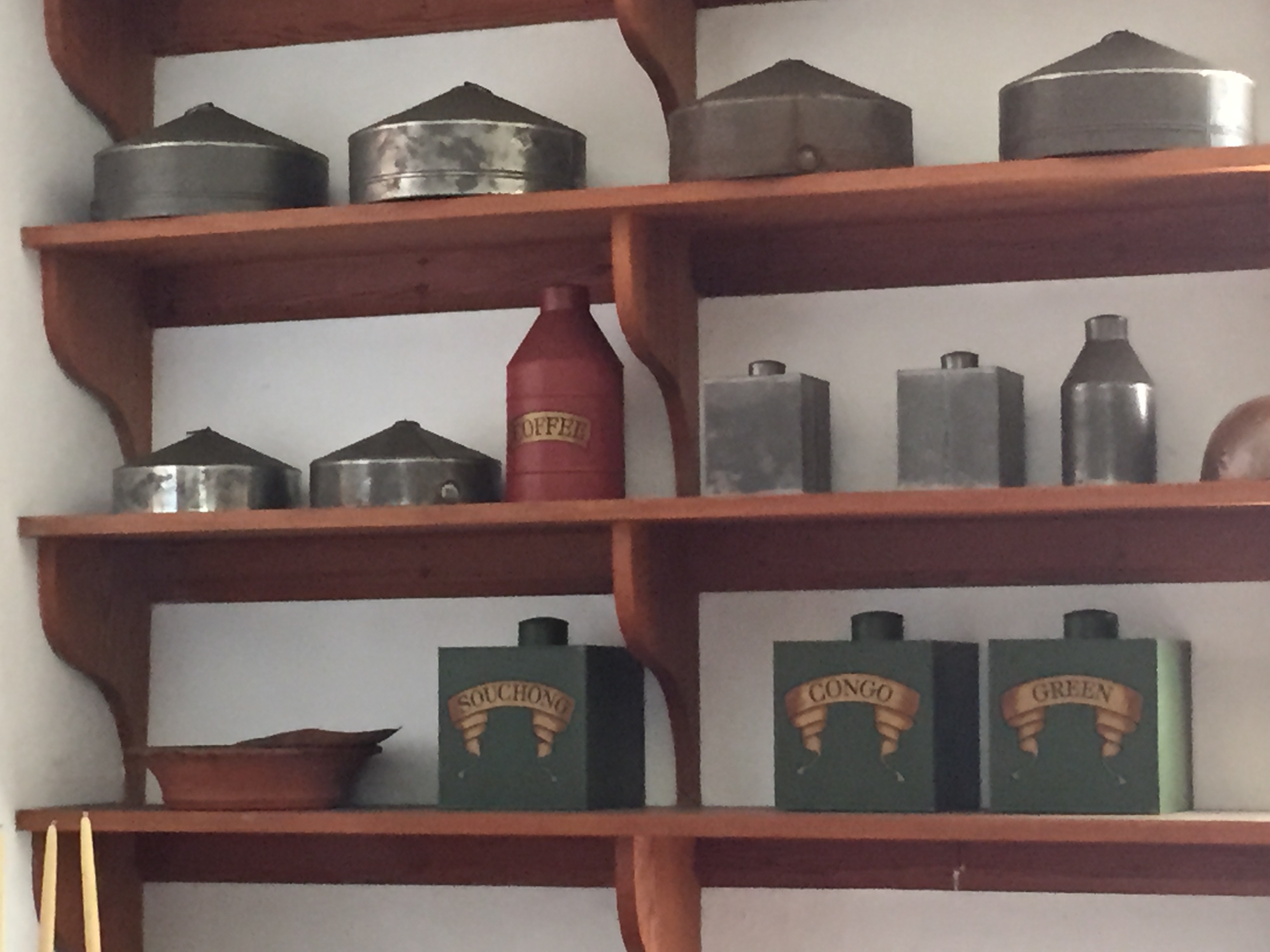
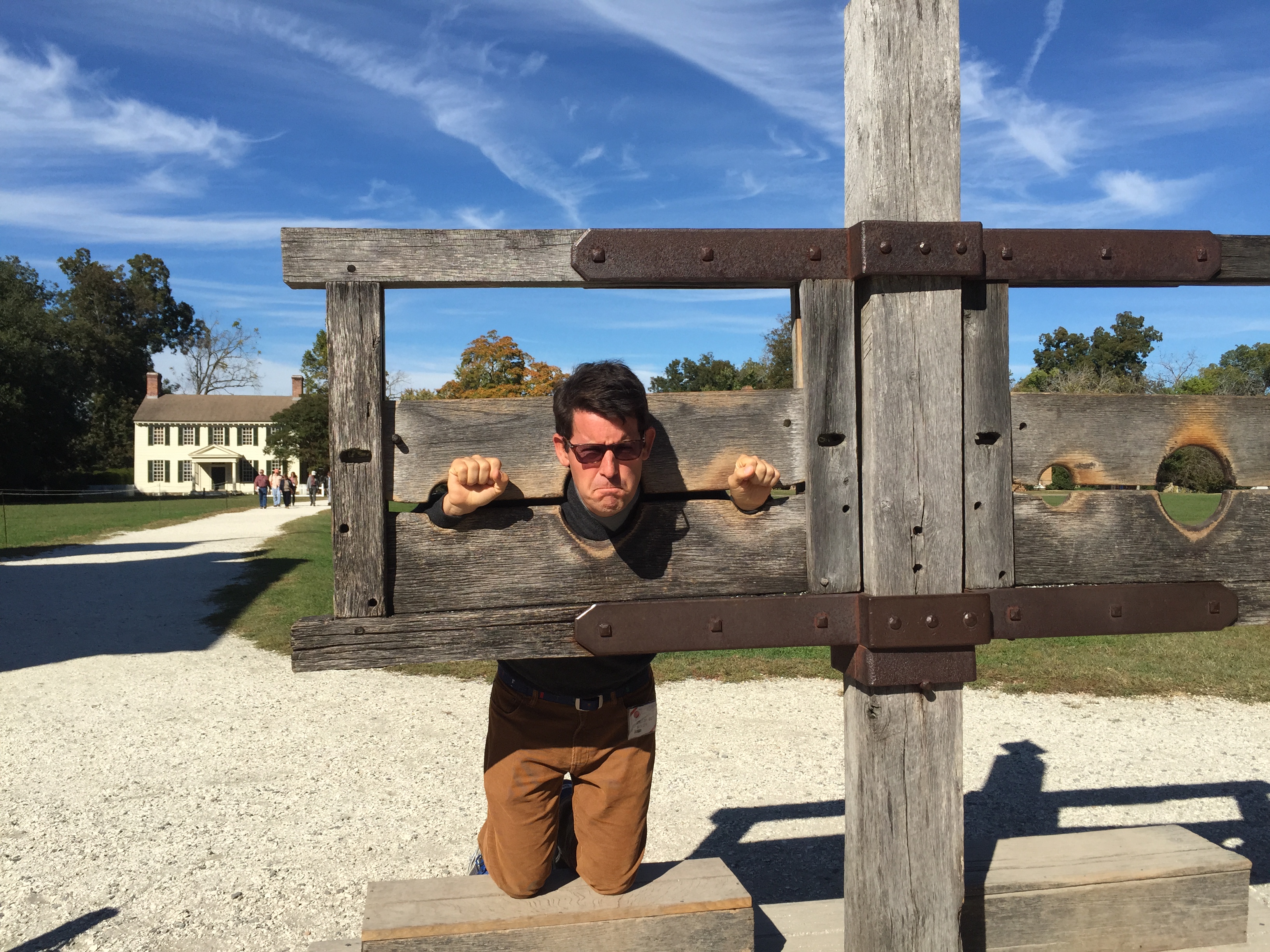
Our other revolutionary stop was Williamsburg. My last visit was in the  70’s and my vague memories were of a more laid-back town than the current Disneyesque area. Despite that, we enjoyed our tours of the Governour’s Palace and Capital, given by the enthusiastic tour guides. I enjoyed seeing Chowning’s Tavern, where we had eaten Brunswick Stew and Welsh Rarebit aka Grilled Cheese Olden Style on my last visit.

What did I do?

What did I do?

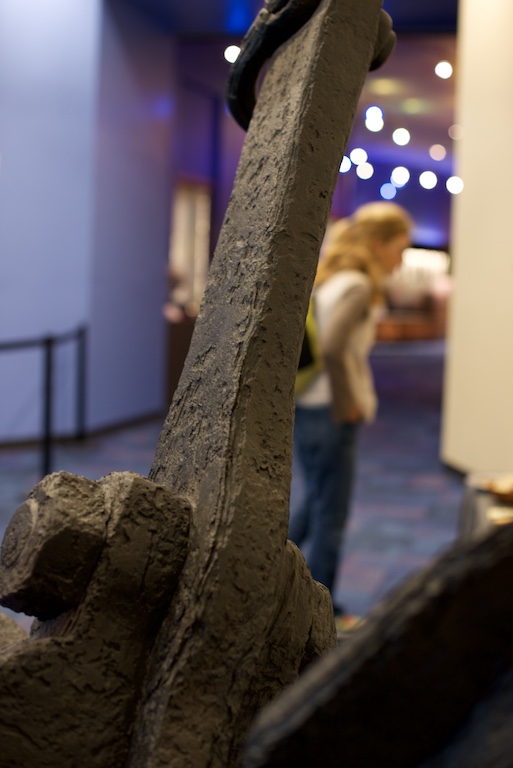
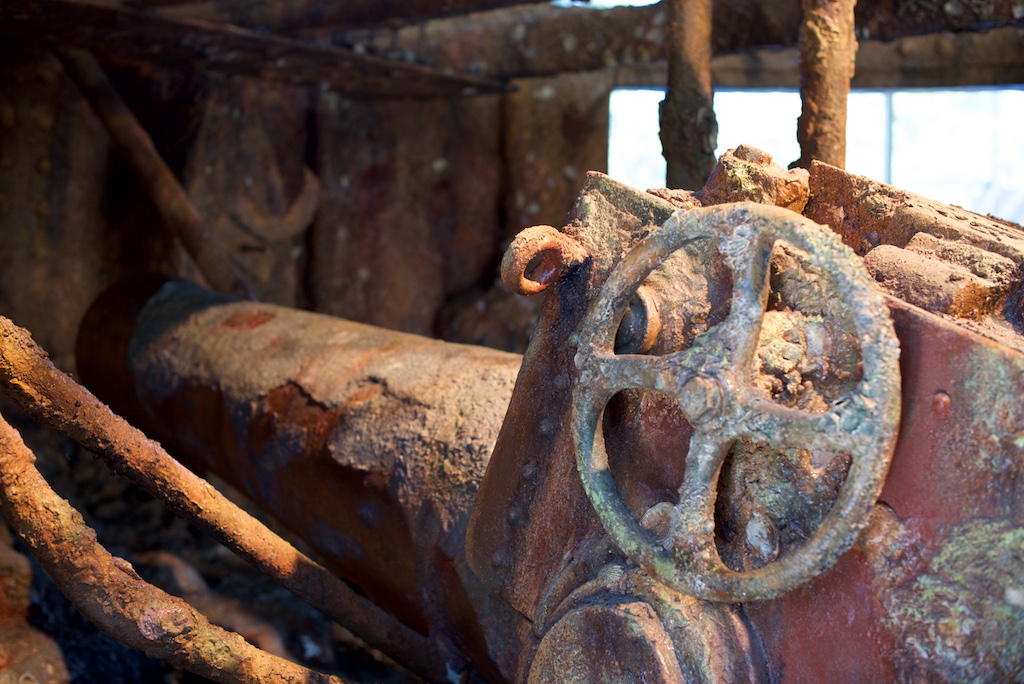
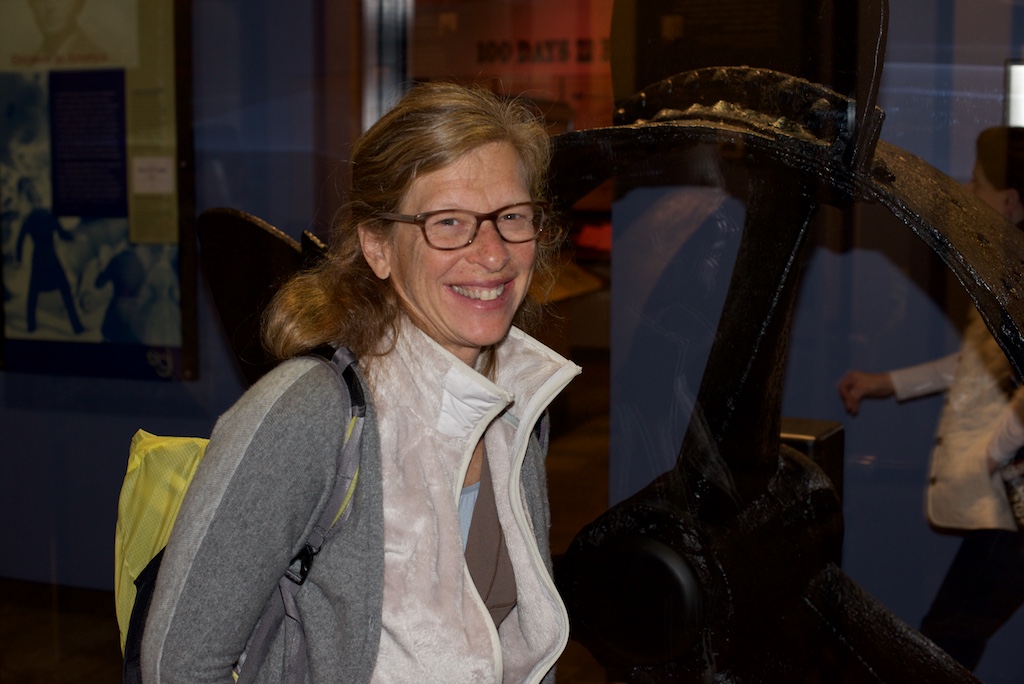
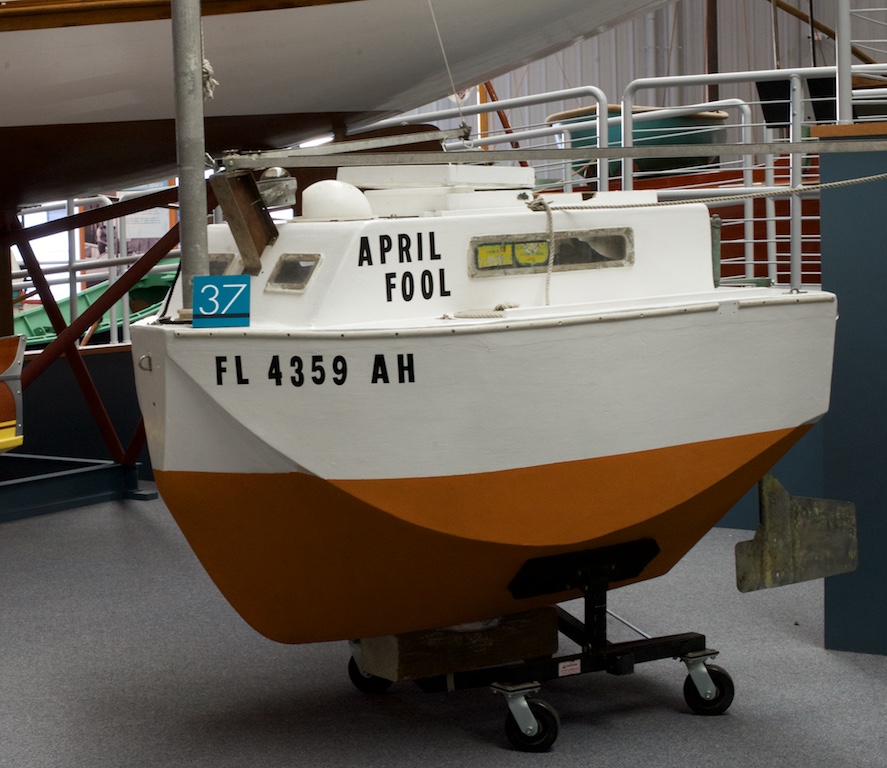
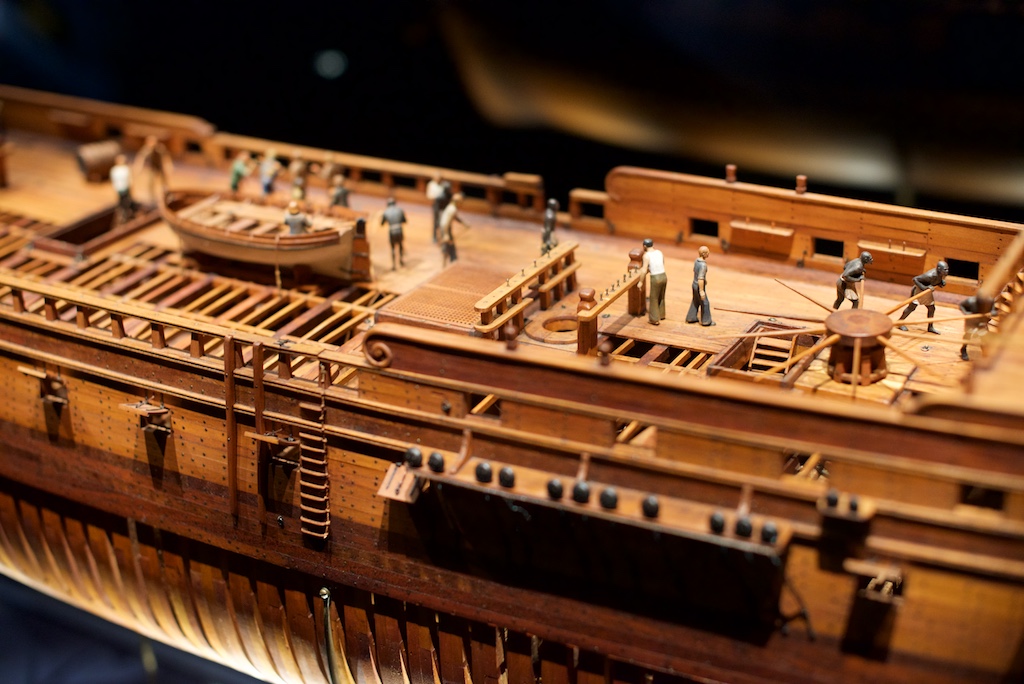
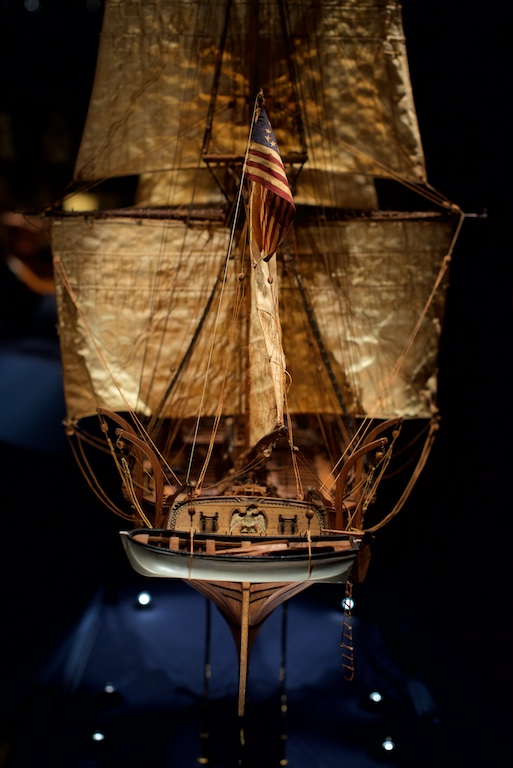
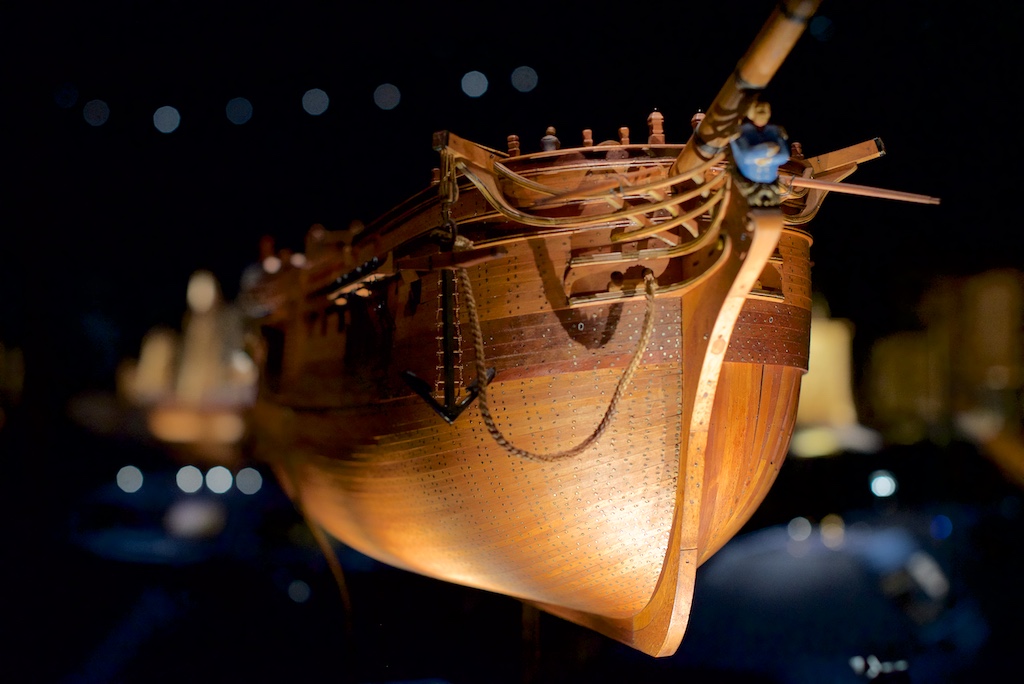
Don’t miss the Newport Mariner’s Museum; it is definitely joining our top ten list of Maritime Museums. Their major project is recovering the USS Monitor, a civil war battleship recovered off Cape Hatteras and undergoing conservation efforts. It was exciting to see an example of a Jangada, a Brazilian fishing boat, in the International Small Boat exhibition.  We  saw them frequently on the beaches and waters of Northern Brazil.  Also interesting was the April Fool, a small boat that was sailed from Casablanca to Florida in 1968. That is not a boat for me. The miniature fleet of model ships created by August Crabtree was more my style.

The lines were short at the historic sights because the tourist season is over.  We keep feeling like party guests that have stayed long past desert or after the keg has gone dry.   The cold weather reminds us to head south as Two Fish wants to swim in warmer waters.  Going to museums is territory for school children, retirees on tour buses, and curious cruisers. I enjoy learning more of our history without having to take a test on it next week.

We recently celebrated our first year of living aboard.  We have learned so much.  We continue to perfect the types of activities that make cruising enjoyable for us.   We rent cars at times, visit any museum that will have us,  eat out too much, watch movies, take hot showers on board, use the heaters, and bake brownies.   It has taken us a year to convert from delivery skippers to cruisers.   The transition still has a long way to go.


Read full story  · Comments { 0 }

Do the Dismal

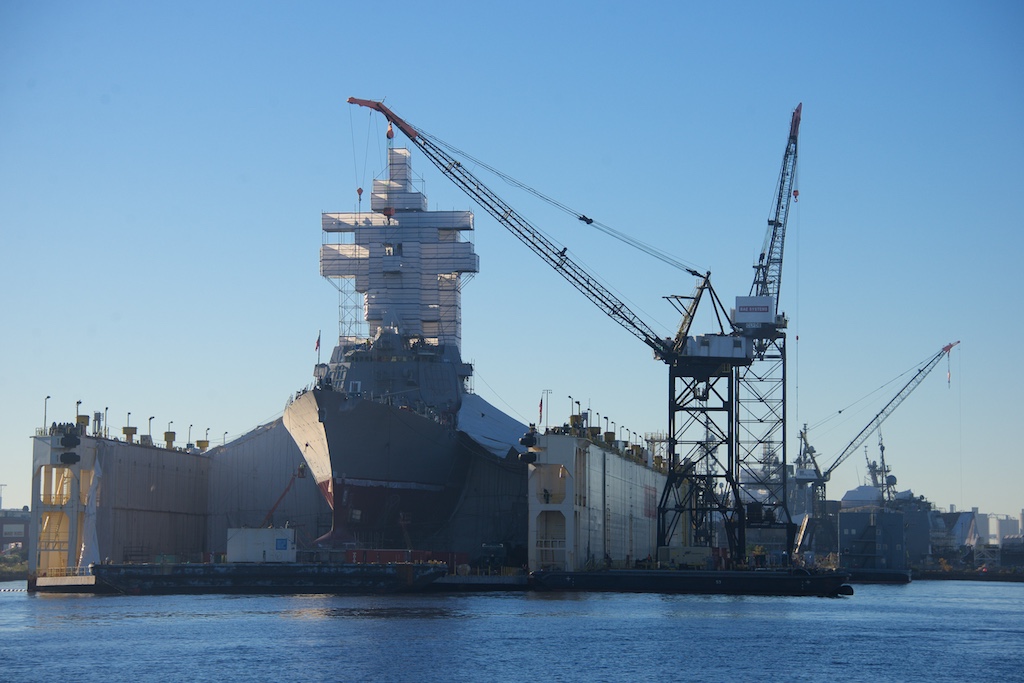
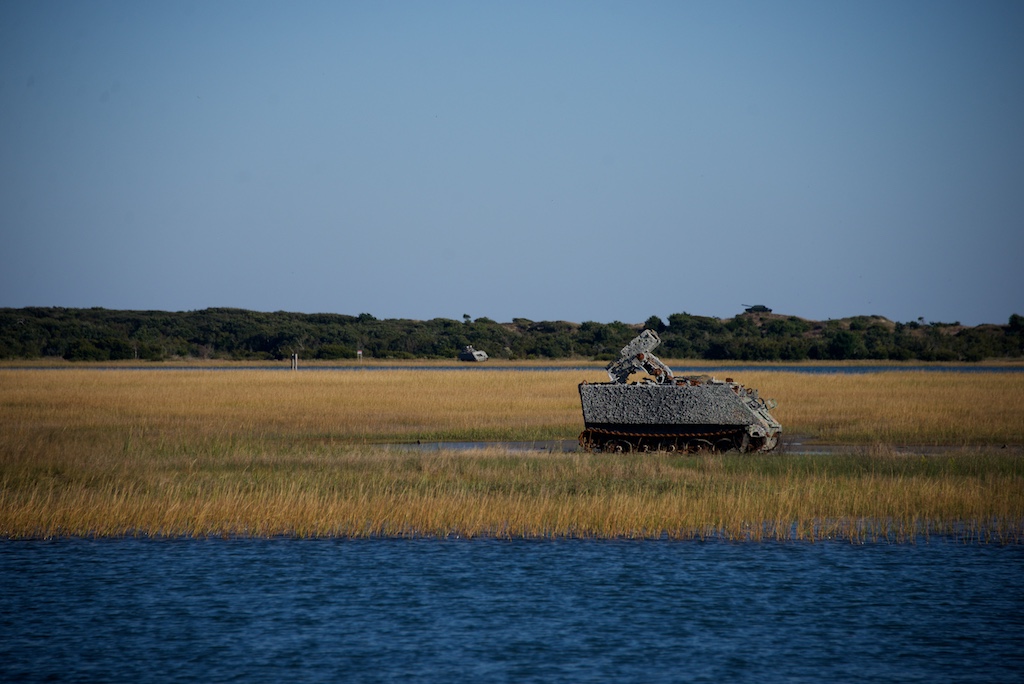
The InterCoastal Waterway (ICW) was Jason’s gift to me.  He did not procure a shovel and dig the waterway, but he reluctantly agreed to travel this route, rather than going out into the open ocean.   The Atlantic Coast portion, from Virginia to Florida, measures about 1,100 miles. It is a slow trip with no open ocean passages and no overnight trips. Perfect Gail travel. Before entering the ICW, we transited past the navy base in Norfolk, Virginia.  To starboard we saw a Littoral (close to shore)

True Green Can?

True Green Can?

ship, a fairly recent addition to the Navy. Littorals come in monohull and catamaran versions but have been a bit of a flop.

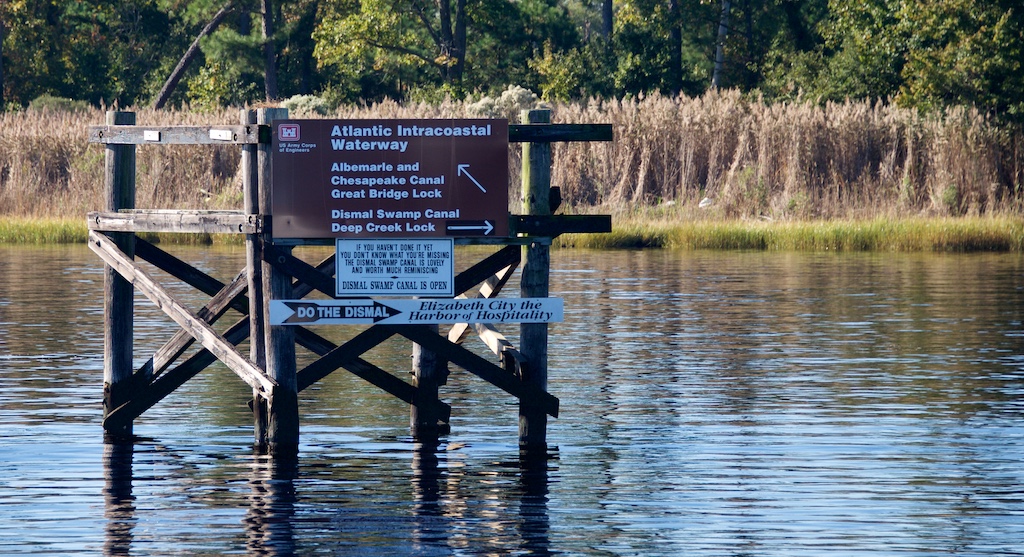
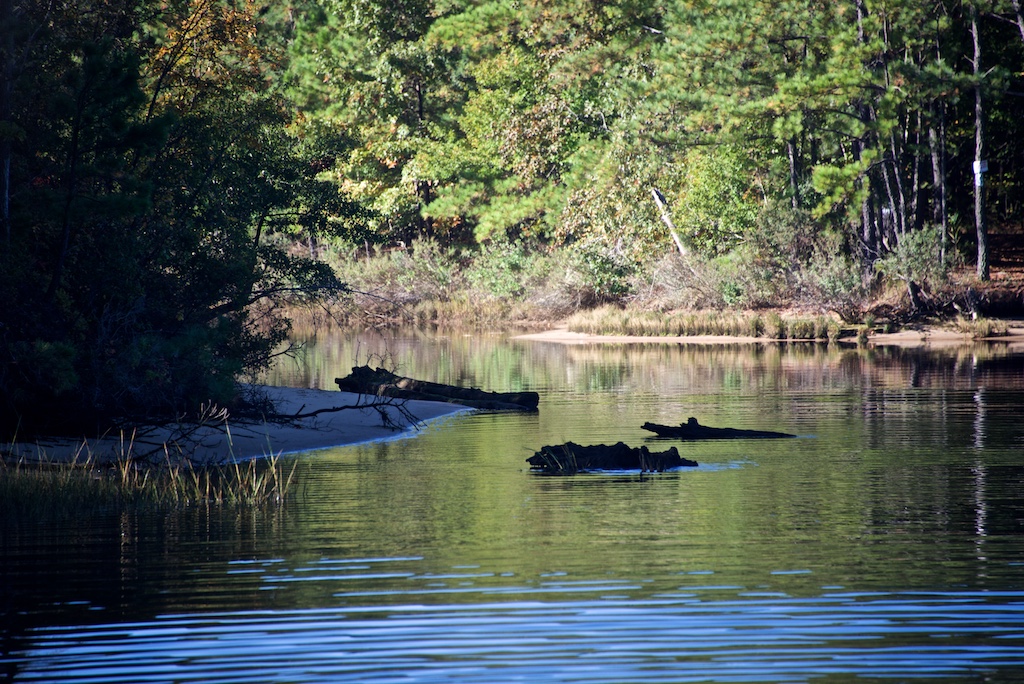
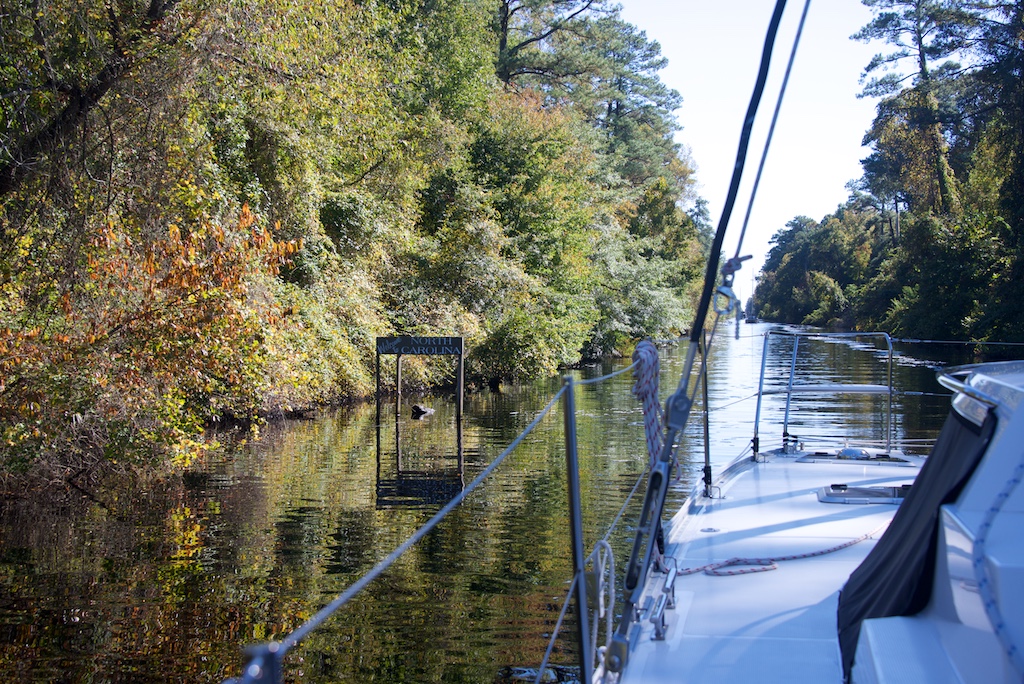
At the start of the ICW, one can decide to either traverse the “Virginia Cut” (1 lock, good depth)  or the “Dismal” (2 locks, questionable depth). We chose the Dismal as it is the more scenic route. The name most likely originates from the common term for swamp in the 1600s being a “dismal.” No one seems to mind the redundancy.

Littoral Ship

Littoral Ship

The Dismal Swamp Company, formed in 1763, had George Washington as its most famous shareholder.  Washington might have been the first President involved in a real estate deal with odd government connections, but certainly not the last.  While they began the process of clearing the swamp for transit, it wasn’t until 1793 that serious clearing began, as authorized by Virginia and North Carolina. Many boaters have unwittingly helped dredge the canal since then. We found that the best way to navigate was to use our time-tested method of following a boat with a

Do the Dismal

Do the Dismal

deeper draft than Two Fish. However, there were two challenges: 1) being a catamaran, we have “two boats” to keep off the bottom and, 2) the lead boat’s sudden turn could be to avoid a hazard or a malfunctioning autopilot. In fact, later in our trip I radioed a lead boat to ask what they were avoiding by swerving.  Their response: “No. My wife just hit a button by mistake.” It didn’t take him too long to give up his spouse.

Oops again

Oops again

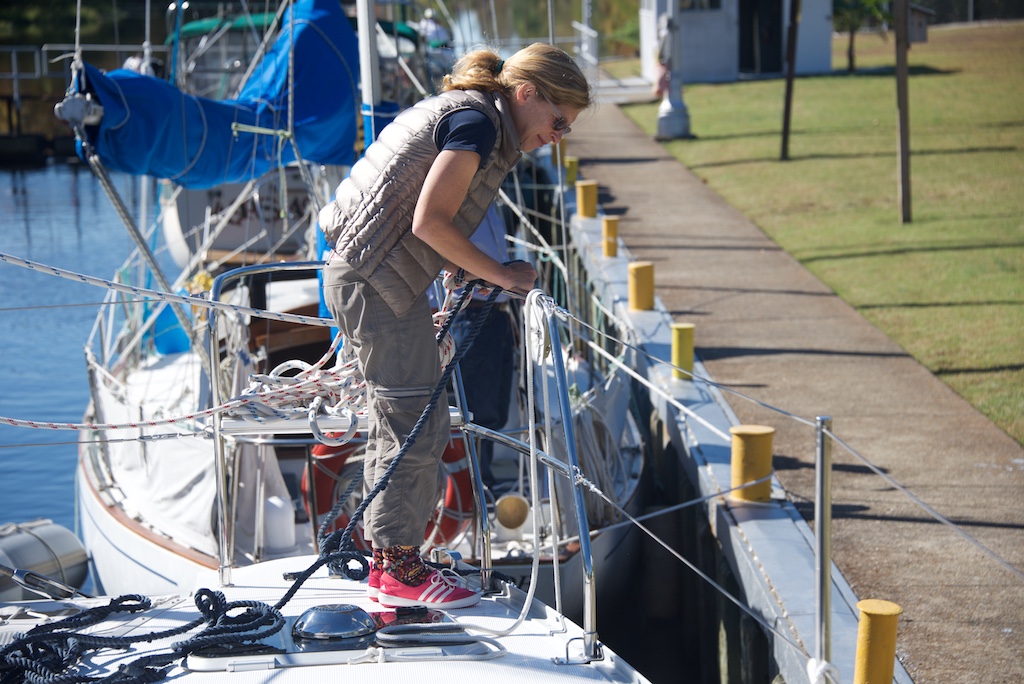
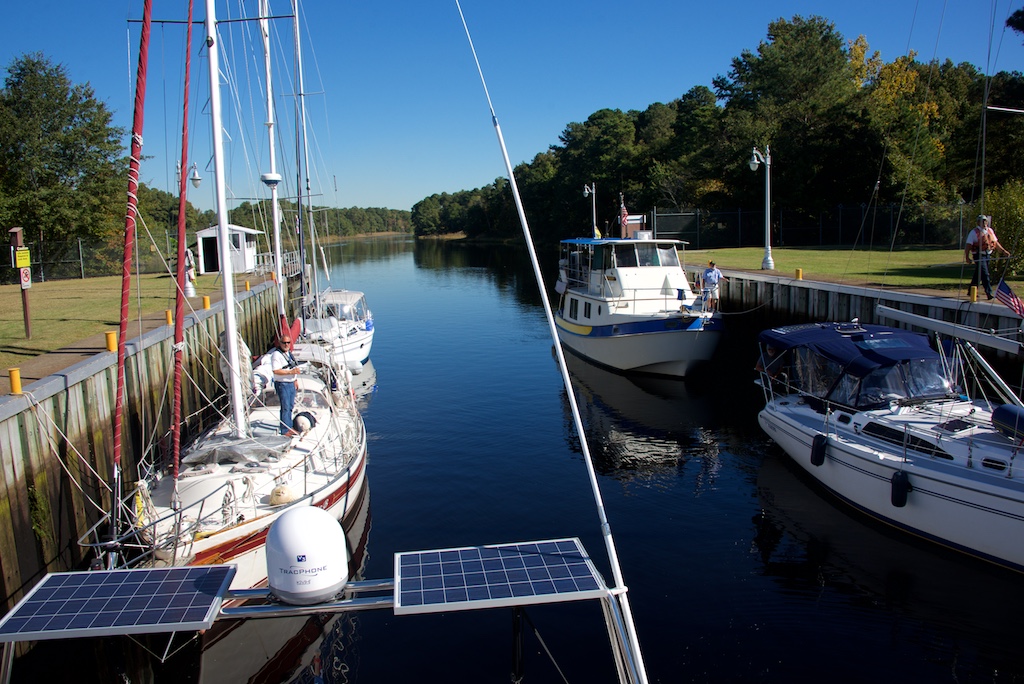
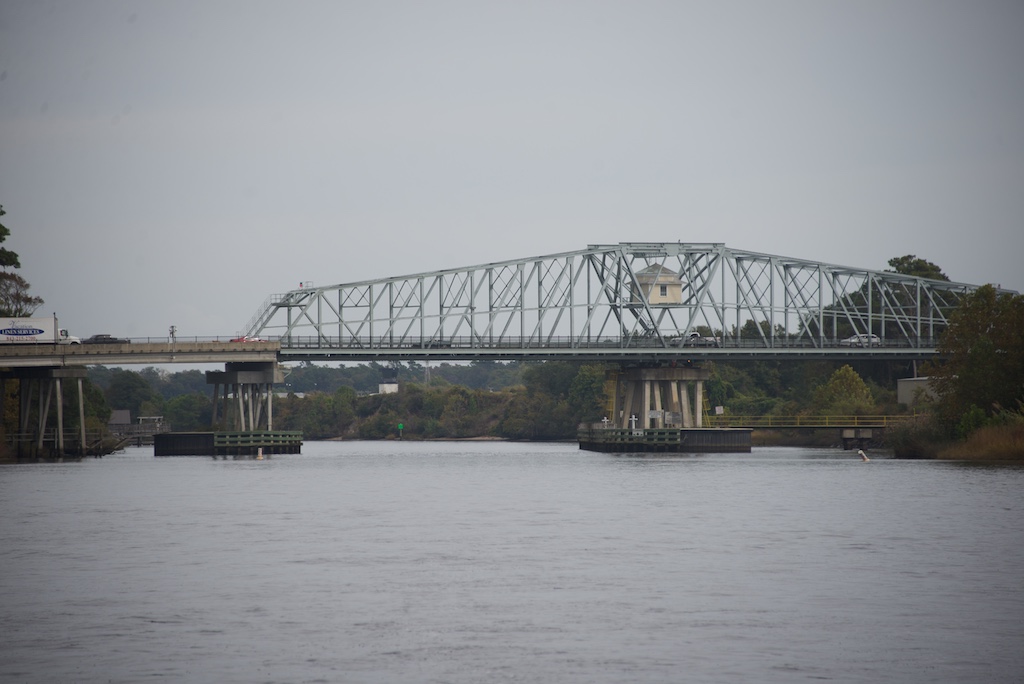
This was the first time Two Fish and her crew had transited a lock.   We had a bit of newbie nerves but it turned out to be easy. The lock operator asked that catamarans not take the first or last spot in the lock. One person holds the bow line and the other the stern line.   As the water level changes the crew adjust the two dock lines.  Single-handers seem to have no problem doing this alone. Our skills keep expanding, but we are not ready for the Panama Canal just yet. The lock-keeper, Robert, is well known for his wonderful lecture about the swamp. There is a swing bridge right after the lock and Robert is also the bridge operator.  When everyone is through the lock he gets in his car and drives a mile to open the bridge. So did we run aground in the shallow dismal swamp?  No, but we had 4 touches.   We skidded over a mud bar.  We skirted by a bush.  And we struck a sunken log, which a diver would later report removed a bit of bottom paint. I said four touches but I only listed 3.  That last threat would come from another direction.

Lock Tie

Lock Tie

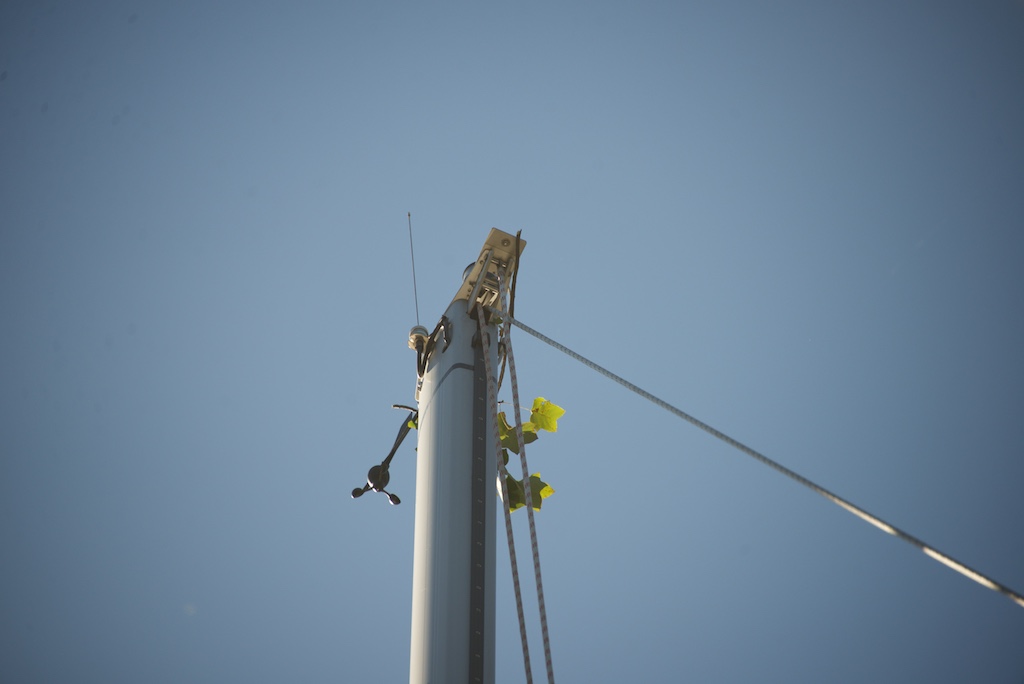
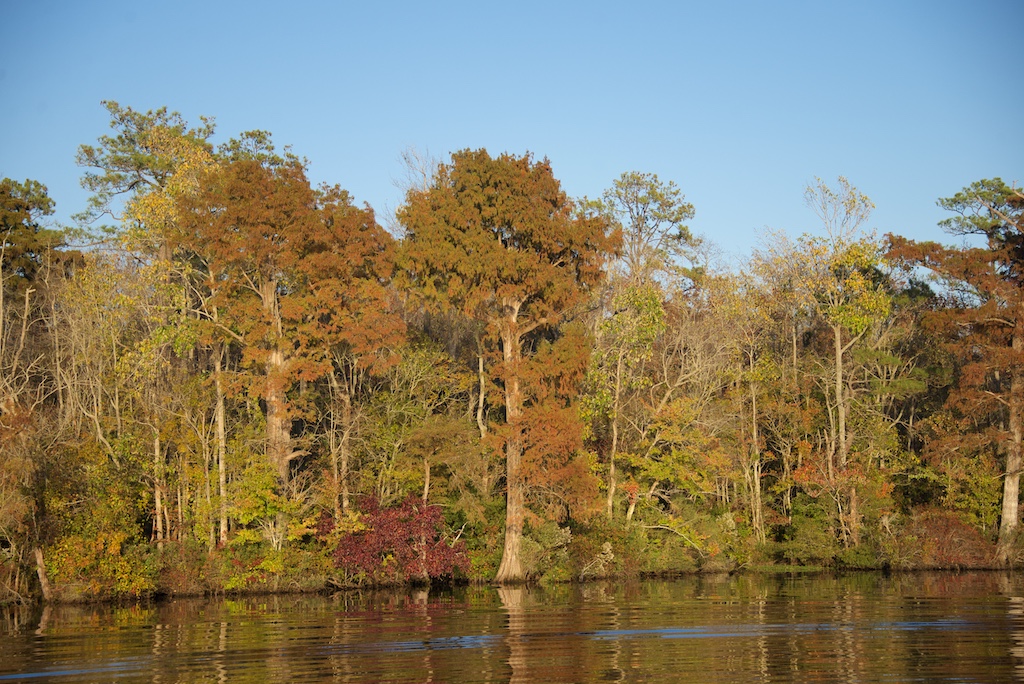
I was so focused on looking forward that I forgot to look above and our wind indicator was violently ripped off by an overhanging tree branch. Fortunately, our expensive electronic wind indicator remained in place but  the cheap mechanical windex is now sleeping with the dismal fishes.  After exiting the swamp via the next lock, we chatted with one of our neighboring boats. He was very happy to have had no incidents in the swamp. I didn’t point out to him that the tree branch in his mast might be an indication that he had a few incidents too.  The Dismal Swamp is gorgeous but the hidden logs make the trip a bit stressful.  One visit for us was enough.  I hope the Dismal devotees that can spend a week in the swamp do not take our feedback personally.

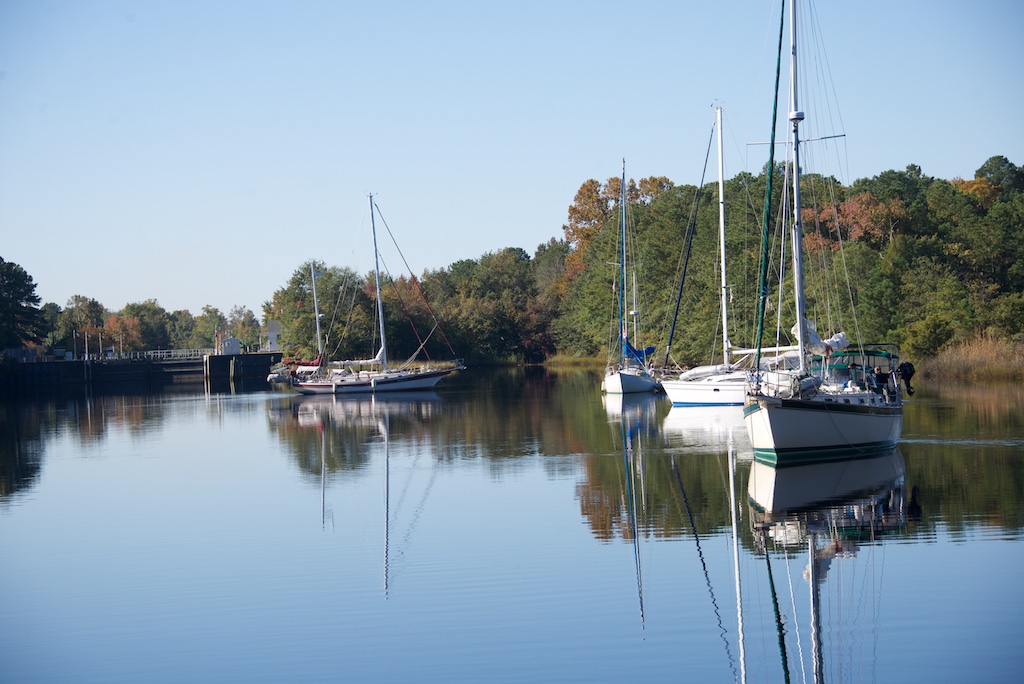
We anchored in Elizabeth City at sundown and were on our way to our next

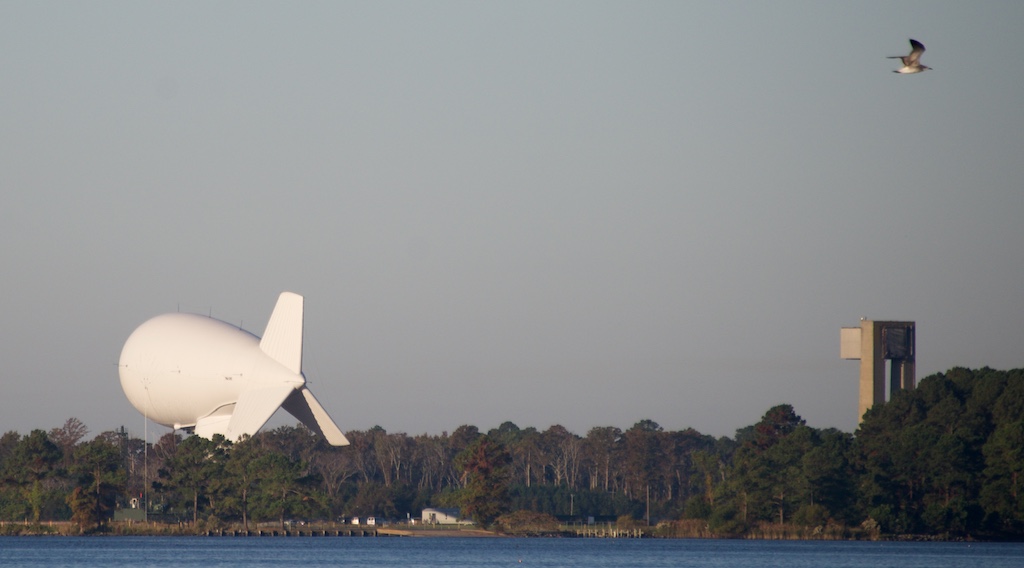
anchorage the following day. On our way out, we sailed past the airship factory, where most blimps are manufactured. Our friends on Steadfast captured our early morning departure.

Read full story  · Comments { 0 }

Warm Weather?

For those of you who think we are wiling away the hours in a tropical paradise, let me describe my day. The alarm went off at 5am. Fortunately, this was a fake 5am since we just finished Daylight Savings Time, but my brain still doesn’t like to see the numeral 5 as the starting point. The temperature was in the 30s and it was still dark outside. I quickly put on my 5 layers of clothing, made breakfast and went outside. We unplugged from shore power, removed most of the lines holding us to the dock, turned on the chartplotters and started the engines.

My job was to stand at the bow with our powerful flashlight, and to tell Jason how we looked on port as he pulled as away from the dock. Since the helm is on starboard, it is sometimes hard for him to gauge distance from objects. Lines released and we pivoted away. My next job was to stay at the bow and be his eyes as we steered out of the marina and towards the river. We now communicate using Bluetooth headsets. Sorry sailing purists (you know who you are) but the headsets are more efficient than handsignals. This is especially true when weighing the anchor; I generally have the chain counter in my right hand, the seawater hose to clean the chain in my left hand and am running back to the chain locker to clear the beehiving chain. Despite drinking New Jersey water, I just haven’t managed to grow that third arm which could be used to indicate the angle of the chain.

Back to our exit. All I could think of was how frozen my toes were. I tried moving my toes and fingers a bit to encourage blood flow. I wondered if I had just cursed aloud and whether Jason had heard me through the headset. We got through the channel markers and I stowed all of our fenders, despite the difficulty of removing lines when your fingers can’t move. Relieved from duty, I ran inside to warm up while Jason remained at the helm in his winter best. When will we reach warm weather?  [Jason comment:  I feel bad reading this as inside the enclosure it was not too cold for me.  I was wearing more fleece than you find at a Patagonia store plus the “bubble” is effective in keeping you warm.]


Green Light Camp Lejeune

Green Light Camp Lejeune

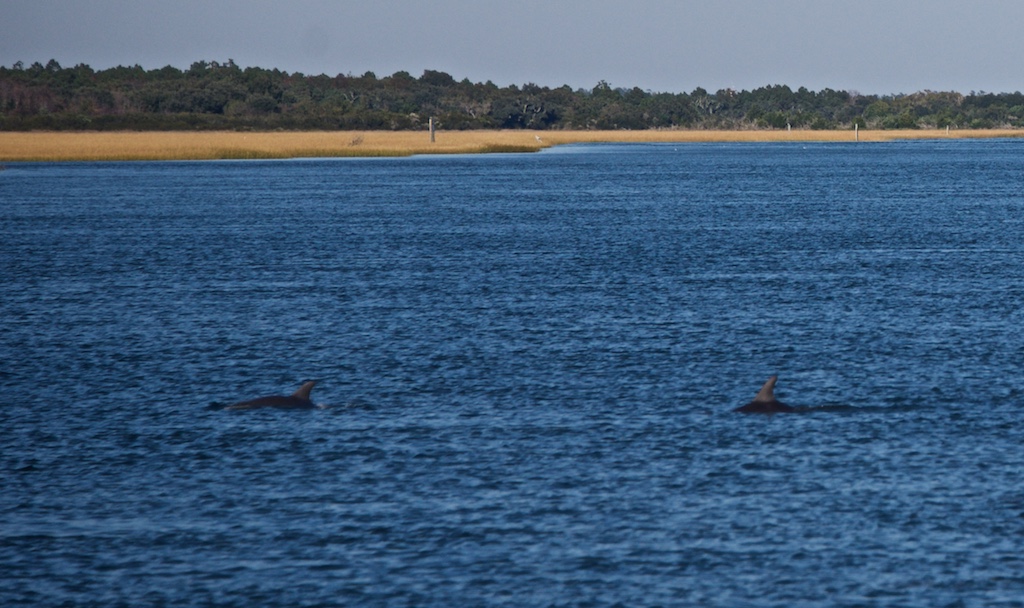
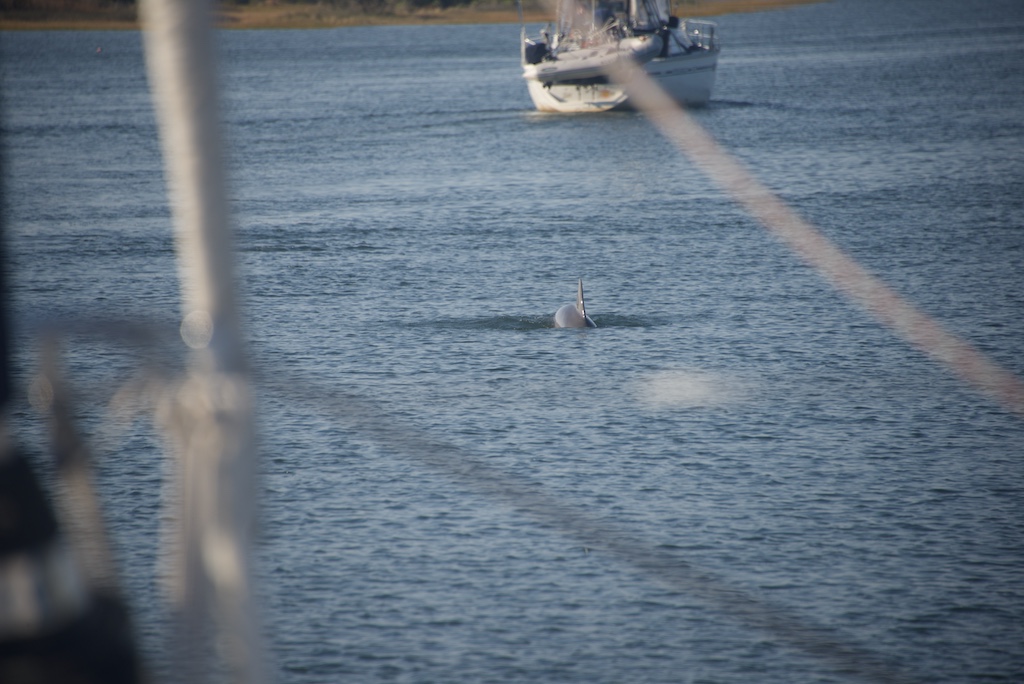
Later that day, the sunshine warmed us up and we enjoyed a leisurely ride through the ICW. We were serenaded by US Navy boats (who politely waited for us to go under the bridge), porpoises, and more Navy boats. The porpoises tend to like shallow water and at one point, unaided by markers, I think they tried to help me stay in the channel – keep me to starboard was the message I took away.

camp l 6

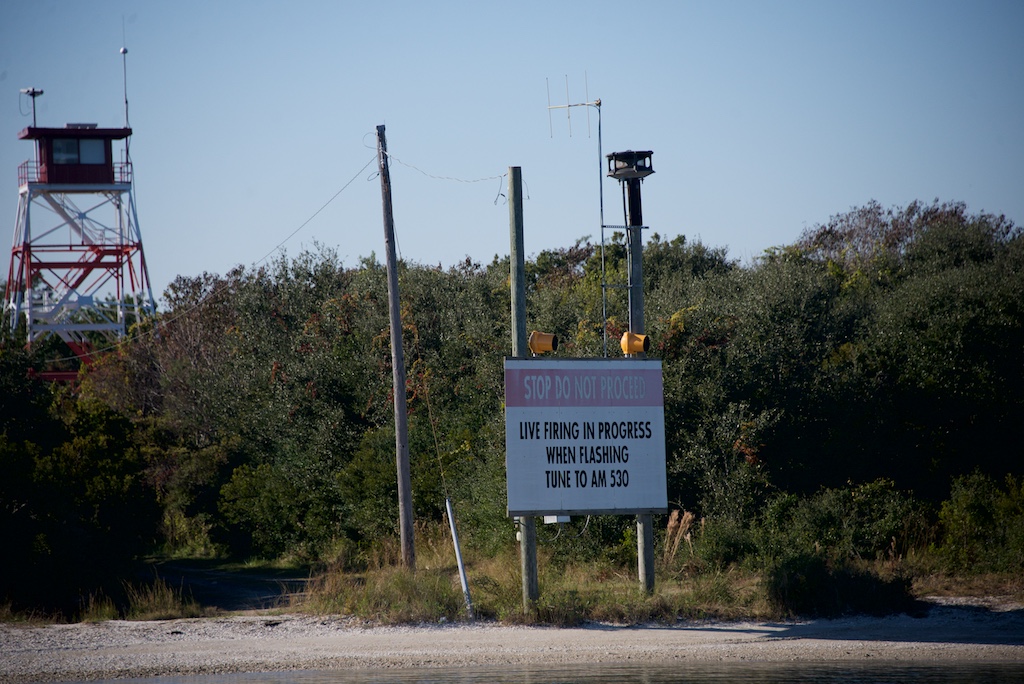
As we passed through the Camp Lejeune firing range, I heard a bit of a rat-a-tat-tat, even

Mile Hammock Anchorage

Mile Hammock

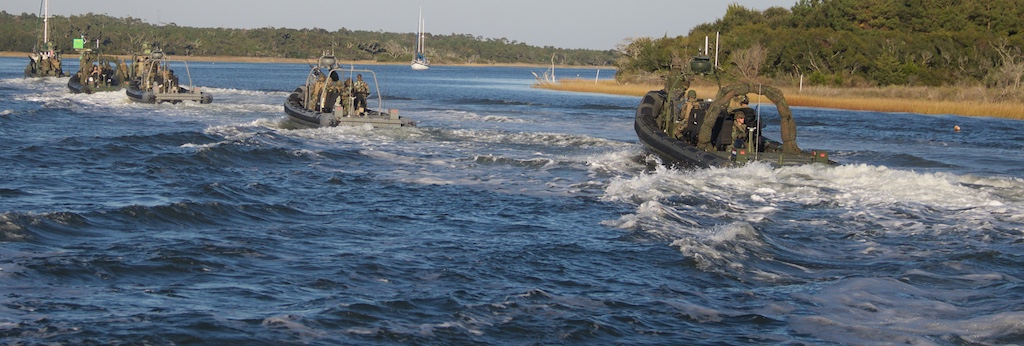
though the green lights indicated they were not firing at that point. I guess it was a neighboring range because we passed  unscathed. Towards the end of the day 5 or 6 boats sped by.

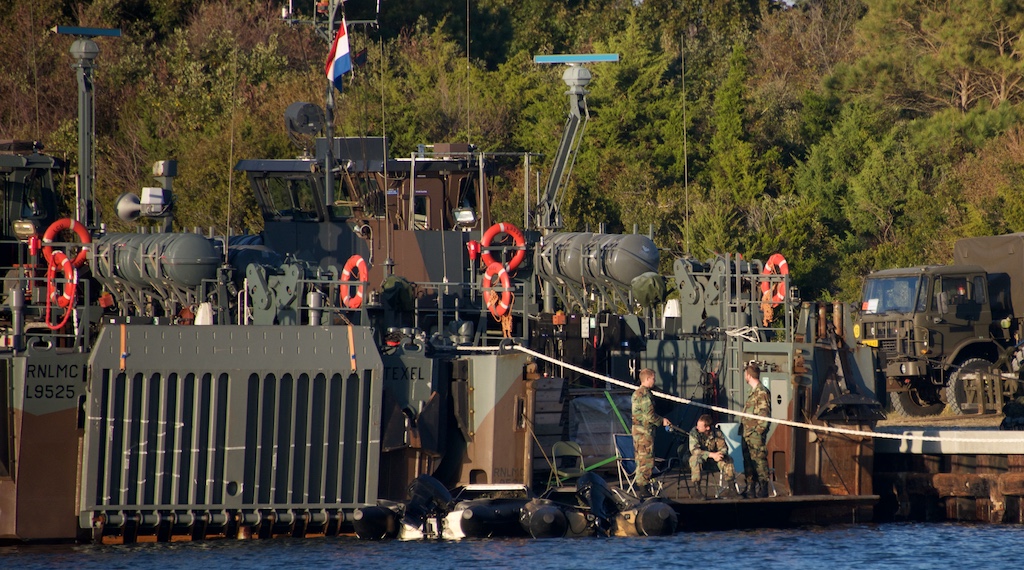
They had Netherland flags so were either on a joint exercise or were US troops in some war game simulation. They did not stop to chat, so I will never know.

That night’s crowded anchorage was calm, with the occasional noise from one of our Navy friends entering or exiting the harbor. We were a bit concerned about drifting into another boat so Jason tied a fender ball to our stern.  If we touched a neighboring boat, at least it would be a soft impact.   The wind shifted 180 degrees during the night causing Two Fish and the other boats to spin but without incident.  The Captain often prepares for things that fortunately do not occur.

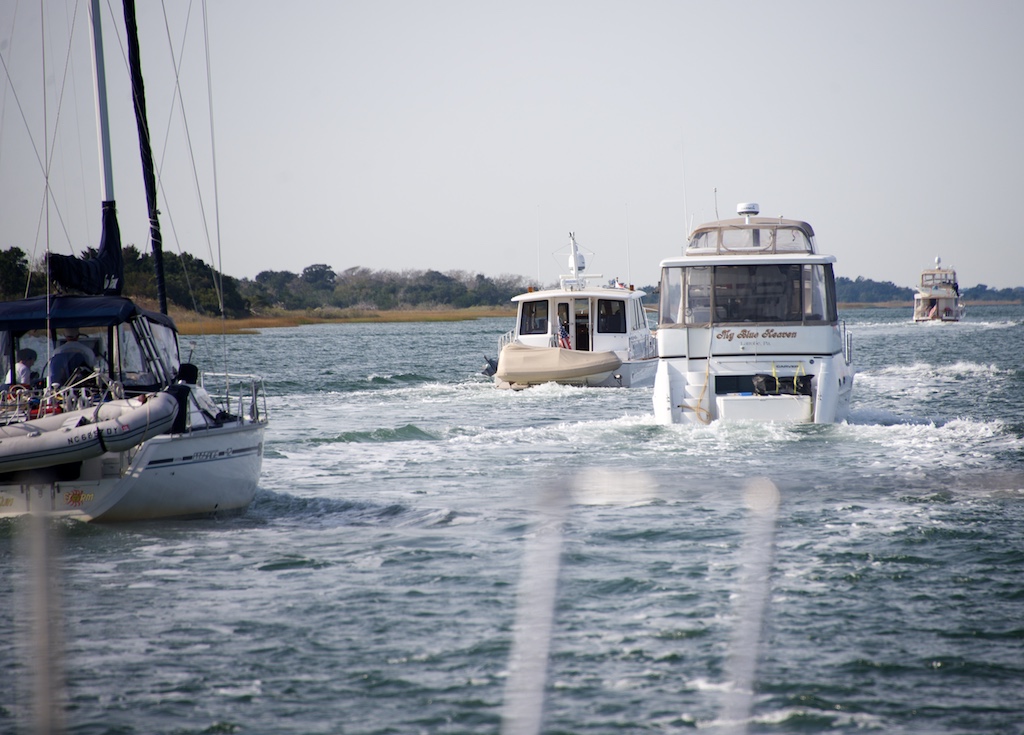
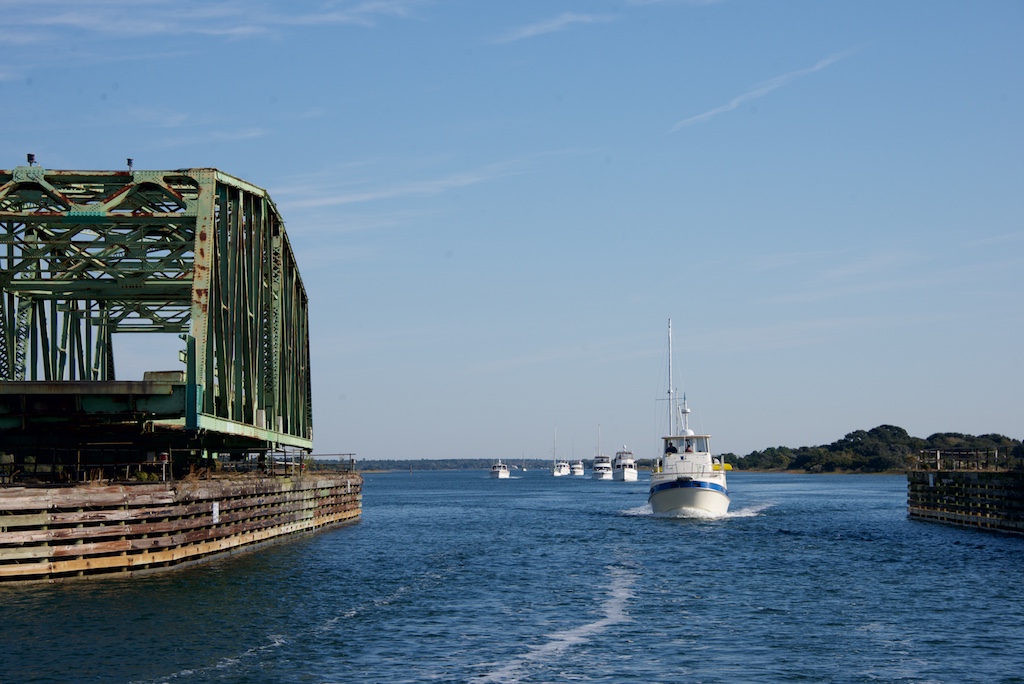
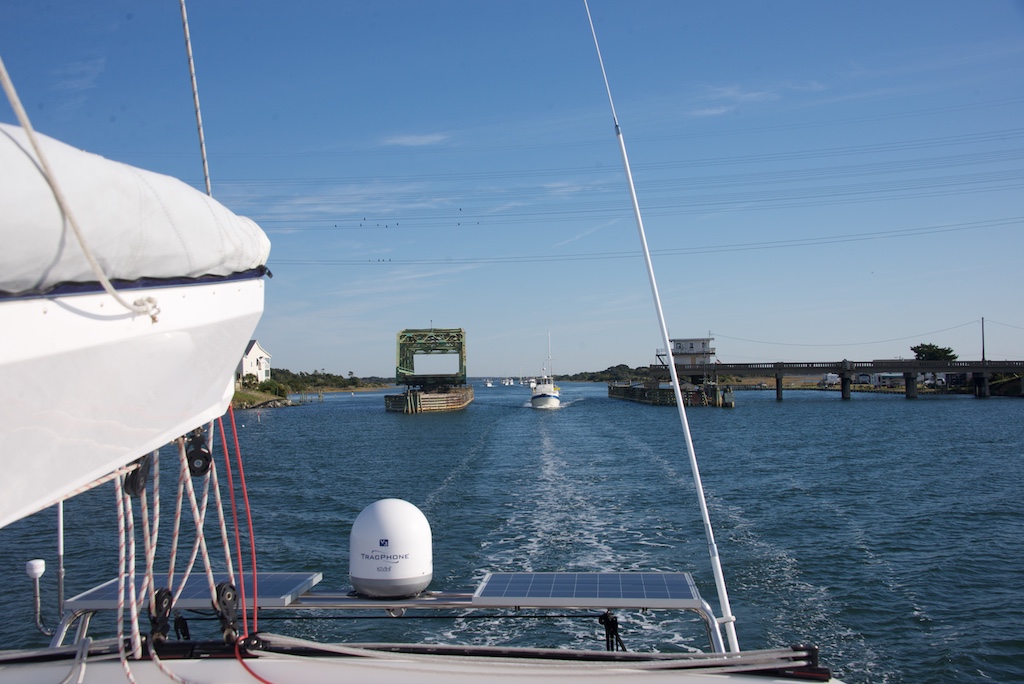
It was back to the peaceful Intercoastal and a transit of Cape Fear River.  I need to re-watch that movie. Some of the bridges are opened on request while others are opened once an hour.  The hourly bridges tend to accumulate a backlog as the boats wait for the next opening.  Boats may look calm waiting for the bridge openings but they are doing a ballet to hold their position.   Frequently currents near bridges can be strong and there can be shoaling (sand creating shallow spots).   The captains must hover the boat without running aground, hitting another boat or getting swept into the closed bridge.   With twin engines Two Fish is good at holding station with either her bows or sterns into the current.  It is a more difficult maneuver on monohulls.  We often witness them charging up river into the existing group of boats since monos prefer to have their bow into the current.  As the bridge opens, the confusing mess of boats gains some order as the monos spin around and head towards the bridge.    Some bridge operators are very focused on minimizing the time the bridge is open.   They encourage the boats to pull up close to the bridge.   I doubt they have ever steered a boat in a current in front of an unforgiving iron bridge.  As the parade passes through the now open span, boats try to follow as close as possible.  Not unlike a highway, some boats are tailgating and others are slow pokes and then a few insane boats will stop for no reason at all.   A quick thank you on the VHF radio to the bridge operator and you have passed another hurdle south.

The queue of boats passes the bridge according to arrival time rather than their cruising speed.  Over the following 20 minutes the boats sort themselves out by passing.   The airwaves are filled by radio calls from the motor boat. “Two Fish. Two Fish. This is the xyz boat. We will give you a slow pass on port.”  I often wonder what the Long Island Expressway would be like if that were the custom on highways as well.

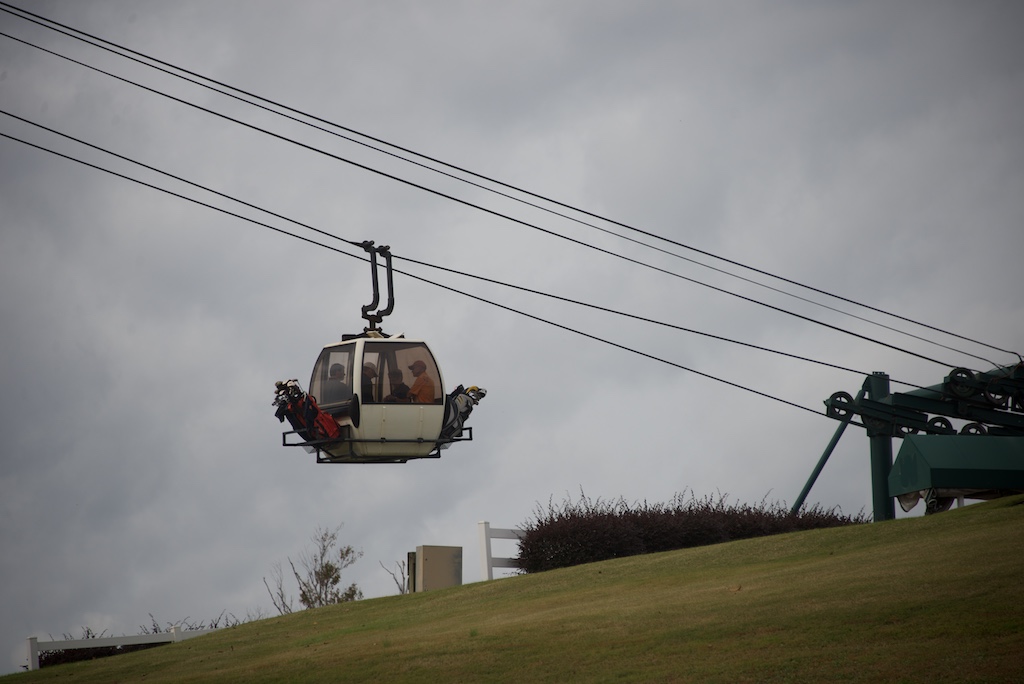
Clubs go on the outside

Clubs go on the outside

We decided to tie up at Southport Marina for the night and were pleasantly surprised by the surroundings and their nightly weather chat. Hank (http://www.carolinayachtcare.com) gave us weather and ICW transit tips which guided us later on in our travels.  The biggest problem with the ICW is shoaling and the general opinion is that South Carolina and Georgia don’t have budgets to dredge their portions. I suppose at some point they will lose tourism dollars and do something about it. For now it is just a nail-biting timing exercise. We try to check comments on Active Captain and ask other boaters for additional information. The ICW is also not so well charted – the chart has often thought we were on land. This

Heeled with water

Note the bucket of water used to heel the boat

adds to the experience? As we got closer to Myrtle Beach, we saw more houses and restaurants. We also passed by a golf course whose parking lot was on one side of the ICW and the course on the other. Golfers had to take a gondola from the parking lot across the ICW with their clubs. Another interesting moment was when we had to wait for a monohull stopped right near a bridge. They were a bit too tall for the bridge and had attached a bucket of water to the mast so as to heel the boat while transiting. In case you are wondering – they made it.  Two Fish also made it a bit farther south.


Read full story  · Comments { 4 }

Another Boarding – This time USCG

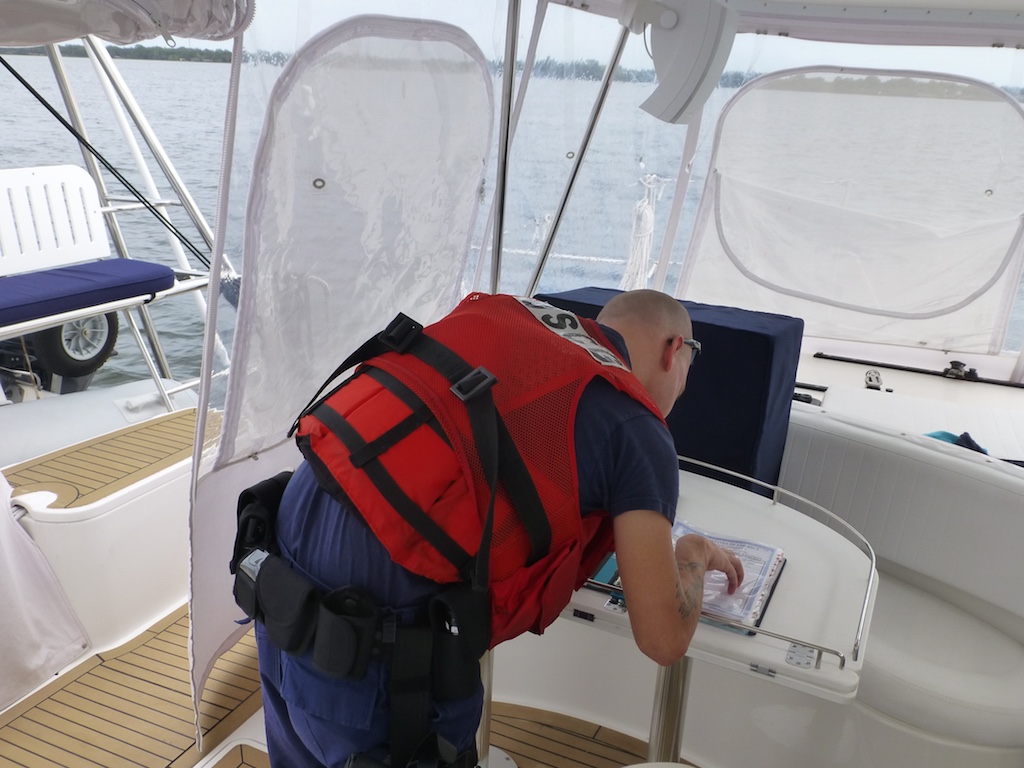
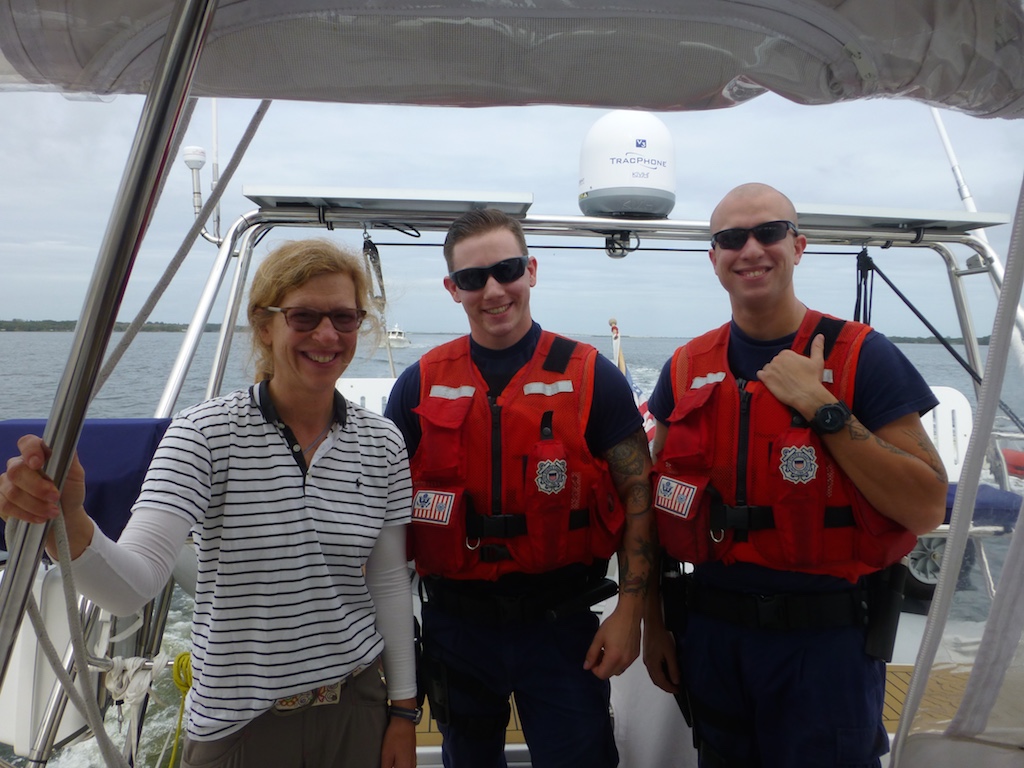
We have been aboard Two Fish for over a year and besides encounters in Uruguay and Brazil, we have had no boardings by the  police or Coast Guard.  That changed yesterday when the Sheriff came aboard; today the US Coast Guard boarded us for inspection.  The USCG were professional, friendly and had good control of their vessel.  We were on the flat waters of the Intercoastal Waterway, when they pulled up behind our stern.  Instead of hailing us on VHF, they signaled us to communicate that they were boarding.   Once they came aboard, they introduced themselves, asked if we had guns and surveyed our boat for threats (their words).   After the coast was clear (pun intended), they went methodically through the list of items one must have to be deemed a safe vessel.

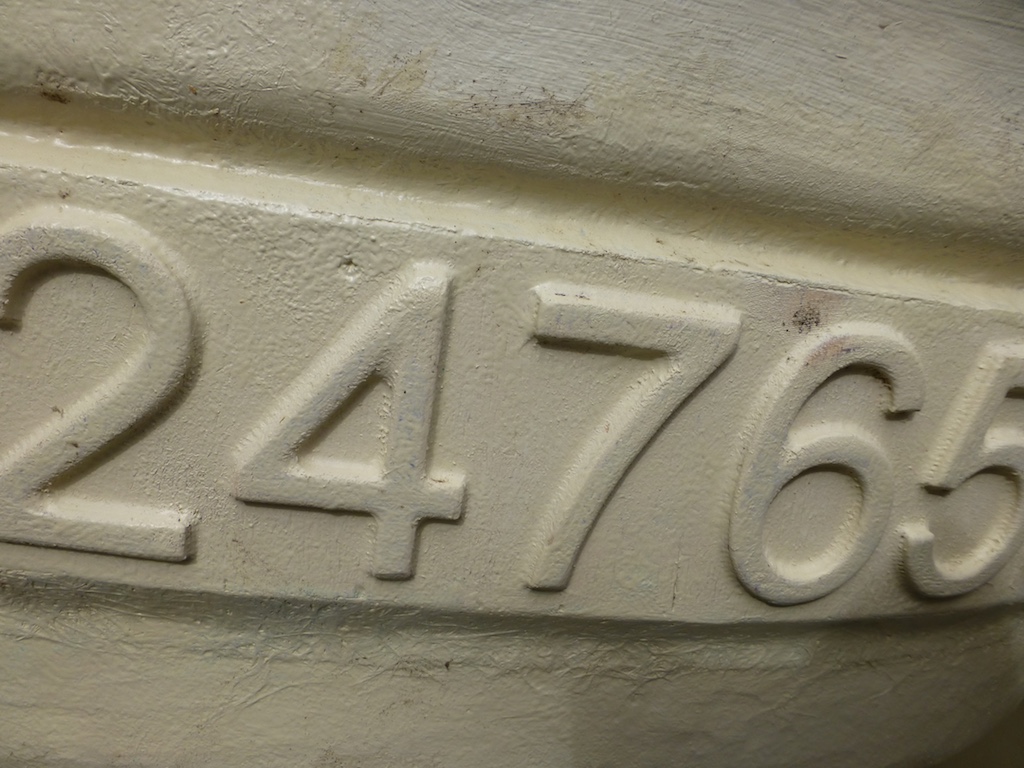
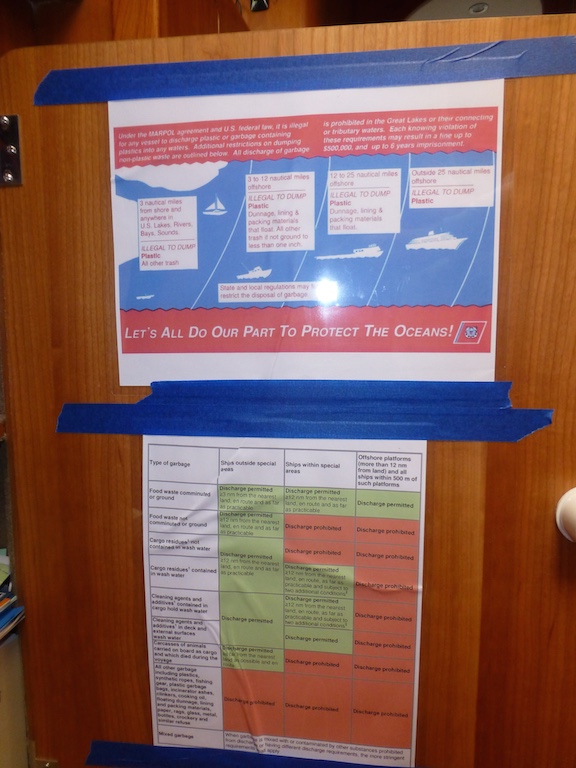
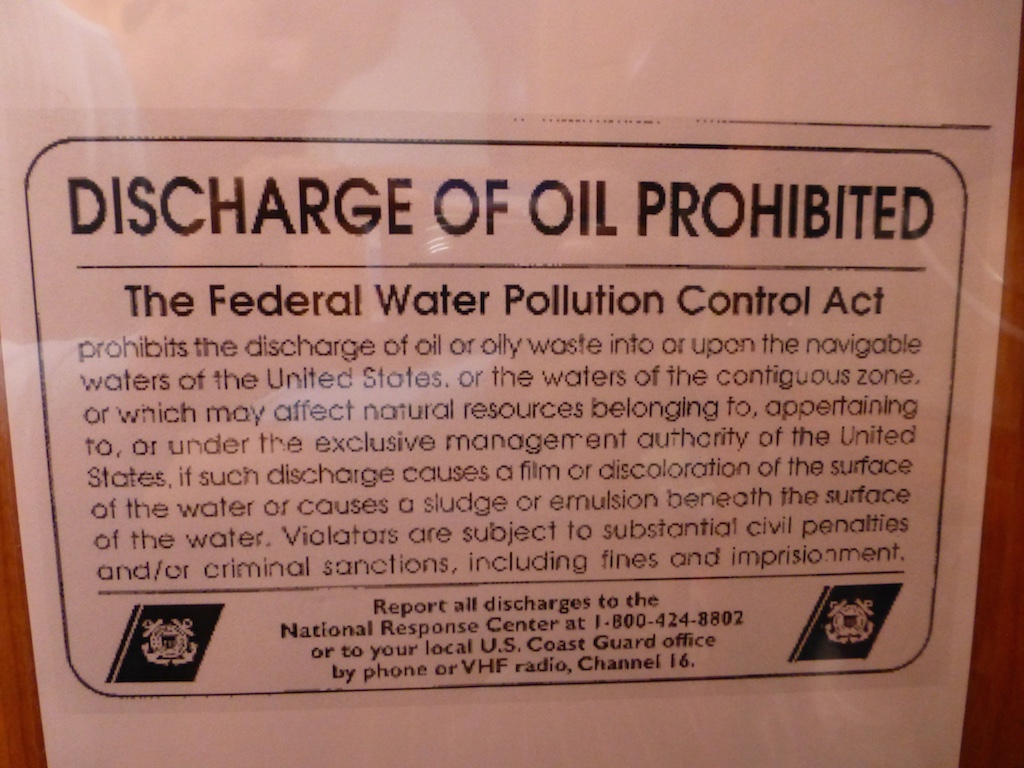
They did a cursory engine and bilge inspection.  The main inspector asked to see if our blowers worked and I was surprised that this is required on diesel engines.  Next, they ensured we had our papers in order (USCG registration, crew identification, oil discharge placard, trash rules placard, and permanent hull identification number).   He complemented the craftsmanship of our number which is made with a router and glassed into the boat.  Thanks Santiago (boat builder).
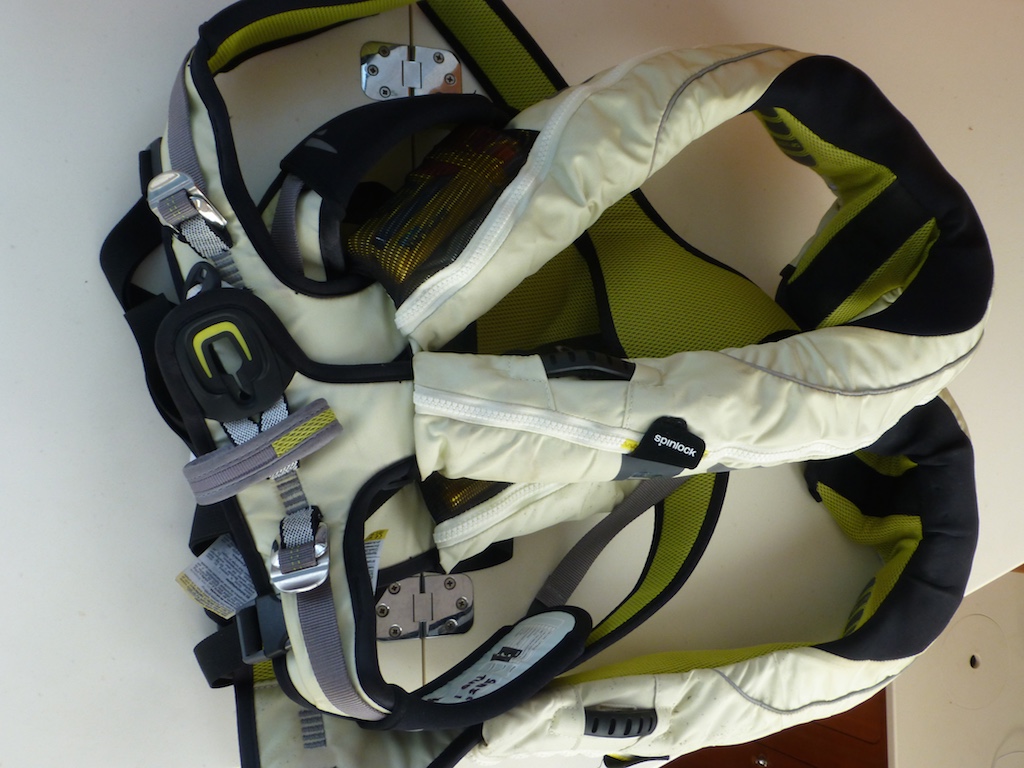
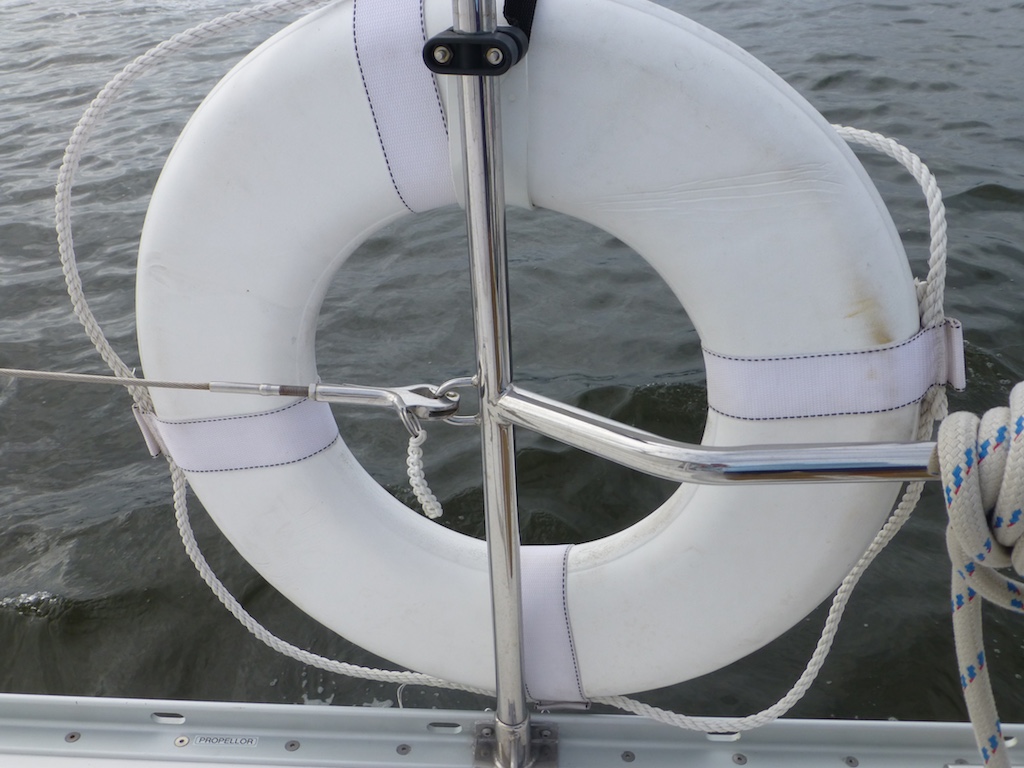
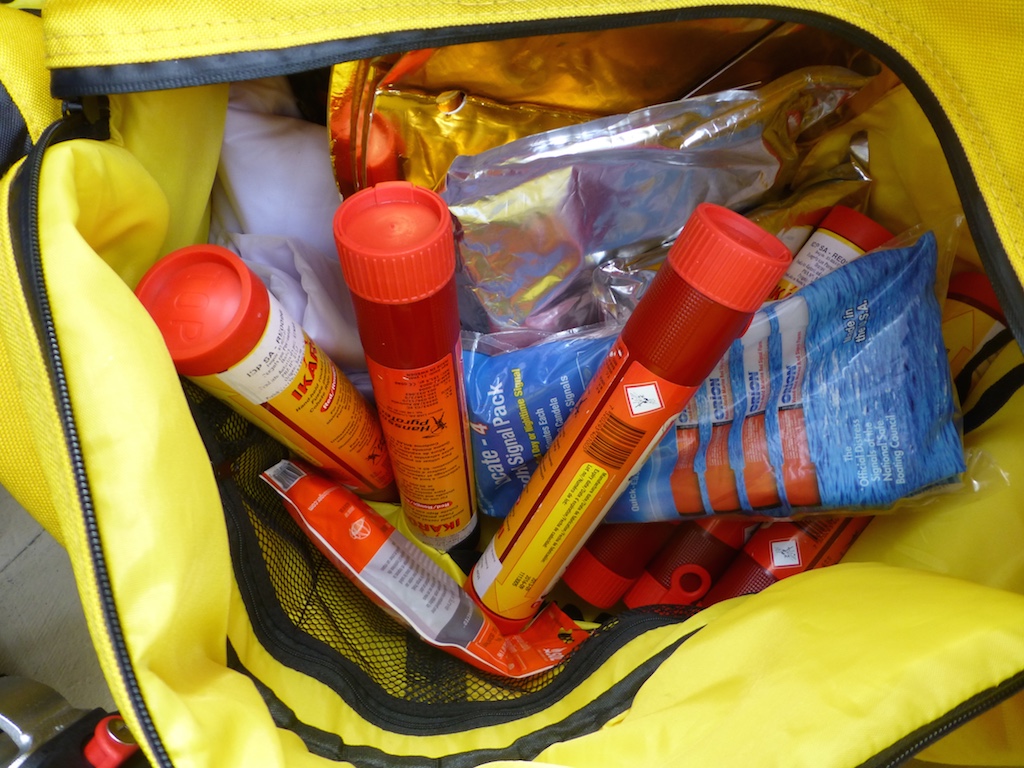
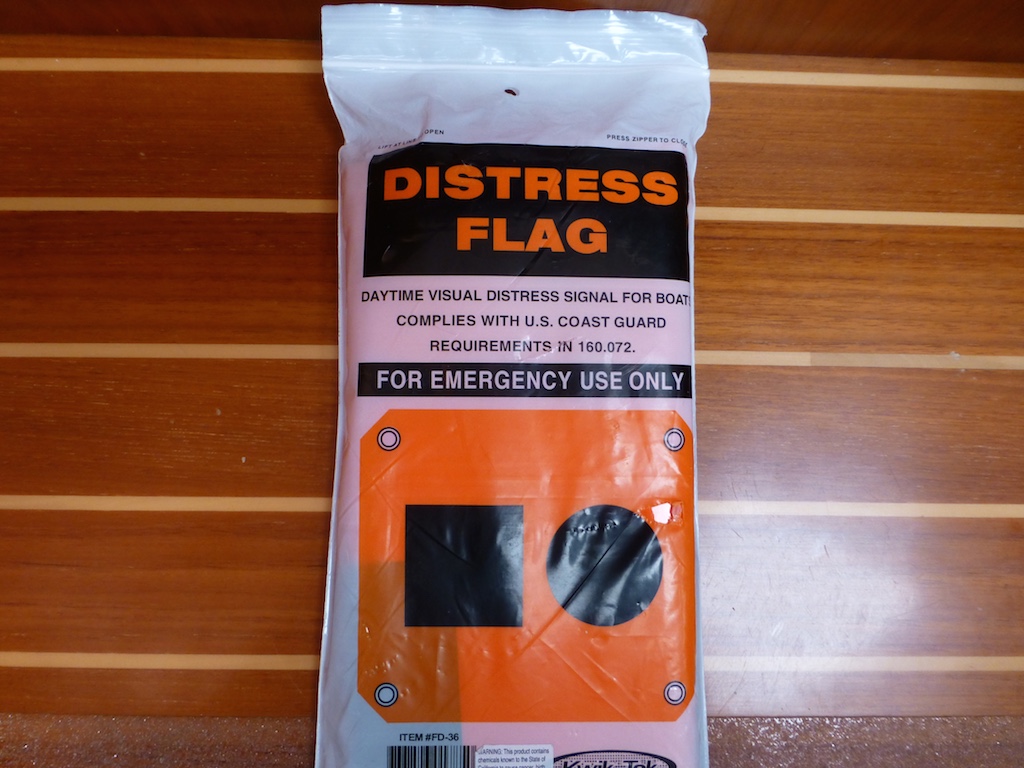
Our safety gear was also checked (type and quantity of fire extinguishers, throwable flotation devices (we have a few), 2 life vests (only 2 crew aboard), flares (checked the expiry dates and type).  It seems like we have enough flares to start a bonfire.   At first glance he stated, “You have enough but that is good”.  We did not get a chance to show Gail’s impulse purchase of the laser flare. I bet I would blind myself with it before attracting help.
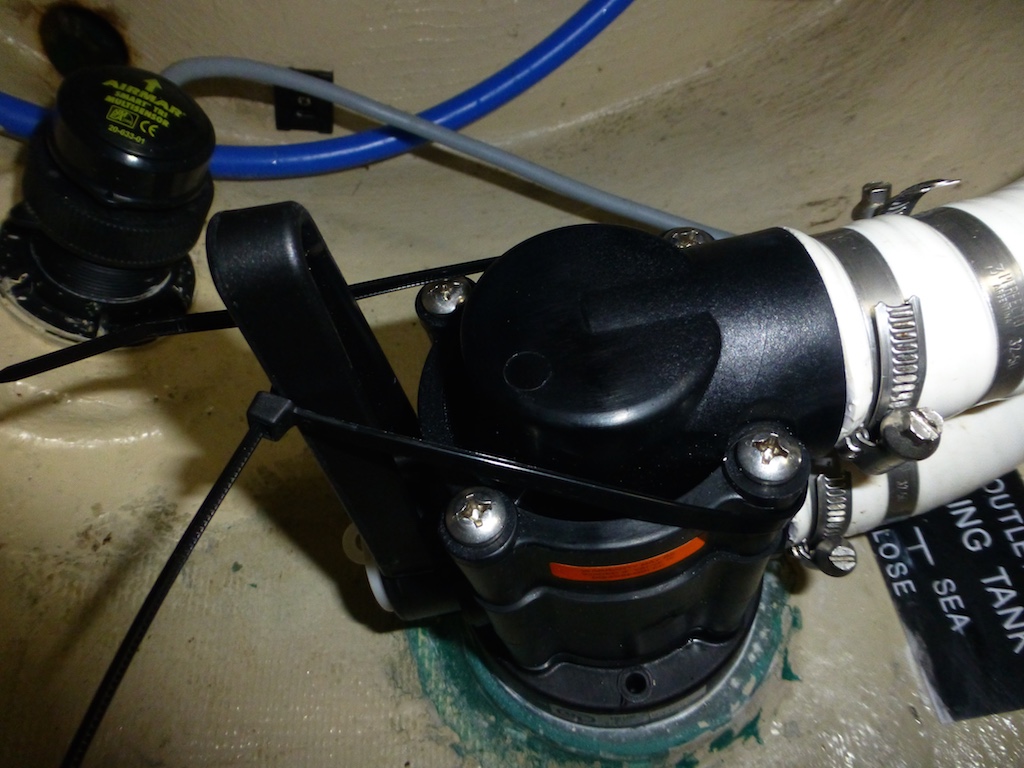
The Petty Officer then went on to check that our heads were leading to the holding tanks and the handle secured.  The handle has 3 positions.  1) Straight to sea which can be used when far offshore 2) holding tank, required to be locked into position in near coastal waters (see zip ties) 3) pump out, which is used when at a marina to empty the tanks.   Every time a pump out occurs, the zip ties must be cut, the handle moved and then new zip ties installed.   Might have to think of a better methodology.
Zip tie keeps prevents head discharge

Zip tie keeps prevents head discharge

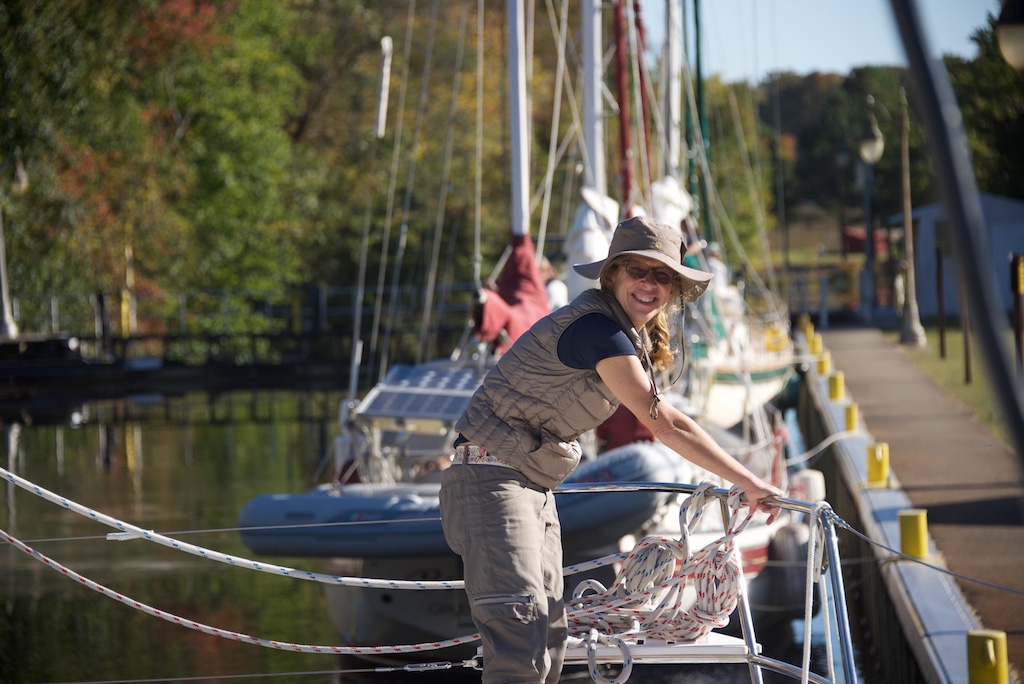
We have a plan for dealing with boardings, now that they have become a daily phenomenon.  I steer the boat since Gail is not a fan of close quarters and Gail deals with the inquisition and boat tour.  The law enforcement guys are nicer to Gail.   Gail also gets credit for outfitting Two Fish with all the required safety gear.  Congrats Gail, we passed and got the willy wonka golden ticket.  For 6 months we can wave the golden ticket and be exempted from another inspection.  Too bad we do not have many more days traversing US waters.  I asked the USCG what were the consequences for failing.  A couple of shortfalls and you get a written warning.  More than 3 fails and expect a ticket in the mail.   A total disaster and the USCG has the right to end your voyage until you have corrected the issues.   By the way, the Coast Guard has the right to board and search you anytime.
Gail and the boarding party

Gail and the boarding party

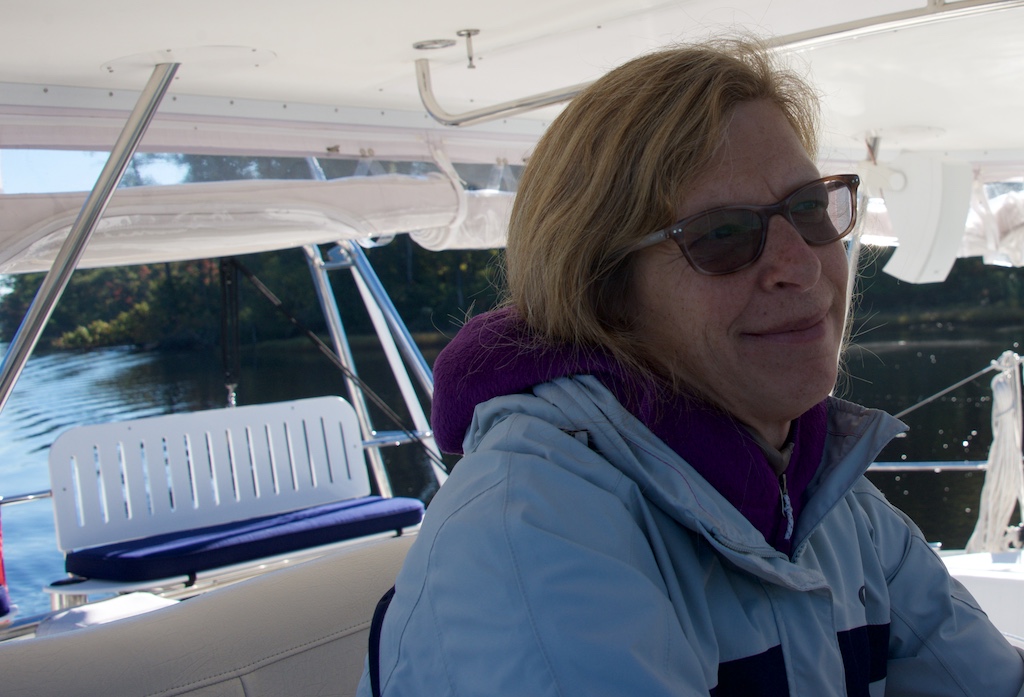
We thanked them and they were kind enough to pose with Gail in a photo.   Lunch was served shortly after their departure.
Here is a link to the official check list.
Read full story  · Comments { 6 }

Passage Plan from Stuart, Florida towards the British Virgin Islands

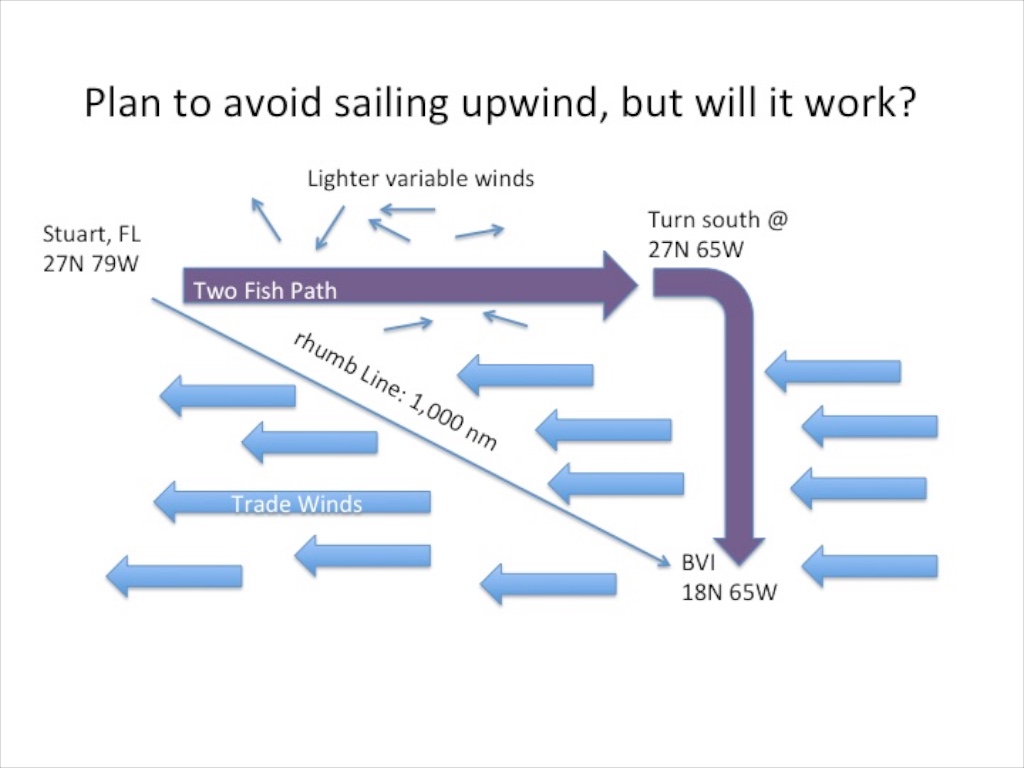
We are 20 days away from setting sail from Stuart, Florida towards the British Virgin Islands.  I must correct myself.  In twenty days, the boat and the crew will be ready, but the weather will dictate our departure date. This is a challenging leg with a wide variety of strategic choices.  Traveling the rhumb line (direct route) is only 1,000 miles, but typically results in sailing into unfavorable winds blowing 20 knots from the east (090 degrees) with the boat steering a course of approximately 118 degrees.  Anything that floats, whether Antares or Oyster  is not comfortable sailing into the wind in a large ocean swell.  The crew would be safe aboard Two Fish in these conditions but 7 days of banging to weather is not fun.

Last September, while sailing down the New Jersey coast, we encountered significant short chop on the bow.  We pressed on with our voyage while the crew grabbed ginger candy.   A few days later, the captain of a 55-foot trawler told me: “I saw Two Fish in the ocean during the wavy day.  We turned back to the harbor but Two Fish kept going.  We realized it must be much more comfortable on a catamaran.”   I told him there is nothing comfortable in short steep waves, but we just kept going. After all, it was just one day. This trip will be a bit longer.

My job as navigator is to try to thread the needle and find a route that is comfortable, safe, quick and fuel-efficient.  Did I mention that I make dinner as well?

Plan


The three key decisions I must make are:

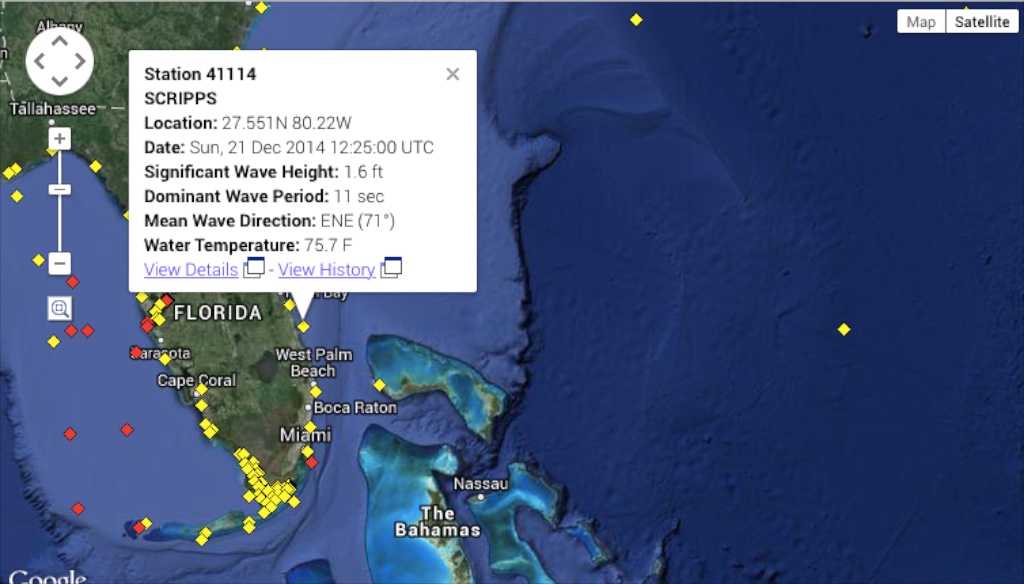
1)  When to head out for a safe crossing of the Gulf Stream.  This will not require guess work as Gulf Stream is 12 miles from Stuart and only lasts for about 60 miles.  NOAA maintains a buoy in the vicinity; the wave data tells us if we will encounter mountains of waves.

Buoy Data

Buoy Data

2)  How far East we should go before turning South.   Staying North for the first 850 miles should allow us to avoid the Caribbean Easterlies with lighter wind, allowing for motor sailing.  Then, at 65 West, we will turn the boat due South and sail on a beam reach into the BVIs.  If I cut the corner to save time, the trip is a shorter distance, but there is a risk that the leg could be 500 miles of upwind torture.   If we go too late, the crew may mutiny as the food supplies run low.   As an added curve ball, there is a chance that the trades will stall and the breeze will blow from the South at 65 West longitude.   If this rare Southerly fills in after fighting to 65W, I will hold my head low and hope nobody notices the failed strategy.

3)  How much we should run the engines.   The boat has a range of less than 1,400 miles, so the engines have to be rationed.   If we encounter a strong headwind, both engines will have to be engaged to maintain forward progress.  Burn too much fuel and we will be forced to sail even in the calms.  Too much rationing and the light air portions become painful and the nine day trip becomes what seems like forever at sea, with recycled jokes.  The weather and the fuel have to be triangulated with the crew’s schedule as they have real lives.   They need to be in the BVI in at most fifteen days.  That should give us plenty of time.

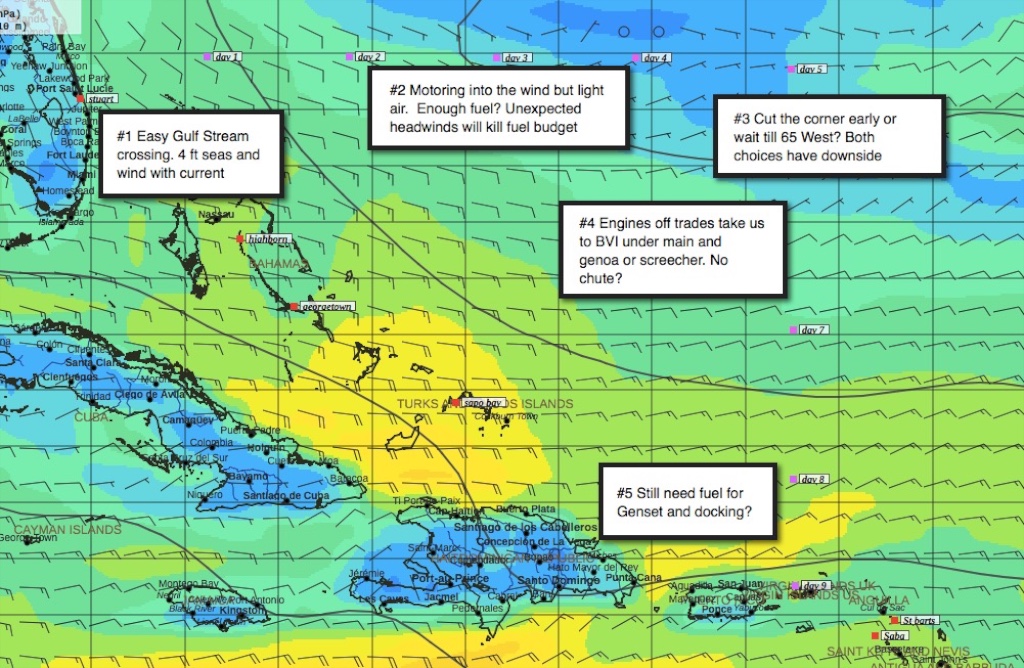
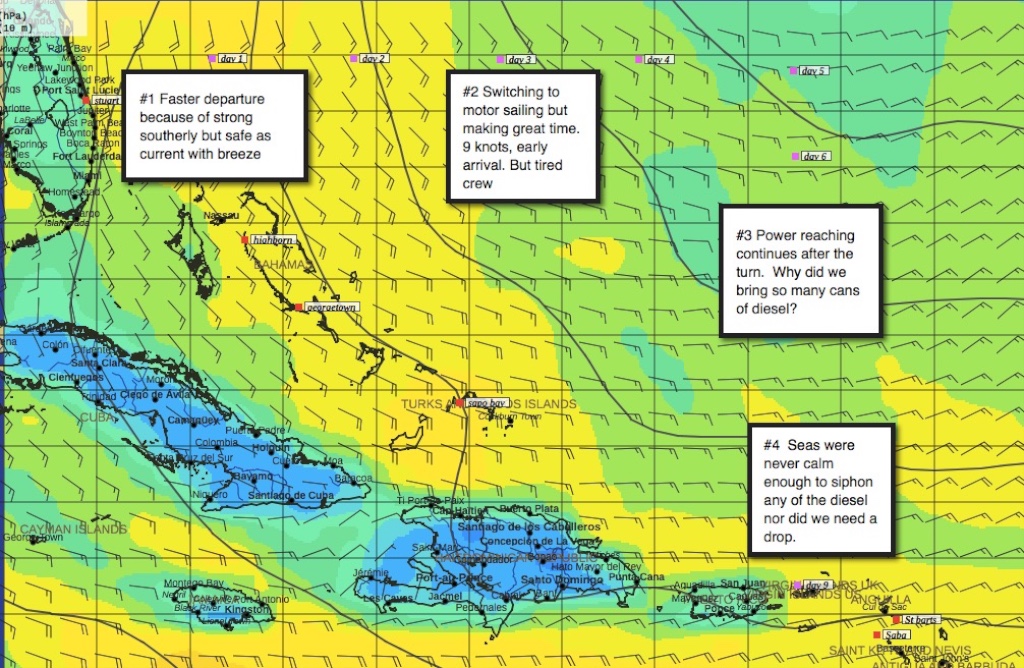
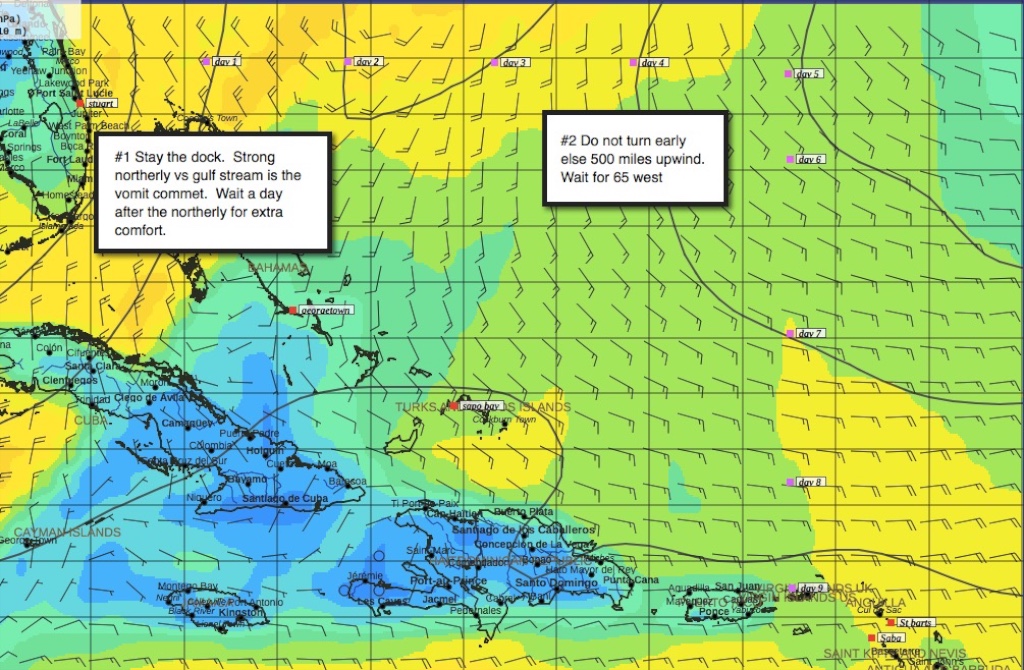
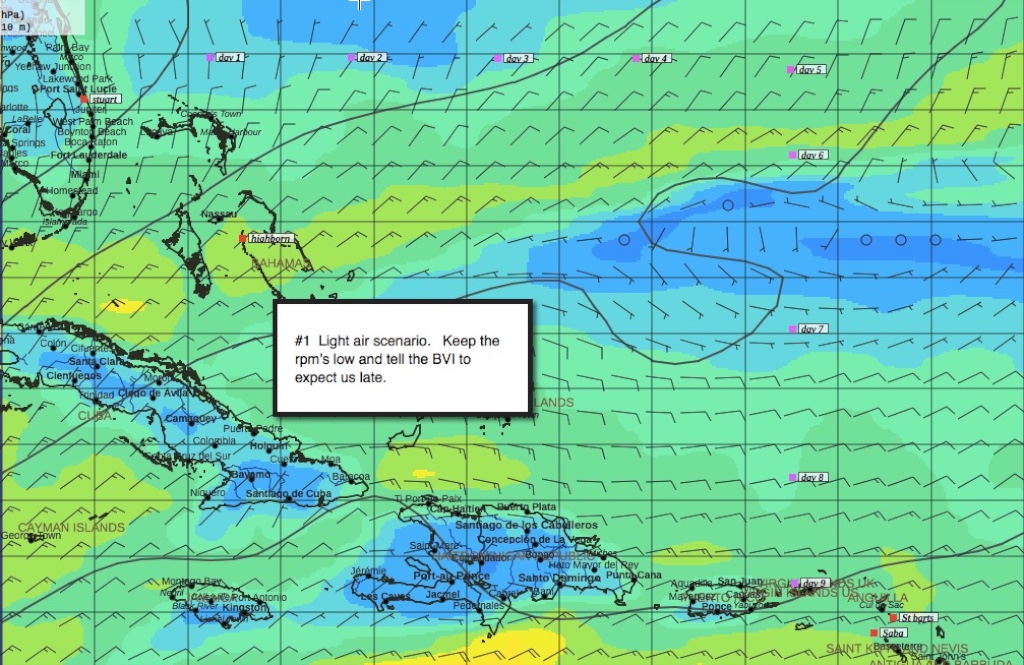
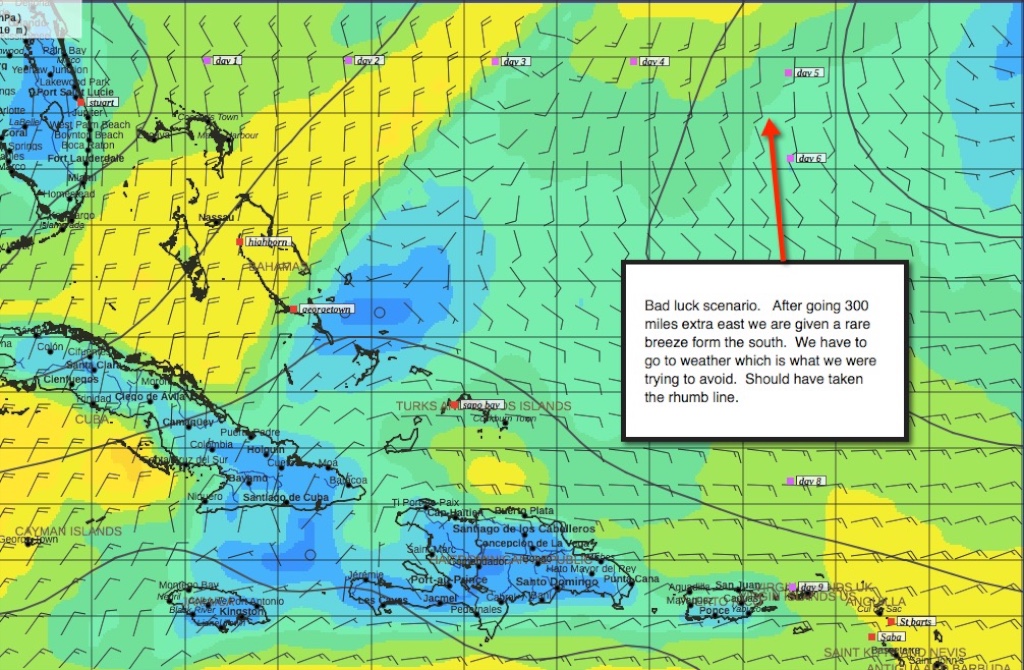
I have taken various snapshots of GRIB wind speed files and annotated them to better understand my choices during the trip.  If you haven’t looked at GRIBs before, the more tails on the wind barb, the higher the wind speed. The tail also indicates the direction the wind is coming from. For simplicity let’s assume that each snapshot is the weather we would see over the entire trip.  That is not a good assumption but makes for a much simpler blog post.  Otherwise I would have to include 40 images.  The small purple icons “day 1, day 2, etc” are expected waypoints, assuming we sail 160 to 170 miles a day.  Budgeting boat speed is tough.  A decent headwind and the boat will struggle to make 4 knots.   Off the wind, the boat can go 10 knots.  The first scenario below is a smooth trip with a decent amount of motoring, no scary seas and a comfortable reach down 65 West.  Happy crew.

Smooth trip

Smooth trip

The next scenario is for the saltier sailor. With stronger winds, we can accomplish some 200 mile days.  The brisk pace might curtail fishing, movie watching and backgammon.  Not sure what I would do with 15 jerry cans of fuel when I arrive in the BVI.  Start my own fuel dock?

Fast trip

Fast trip

If on the 10th of January we wake to the below GRIB file, we will have to stay onshore for a couple of days.  The gulf stream crossing would be ugly.  Our schedule affords time for a delayed start.  It is important to tell crew about the chances of delays.

Stay at the dock

Stay at the dock

If the next GRIB is what we experience, we will have plenty of movie nights but be counting every ounce of fuel.  I try to run the engine in the hull where the fewest people are asleep. The boat is very quiet if you are sleeping in the other hull.  I will also chose which engine to run in order to balance the boat’s helm and tame lee helm.

Light Air

Light Air

The last scenario is  my nightmare. We work hard going East and instead of  trade winds, we find a Southerly and a 500 mile beat to the BVI.  We should have just taken the thorny path and followed the rhumb line.

Bad luck - Southerly

Bad luck – Southerly

Gentleman’s Guide to Passages South by Bruce Van Sant

Gentleman's Guide

Gentleman’s Guide


A popular way to sail to the Caribbean is described in the book “Gentleman’s Guide to Passages South.”  The path to the Leeward Islands is often called the thorny path since you have to sail upwind and into waves.  Van Sant’s plan to remove the thorns from this route is to wait for weather windows, hide behind islands and travel early in the morning to avoid some of the pain.  This plan does not match our preferred style of travel.  Neither Gail nor I like having the constant responsibility of should we sail today?  We prefer to take our medicine in a long passage and then arrive in the BVI worry-free.  This is also aided by 3 kind friends that have come aboard to fill in for Gail.  Without their help we would have to read Van Sant’s book.  Plenty of folks follow his strategy but I bet there are some rough days.  When sailing downwind from the BVI to the Spanish Virgins I remarked how wonderful the sailing was, but also thought about the uncomfortable conditions were I reversing my direction.


Fuel

Fuel gauge

Fuel gauge


We used pink dinosaur juice, diesel, to power Two Fish down the ICW with disregard for fuel consumption.  Falling oil prices and frequent fuel docks encouraged us to run both engines at plenty of RPMs.  Those free wheeling days are over and now it is back to being fuel misers.

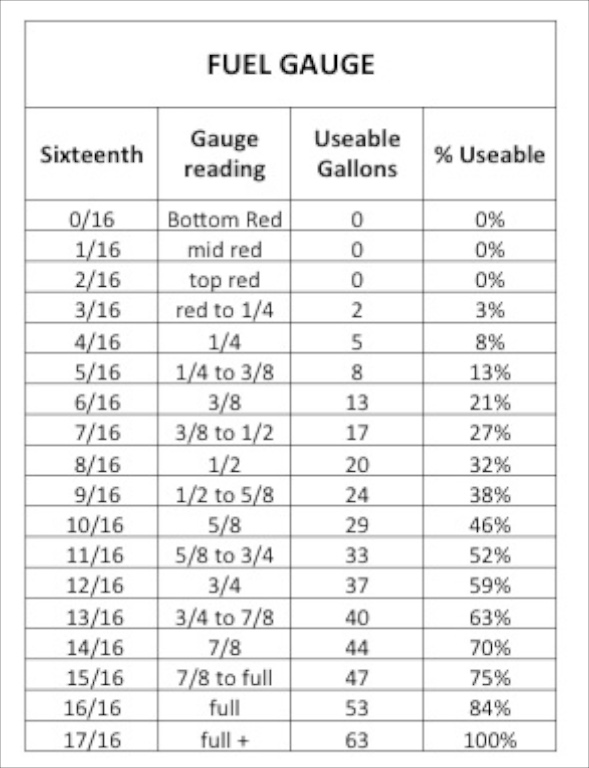
The first step is to know how much fuel you have on board.  Fuel gauges in the marine industry are as accurate as divining rods.  One friend told me you only need to know how much fuel you have when you reach half empty.   I prefer a bit more precision.  Another friend is considering a 3,000 dollar system to precisely monitor his fuel  consumption by installing sensors at the fuel rail linked to the NMEA network.  Tempted, but that seems like too much complexity for Two Fish.

As an experiment, I used our fuel transfer pump located in the battery locker to move fuel from port to starboard.  I then filled the port tank slowly via jerry cans in 5 gallon increments.  Through this process I was hoping to better understand the gauge.   Other boat owners measure the shape of the tank and use math to calculate the volume.  This may work in theory, but I prefer the slower and less elegant method of empiricism.   During the construction of our boat, we asked that the fuel tanks and water tanks be switched.   This gives us 75 gallons of fuel instead of 60 gallons.   The useable amount of fuel is close to 63 gallons which affords a conservative margin of error and prevents sucking crud from the bottom of the tanks.


Fuel consumption

Fuel consumption

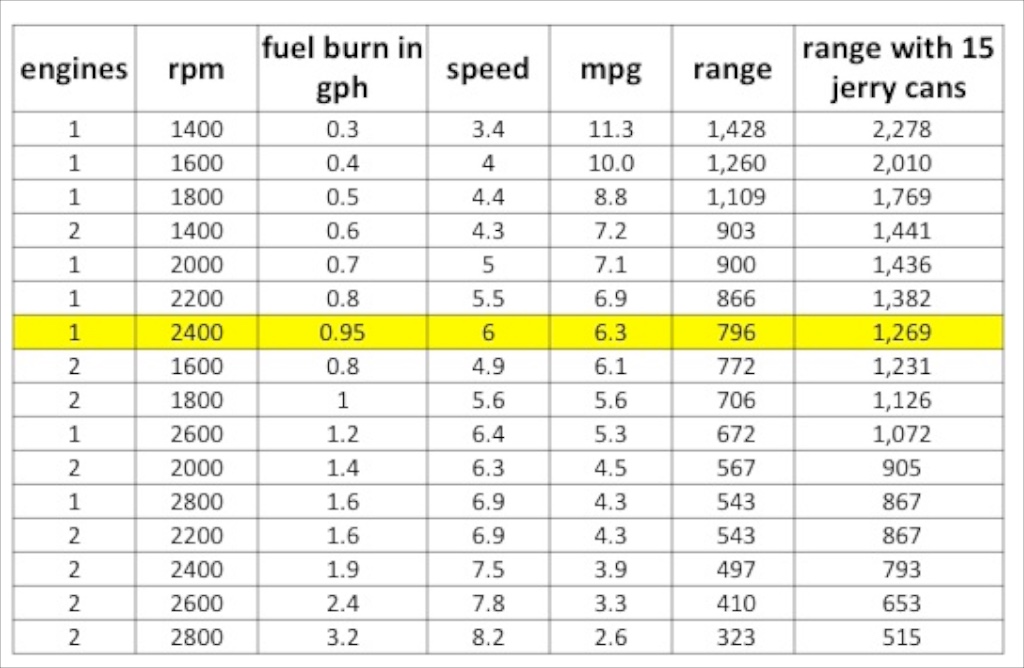
* speed is in knots.  mpg is nautical miles(nm) per gallon.  range is in nm.

How do I select the proper RPMs?   The Volvo manual says maximum cruising RPMs should be 500 RPMs less than the engine’s maximum RPMs.  3,300 minus 500 is 2,800 RPMs. The manual goes on to say that this is to save fuel.  When motoring in Brazil, we tended to use one engine at 2,200 RPMs based on the fuel efficiency graph in the manual.  The above table is a combination of two sources of data, the Volvo manual’s fuel per hour by RPM and our speed for various RPMs as tested on the ICW.  I did the speed tests in flat water with little current and used the Furuno’s averaging function.  The numbers are far from perfect, but are at least in the ball park.   It is not worth obsessing too much since a bit of real world wind, waves, motor sailing or current tosses the whole speed test in the trash.   By the way, I have finally calibrated my paddle wheel (the DST sensor that measures depth, speed and water temperature).  It seems to give the most accurate results with an 8% reduction factor.

How will I store 15 jerry cans of fuel?   We have a place for 8 in the cockpit lockers and another 7 under the cockpit table.  Dinner time with  jerry can foot rests.   I will make someone happy when I reach the BVI and hand out free jerry cans.  For the long run I like to have 3 or 4 cans, not a Campbell soup factory of cans.   The “rental” cost of the cans is worth it because I can make the trip time more reliable for my crew

My plan for RPMs is to use 1 engine at 2,200 RPMs but use more power if there is no wind.  I will use two engines in the case of a strong headwind to control the boat.   Then, as the journey proceeds I will recalculate the remaining distance and fuel to see if I can be a hotrod or a miser.  All of this is theoretical since with good wind  we will not use the engines.   We traveled a similar distance from Brazil to Tobago and had 9 engine hours and 12 genset hours.  We arrived with 160 gallons of fuel.

The wind and waves in the end will decide if our passage choice makes sense.  I will try to do a short blog entry every day during the passage so you can join me on my decisions making process.


Read full story  · Comments { 5 }

Two Fish gets customized

Waiting for a semi-custom boat to be built offers plenty of time to consider what features to choose.  The Antares comes with just about everything so it is difficult, BUT not impossible to create add-ons.  However, the additions you decide on during the build can only be based on inputs from previous owners and brief trips aboard, rather than your own lifestyle.  After a year aboard, we have  firmer views on what we want from the boat.  WARNING. Before you ask Antares to add features to your new boat please follow two rules:  1)  Do not tell them it was my idea, and,  2)  This boat has a long wait-list so the factory is focused on keeping up with their production and you may have to customize it after splashing.  Waiting will help you figure out your own preferences.

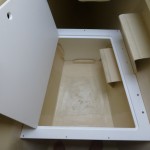
I like an organized boat.  So some of our upgrades have been about making things more organized for a cleaner look aboard and in the lockers.  I think the bilges should be as clean as the cabin.

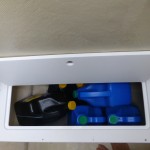
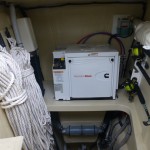
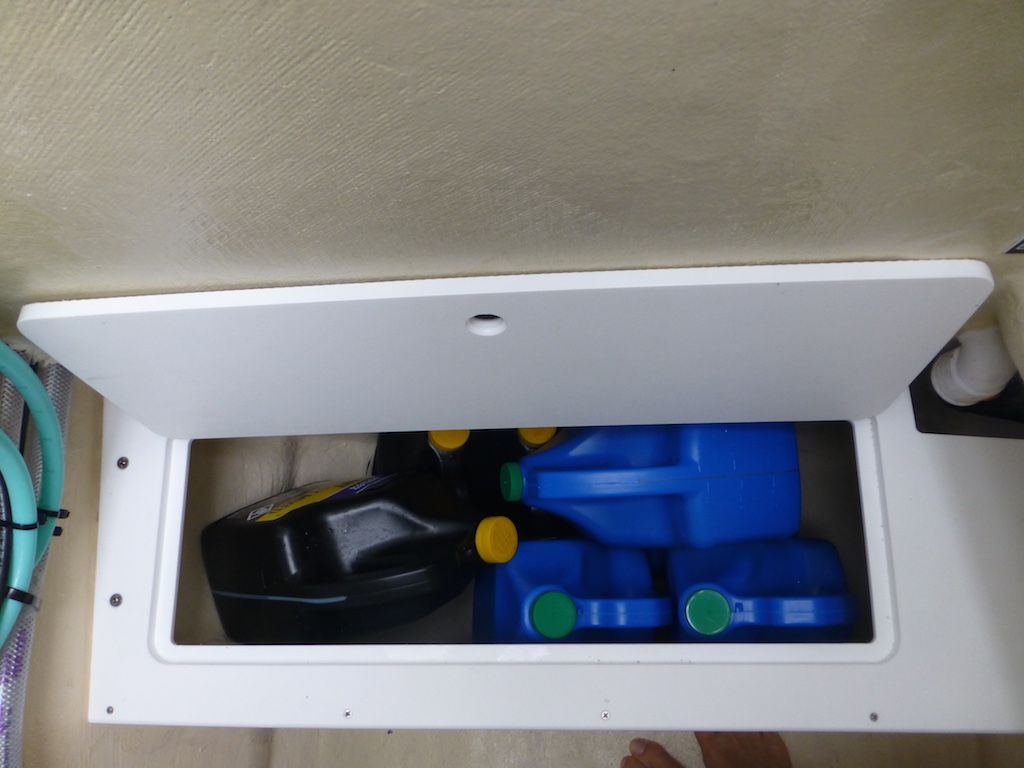
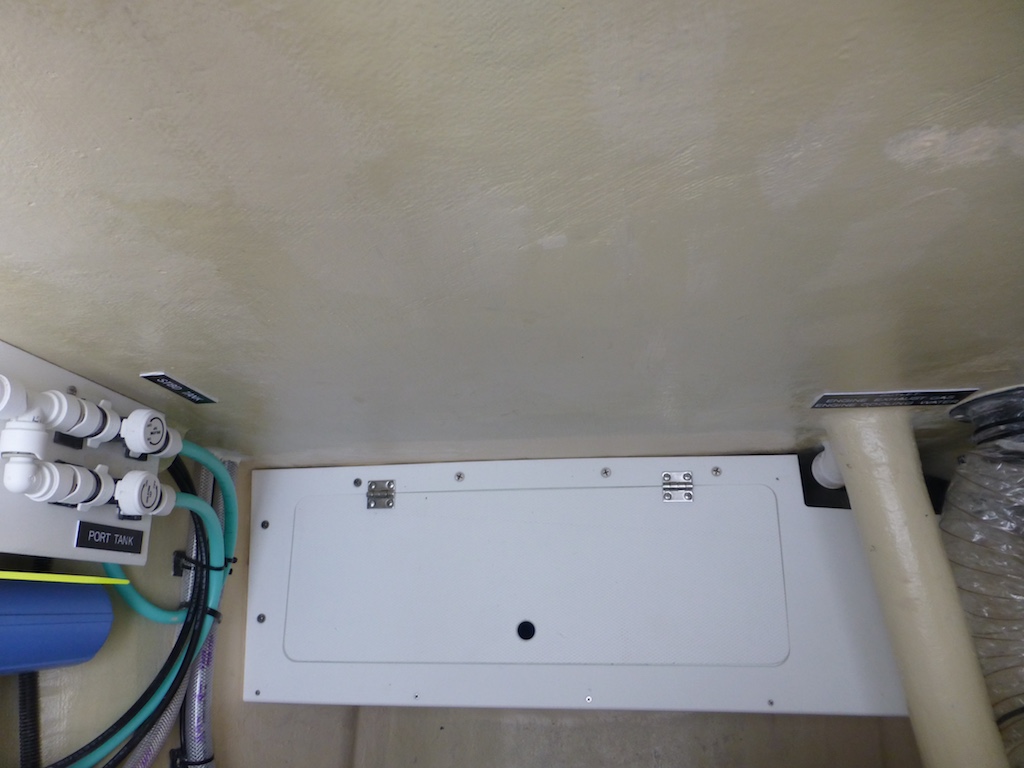
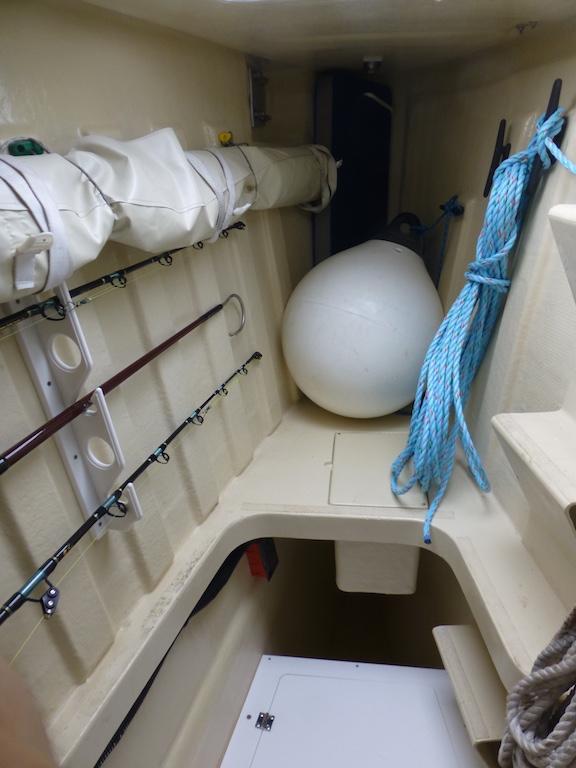
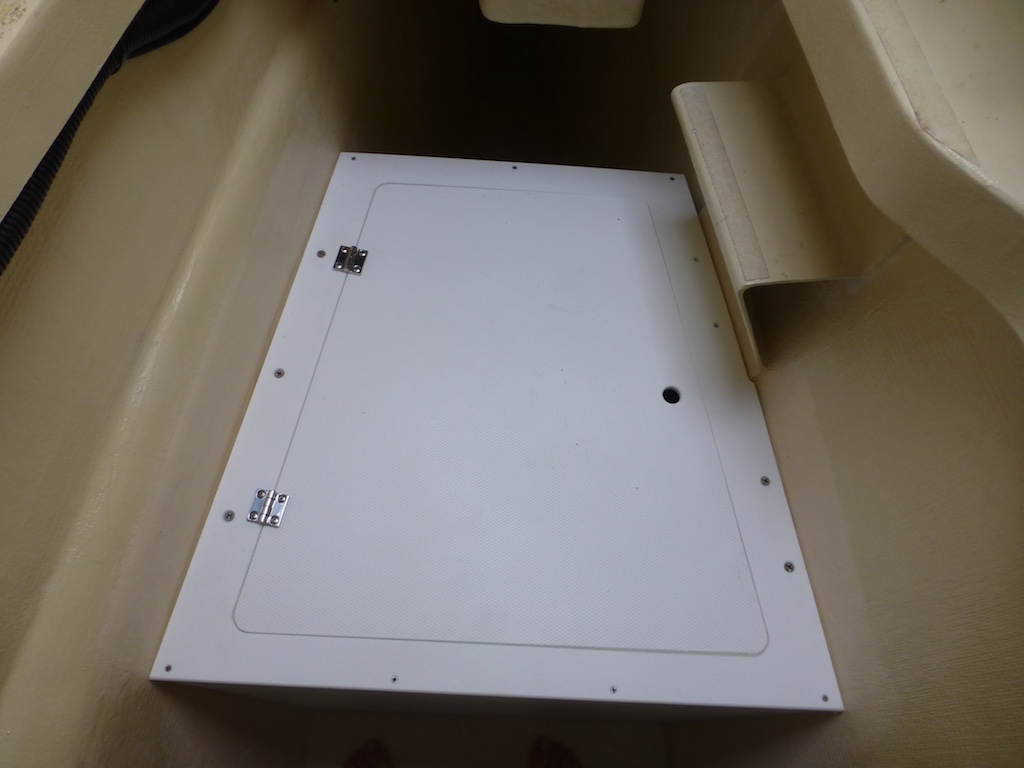
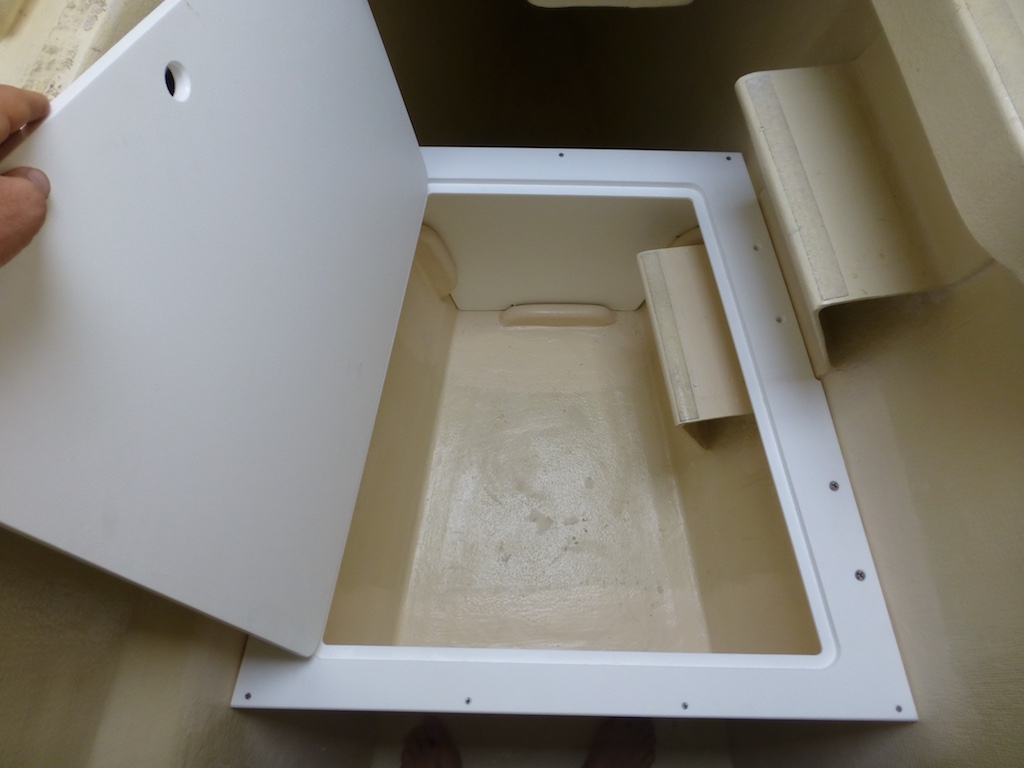
Permanent Storage boxes in the Genset locker and the Watermaker Locker

It is early days with this new creation but I love it.  Now engine oil, coolant, and other fluids have a home aboard Two Fish. The Genset locker box is so huge it can hold a large tub.  We store our baja filter, fuel siphon and other oily bits in this space.  The box also creates a space in front of the box for holding our oil extractor.  No, we are not starting a small fracking operation, this tool is for oil changes.  No longer do I have to tie down the oil cans.  Also entering and exiting the lockers is much easier now as the boxes make a great place to put your feet.  Finally, the boxes can be removed if necessary for some unusual service.  Maybe Antares will make them standard in a future boat?   Remember rule #1, do not mention my name if you ask for it.

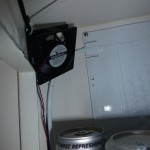
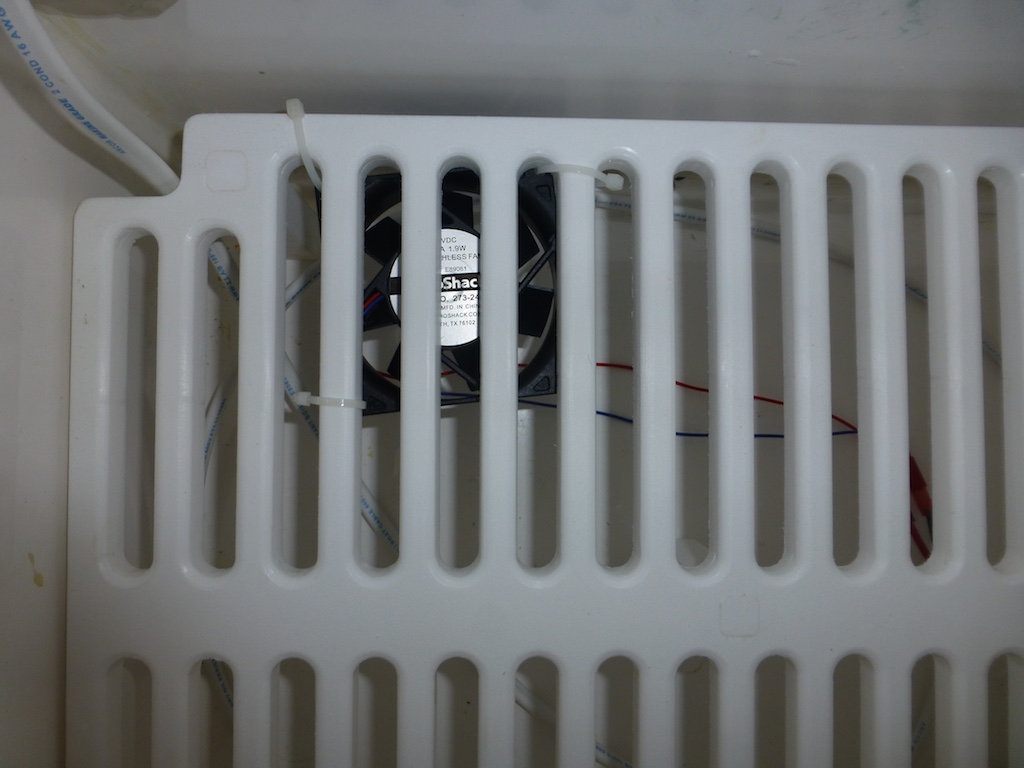
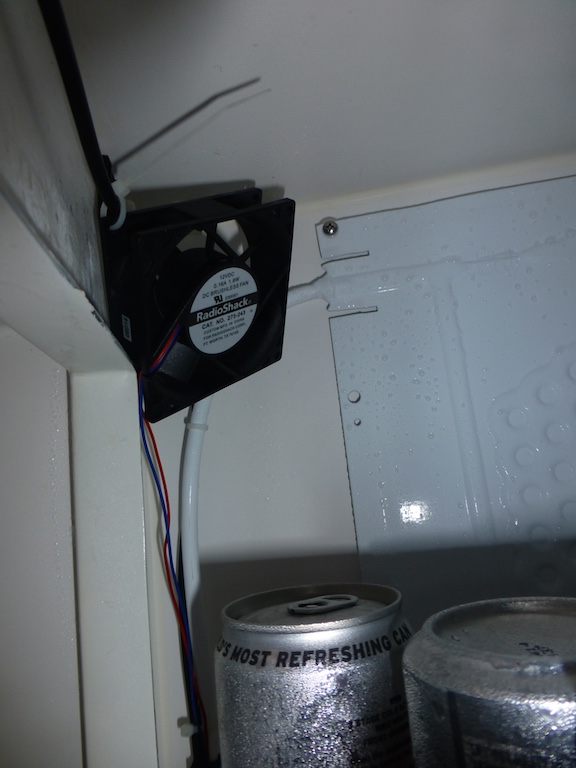
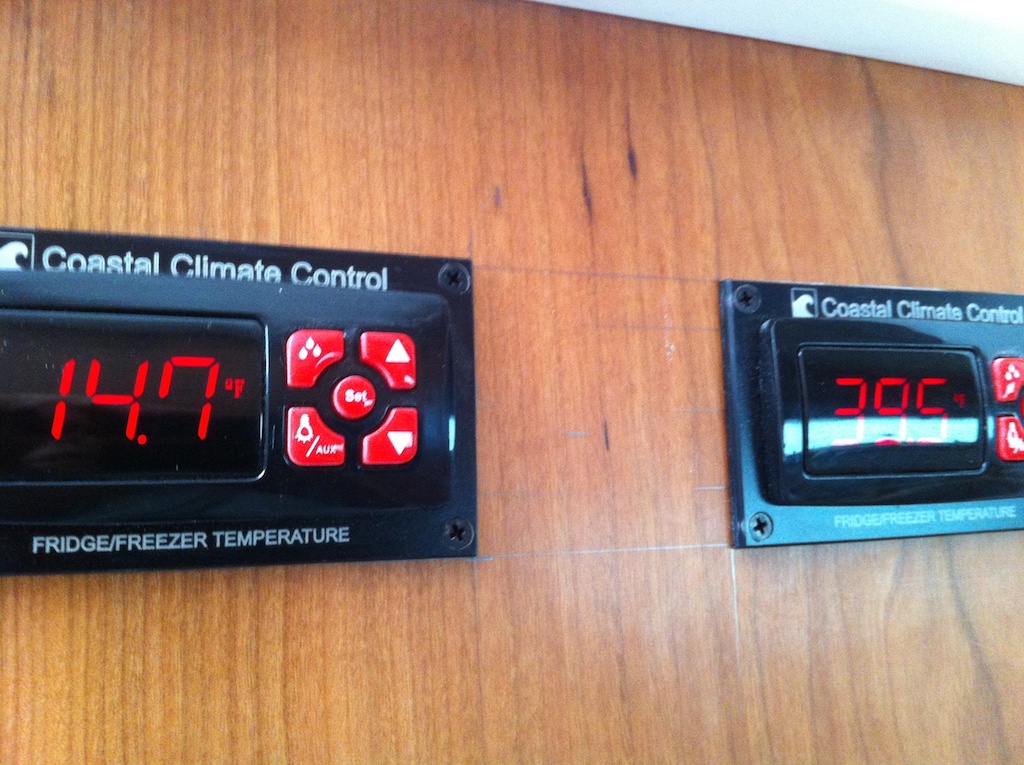
Fridge and Freezer Fans

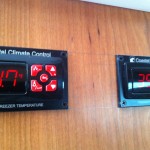
Marine fridges and freezers are not as powerful as our 110 Volt models onshore.  The symptoms that we have seen are excessive condensation, frost and troubles achieving and maintaining a very low temperature.   We have improved the fridge seals, ensured the proper compressor coolant pressure and have now added fans.  We hope to have the best in marine refrigeration.  The fans should address the issue of uneven temperatures.  Initial testing is good but serious testing will start when we arrive in warmer weather.  In Charleston, we could have kept our stores cold by leaving the door open.  We also upgraded the thermostats to a digital model.

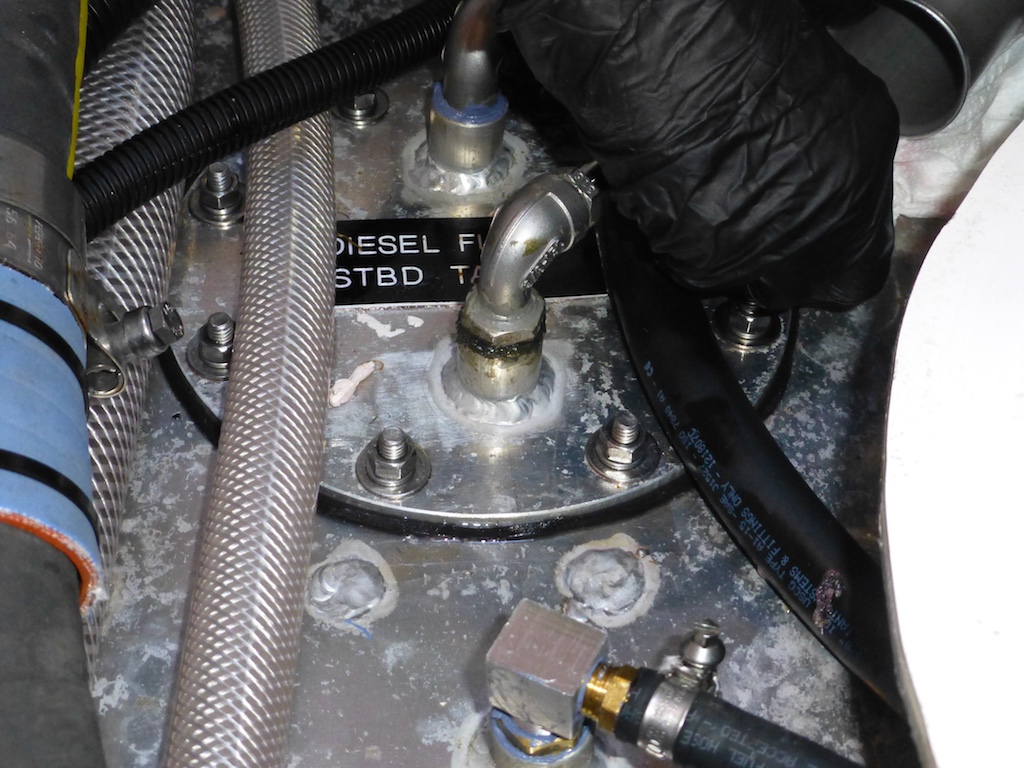
Bilges

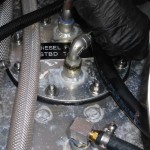
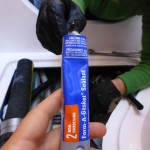
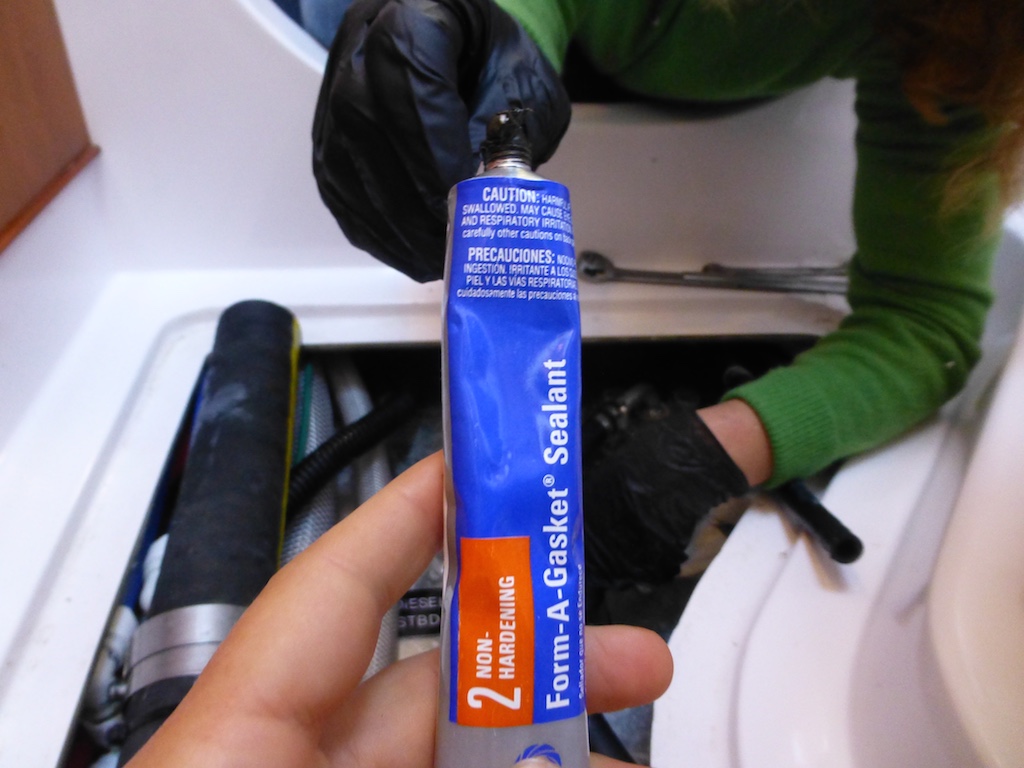
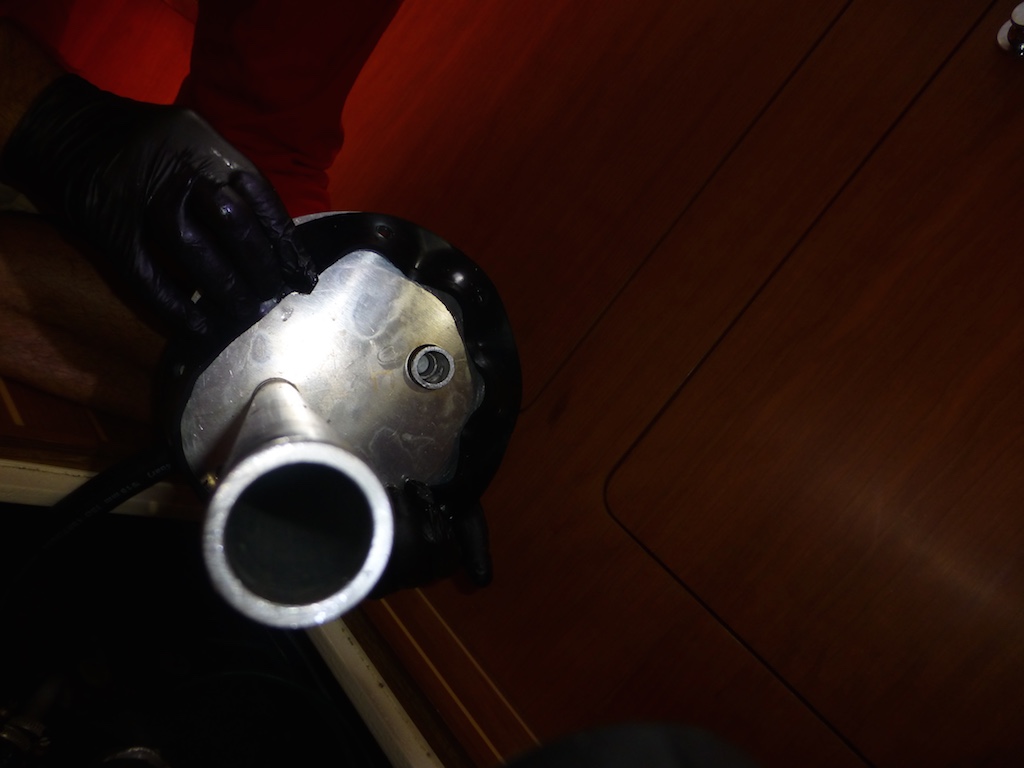
We had some initial problems with fuel not staying in the fuel tank.  There is nothing worse than the smell of diesel, but we eventually sorted out the problem.  First, we replaced the gasket in our fuel tank inspection port.  The previous material was failing under the assault of diesel with additives.  The new material is pricey, but Viton seems to keep the diesel in place and does not degrade.   Second, we tested the tank for micro leaks when filling the tank to full.   A few bolts were leaking so we re-seated them with a sealant known for is diesel resistant power.  We now have a tanks that keep the diesel trapped.
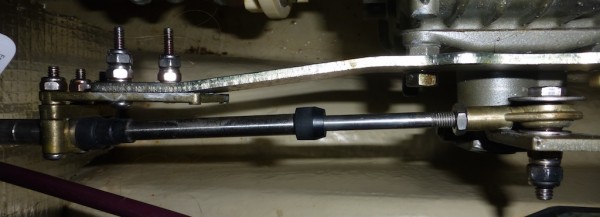
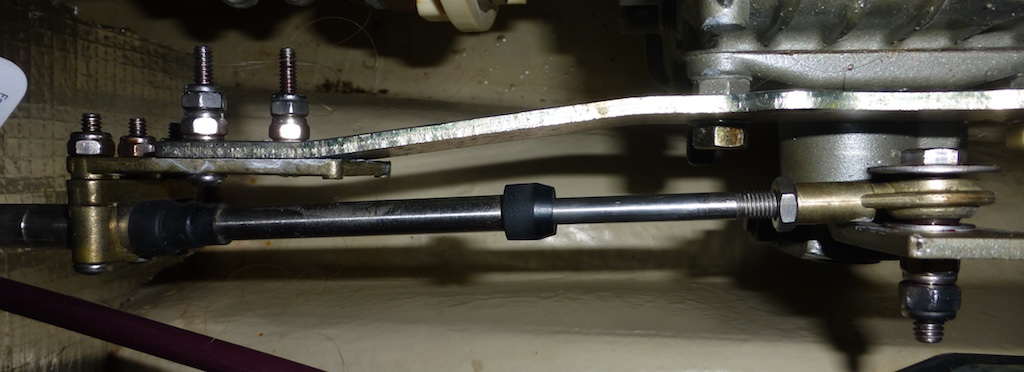
Bullet proof gear shifter

Bullet proof gear shifter

Our next bilge upgrade was preventive.  Antares Guru, James, told us about power catamarans that had the shifter connection come off. Murphy’s Law requires this failure to occur next to the fuel dock. Imagine that you are locked in gear headed at pricey boat.  For the cost of a few nuts, this seemed to be a worthwhile upgrade.  James installed longer bolts, extra nylock nuts and some Loctite to defer a visit from Murphy.

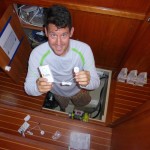
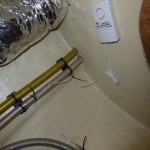
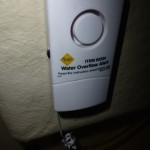
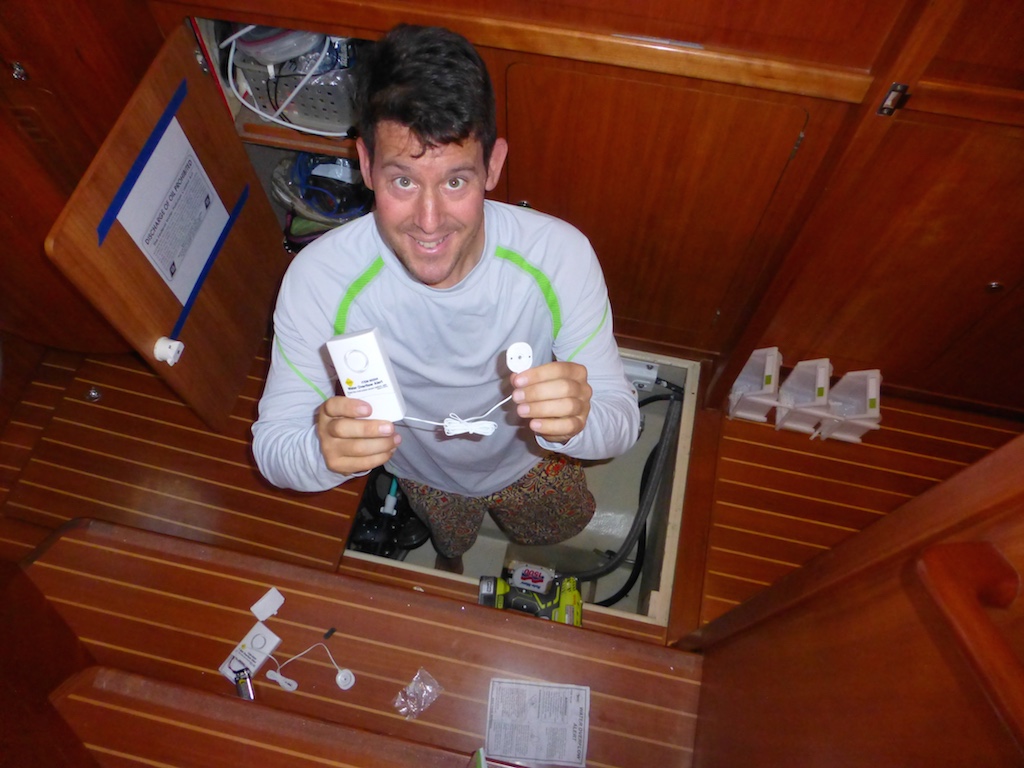
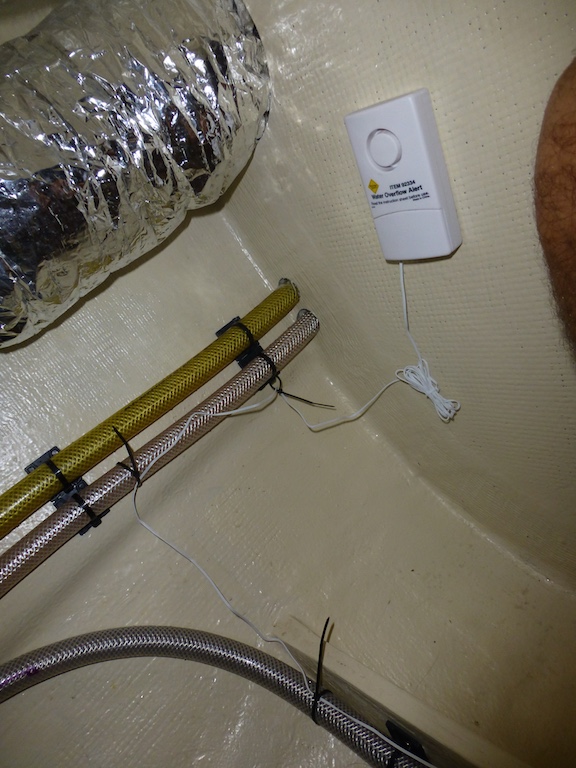
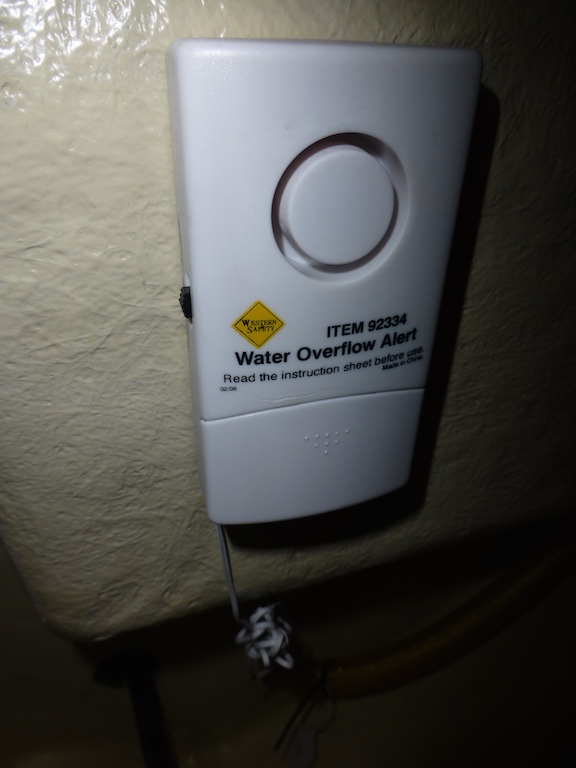
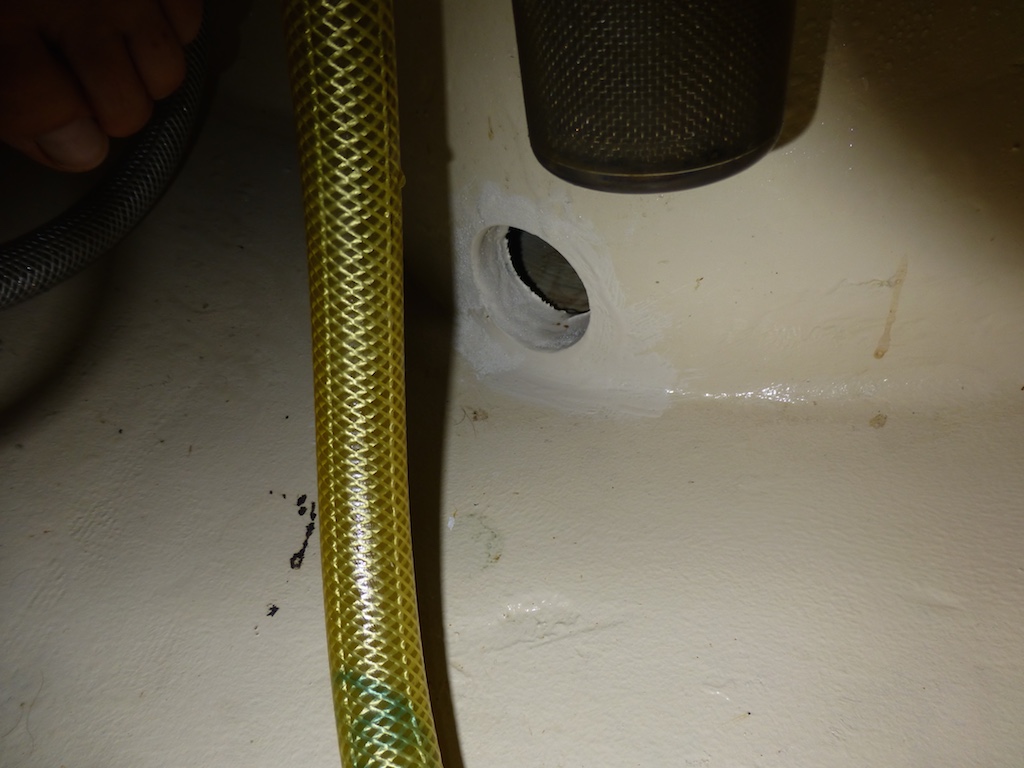
When we first got the boat, the watermaker had a fatal flaw and created a small pool of water in the bilge.  This led to fears about the boat flooding in strange compartments without my knowing.   We bought a bunch of inexpensive water alarms that run on 12 volt batteries and placed them near possible flood spots.  We also added limber holes under the master and guest bed so those areas could empty into the main bilges.

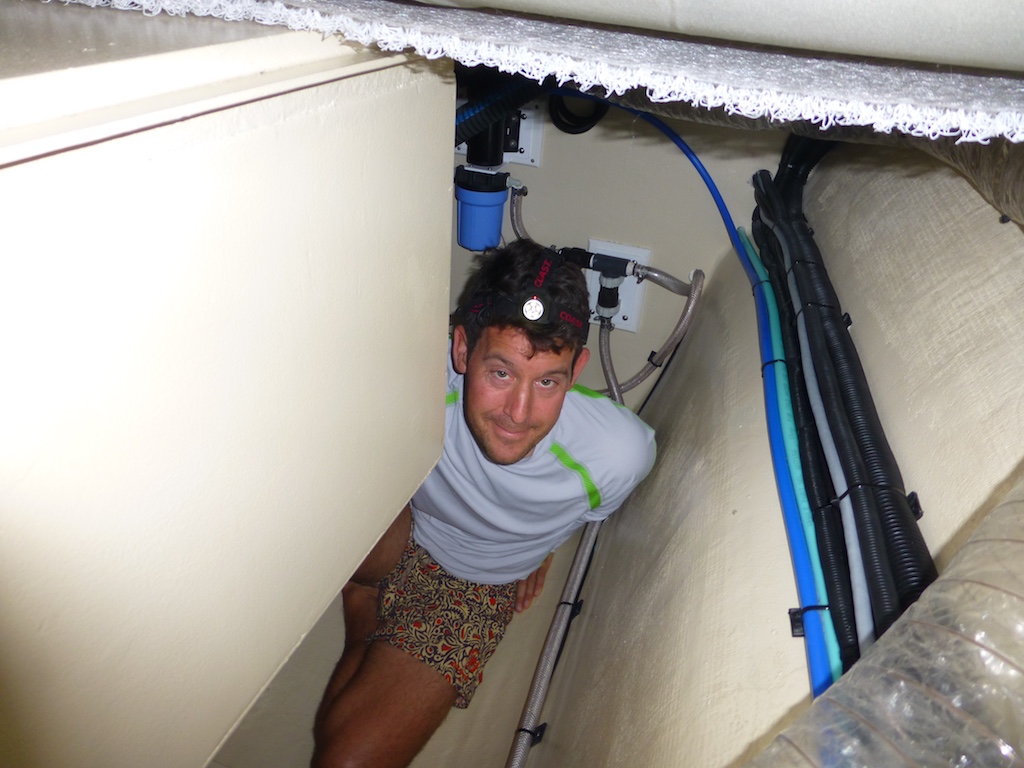
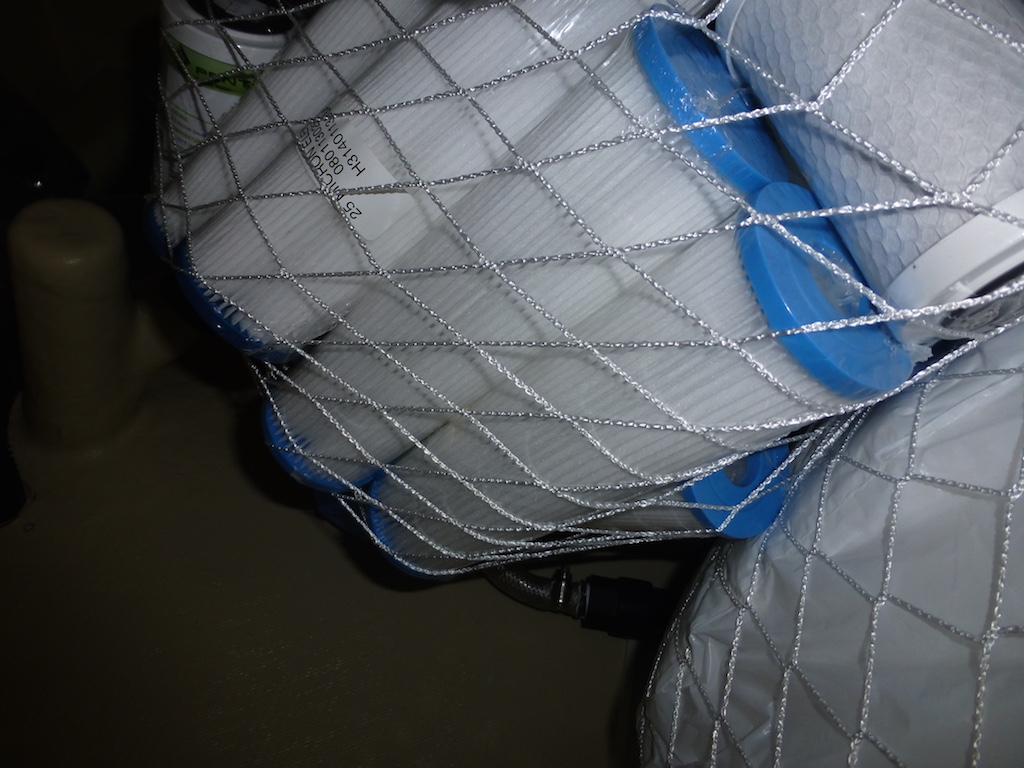
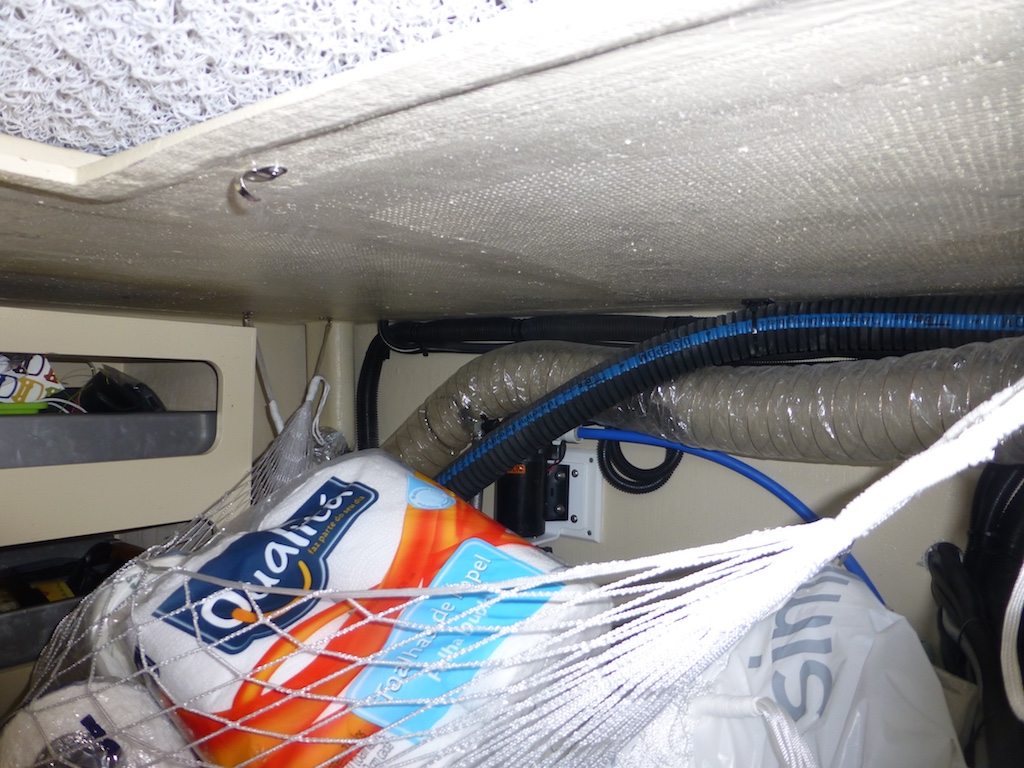
I have avoided storing anything under the master bed because the area contains the lift pump for the watermaker.  A year has passed since our initial issues, so I decided to store some rarely used items there.  Accessing this area is almost as easy as swimming to shore mid-passage.  Our huge collection of watermaker filters was a perfect candidate for remote under bed stowage.   I installed 3 gear hammocks that keep the filters, oil blankets and paper towels out of the bilge.

Clock and Barometer
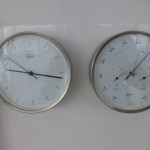
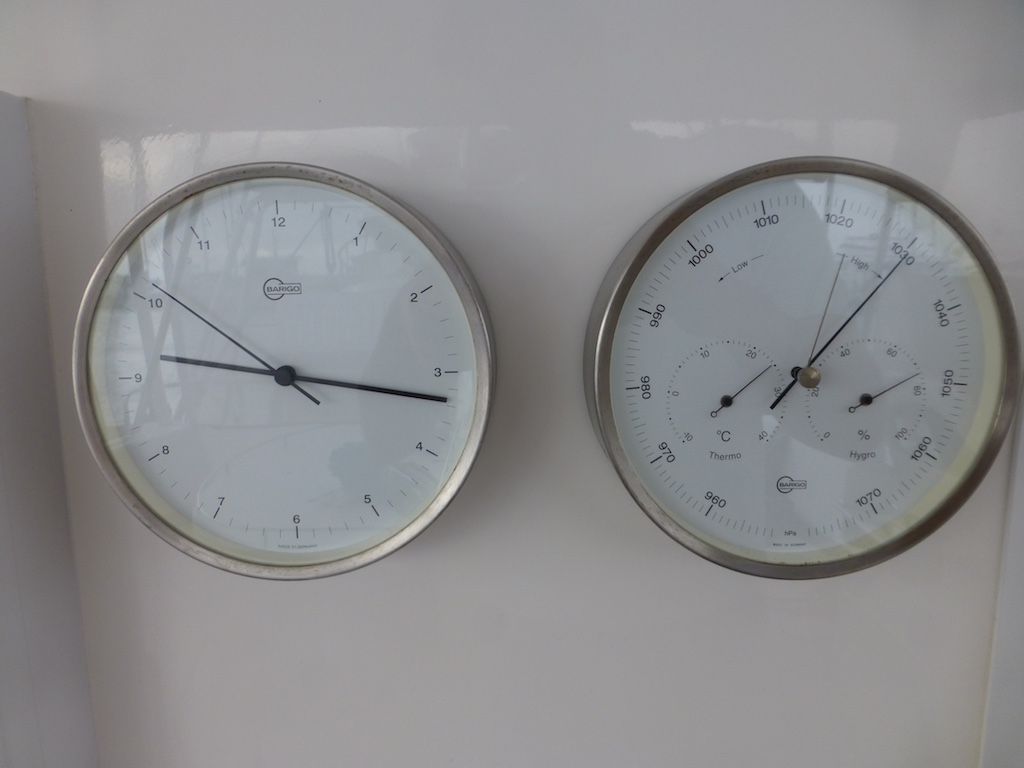
Barigo Clock and Weather

Barigo Clock and Weather


These units were chosen for their looks and not their accuracy as marine instruments.  They need to be polished to avoid rusting.   The weather device has humidity, temperature and the all-important  barometer.  We keep track of GRIB files with a high regularity and the barometer is not currently a huge focus.

website for the clock maker


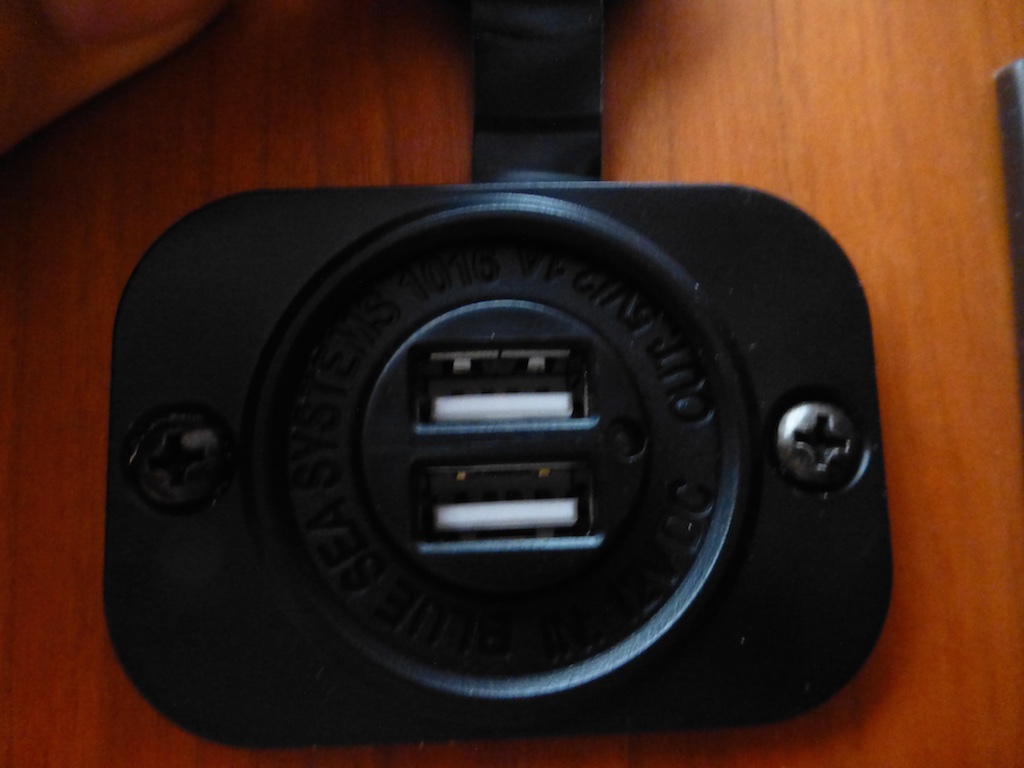
USB for 12 volt
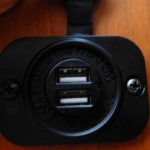
BlueSea USB

BlueSea USB


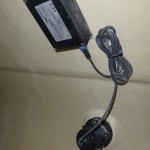
With our iPhone anchor alarms, iPad podcasts and other amp-consuming applications, we have a constant need for charging our Cupertino friends.  We had plenty of cigarette lighter style outlets, but the adapters always got warm; this deeply concerned me and curtailed their use.  Now we have replaced these fire hazards with a USB outlet from BlueSea.  They work great and should be standard on all boats.  Check out this post on the charging or take my word for it.


Canvas Customization

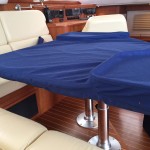
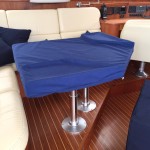
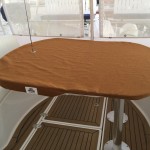
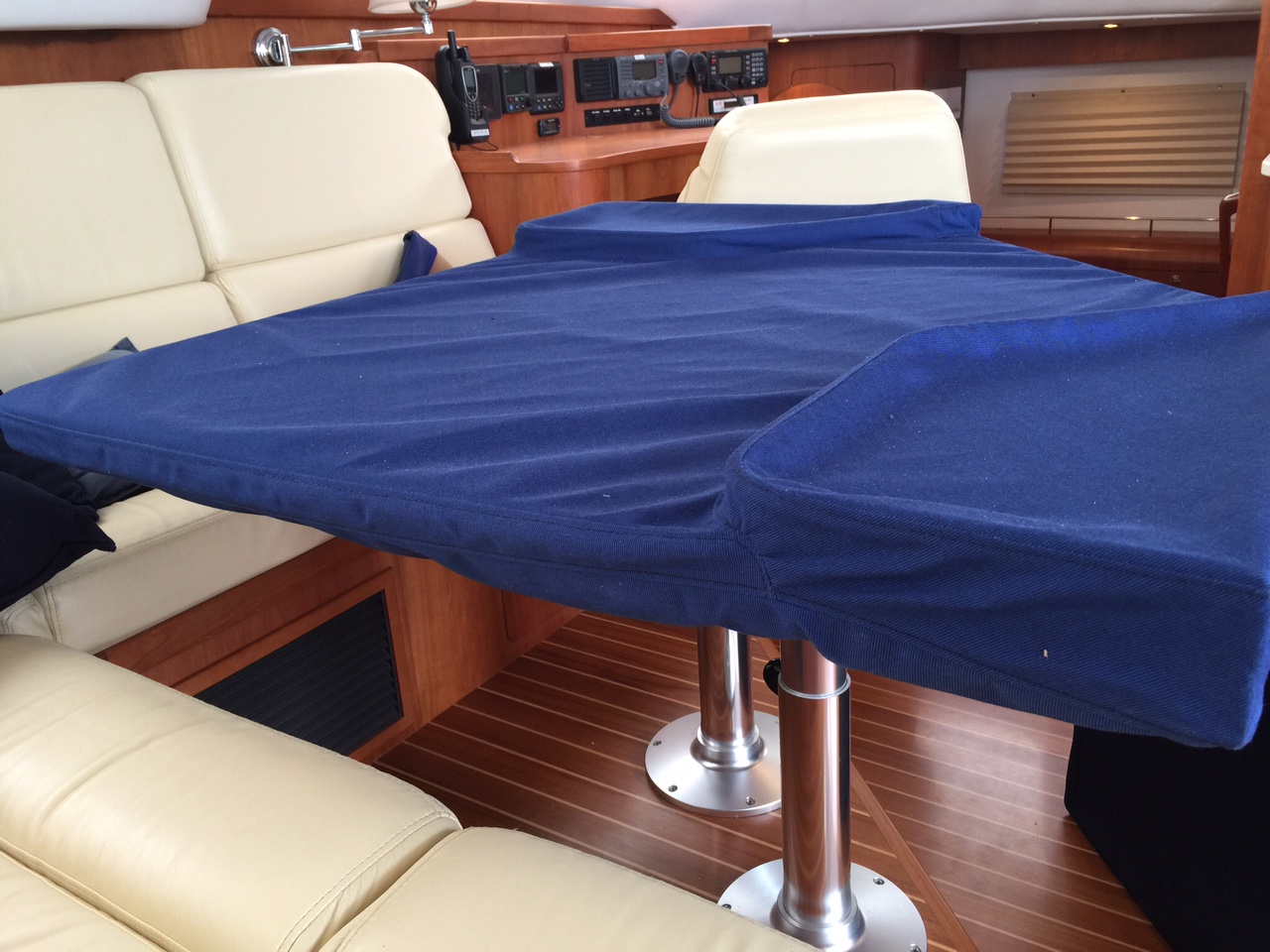
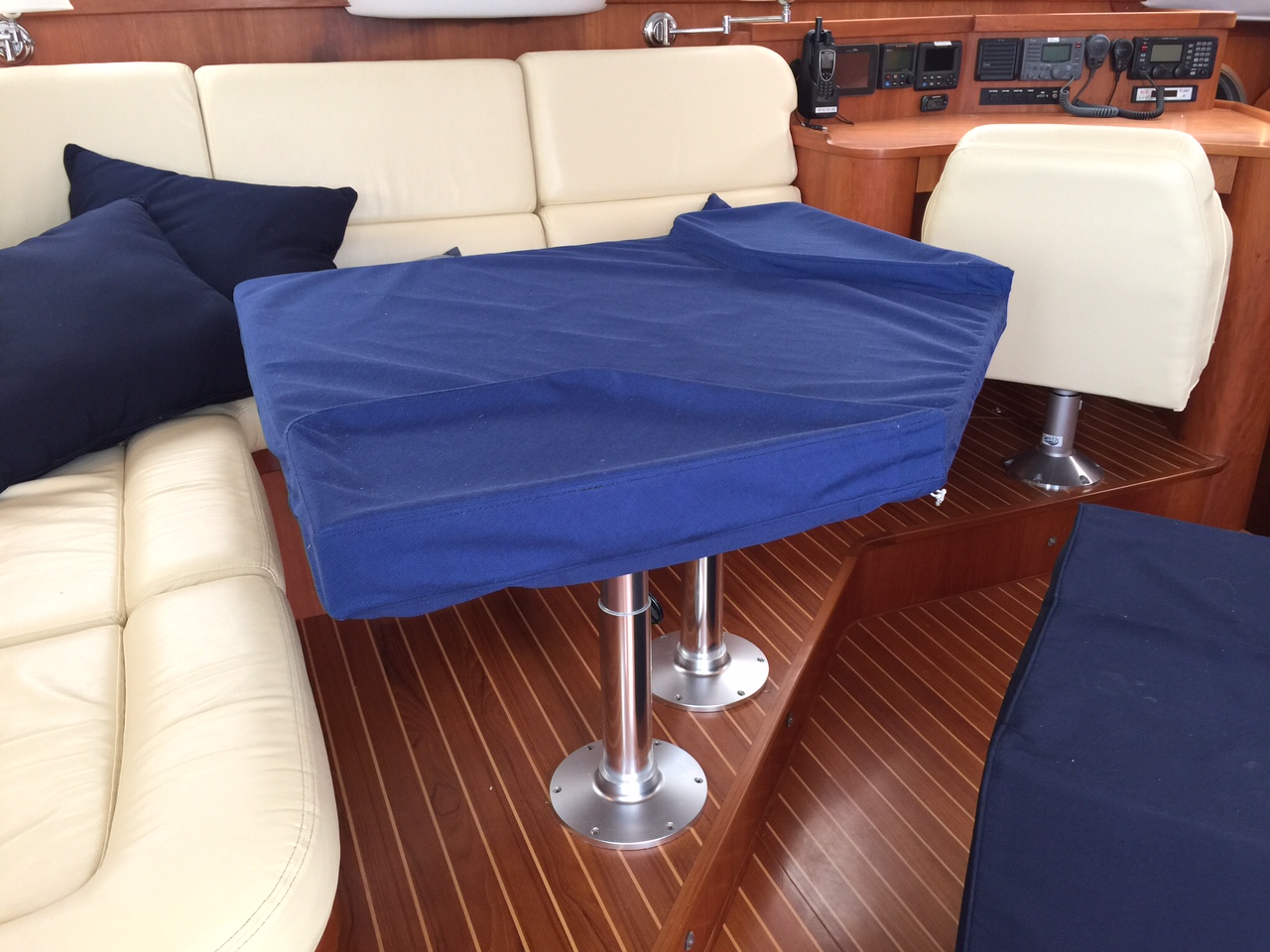
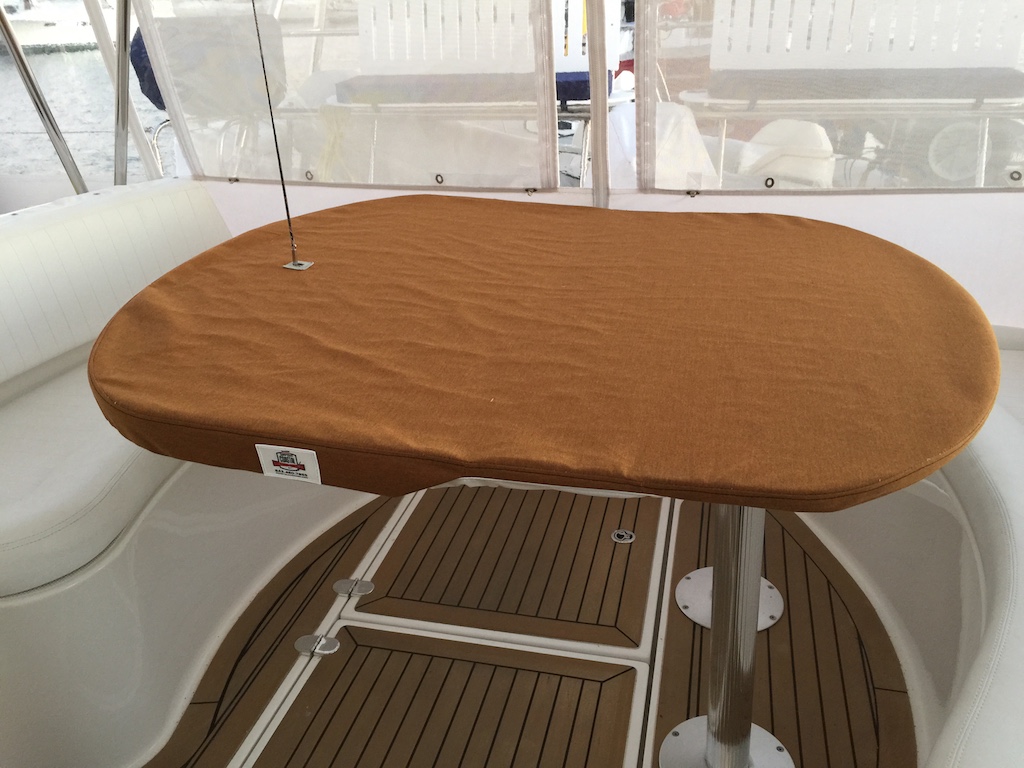
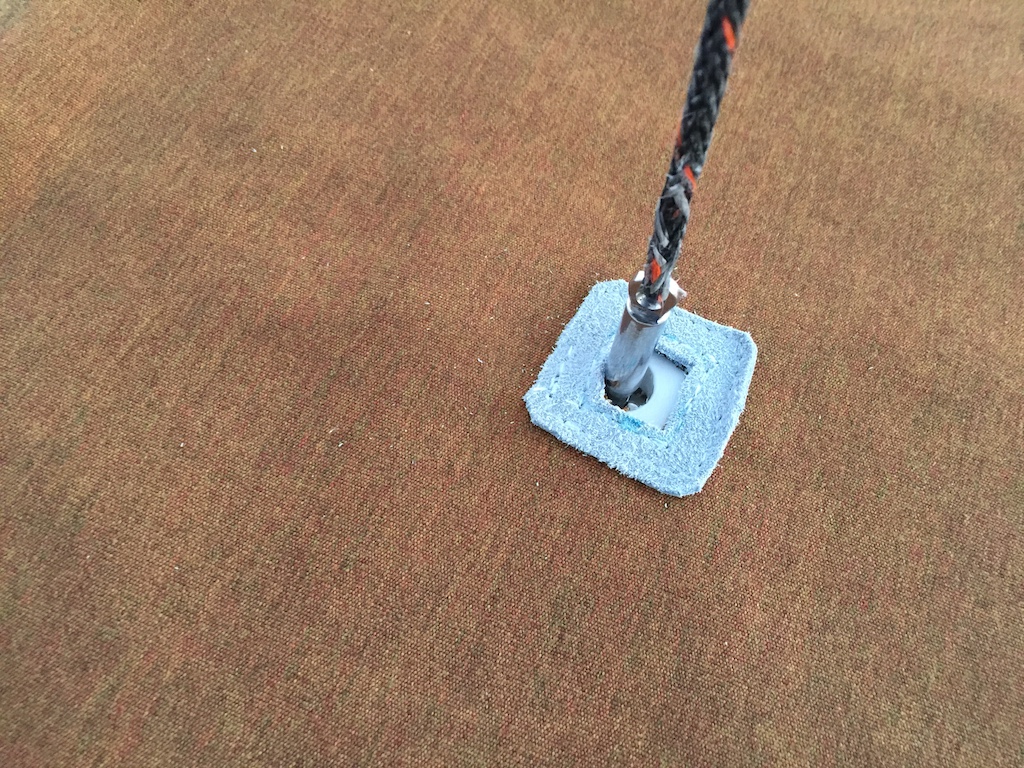
“Hello sir. I would like to buy two table cloths.  The first is for a table that is sort of oval with a line holding it up at one end.  The other one is more complex, has wings and is a pentagon.” said Gail.

“Please leave the store” said the store employee.

That is what would happen at a department store if you asked for the two tablecloths we had custom-built in Charleston.  The canvas shop was efficient and made a quality product.  It is a joy to have a proper table cloth for outdoor dining and the indoor cloth protects the table during passages.

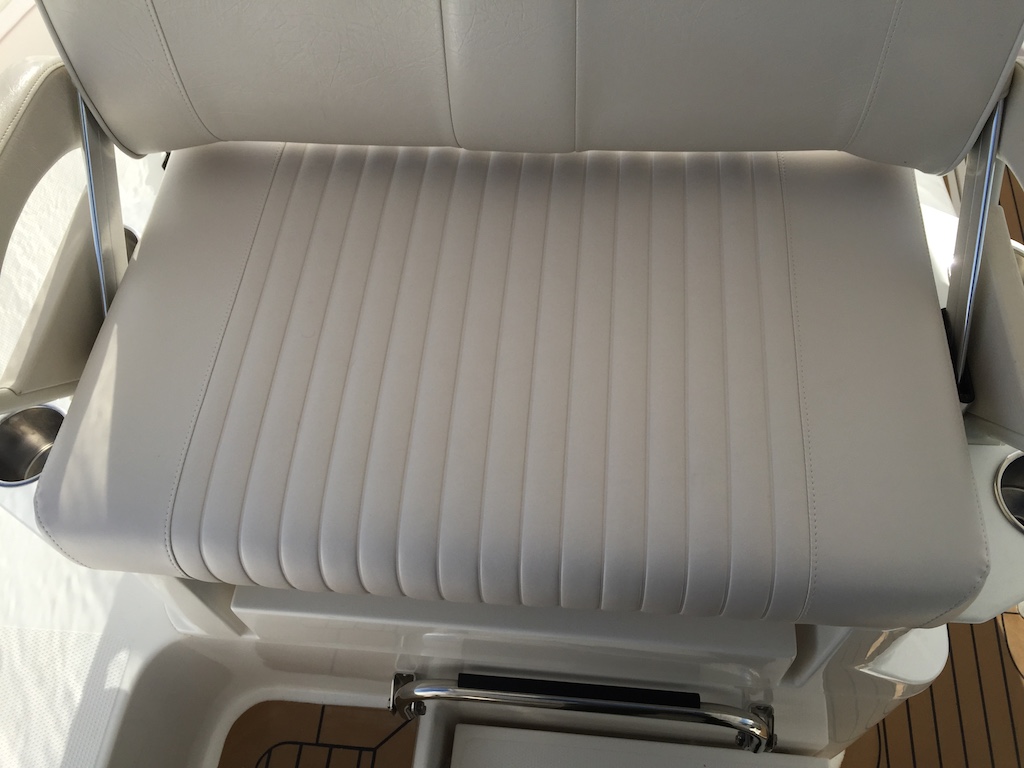
We never loved the quasibucket style design of our helm seat.  It had padding that pitches you forward at an odd angle and a ridge in the middle.  Also, a key seam failed on Two Fish and some early boats.   I think the seats are now made with a better material so the failure is less likely.   The manufacturer sent us a replacement seat but we chose to construct a new design.  This design is flat and matches the pattern of the cockpit cushions.   So far it has been very good for both of us, especially as we like to sit in the lotus position while on watch.

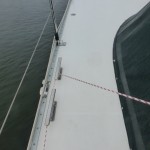
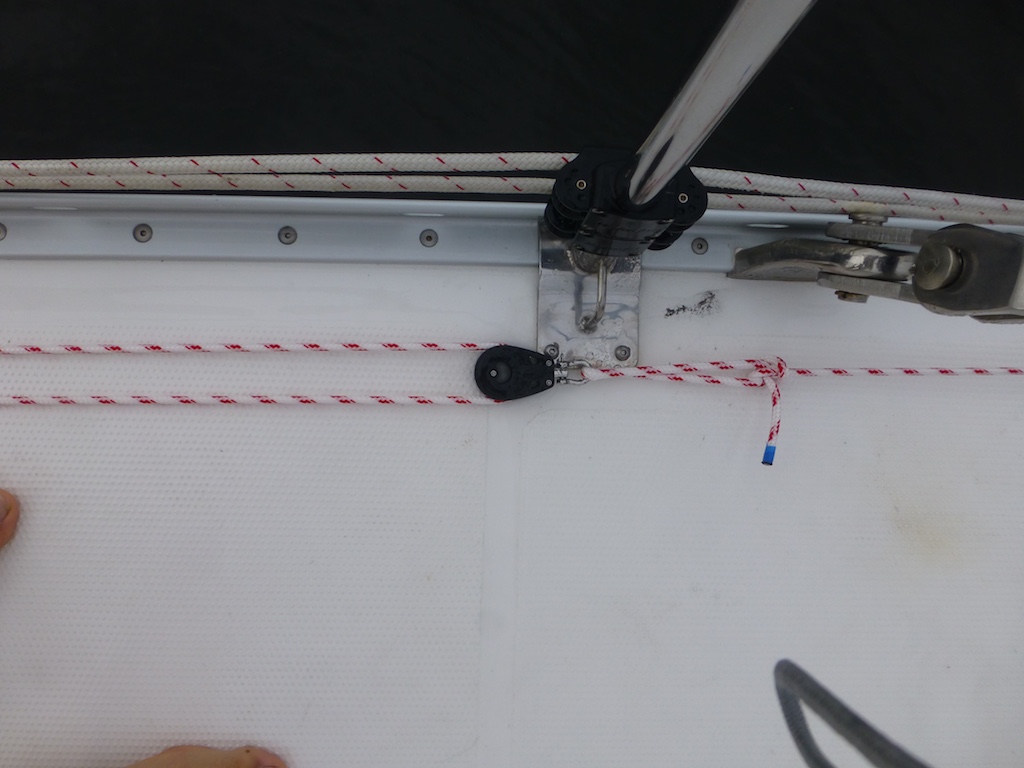
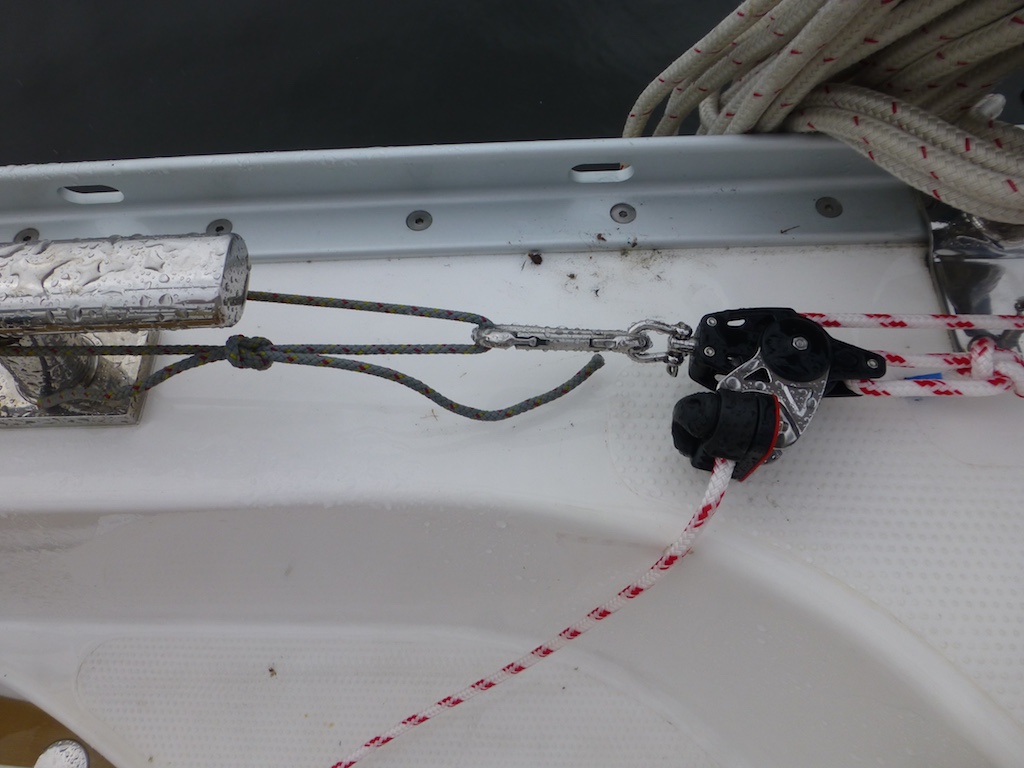
Preventer system

This creation is over-engineered.  Or may be over Jason-ed as the engineering might not pass muster at an MIT inspection.   The system has the goal of being an easy to operate preventer. (For non-sailors, it is preventing the boom from violently swinging over to the other side if the wind shifts.)

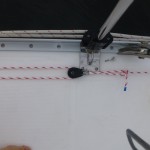
1)   When not in use, only a loop remains attached to the end of the boom.  This makes for a cleaner cockpit.

2)  When it comes time to use the preventer, it is easy to attach.  A simple clip system from the preventer attaches to the end of boom loop.

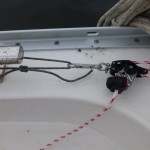
3)  The preventer line uses the mid-ship cleat to turn the line aft.

4)  Finally, the system has purchase and is controlled with a repurposed dinghy mainsheet block.

The traveler on the Antares is basically a preventer since the mainsheet is kept short.  Remember to cleat BOTH sides of the traveler at all times.  The preventer is another layer of protection from  accidental jibes and also can be used to shape the main sail.   A less obvious usage is to reduce mainsheet slap.  The Antares mainsheet passes under the salon and in lumpy seas and light air the mainsheet will slap the bottom of the salon.  Nothings gets me on deck faster than hearing the sheet slapping the underside of the salon.   My best technique to eliminate this noise is to ease the vang and tighten the preventer.   The new system is easier to tension than the old one (a simple line to the cleat).

Other Rigging changes

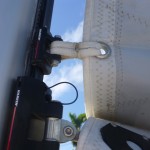
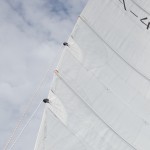
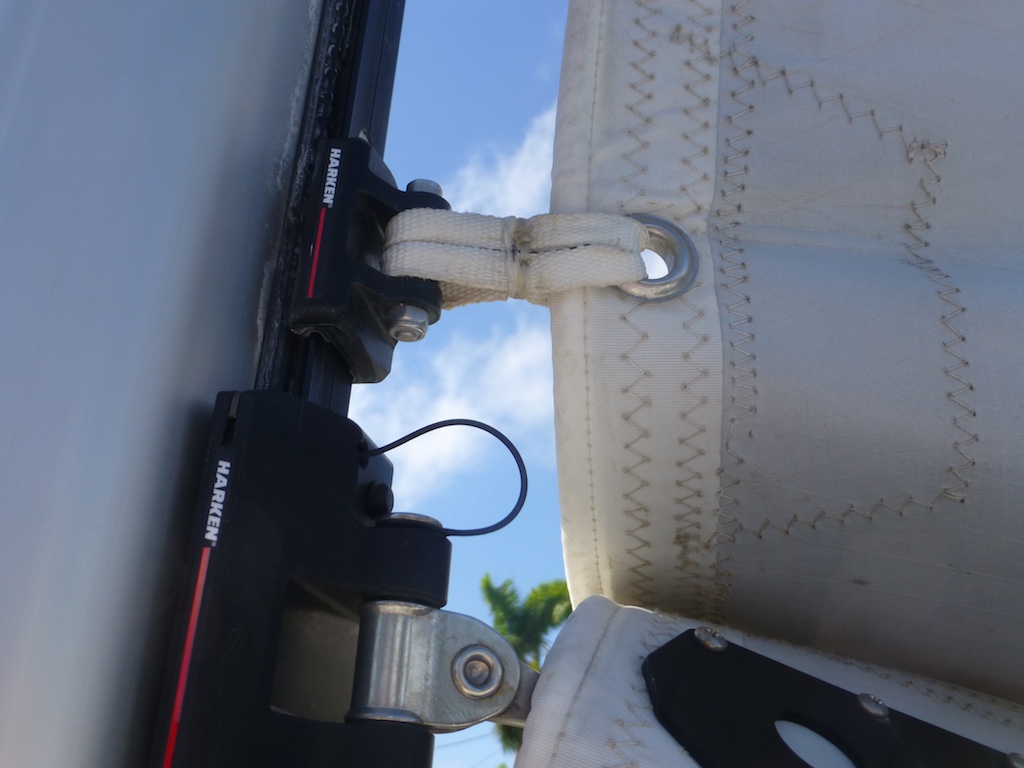
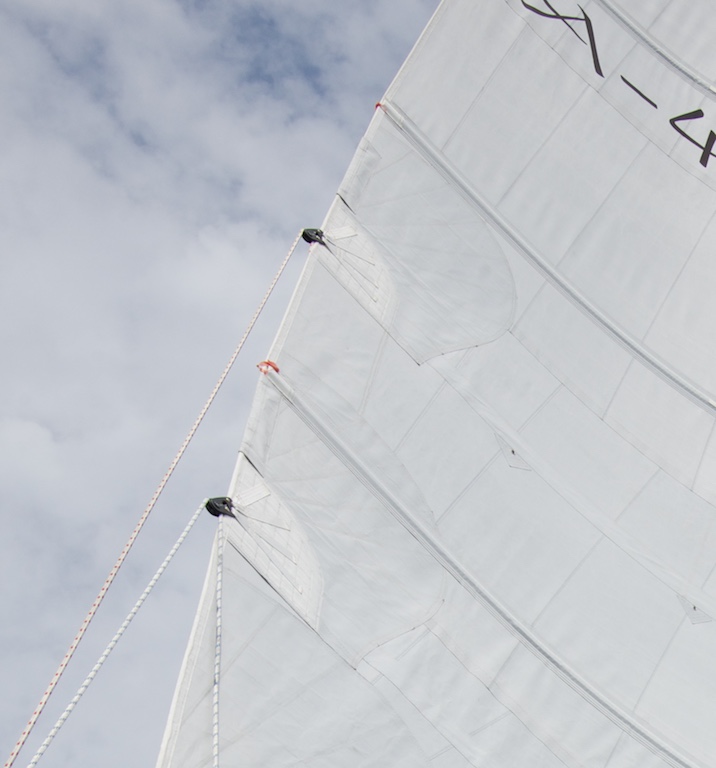
We disagreed with the design of the mainsail cars on the Antares. Before you take my word as gospel, there are many boats that have sailed 10,000 miles without incident with the factory set-up.  The factory set-up uses small harken cars so that when the sail is dropped the head is not too far off the deck.  This is a laudable feature but does not give the most robust Harken solution.  We installed batten cars at every batten and reef cars at every reef point.  The intermediate cars standard on the boat are friction sliders and they were replaced with ball bearing cars.  This may be overkill, but it allows for smoother drops and a more robust attachment of the main to the track.  We re-cut our sail cover and added a few mast steps to adjust for the higher mainsail stack.  Gail can still put on and remove the sail cover.  She can also frap the main halyard with a little help from the boat hook.

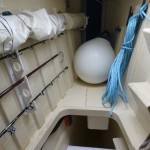
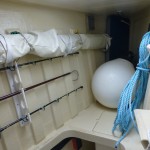
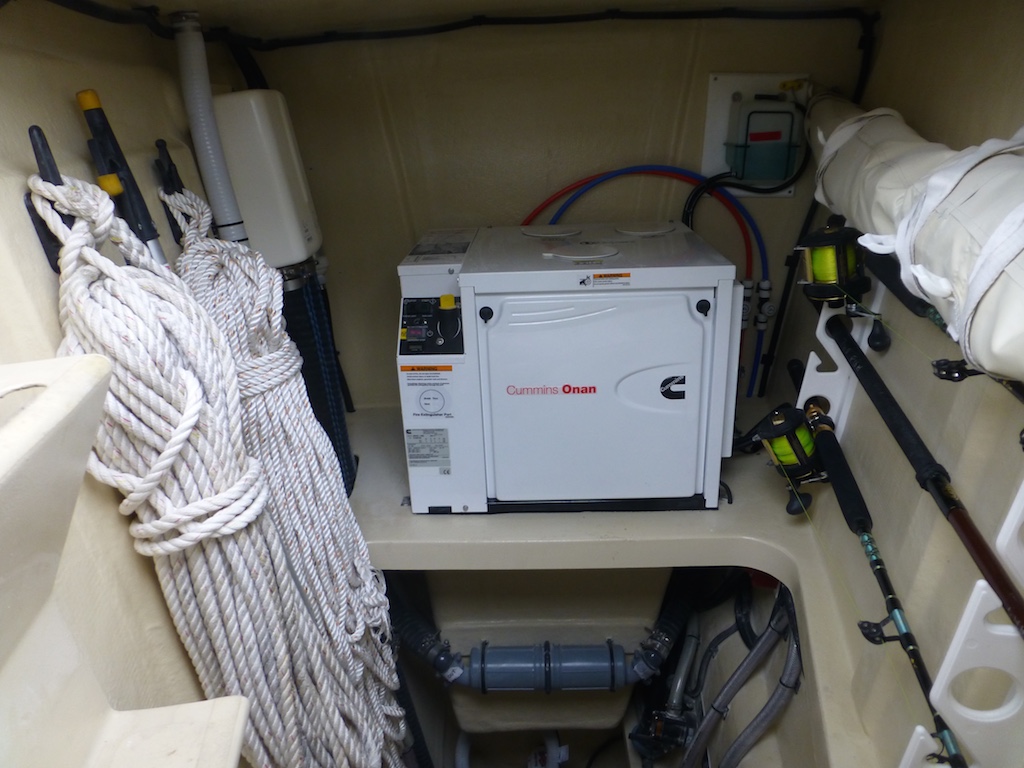
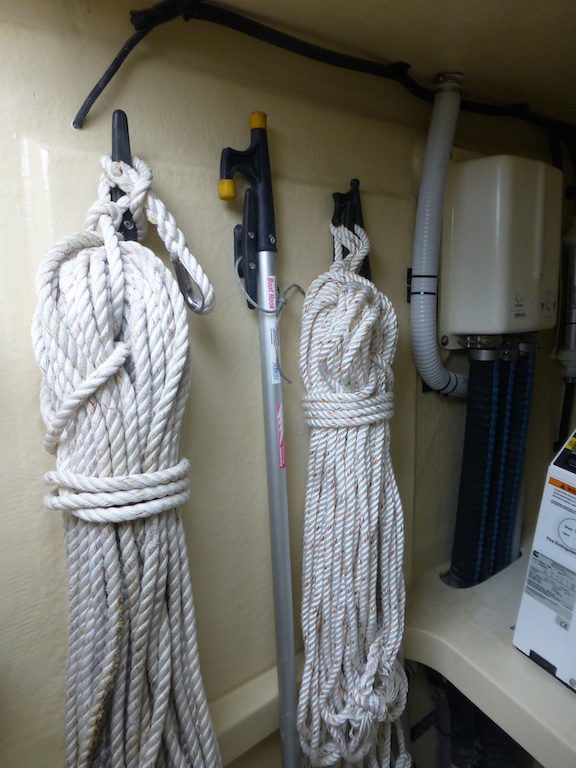
Organizing the Genset locker

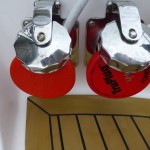
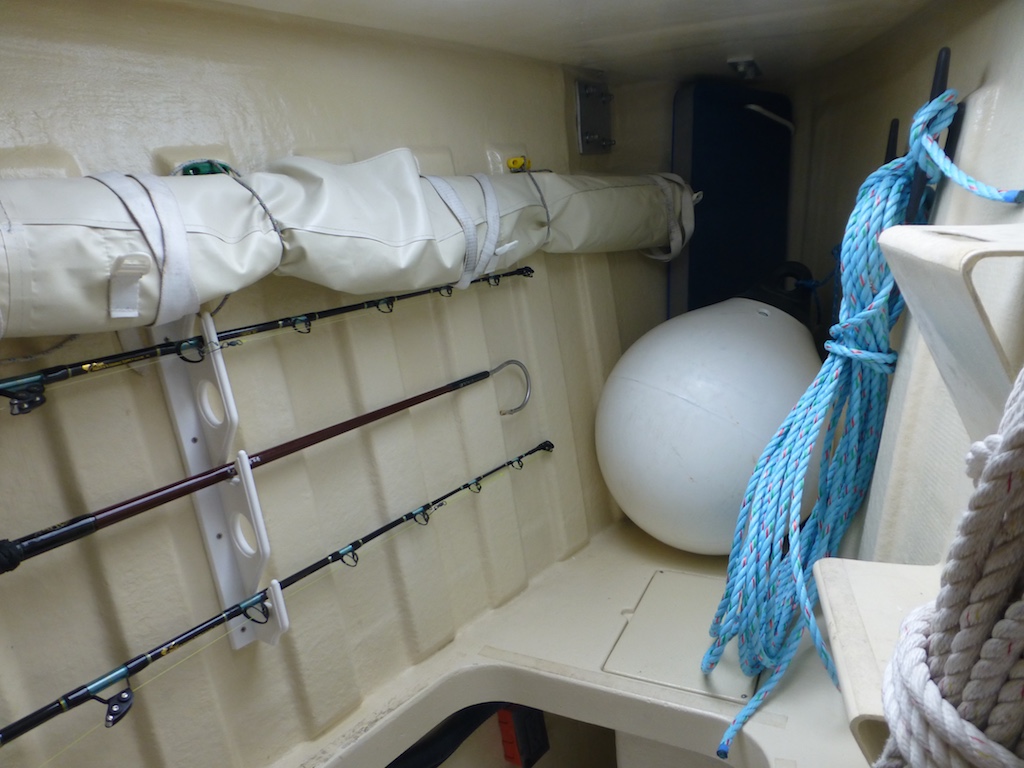
The Genset locker holds long lines which are useful in narrow rivers and tight anchorages.  They are also useful when warping or leaving a Med moor.  One line is 300 feet, the other 150 feet and the final is 70 feet of propellor avoiding polypropylene used for grabbing mooring balls from the stern steps.   The fishing polls are out of the way and there is a custom place for the aft sunshade.  Most owners store their sunshade on the dinghy arch.  The genset locker is so organized and clean, I am thinking of inviting guests over for drinks in the locker.
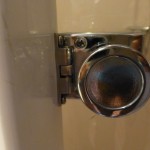
 

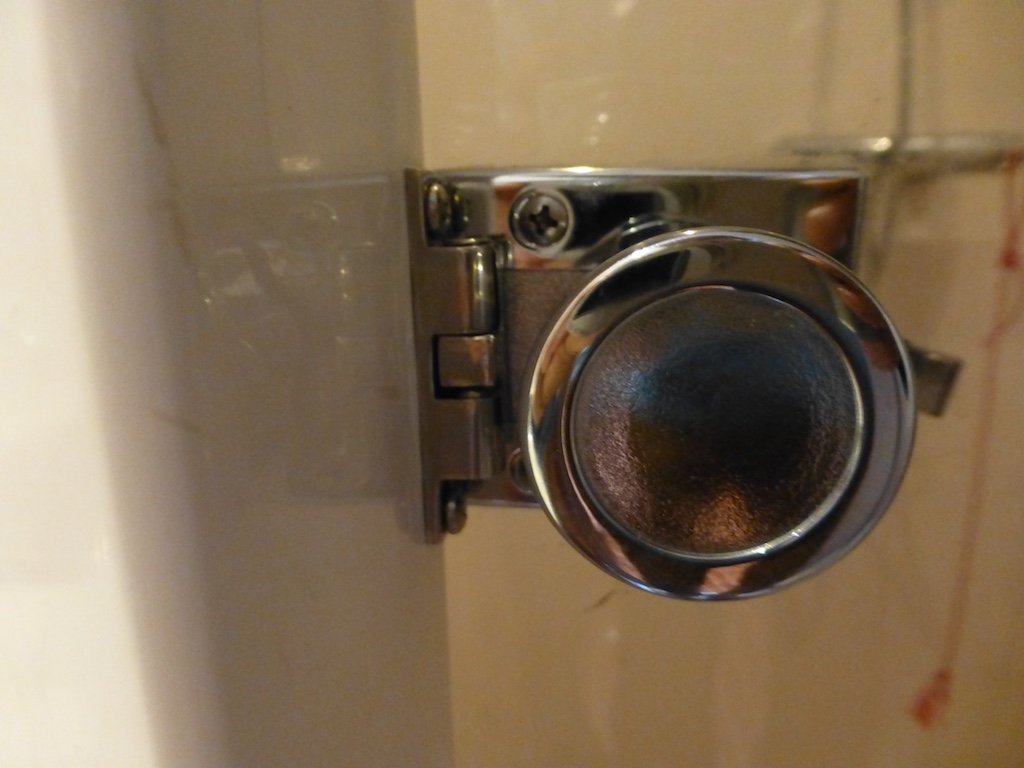
Slam Latch left of knob

Slam Latch left of knob

Shower door lock

In big seas, the master shower door can fly open.  Many owners sail blue water with an extra line tied from the door handle to the sink.   Effective, but hobo style.  Two Fish added a slam latch to the existing latch.   The latch can be adjusted via a screw to create the correct pressure to keep the door closed in a big sea.  Better yet when the factory makes  a new door they need to hang it such that the mechanism goes deeper into the catch.


VHF position

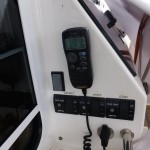
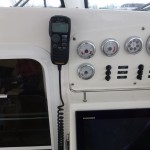
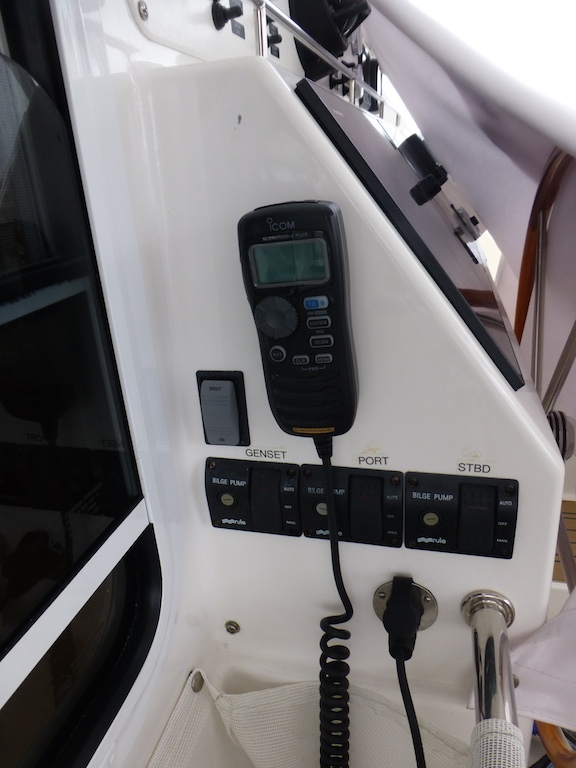
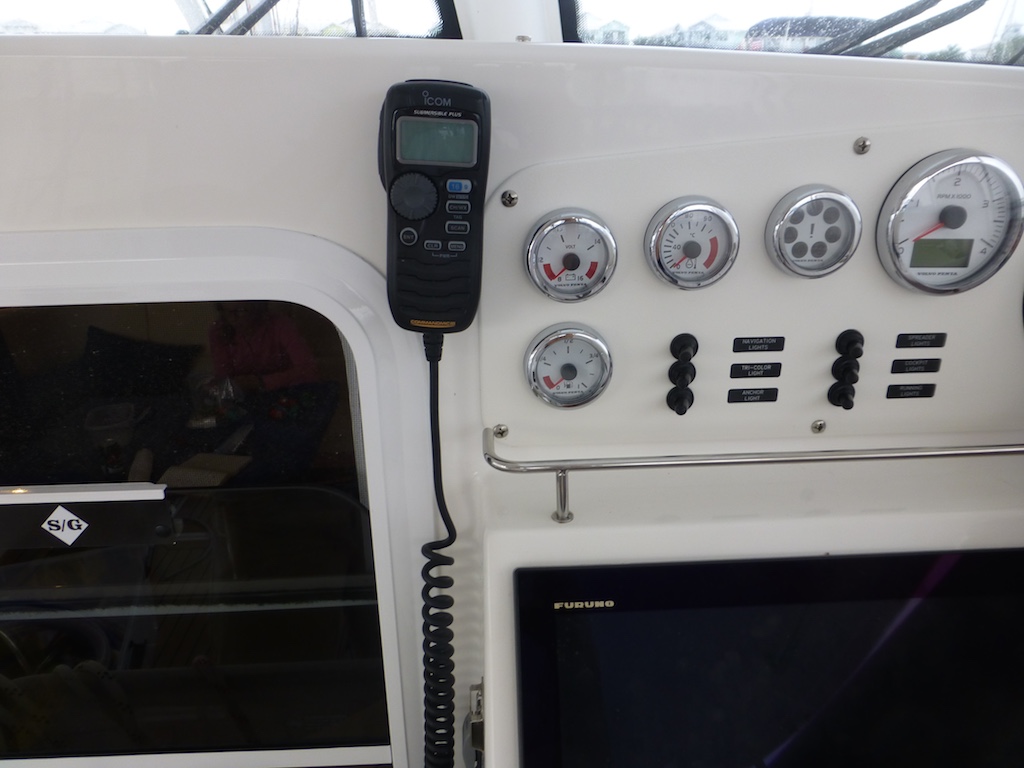
Many boats install their VHF above the bilge pumps.  One person can then be at the helm, and the other can operate the VHF.   However, the flaw with this installation is that the VHF speaker is facing to port and is hard to hear while helming.   The solution is to add another dock for the VHF higher up so it can be heard by all and reached by all.  When the trip is over the VHF returns to its old dock where the canvas cover protects it from exposure.  Small change but big benefit when transiting the ICW where there are frequent communications.

Entertainment cabinet

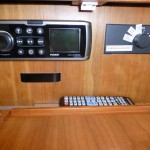
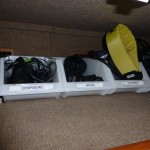
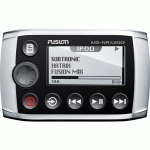
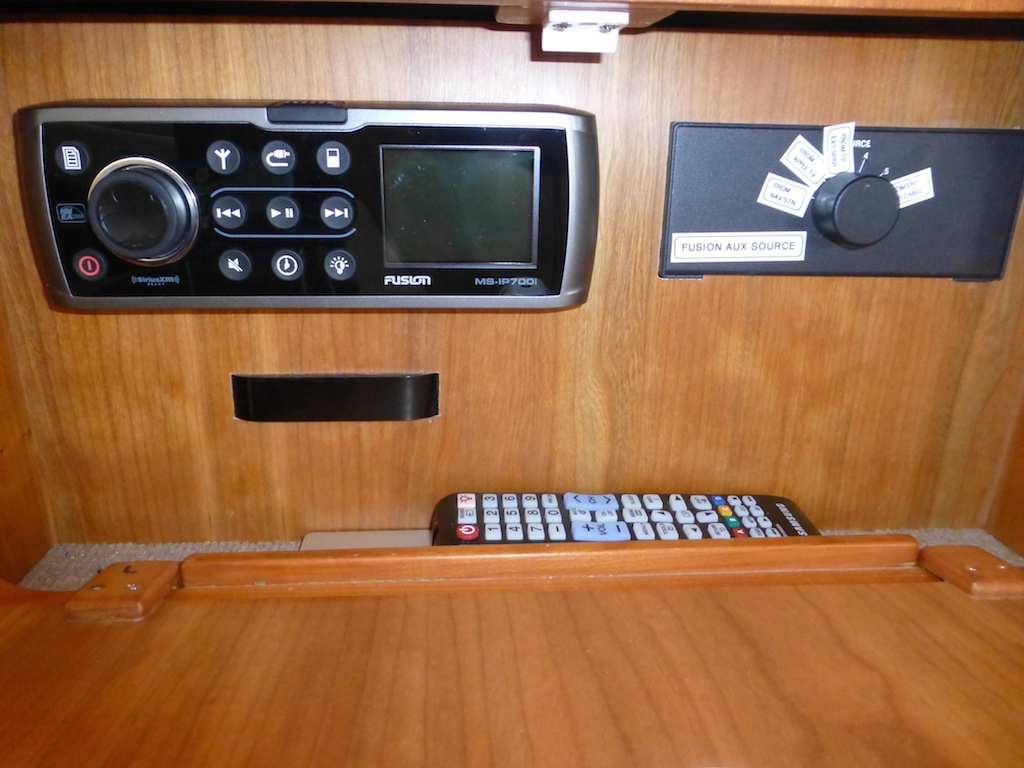
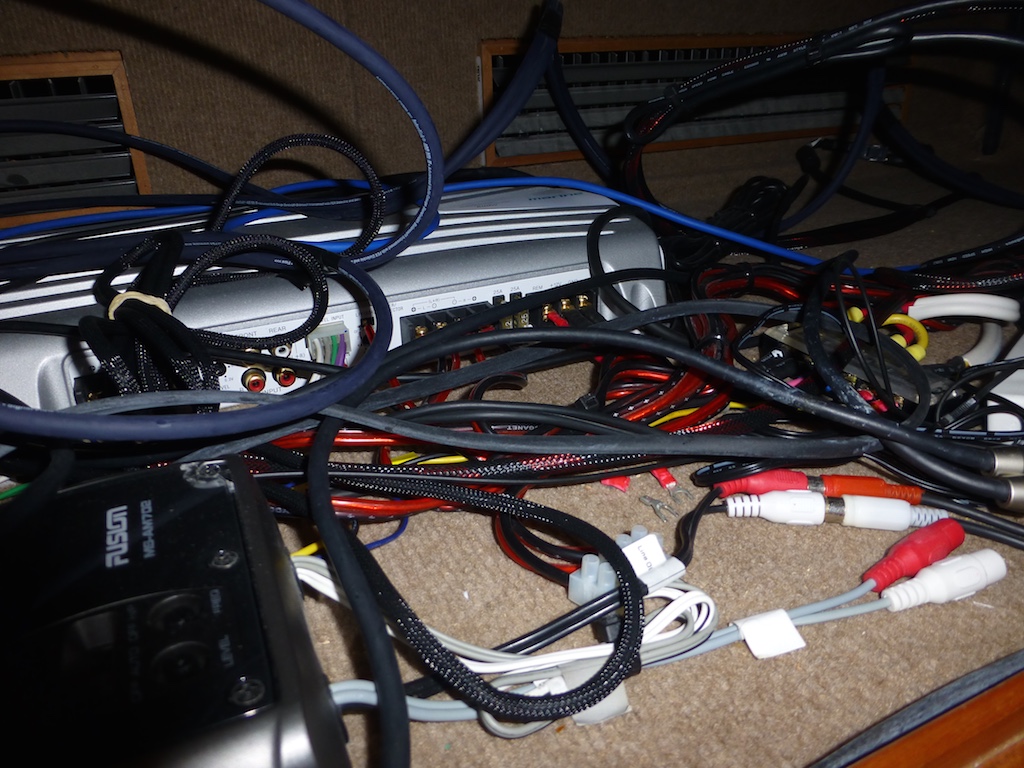
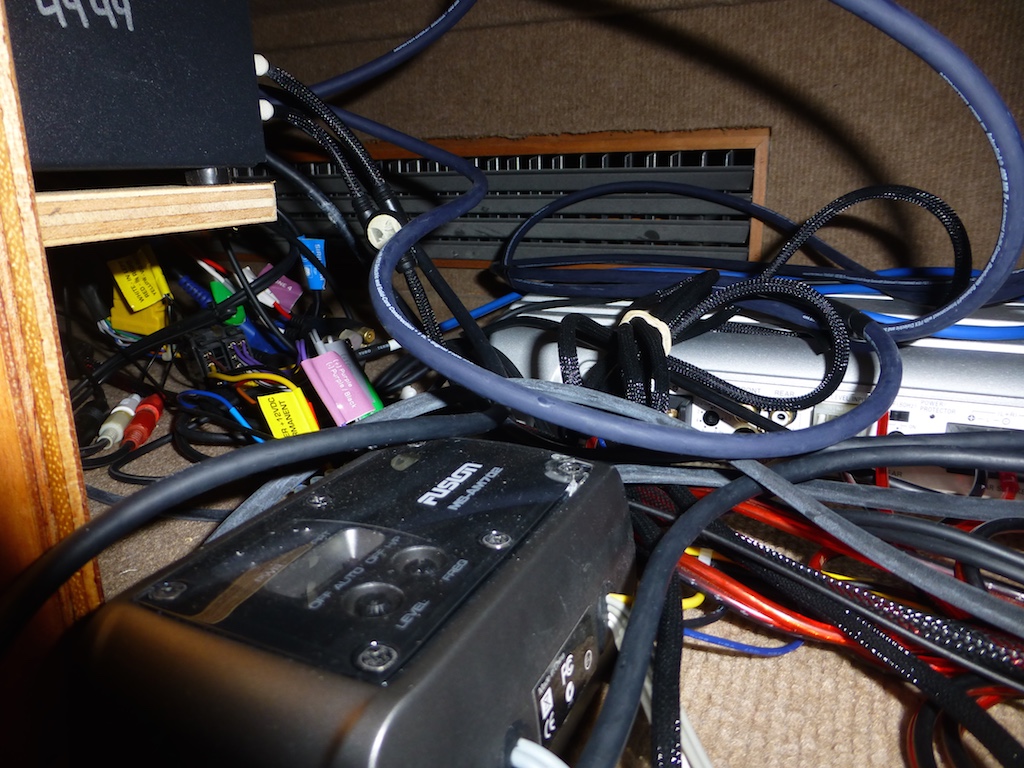
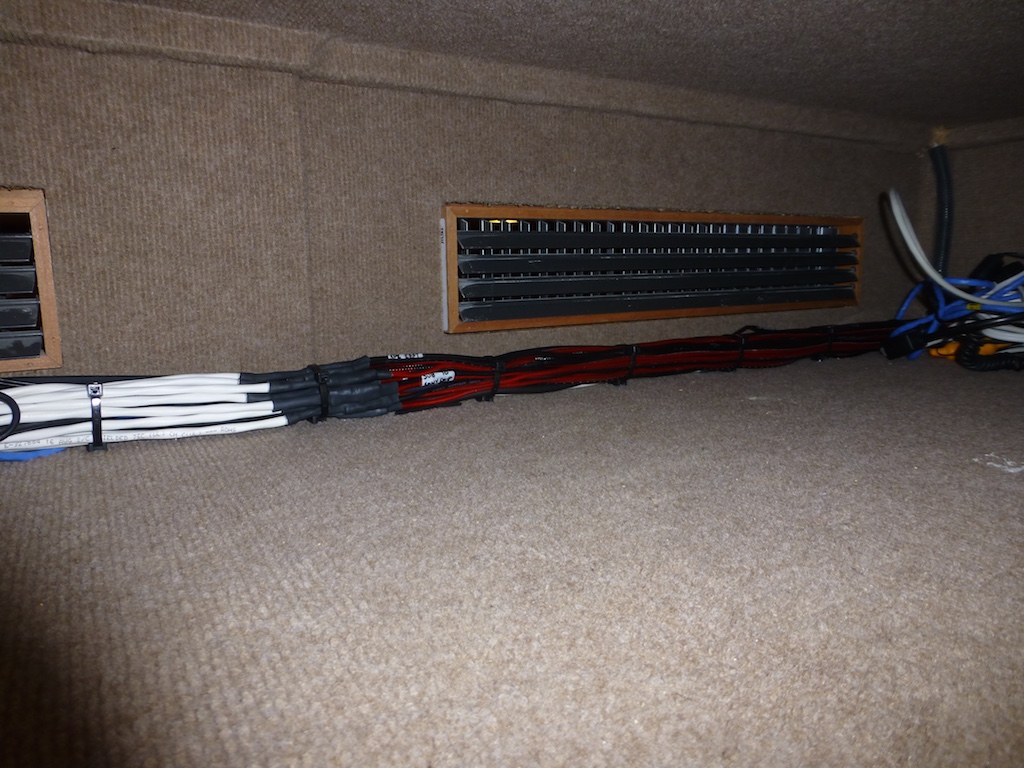
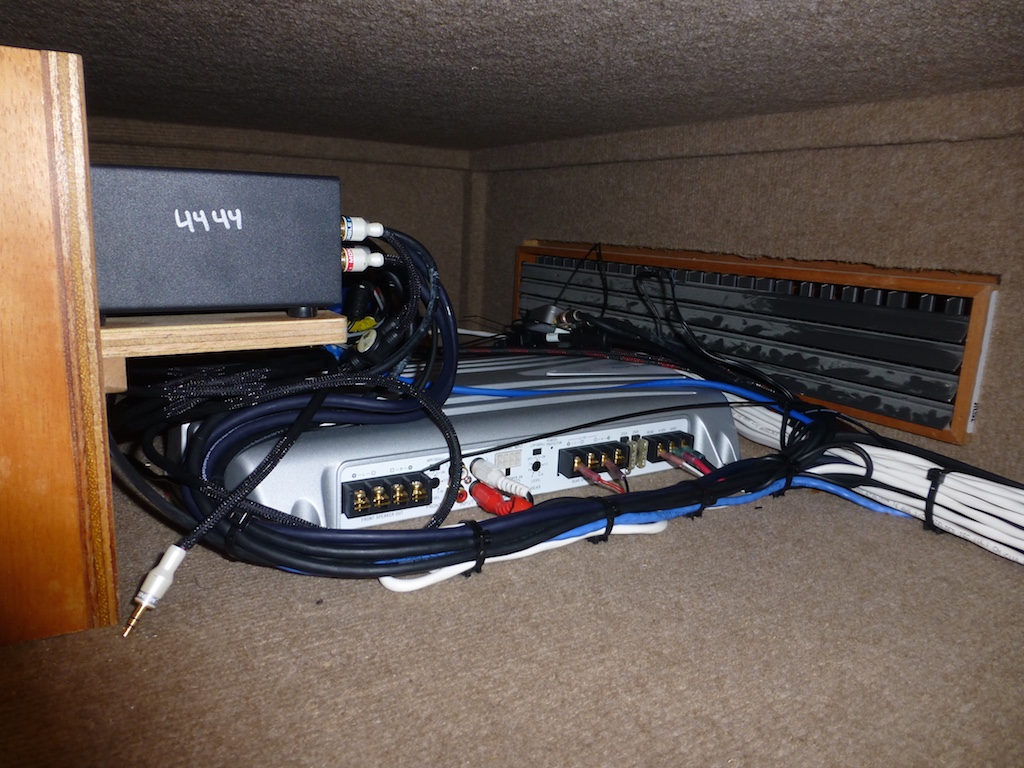
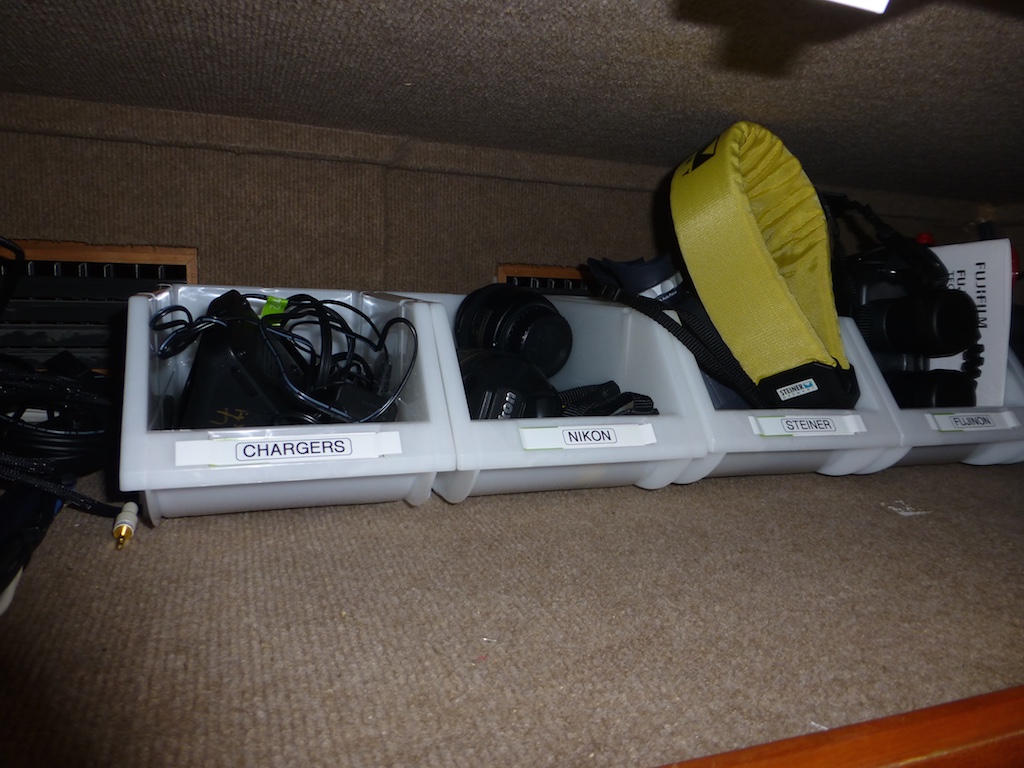
Under the salon TV, there is a huge space but the boat builders used this area to run  wires.  For a year, this has driven me nuts. That created the energy needed to change the set-up.  We cleaned up all the wires and moved hardware behind the Fusion stereo.  With a large space ready for organization and a quick trip to The Container Store,  vital stuff now has a safe place.   Binoculars with compass, stabilization binoculars, air horn, rangefinder, camera, VHF chargers and more, all have homes.  This change is a huge lifestyle improvement.

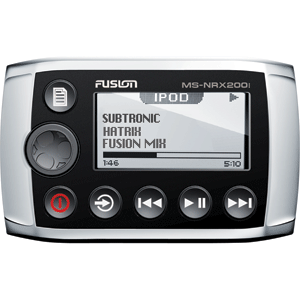
Since day one, the Fusion stereo has had a wired remote at the helm. I find it nice to be able to quickly stop the music to hear the VHF or law enforcement.  Recently, we connected the Fusion to our 12 volt router and “bingo”, now iStuff can control the stereo with album art. Not necessary but very nice.


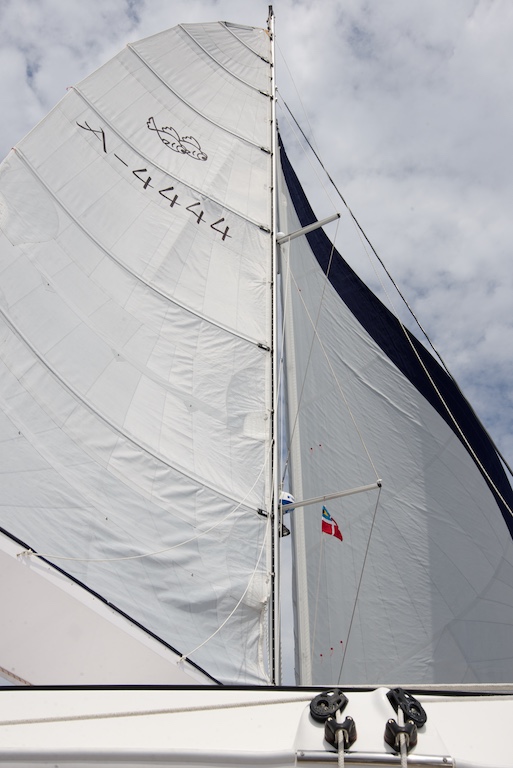
Screecher
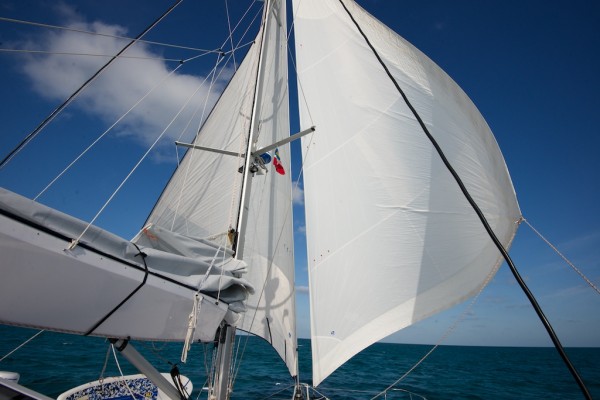
Screecher

Screecher

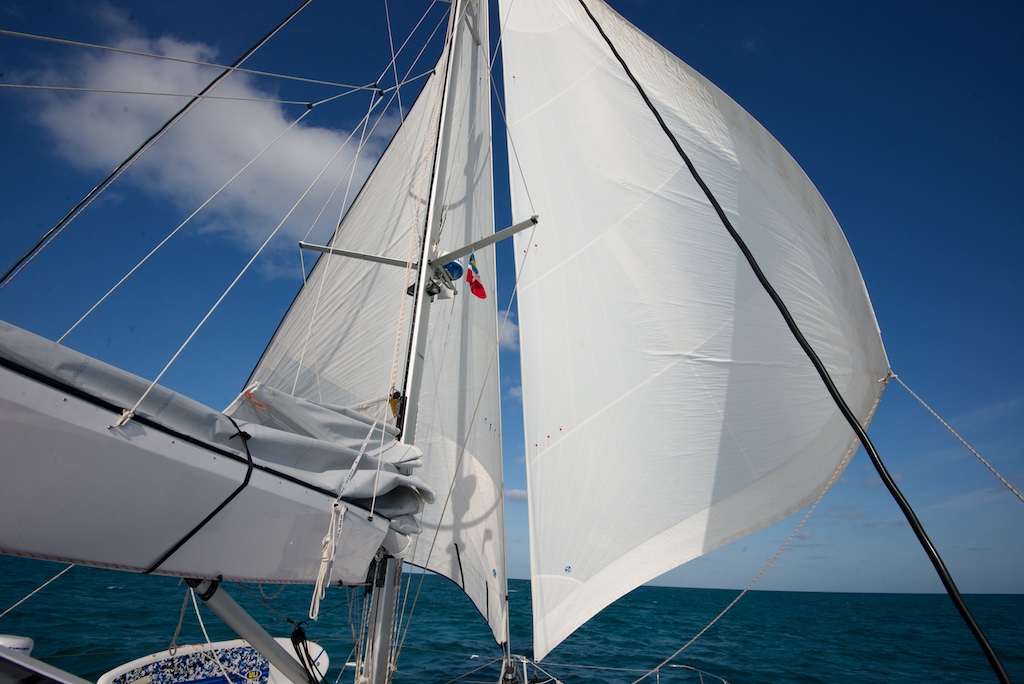
This is a must.   Traveling dead down wind with Genoa and Screecher is a joy. Power reaching with Main and Screecher is fast and fun.   100% happy I got this sail and the bowsprit installed.  At some point I will change the reefing line to a continuous line and snatch block for winch reefing like sister ship Calypso has already done.   However, I have hand-furled the sail in over 20 knots with no issues.

Self tacking Jib
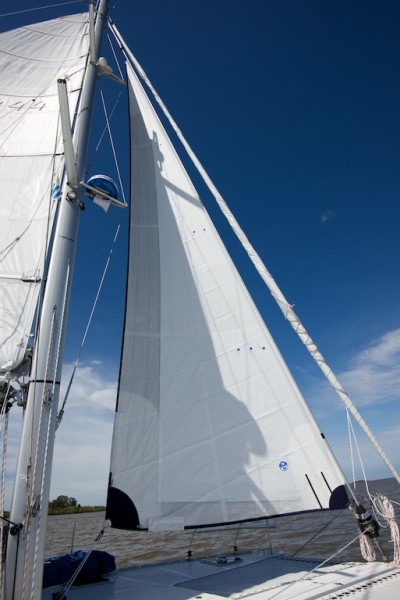
Self-tacking Jib

Self-tacking Jib


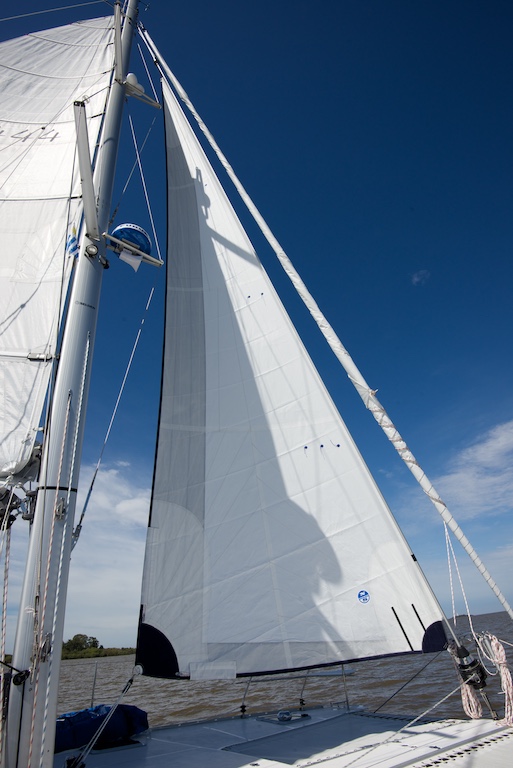
We have not used this, except for testing.   If we sailed a lot in cold weather, or, short handed, the sail might get more use.  The furled Genoa works ok in very strong breezes (40knot) when off the wind and does not require the crew to go forward to drop and bend on a new sail.  However, having the Jib offers back up if a head sail winch were damaged.  I would consider skipping this option and having a cleaner foredeck, one fewer line in the chaseway, and a few more bucks in the wallet.


Underwater Lights

Before I get new owners too excited about adding features to their boats, I would warn that a simple boat is easier to learn and may have fewer initial problems.  You can add many systems later as you learn your preferences.

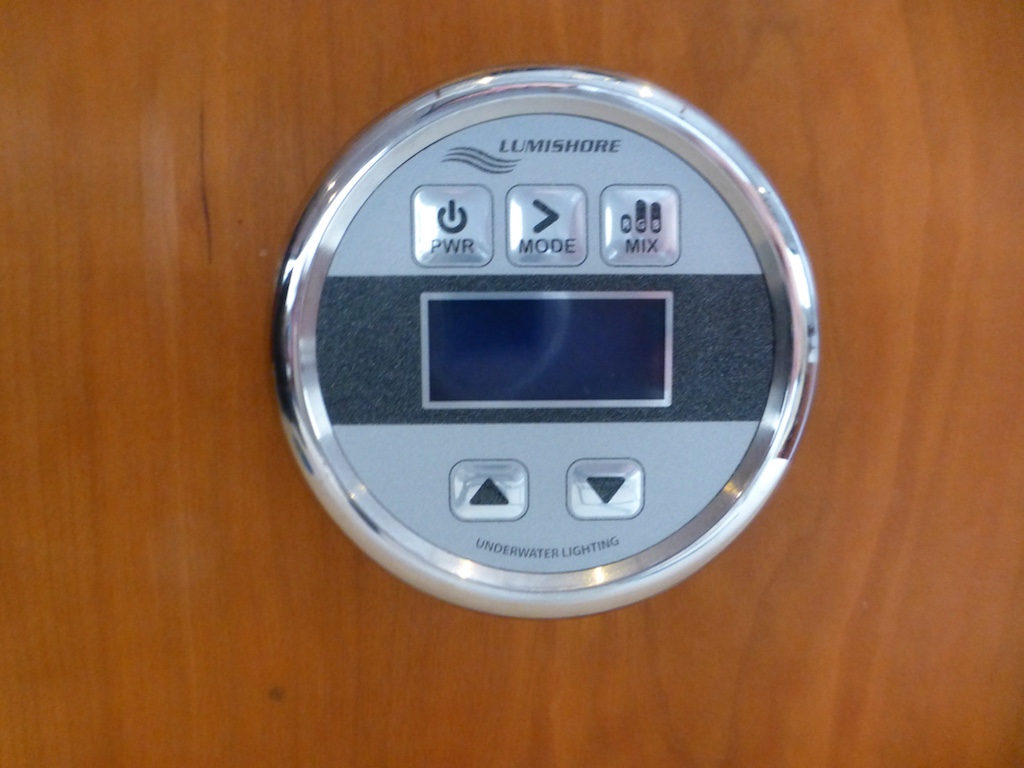
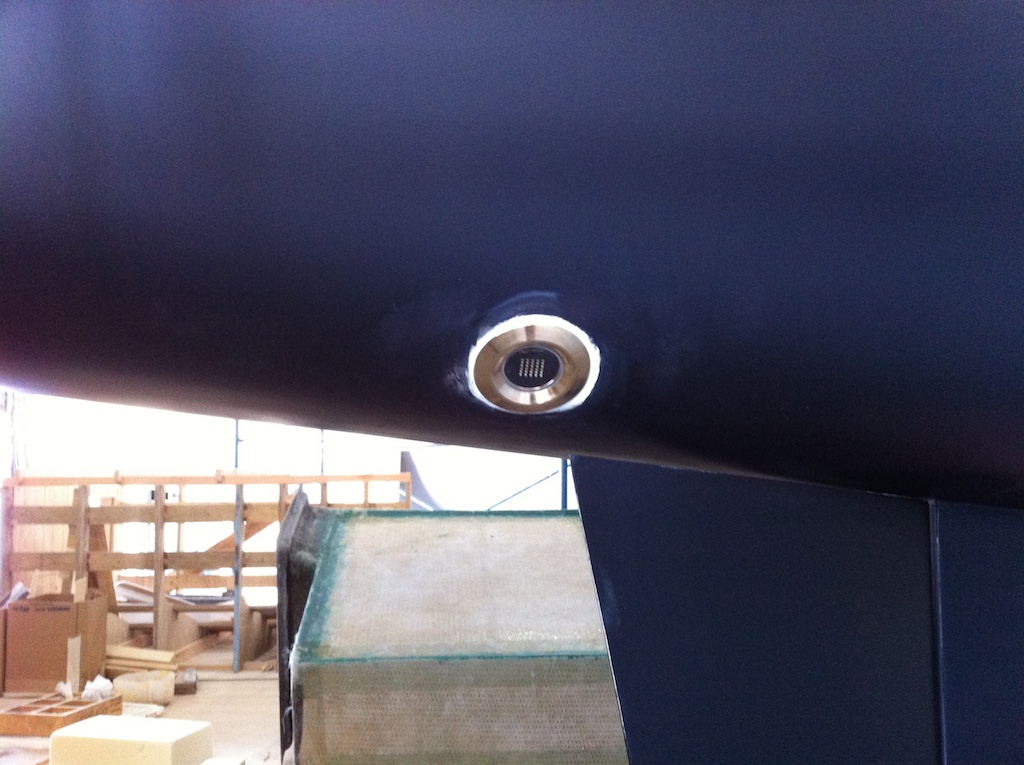
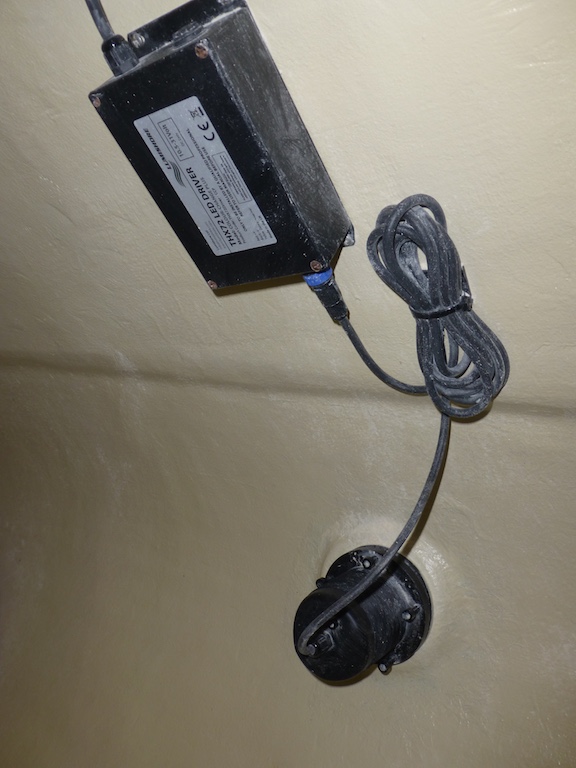
We bought these lights under the advice of Live Wide.  The factory did a great job installing the units.  Lumishore lights are bright and make any color under the rainbow.   We turn them on when we are expecting guests.   We do not mimic sport fishers and leave them on during the evening when in the Marina.   We do enjoy their ability to attract fish at night, but would rather sharks stayed away.

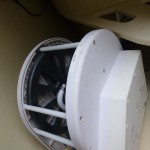
Glendinning power cord reels

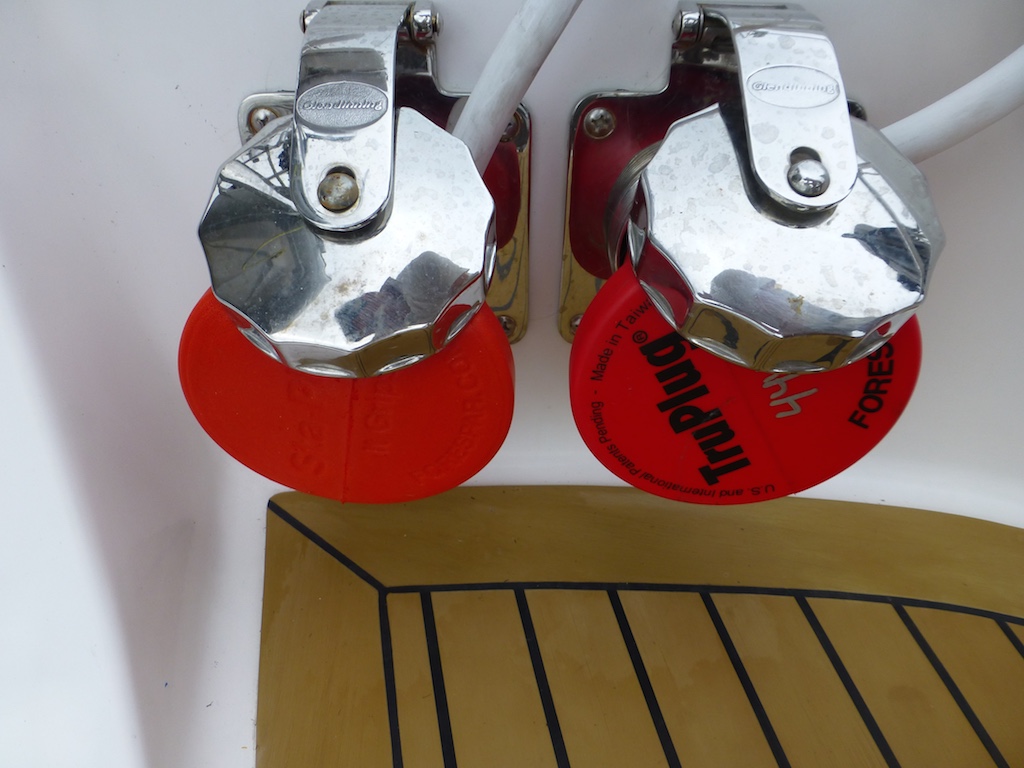
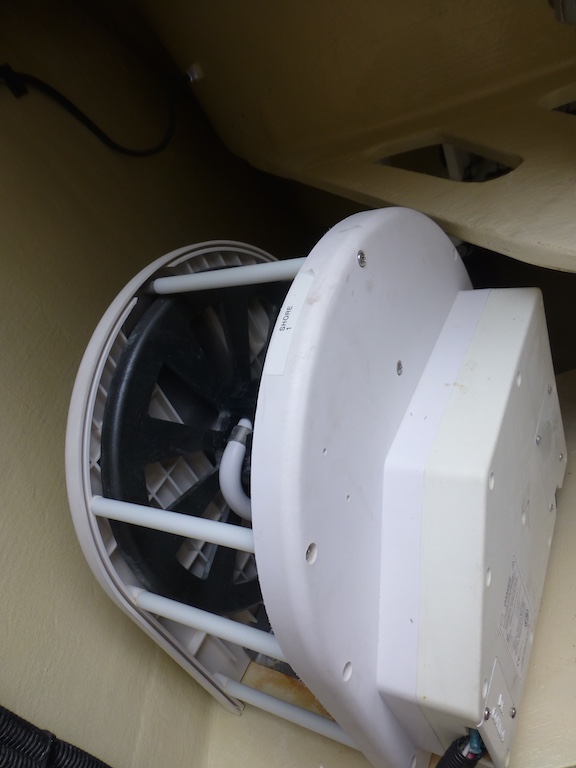
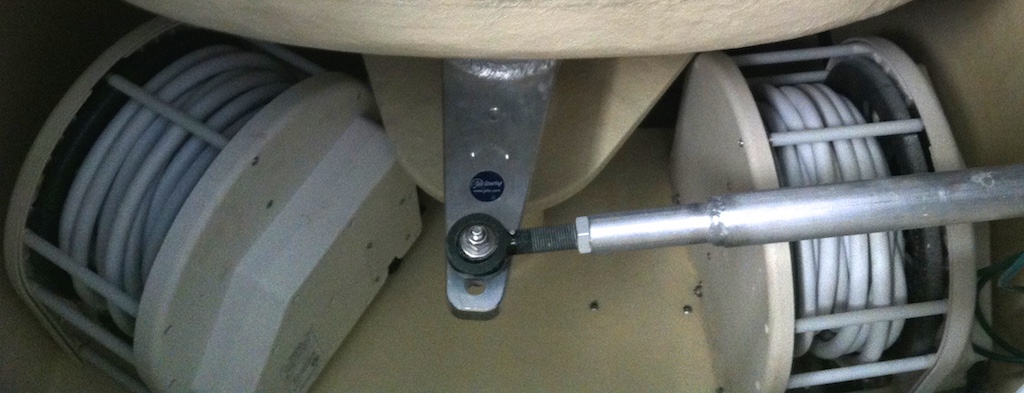
I do not think this option is offered anymore, and I think we are the only boat with this feature.  It has worked flawlessy.   The job of stowing cords is made shorter as the electric reels spin the cords away.  But the biggest benefit is the reels are in a place where you would never store something.  This frees up space in the valuable cockpit locker where traditional cord owners store their power cords.  Also having the power at the stern rather than mid ships often leads to a cleaner hook-up to the power post.  As you can see in the photo we put plugs into the cord exits when in use.   If there is large chop, water will not enter the boat (very very rare).
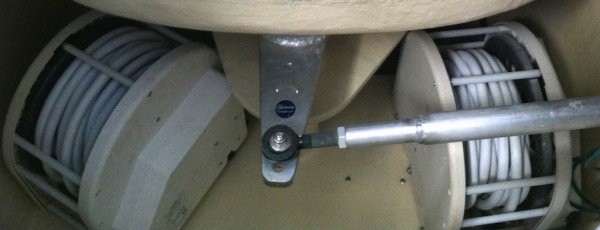
Cords stowed

Cords stowed

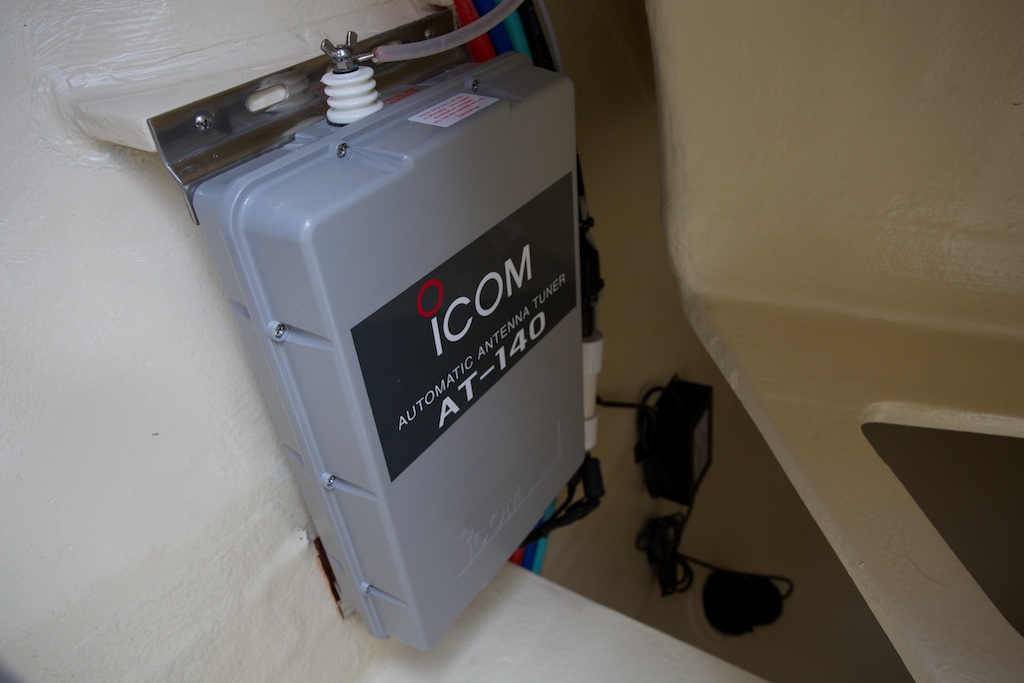
Single Side Band Radio (SSB)
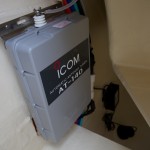
SSB

SSB

We do not use it much.  A little over a year since moving aboard, is sometimes too early to know your eventual go to items.   For example, we did not use our heat for 9 months, but we would have frozen to death, or at least never gotten up in the morning, on the ICW as an early winter caught the southbound sailors.  Likewise, the SSB might come in handy in other parts of the world.  Part of our low usage is because we have not mastered using it as a modem.  We hope to make some friends in the BVI that will give us tips on controlling it with the MacAir.  We know it works well since we have used the radio for long distance communication.


Roller main versus slab reef main

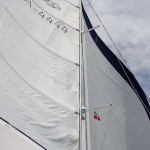
This topic could consume a blog post.  One of the joys of cruising for me is working the sail plan.  Putting a reef in the Main at night when the breeze is climbing is a skill.  Not a tricky skill, but one learned with practice.  If you find no sense of accomplishment in that process, then install the Roller Main.   The Roller could allow for a more balanced helm in a big blow as you can hoist a tiny Main and tiny head sail.  The slab reef can not get smaller than 2 reefs and so one must go Jib alone.  In theory, this will create a less balanced helm.  However, in strong winds we have not found the helm poorly balanced with our slab reef Main.  I know one owner who installed a third reef on his Main.  Interesting, but I did not follow his lead because it would force me to leave the cockpit and it would create too many control lines.   Having blocks installed on the leech of the main is a must for easy reefing.  The Slab Reef Main has a huge amount of extra sail area in the roach.  After one reef is installed in the Slab Reef Main, it is the same size as the full Roller Main.  This extra sail area can be nice on a light air day or going upwind.  It is also very difficult to tension the leech on the Roller Main which limits performance in certain conditions.

I support the purchase of the Slab Reef Main 100%, while Gail partially supports the Roller.  She is concerned about the Roller not working one day but is jealous about the Roller Main being push button in and out.
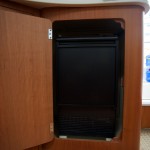
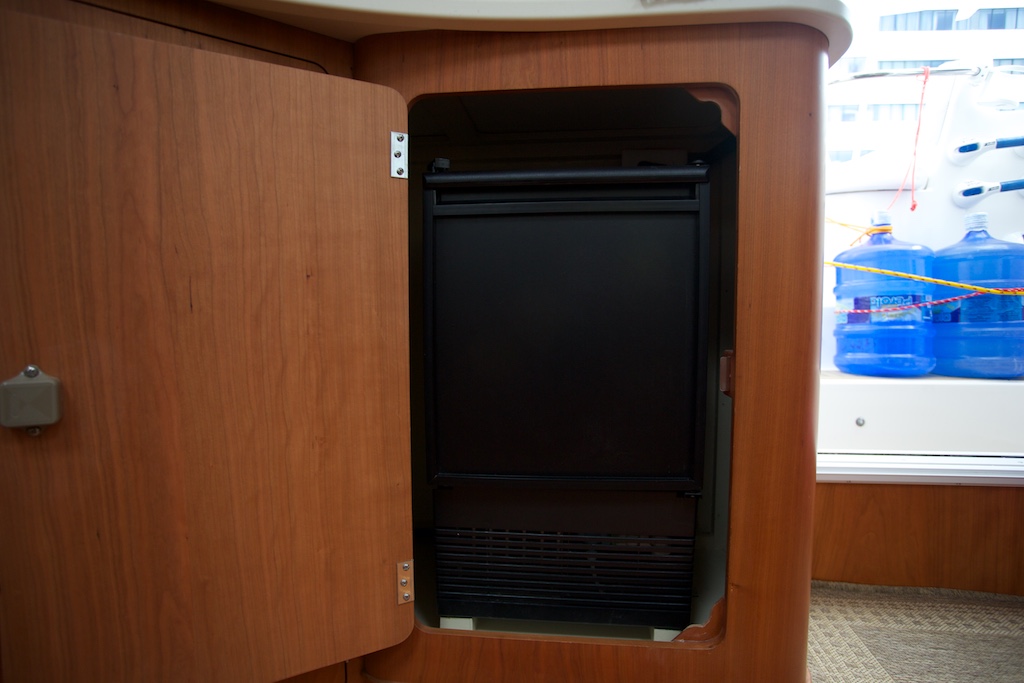
Ice maker

Ice maker


Ice maker

We do not use our air conditioning often, but really enjoy an ice-cold drink.   We have hung the ice maker power supply off the inverter so solar power can make ice.  Our bit to stop global warming.  The factory-installed model works very well but others prefer their plug-in models from Amazon.  The plug-in is easy to replace but is slower and requires water to be added by hand.  Oh, the rough life of a cruiser.  Gentlemen do not cruise without an ice maker?


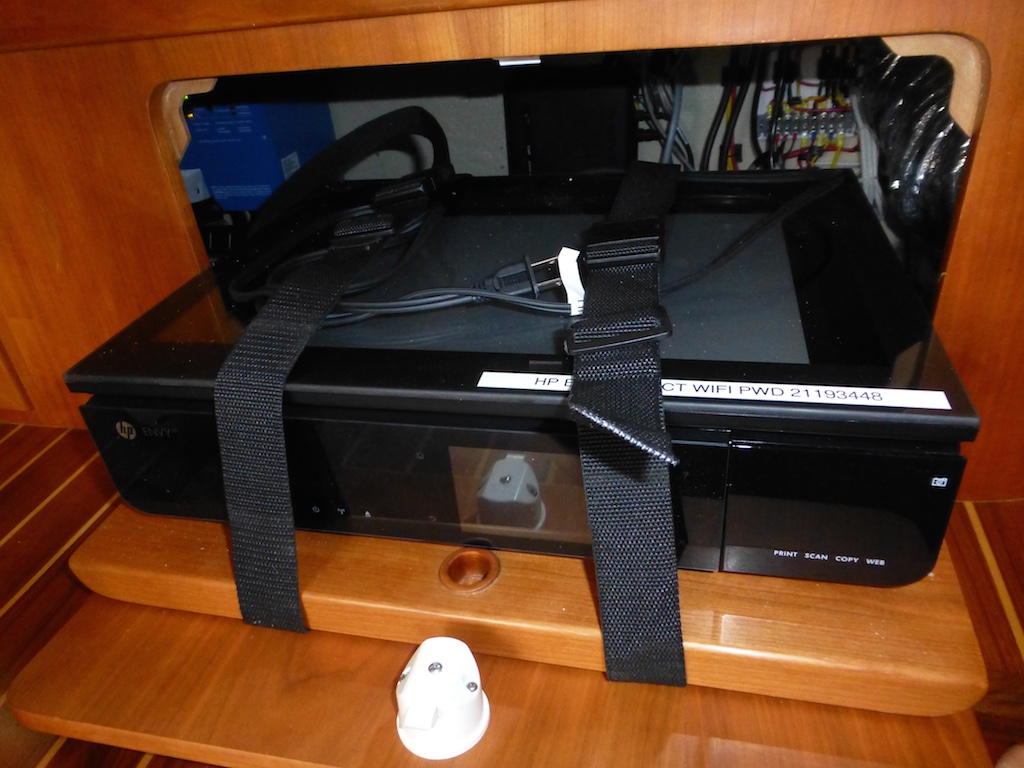
Printer Shelf

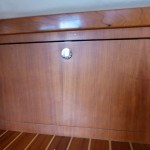
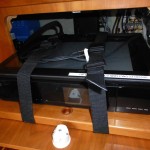
Two Fish is not just a sailboat but also our home.  No home office can survive without a printer/scanner to fill out entry forms, file taxes and other pedestrian paper work.  Many cruisers place the 110 volt printer in a locker.  Gail was not excited about diving into a locker every time she needed to print.   Instead, Two Fish has a printer located behind a custom wood door in the settee.   The carefully sized printer slides out effortlessly, making that quick print job painless and curse-free unless Jason left the printer without paper.   We have straps to keep the printer in place during passages, but this may be excess.

Woodwork

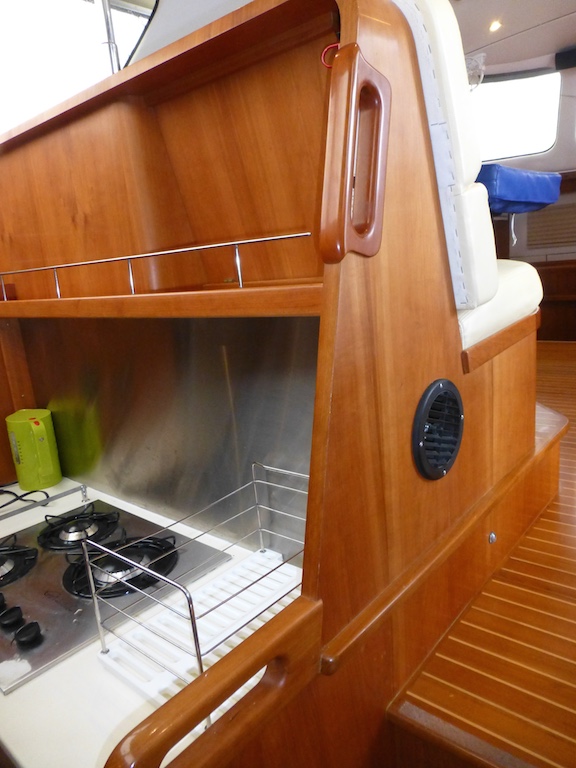
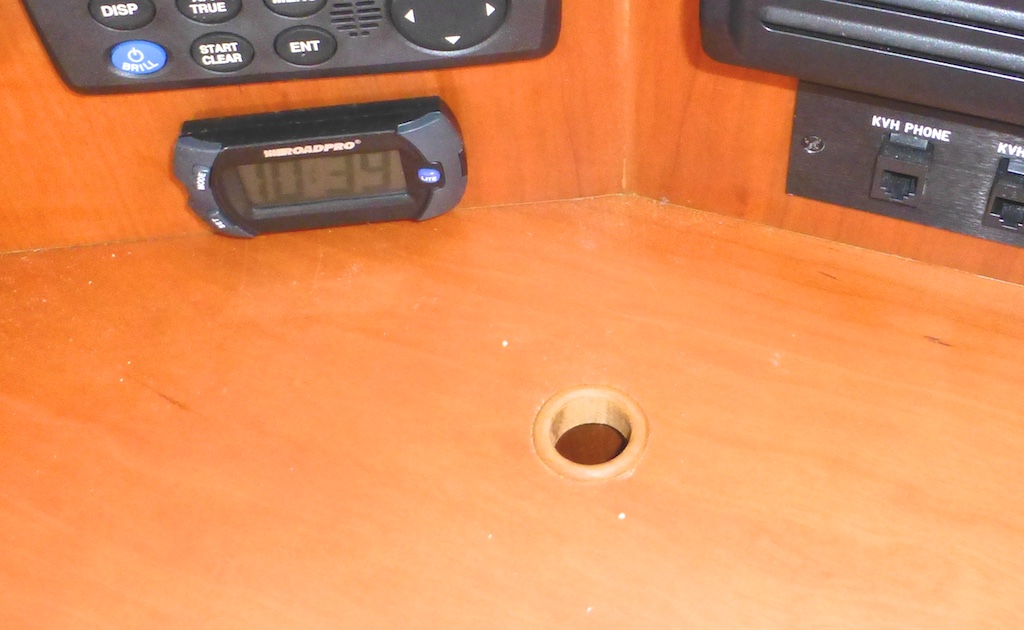
The factory is great on woodwork details.  We added shelves to the bottom of our closets.  We also added a grommet in the Nav Station so that power cords pass nicely to the laptop.  We copied Live Wide and added a handle for safe passage from the galley to the salon.  I will add more shelves in the master hull cabinets, but they will not be as beautiful as the Argentine cherry.

Chain counter

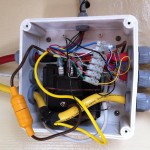
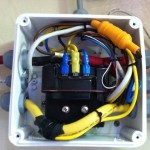
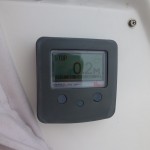
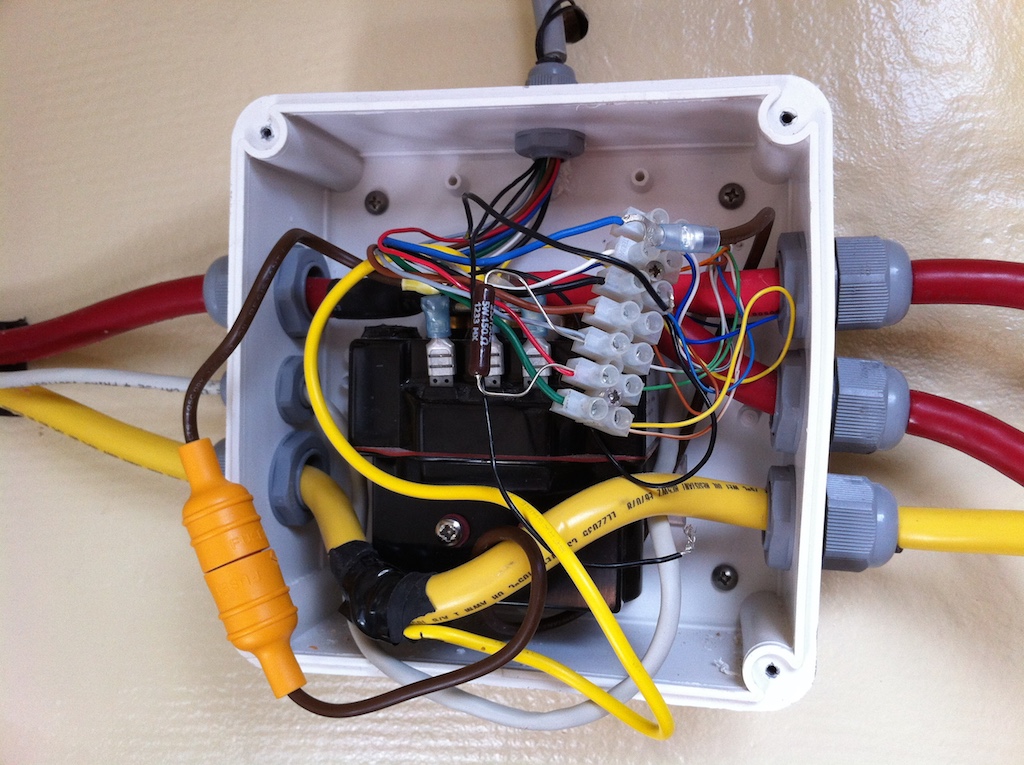
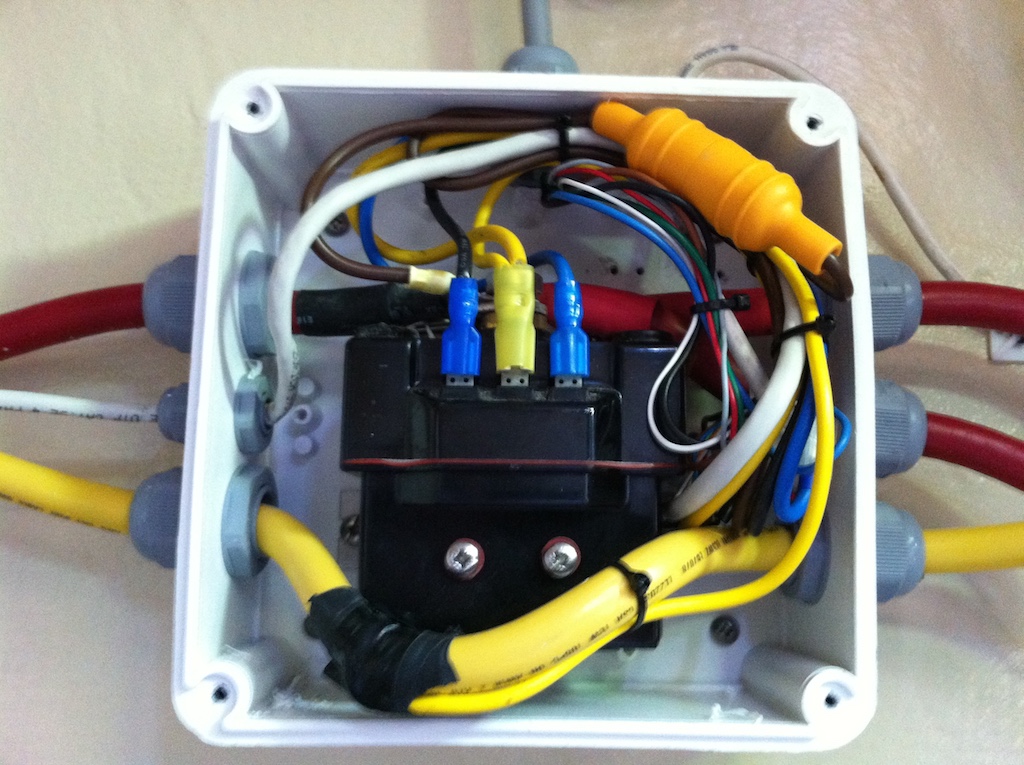
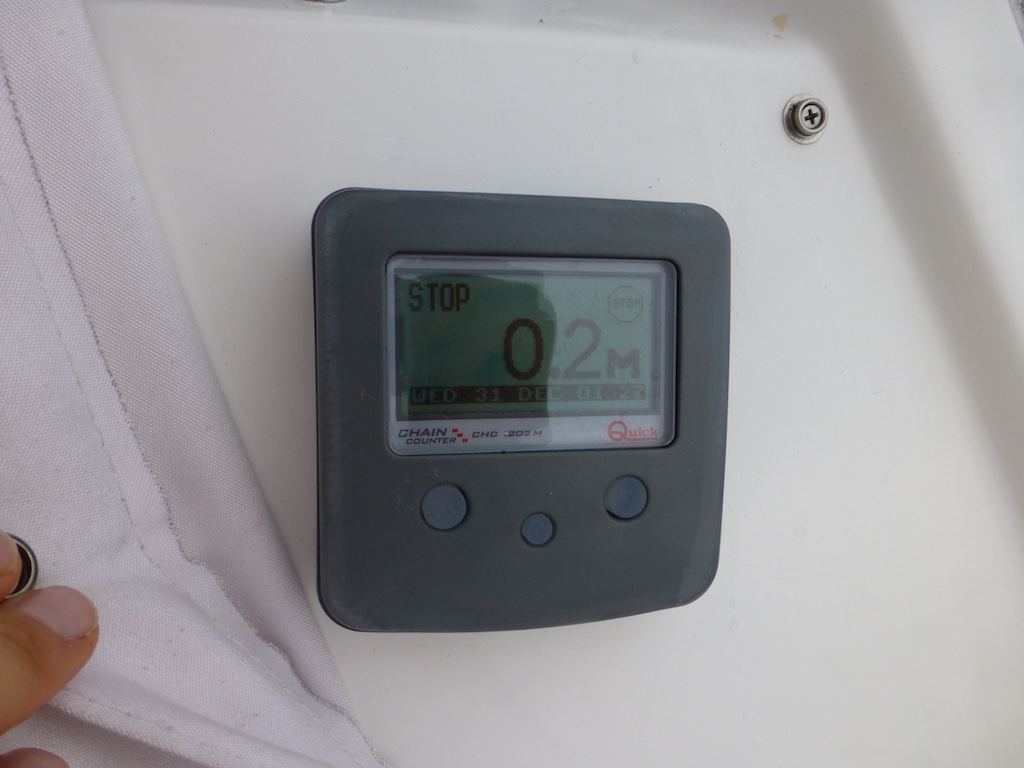
We were the first boat to ask for a chain counter and a remote at the helm.  This was new technology for Antares and we had some initial glitches.  But after we cleaned up the wiring, in the junction box the gremlins fled and it has been a joy.  Most folks have a coloring scheme on their anchor chain to tell how much chain has been released.   I found this system difficult because the zip ties fell off and I could never remember our color code system.  With this system, both anchor person and helmperson can see how much chain is down.  Often the diligent person weighing anchor (Gail) is working terribly hard on cleaning the anchor as it is being raised and may on occasion forget to tell the helmsman (Jason) that the boat is adrift.  With the remote located at the helm, this problem goes away.  In rare occasions this remote is useful for Med-Mooring or single handed anchoring.

Solar power
New solar controller

New solar controller


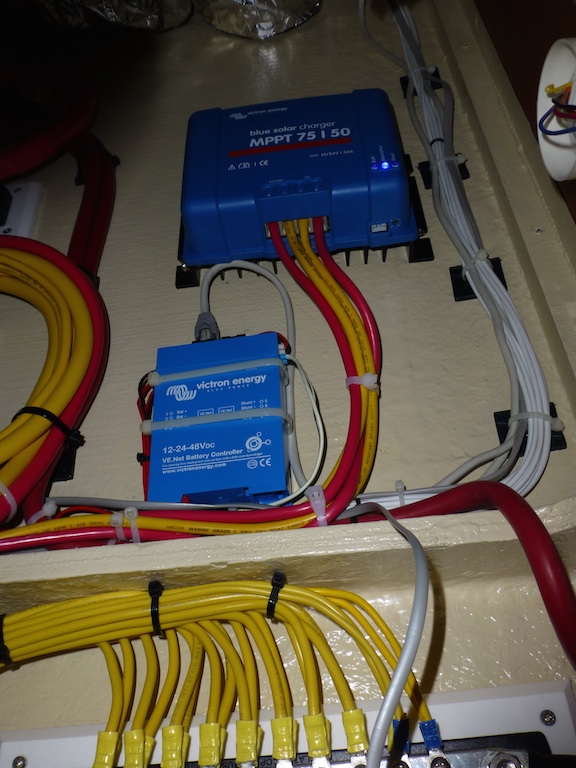
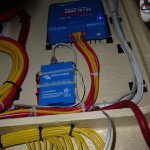
Nothing beats solar power on a boat.  Silent and great at top-up charges.   Our boat was ordered with the two extra large panels on the dinghy arch.  I may add more some day as solar requires no effort.  We recently replaced our defective solar controller.  The symptom was the need to be rebooted by removing the fuse with some regularity.  Victron sent a new unit ASAP so it might be a known glitch.  The new unit is a small upgrade to our unit  (more amps and includes their new communication protocol).  So far I am just happy not to be yanking the fuse all the time.
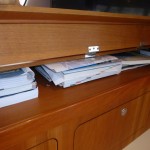


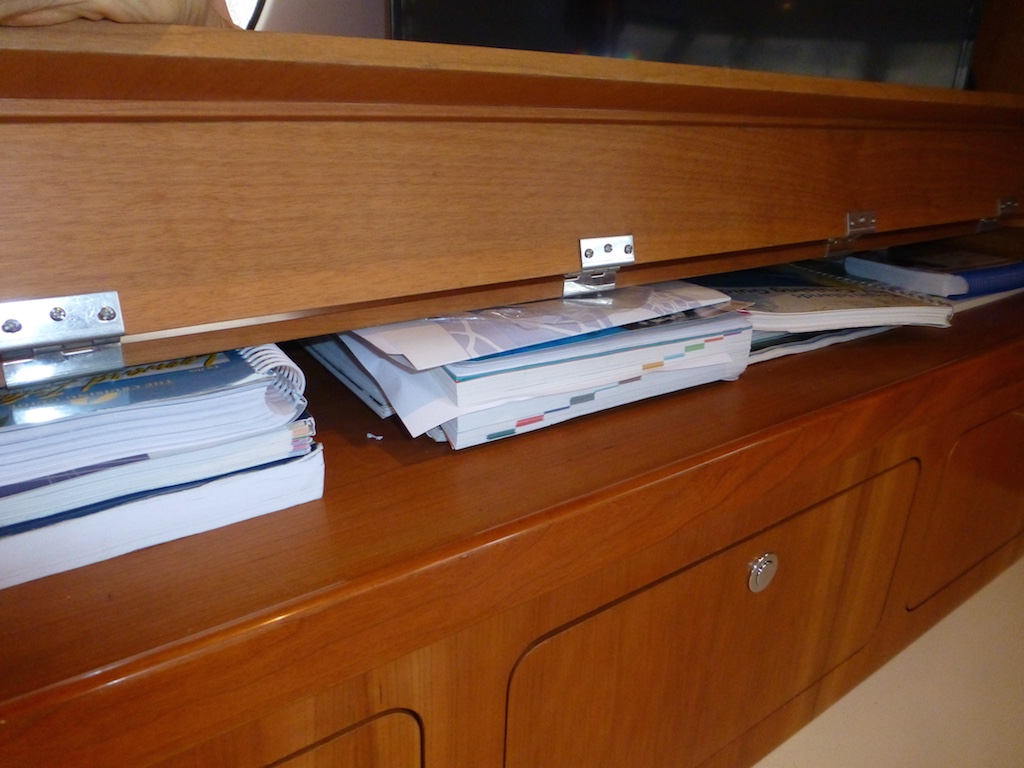
Chart storage

Chart storage


Chart storage

We always have paper charts on board (Gail rule) so this is a must to keep the cabin organized.  I will skip the debate about their need in the modern world.  Gail likes them, so they are aboard.  We also tend to buy every cruising guide we can find.  Bluewater Books is a great store for buying guides.  However, sometimes I avoid reading the guides so I can be surprised by what is onshore.  I do always read their navigational tips so as not to be surprised by a rock.   Remember the old sailing adage, surprised by a beach bar is a good thing – surprised by a rock is a bad thing.   Told you sailing is not a complex activity.

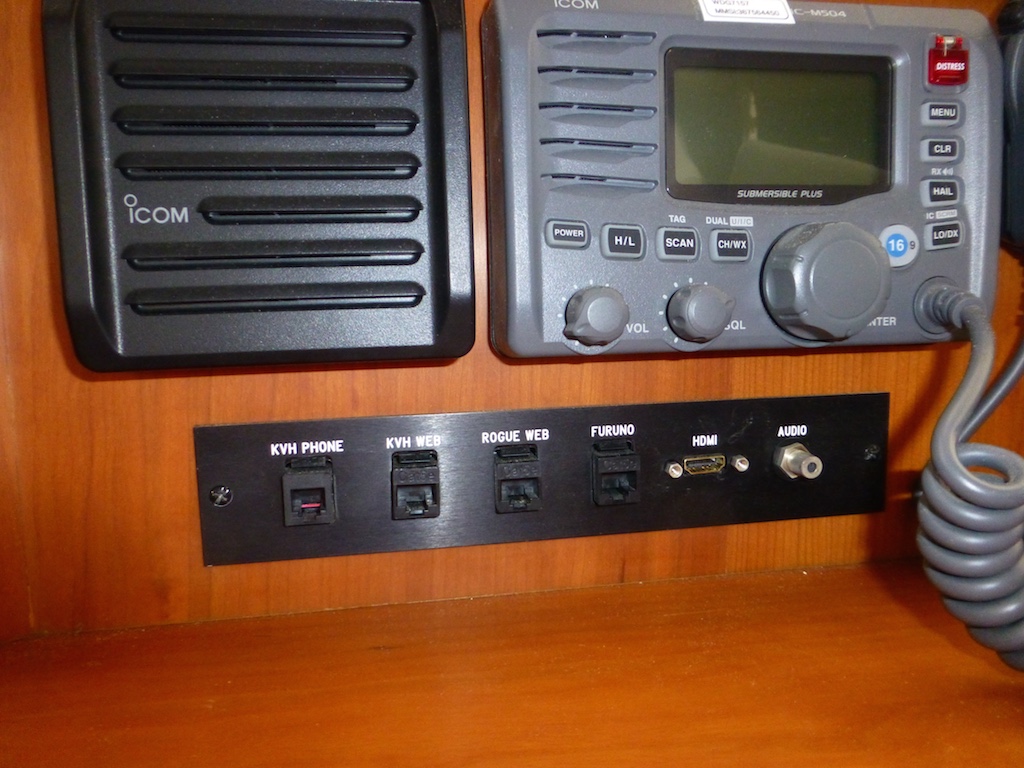
Nav station input strip
Plug central

Plug central

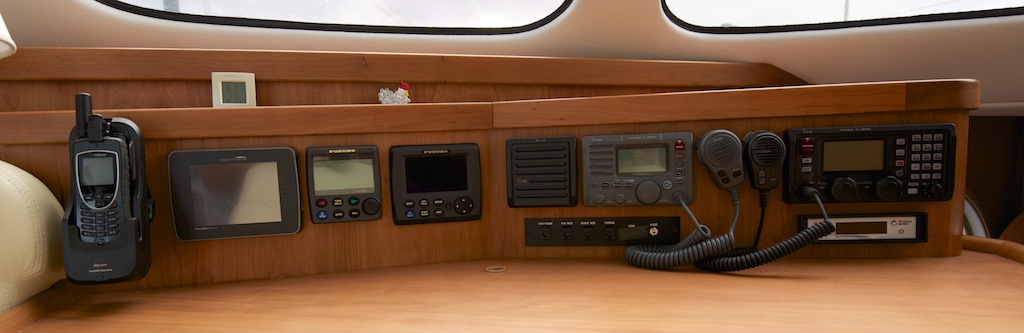
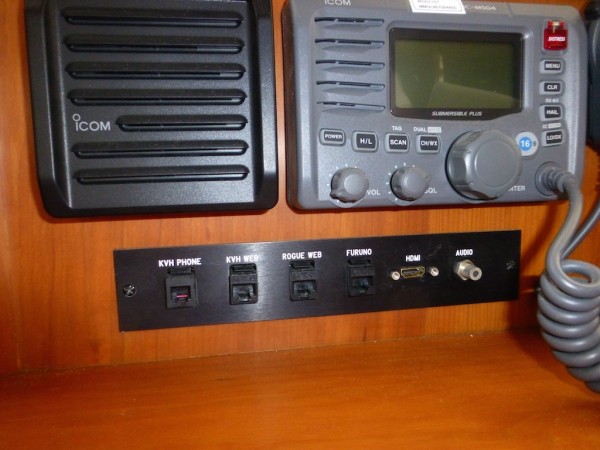
This was Gail’s discovery and has worked well.  Older boats just had wires coming out of the hutch.  Ugly and leads to broken wires.  This strip cleans up the mess.  Which inputs do we use?  KVH web frequently in passage for our internet.  In order to not use data by accident we do not serve up the expensive satellite internet wirelessly.  HDMI is used when we watches movies from the laptop on the big TV.   KVH phone is only a back-up since the Iridium is a quicker phone solution. Rogue Web is only used if there are debugging issues with our wifi extender.  Furuno allows MaxSea navigational software to get the data from the network.  I keep forgetting what settings are required to make this work and Gail has to keep fixing it for me.   Audio allows any audio source to go into the Fusion stereo.


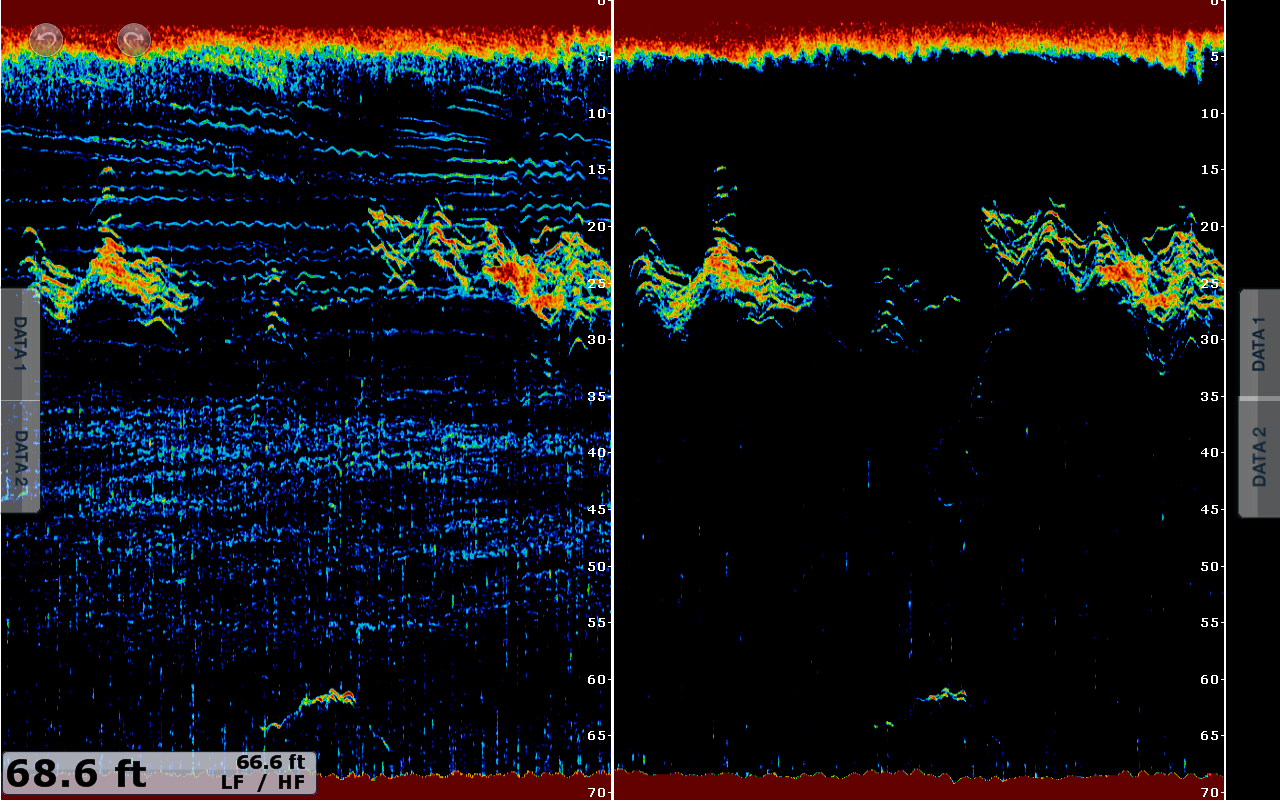
Fish Finder
Fish Finder display

Fish Finder display


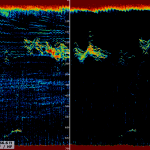
This one missed the mark.   A simple depth sounder is enough.  Our fish finder consumes power and only offers a  graph of what you have passed over.  The fish finder helps in understanding the contour of the bottom when anchoring.   I turn it on when anchoring, gunk-holing or passing through a tight passage.  I am too hopeless a fisherman to use it to increase our catch.  One advantage of the fish finder is  that it is a back up for the depth sounder and my starboard hull is wired for a transducer upgrade in the future if my mood changes.


Port forward cabin selection

We have the storage option instead of a small pipe berth or an office.   An office seems excessive since when we need to work we use the nav station or the salon table.  Computer work inside a hull could be stifling.  The pipe berth has merits but we prefer convenient access to our tools on nice shelves.  Boat work is never a picnic so you do not want to be lifting cushions every time you need a different tool.  The second shower option was not available when they built our boat.   I can see the advantage but guests typically shower outdoors when the weather is warm enough.  The sail locker has been convenient for storing the chute, canvas covers, and extra cleaning supplies.

Factory sold Canvas covers

The helm cover is a must.  Protects the expensive navigational equipment in no time.   The dinghy cover has limited usage since we are full time live-aboards.   If we left the boat for an extended period of time, this would be used.  Winch covers were a bit too small and need to be replaced.  Helm seat cover is not used as the enclosure is often up, thereby protecting the helm.  We enjoy the convenience and protection of the canvas rear winch cover.
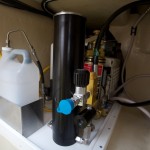
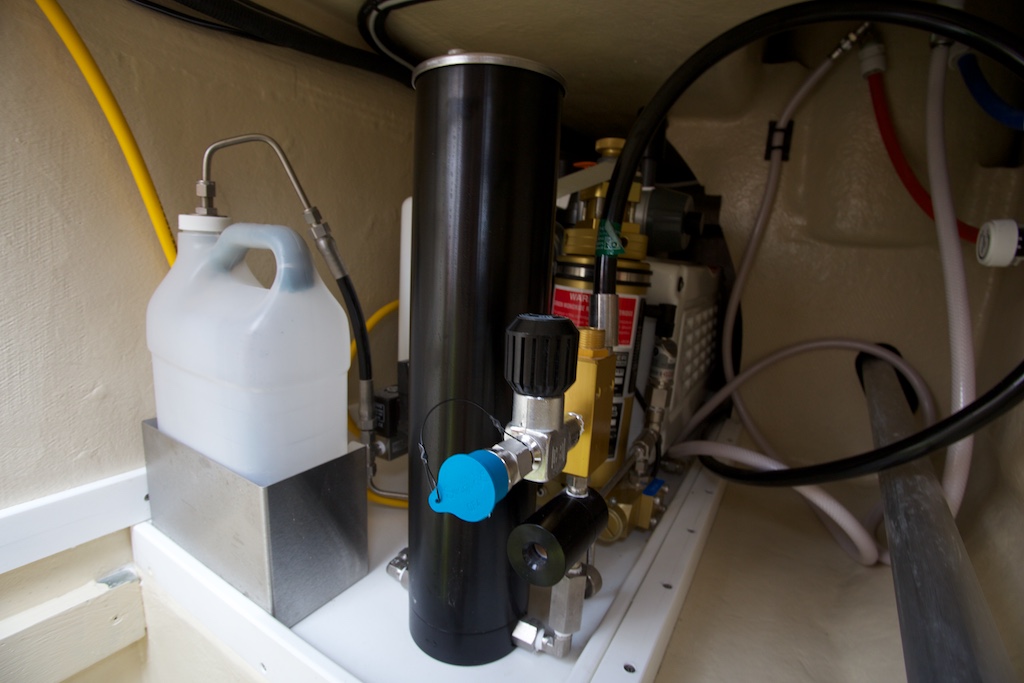
Dive compressor

Dive compressor


Dive compressor

So far it has been underused, but we expect that to change as the next 6 months as we will be in perfect waters for diving.  I will report more on this feature later.  It was installed in a very clever location so you end up losing almost no space.  However, there are dive shops that can fill your tanks.   2 x 62 liter tanks fit nicely in our stern line lockers and a rack in the locker can hold 2 x 80 liter tanks.  The compressor takes less than 30 mins per tank and can fill up to 4 tanks at a time.   We have a 110 volt fan to keep the compressor cool during fills and a nice cover to protect the compressor from accidental splashes.


KVH V3

This is an expensive option at start up but costs only $50 a month to keep running.  In the right parts of the world, it is fast and is a very convenient way to access the internet for weather, email or web surfing.   The KVH has come through for us in dealing with mundane finances and last year’s retirement.

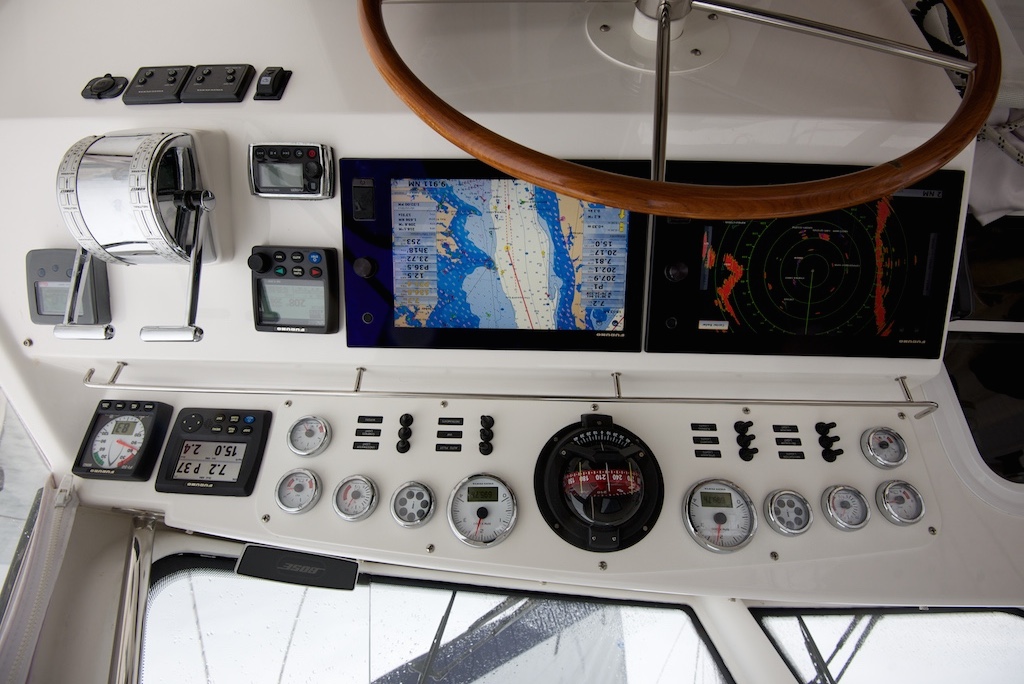
Nav Station Set-up
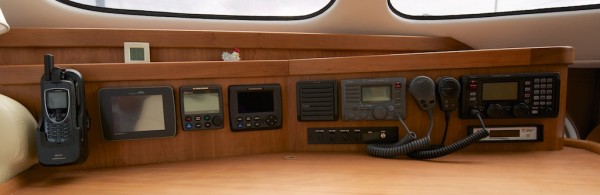
instruments

Iridium Extreme phone

The Iridium’s primary purpose is to go into our ditch bag in case of emergency.  It works just like a cell phone so any crew member can operate the phone in case of emergency.   For our upcoming trip I have the 6 different Coast Guard numbers pre-programmed.  I wonder if I should also include Domino’s pizza?  Do they deliver mid-ocean?   The Iridium can also download data but we use it for  GRIBs and text emails only, as the speed is only 4kbs.  Your home network work is probably 40,000 kbs.  We have an antenna for the Iridium on the dinghy arch.

Vesper Vision AIS

The Vesper has been a great AIS.  It seamlessly sends the AIS data to our Furuno system.  The feature we were happily surprised by was the ability of the unit to broadcast data from the NMEA network.  If that mumbo jumbo makes no sense to you, what it is saying is that wind speed, depth and other data are sent out wirelessly anytime the unit is turned on.  A few bucks at the app store and you can buy slick applications that will show this data.  Now in the middle of the night if you want to know the wind speed you can check it with out getting out of bed.  My current project is to get iRegatta to calculate VMC.  (That is another post!)

Furuno RD33 data display

This data repeater is a workhorse for Two Fish.  Location makes log book updates easy.  Also, while at anchor the windspeed alarm is a nice safety feature.  The compass is a convenient way to detect wind shifts.

Flexiteek

Flexiteek

Flexiteek

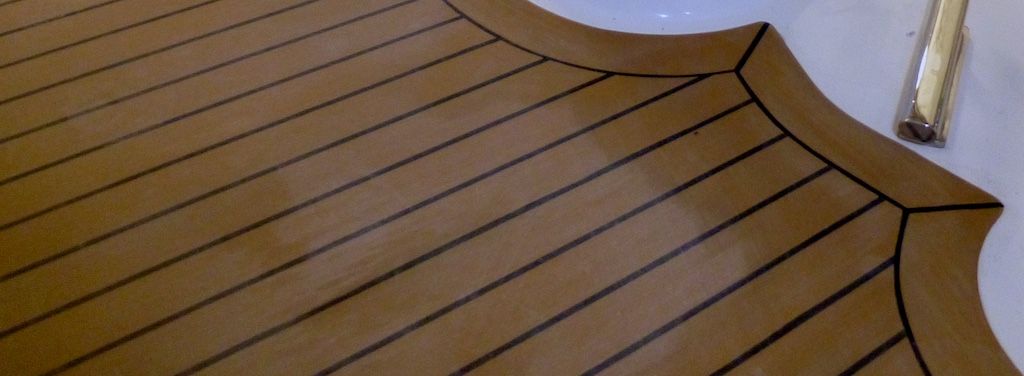
I would get the fake teak again.  It hides dirt, reduces glare from the deck, and adds charm to the boat (subjective).   The short coming is that it can get very hot, so we wear flip flops.   Footwear is never a bad thing for a boat.  Your feet thank you by the end of the day.   Stains can be sanded out and as it ages it looks more real.   The black caulking lines need some maintenance over time.

Bigger Water Maker

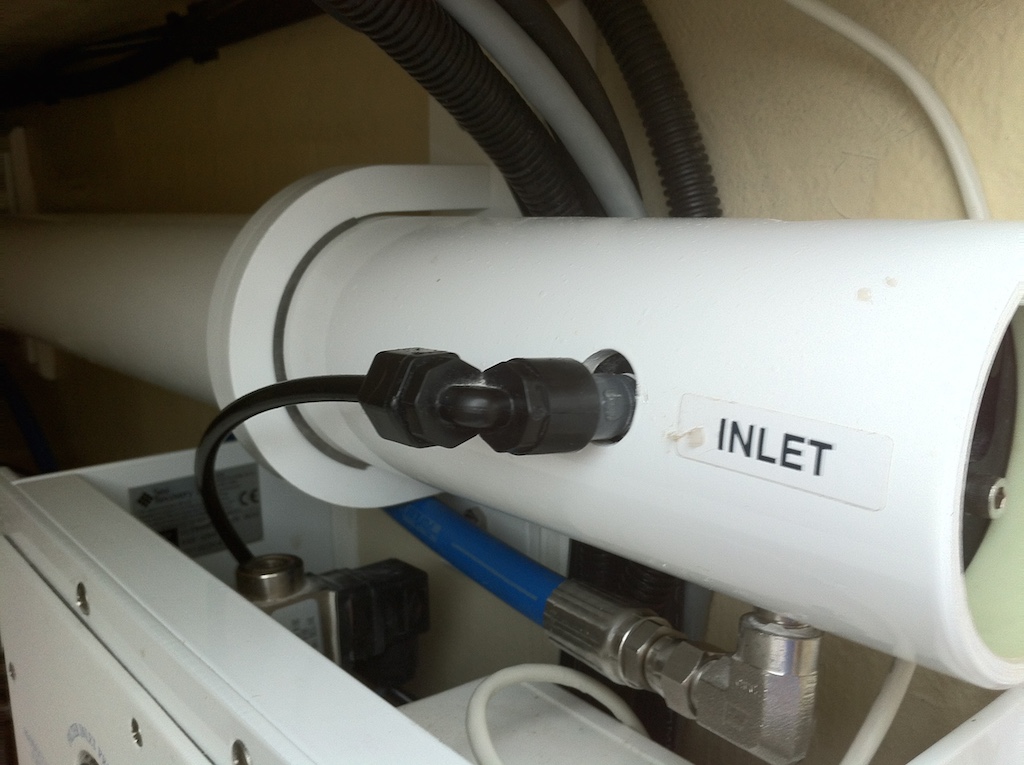
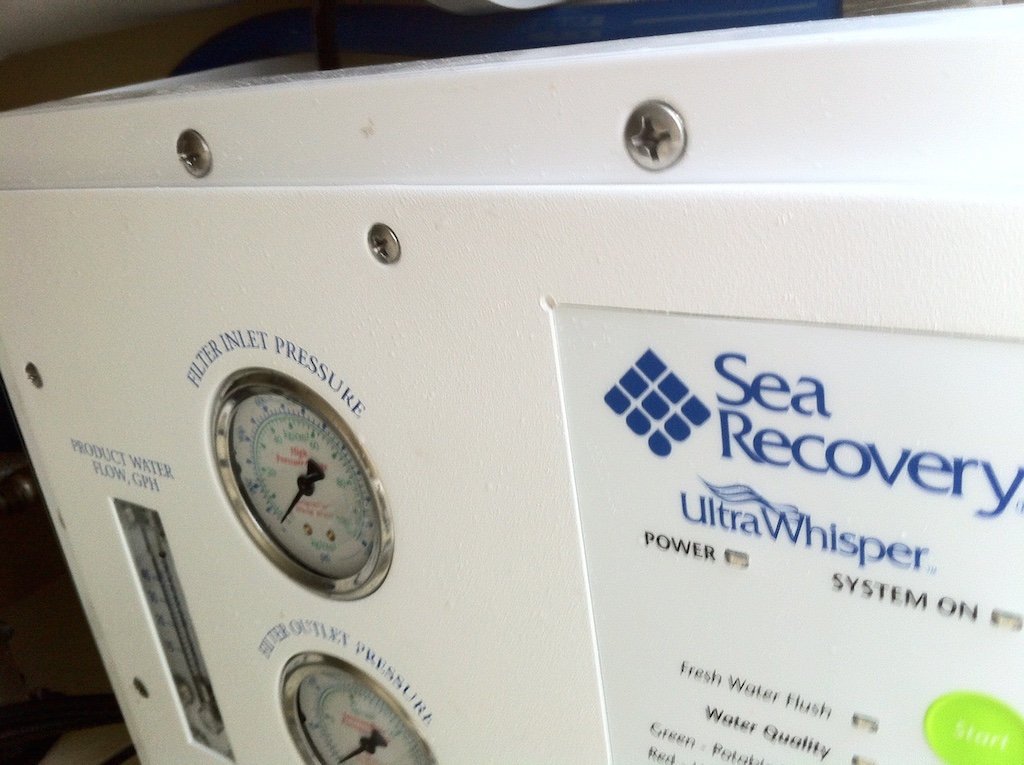
I have passed through the valley of broken watermakers and emerged a stronger man.  Let me tell you the long story. I am assuming that since you made it this far into the post, you must be a glutton for punishment.  We foolishly left the factory with an untested watermaker. When we turned it on the hoses blew off.  For those not into watermakers, this is not a good sign.  We had three issues.

1)  Our watermaker has a lift pump and an energy recovery unit.   The latter takes place of the high pressure pump.  It is called an ETD.  The ETD, now a swear word on Two Fish, was milled incorrectly.   The two pistons inside the ETD would get stuck and become a blockade for the incoming water.   As the pressure built, the weakest link would fail and a hose would go flying.  We did develop the ability to remove the ETD and unlock the pistons.  This would take about 6 hours and only give you one usage of the device.   After a comedy of errors, we finally connected with a new ETD sent by the factory and replaced the unit in Trinidad.   It turns out the watermaker manufacturer had done a recall on this part but never got around to telling Two Fish or the factory.   Since replacement, the unit has been flawless.

2)  Our water maker has a electronic valve that opens after the 1 minute priming period has passed.  Our first 2 Danfoss valves were duds.   We have had perfect performance from our third valve but we also carry a spare.   I bet the early valves may have been damaged by the misbehaving ETD.

3)  Original installation had a few poor hose connections.  Pikin was a hero in Brazil;  after four attempts, he found a guy who could crimp a high pressure hose that was forgotten in the install process.

After all my complaining what do I think of the watermaker.   It is now set and forget.  It makes water just fine and the speed is appreciated.  During passages I will run the Genset for 2 hours to charge the batteries and can make 50 gallon of water at the same time.  I apologize to the crew who were aboard during the drought.  They were such great sports.

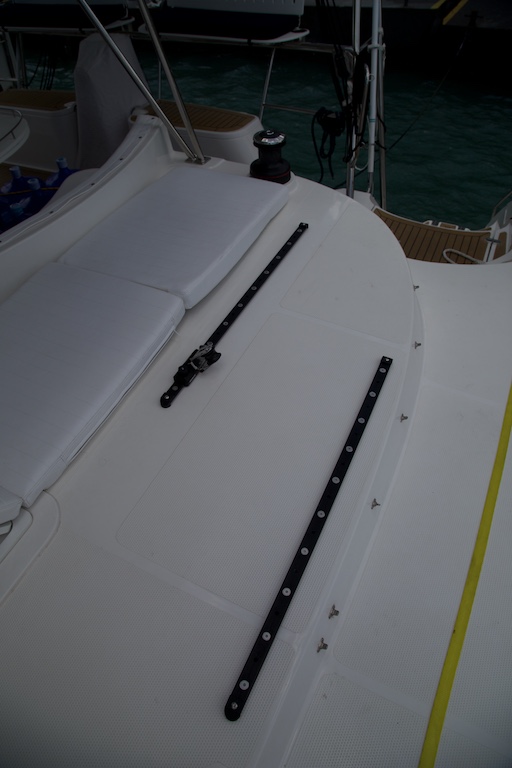
Chaise lounge / Dual Genoa tracks

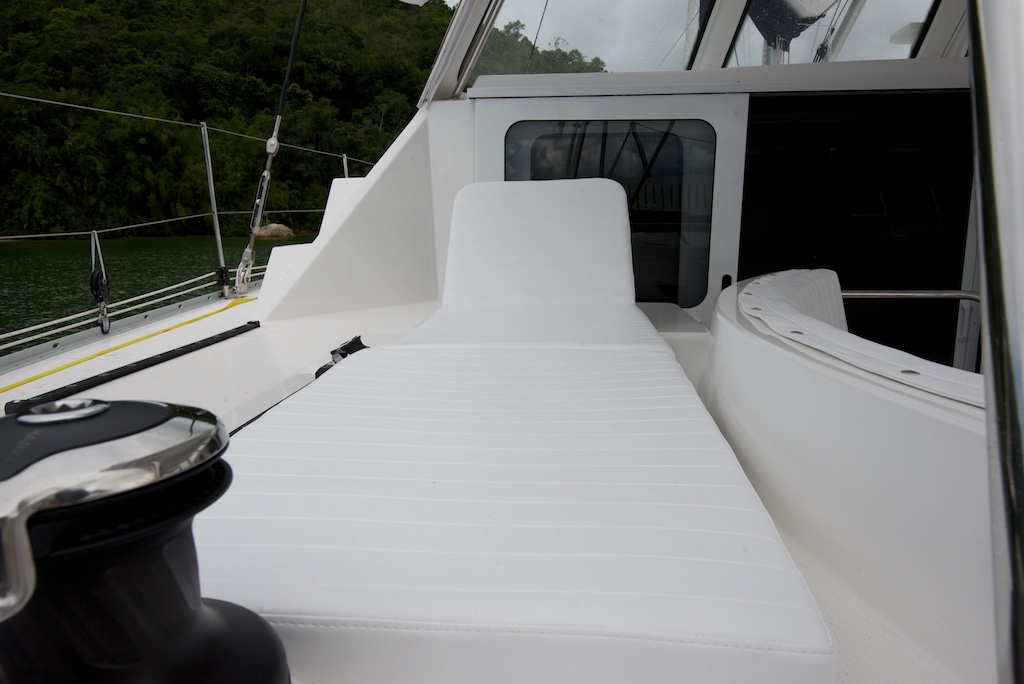
I thought I would be on the chaise all day long and I am surprised I use it less that expected. Every time I use it for a reading perch I appreciate how cool a spot Antares has created.  The cost for this is not having the extra helm seat, which I find a bit out of place anyway. So it is a double winner.  Gail created her own co-pilot seat by buying a huge matching Sunbrella cube which we use both outdoors and indoors for extra seating.  Another double winner for the price of one.  By having the chaise we also got a very nice storage box on deck.
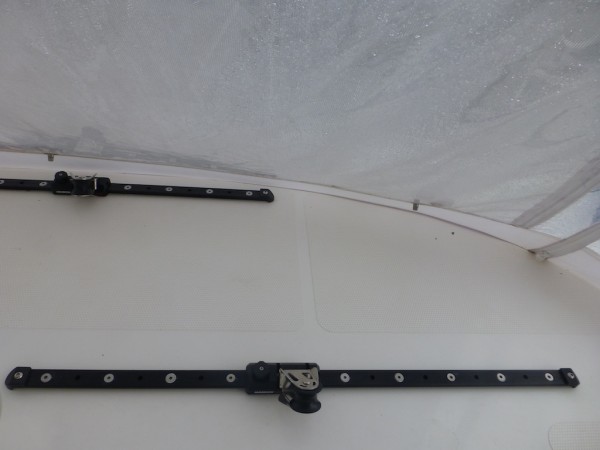
Dual genoa track

Dual genoa track

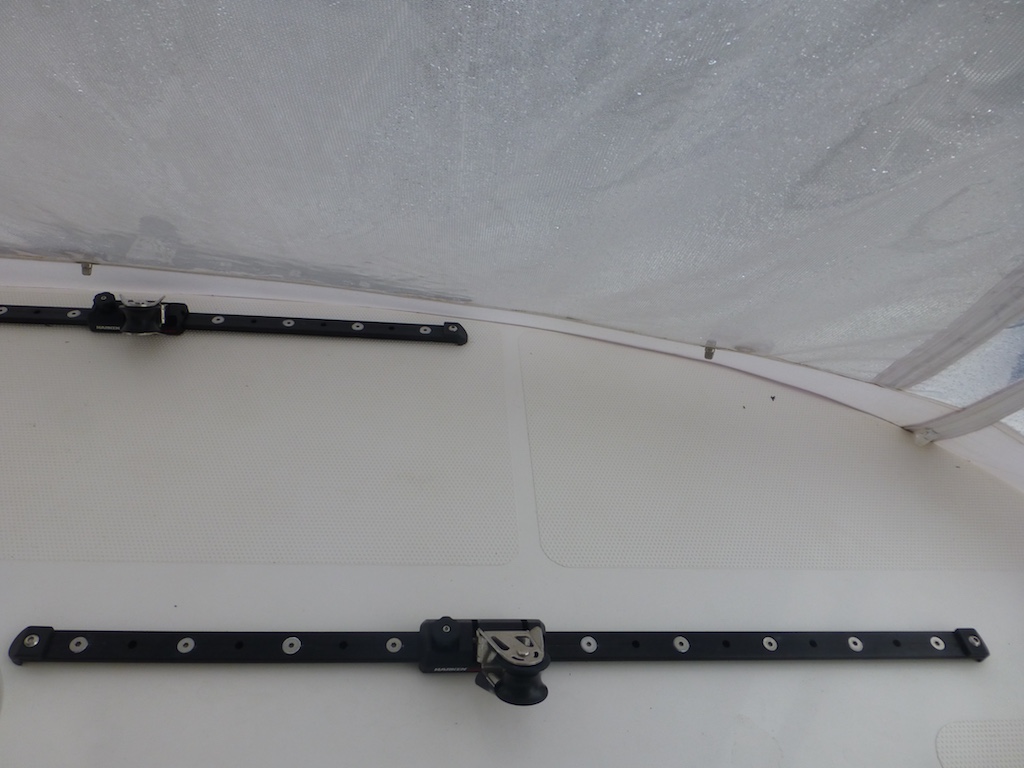
We had two genoa tracks installed on Two Fish to get better sail trim and accommodate more of the enclosure.   I would not consider this a must have item.  It is a nice to have for back up and fun for sail trim but not a must.  We are cruising after all!


Final small stuff

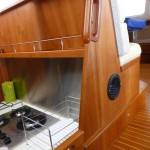
I can not believe you have made it this far into the post.  Congrats on the epic job of reading through mud.  Our final customization has been adding hooks to the master head.  You can not have enough when you go swimming 3 times a day.  We also added an anti-siphon loop to the genset bilge pump. This may be a small risk but a reverse siphon could occur on the bilge output for the genset as it is close to the water line.  We added a vented loop to stay extra safe.  In the South Atlantic we did notice water was entering via the bilge pump system.   We followed Golden Glow’s lead and installed new cool toilet seats.  They should be standard.  Easy to clean and no slamming.  We also added fiddles above the microwave and above the cooktop.

Future projects

Most important project is not to do any projects for a while and enjoy swimming, diving and exploring ashore.  But I have some thoughts:

1) Copy Field Trip and hang the watermaker power off the inverter.

2) Copy Live Wide and add an AC vent to cool dive compressor

3) Add shelves to cabinets

4) Add adjustable genoa cars.  Add bow block to fly chute from windward bow.

Remember do not ask Anatares for all these features or no one else will get a boat before 2030.  Enjoy your boat, your favorite upgrades will most likely be different than mine.


Read full story  · Comments { 6 }