Paperwork for the boat


Plans of sailing over the  horizon without a care in the world have been curtailed by paperwork that seems to want to follow me to sea.    Here is a post on what I have learned during the process of setting up s/v Two Fish.  Please do not take this advice as a given.   It is more like clues from the clueless.    I did not study Argentine or Brazilian import duties in school, and given my sloppy dedication to my studies I doubt a class in this topic would have increased my knowledge.

This post will be more interesting to Antares owners, since they face the bulk of the South American documentation issues.   For others, this post will be as useful as a snow shovel is for a resident of Key West.

Step #1 – LLC or No-LLC
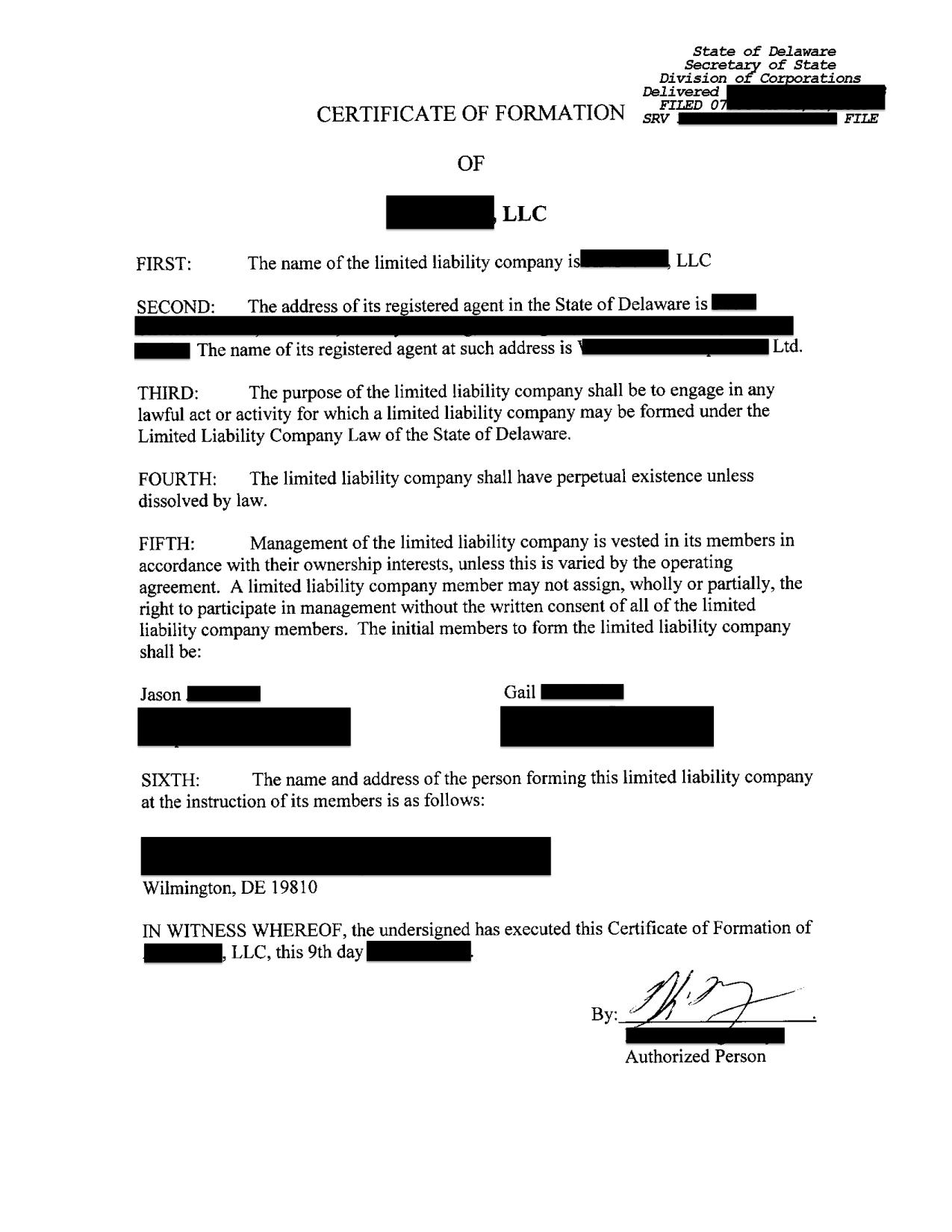
Evidence of new LLC

Evidence of new LLC

First, you must decide if you want to own your boat outright or manage it via a Limited Liability Company (LLC) that owns the boat.

Pros of LLC:   Like it says on the tin, an LLC “limits your liability”.   If a court battle erupts, this ownership structure allows you to separate your other assets from the operation of the boat.   Another pro for international celebrities is the ability to have your ownership be private.  That is why Two Fish and the Russian oligarchs chose the LLC format.

Cons of LLC:   You will have to create sufficient paperwork to support that the LLC has given you rights to the boat.   Imagine showing up in port with your US Coast Guard documents that say the boat is owned by some furtive sounding LLC.   “Mr Port Officer, The Dark Shadow LLC is owned by me.”   What do I have to prove it?  Is a note from my mommy enough?   So one must visit notaries, Consulates, and the State of Delaware to document ownership.


Step #2  – Create a Delaware LLC

We chose to create an LLC in the State of Delaware.   We hired Jan Painter of All Yacht Registries in Omaha to help with the process  (Phone:  402-505-8014 www.allyachtregistries.com).   Jan was very helpful and efficient, despite my preconceptions that Nebraska is not a state brimming with yachting traditions.  This first step puts you $450 closer to the poor house, but your LLC now exists in the State of Delaware.  Do not pack up the kids for a road trip to look at the corporate headquarters, but it will be searchable online, legal with the state clerks and will have a legal address in a cookie cutter office park that also has a chiropractor.

Step #3 – Get a Builder’s Certificate

Before you can start any paperwork, you need to own a boat.   Once you are near completion, the factory will fill out a “Builder’s Certification and First Transfer of Title”  that will be the basis for your next steps.    The form describes the boat’s length, displacement, engines and such.   It also lists the boat’s hull number.  Antares was very efficient in producing this document.

With a valid LLC (step #2) and a completed builder’s certificate (step #3) you can return to ALL YACHT REGISTRIES to apply to be a USCG documented vessel.
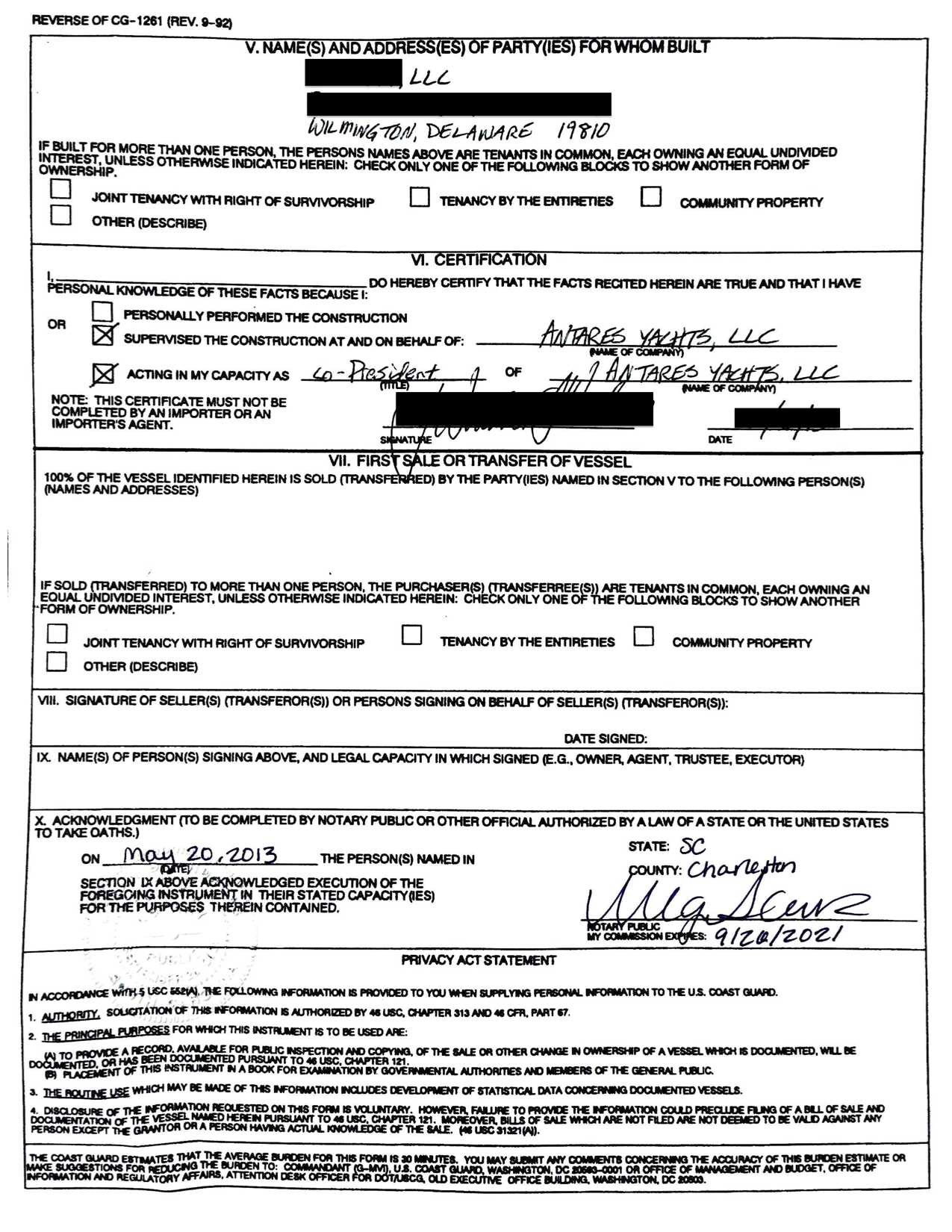
Builder Certificate page 1
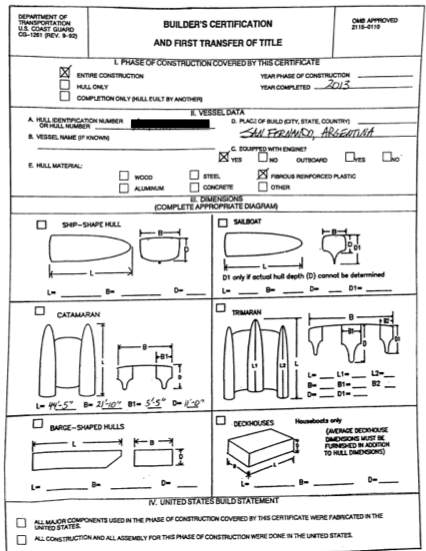
Builder Certificate page 1

Builder Certificate page 2

Builder Certificate page 2


Step #4 – US COAST GUARD Documented vessel
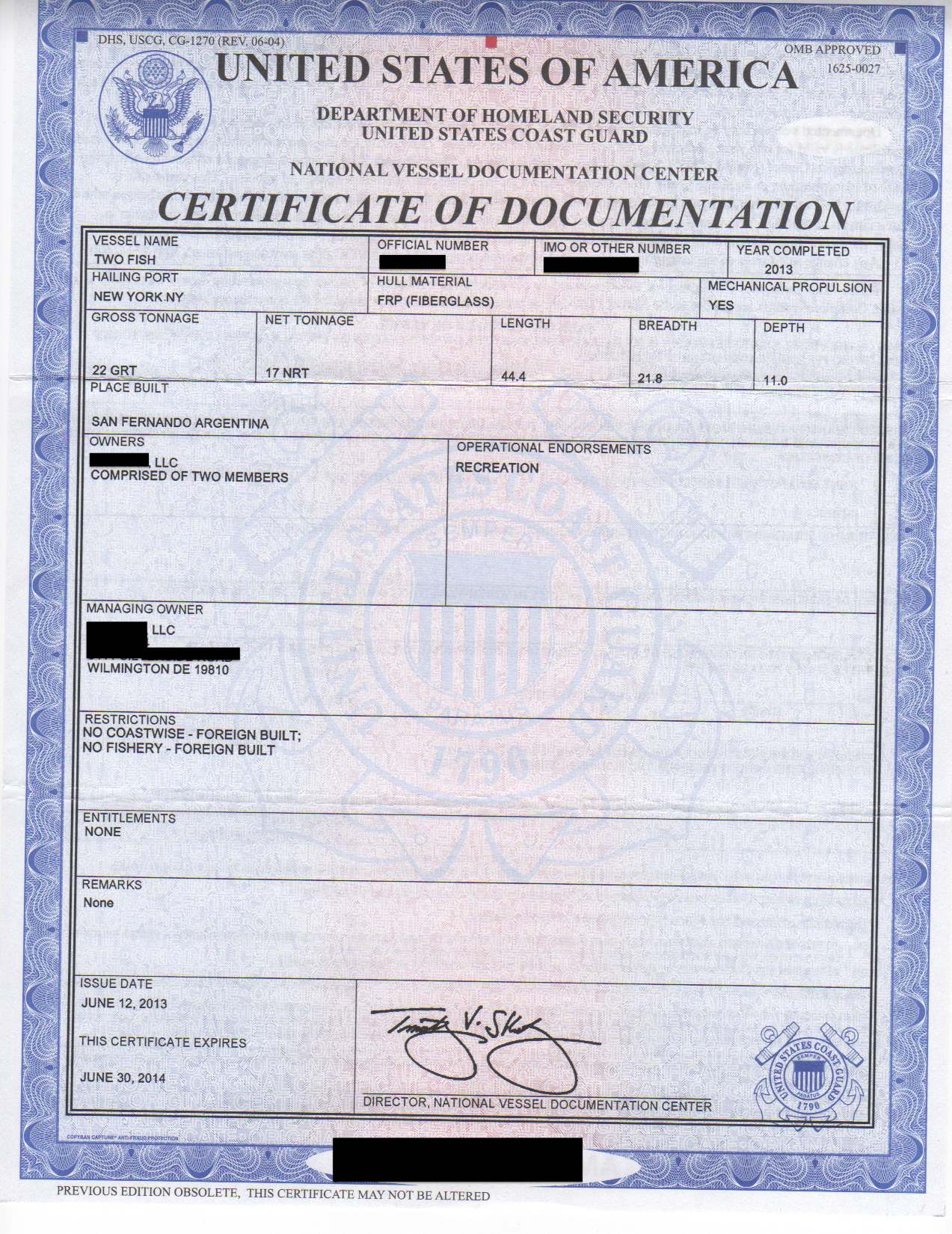
USCG Documentation

USCG Documentation

I budgeted about 1 month of time to reach the end of step 4, even with express service.   All Yacht Services will now submit your LLC paperwork, your Builders Certificate and a completed application to the US Coast Guard.  The “Application for initial, exchange, or replacement of certificate of documentation; redocumentation” is about as friendly an application as the title would indicate.   But it was a breeze to fill out since All Yacht Services was in charge.   After a few anxious weeks, one is rewarded with a USCG document in classic terse language, stating that your LLC owns your boat, at least in the eyes of the US Coast Guard.    The next few steps will allow other authorities such as the Argentines and Brazilians to join in this view.

This next paragraph is way over my head but here is my explanation of Documentation vs Registration.  Recreational boat owners in the U.S. are required to register their vessels with their respective state governments unless they have documented their boats with the federal government.  Documenting vessels started as a way for the federal government to manage commercial shipping and its resultant taxes on merchant cargoes. Today the U.S. Coast Guard is in charge of documentation, and there are multiple types of vessels that can be documented, including recreational vessels.  Any vessel of 5 net tons or more can be documented.  Documented vessels are given unique official numbers similar to state registration numbers. However, documented vessels do not display their official numbers on the outside of the hull; they are identified by the name and hailing port. The application for documentation must include a name for the vessel, which may not exceed 33 characters. The name may not be identical, actually or phonetically, to any word or words used to solicit assistance at sea; may not contain or be phonetically identical to obscene, indecent, or profane language, or to racial or ethnic epithets. Once established, a vessel’s name may not be changed without application, fees, and the consent of the Director, National Vessel Documentation Center. There is no rule against duplication of names for documented vessels, so hailing ports are helpful in identifying vessels. The official number must be posted in a visible location inside the boat.

So why would you want to document your boat rather than simply register it with your state?

  • Documentation eliminates the need for state registration, until you stay in a state for a long period of time.   We may end up registering in the State of Florida, but will cross that bridge when we come to it.
  • If you travel to foreign waters, the Certificate of Documentation facilitates clearance with foreign governments and provides certain protections of the U.S. flag.   This is important to me.
  • It is much easier to track stolen vessels across state lines with the federally documented “chain of ownership”.   Our boat is larger than an iPhone, so this is not too important.

The USCG documentation needs to be renewed annually so mark it on your calendar as your mail service might be slow.


 Step #5  – FCC and a Call Sign
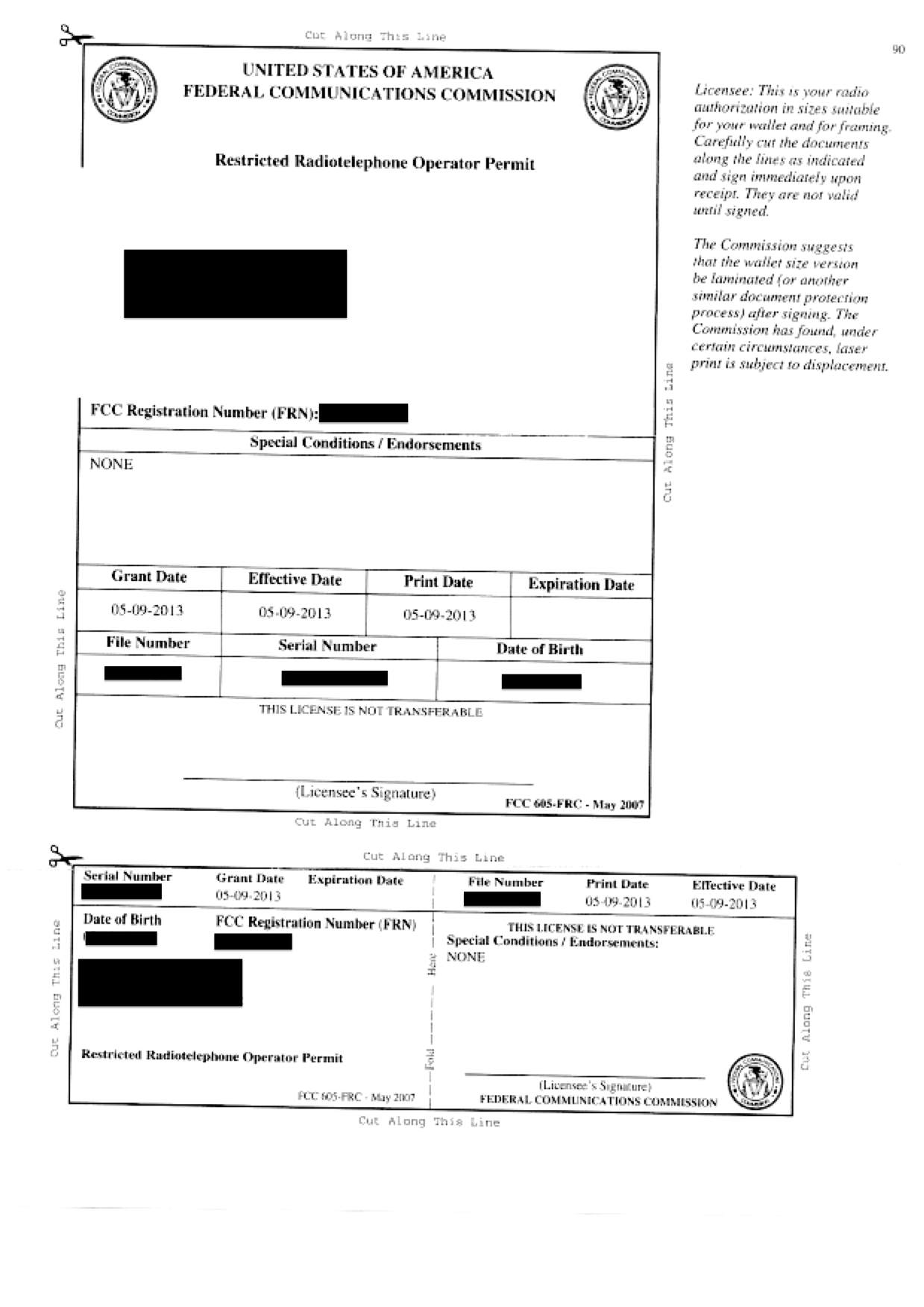
Radio Operator
Radio Operator

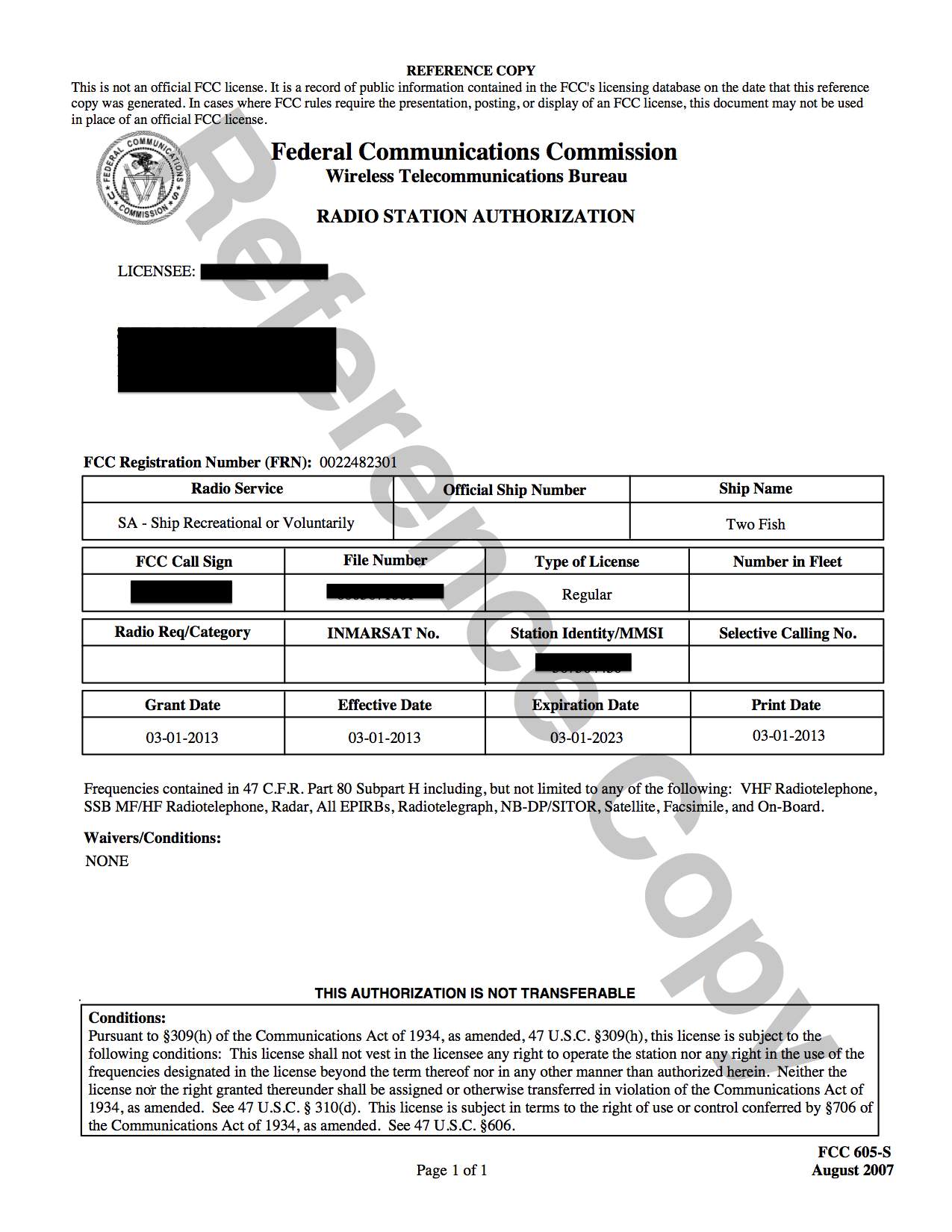
MMSI + Call Sign

MMSI + Call Sign

I am a bit of a rule follower and the rules state that to use your SSB,  you need to pay two fees to the FCC.   A quick trip to this web site will get you started: https://wireless2.fcc.gov/UlsEntry/licManager/login.jsp   One permit you need is the restricted radio telephone operator permit.   I am not sure what the consequences would be for not having this permit.   Somewhere on the FCC site they threaten to make you listen to elevator music for 1,000 hours on a poorly tuned AM radio.   So to avoid this, we have spent the money for this permit.   On the back of the license I was informed of its limitations pursuant to the Communications Act of 1934. Disappointingly, my new permit does not allow me to start an 80’s hits radio station.   I rather fancied the idea of becoming a disc jockey.

The second license grants you an important call sign for the Single Side Band radio.  It is also granted via the FCC.gov website.   This is handy for radio communications and required if you plan on using sailmail.com.    Sail Mail is a program that uses the SSB as a slow modem to check for text-only emails while mid-ocean.  200 bucks a year grants you an annual subscription to Sail Mail.    It includes software,  access to weather data and no usage charges, as long as you use it prudently.    Two Fish will use this for getting free weather updates mid-ocean.    As a random fact, the engineer who created the technology to use an SSB as a modem also designed the yellow first down line you see on TV when watching American football. At the end of the process, you should have two licenses from the FCC  (Ship Radio and Call Sign).   The site is a bit confusing but you will find your way through after being relieved of some hard-earned ducats.

This process also produces an MMSI number.  This number is used in Digital Selective Calling (DSC) and is need for modern VHF, SSB and AIS.   The AIS uses the MMSI number to broadcast your intentions to ships within VHF range.   The MMSI number can also be used to hail a specific yacht rather than summon it via the public channel 16.   And finally, DSC can be used for automated distress calls on the VHF or SSB.   If you fail after placing a satellite phone call, EPIRB, and a traditional VHF, call you can try this system.

Step #6  –  EPIRB
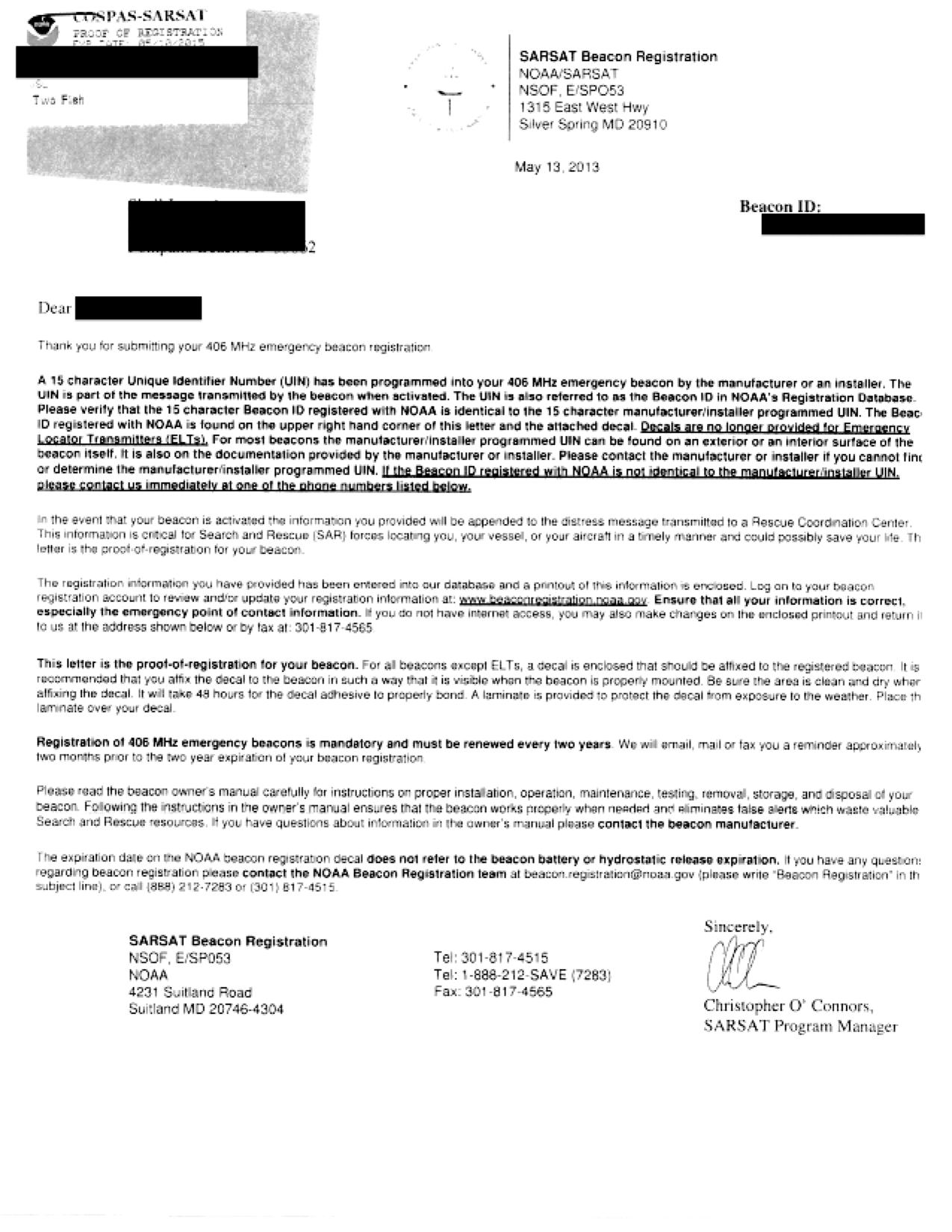
NOAA EPIRB Registration

NOAA EPIRB Registration

Darwin award winners are selected for doing incredibly stupid stuff that sometimes eliminates them from sustaining their lineage.   Previous winners have tried to ascend to 2,000 feet using a lawn chair and helium balloons.   After take-off, it was discovered that they had no landing strategy.

Not as dramatic an award winner, is buying an EPIRB and not registering the life saving device.   Registration is free and allows the Coast Guard to know who you are when you press the panic button.   They can call loved ones, who can direct the Coast Guard with additional data such as that the Two Fish crew are skiing in Colorado so it must be a false alarm.   This does incentivise the crew to stay on good terms with their emergency contacts.

The packaging with your EPIRB will have many places strongly encouraging you to register your EPIRB and avoid any chances of collecting a posthumous Darwin award.   Do spend some thought telling you loved ones how to respond to a call from the USCG.   The USCG will have the precise location of the EPIRB but want help to make sure it is not a false alarm.  We will maintain a float plan on the site and this, along with the Spot tracker, makes it easy for our helpers to assist in our search and rescue.   However, I think there are better odds we will use the EPIRB when lost in a carnival parade in Brazil or a bar in the BVI, as true emergencies are rare.


Step #7 –  Power of Attorney for Argentina
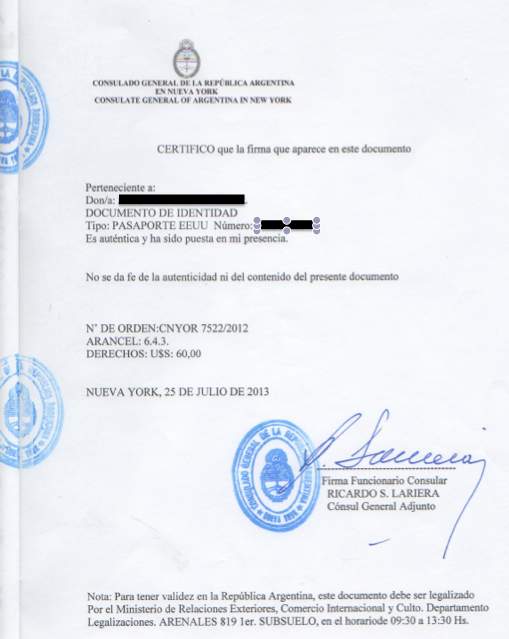
Power of A Page 2
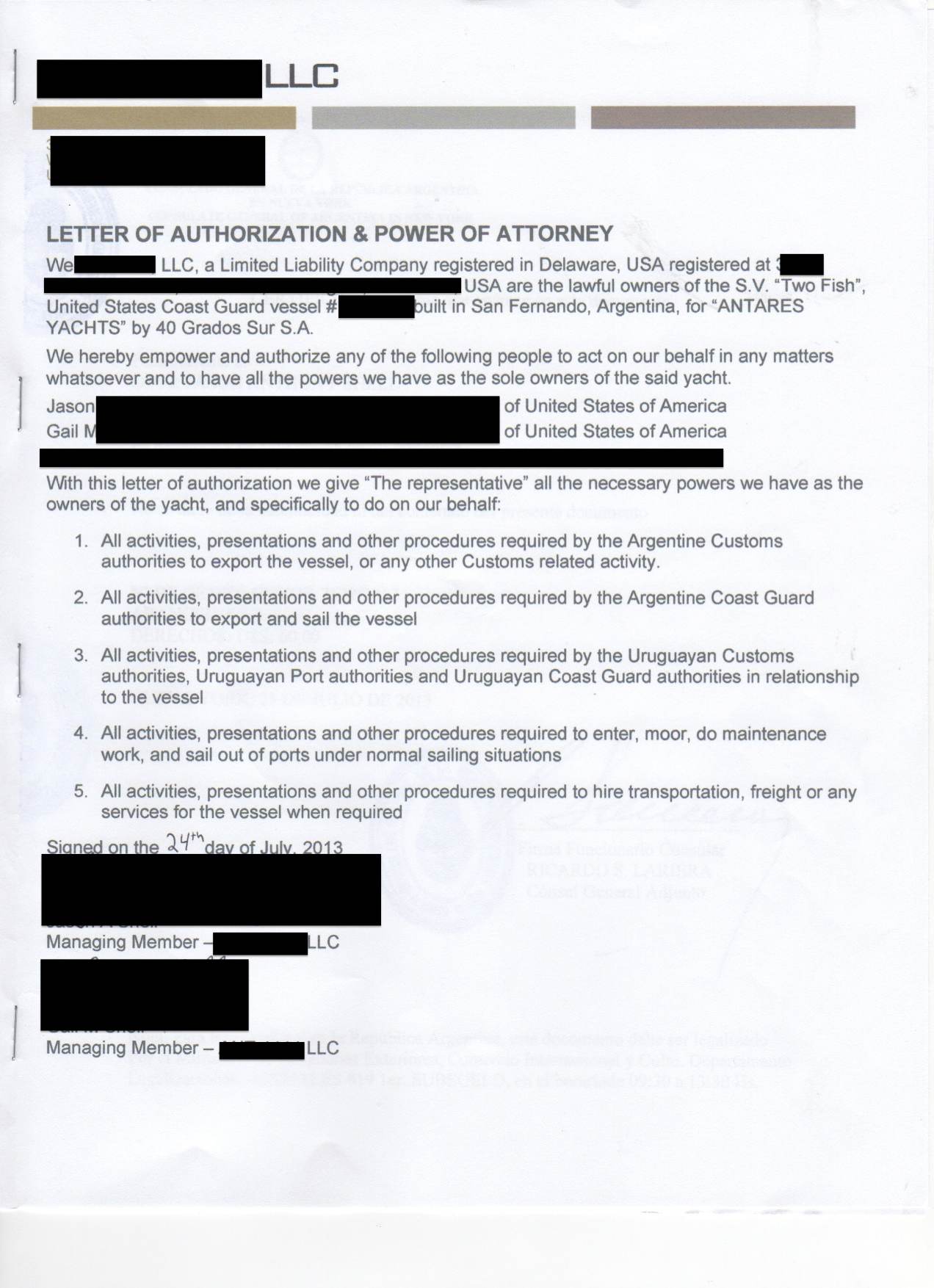
Power of A Page 2

Power of Attorney

Power of Attorney

If the previous steps did not seem odd, arduous, and annoying, the next steps will certainly make you scratch your head.   Argentina carefully controls imports.  Boat builders that export their product get an exemption on import taxes for the parts they are including into the exported yacht.   A gizmo imported from the US might face a 50% tax, but if it is proven that the gizmo is going to be part of Two Fish then the tax is not charged.   This forces the Argentinian customs officers to keep a tight leash on the entire process.   The factory does a great job of coaching buyers on the requirements.

To get your boat out of Argentina you will need a Power of Attorney, if you have decided upon an LLC structure.   The POA can be written by the members and then signed in the presence of the Argentine Consulate.   You can imagine that it is not a daily procedure for the consulate, so when you ask for their help, work on your best manners.  It really helped to have a sample of a previous boat’s POA which gave the consulate confidence that it was an OK process.   I visited during the morning (9-12 for all new requests) at 5th and 56th Street.   I was able to get this stamp in the NY consulate but they were considering sending me to Washington D.C.   The basic text of the POA states that certain people are empowered by the LLC to use the boat in various ways.  The various ways do not include  a dance party platform, but more pedestrian activities like sailing the boat, fixing systems and working with Customs.   The cost was $60 payable only via a US postal money order.   I had to leave my passport and the POA with them overnight.   The document came back with a second page attached saying in Spanish that they had checked my passport and seen me sign the document.   Fingers crossed.


Step # 8 – Delaware Confirmation of the LLC

So you have told the USCG that your boat is owned by some made-up name LLC.   Sounds to me like you have given your boat away to an entity in the ether.  To prevent donating your pride and joy to the tax collector, one must write an operating agreement.    I am not a member of a bar, but I have been to a few bars, so here is the operating agreement we are using.   It tries to achieve two goals.   Firstly, the legal stuff which you should seek advice from counsel for at $500 per hour.  Secondly, the agreement is formatted such that the Brazilian Consulate will find it matches their specific needs.   Calm down,  I will have more detail on Brazil later.  Click on the link to open a PDF of a template.

Operating Agreement Template


Step #9 –  Time to visit the Notary  in Dover, Delaware

We bought the boat so we could travel to far away places. Little did we know that our first trip would be by car to Delaware to have the agreement notarized.  The reason we are driving to Delaware is that the State will only authorize Delaware notaries.   The State of Delaware can do its part by mail, but not the notary (as far as I could figure out).  Also we are in a small rush, so the drive is our best option.  Most Delaware banks and UPS’s have notaries.  (PNC Bank at 3 the Plaza) is closest to the Delaware Division of Corporations,  your next stop.  Or, the closest UPS is (http://www.theupsstorelocal.com/4435) — The UPS Store 73 Greentree Drive, Dover, DE 19904  (302) 346-1010 — Monday – Friday  7:30 am – 6:00 pm.

Notary Check List:

1)  Original Document

2)  Notary is approved by the State.  (It may be that the notary can only be from the State of Delaware)

3)  Notary’s raised seal or embossing seal  (Name, commission, expiration of commission, state of commission)

4) Documents with more than one page must be stamped on each page by the notary and the pages numbered  (ie 1 of 4).

5) The notary must write that the signatures were written in his or her presence.   Notary must identify the author of the signature by writing the signator’s full name. It must be clear which signature is being authenticated.    Good to reference the passport being checked for face and signature.  I hope the template helps achieve these goals.

6) Notary must state location, date and signer’s full name.

7)  You will need to do this TWICE.   One version for Brazil legalization and one for global apostillization (see Step 11, point 3)


Step #10  –  Answer this question honestly

Do you crave maple syrup at odd times?   Does Saturday night just feel right if ice hockey is on your TV?   Then you are Canadian and some of this post does not apply.


Step #11  –  Cross the street from the Notary and Visit the Delaware Division of Corporations

You probably want to confirm your LLC exists before the big drive.   Use this link https://delecorp.delaware.gov/tin/GINameSearch.jsp.

401 Federal Street Suite 4 is the office location.    Or better yet, surf their website and you will learn more.  http://corp.delaware.gov

Here is my checklist from this visit:

1) Certification of commision of the Secretary of State of the acts of incorporation.  In short an agent of the Secretary of State will say your LLC exists.  BOTH COPIES

If you were concerned that John Kerry might be the Secretary of State signing your boat documents then relax.   He will not be involved. Which is good because he has had 3 boating events that have slowed his career  (1)  registering his boat for tax-advantaged reasons  (2)  boating during the Egyptian collapse (3) Swift boat accusations during his presidential campaign.

2)  The state of Delaware will also need to certify the  public notary you employed to watch you sign your operating agreement.  Make sure they include the notary’s commission, jurisdiction and signature.  BOTH COPIES

3)  In 1961 most nations in the world signed an agreement about how documents would be signed.  Sort of an international notary agreement.   This is called Apostille.  The plan is to take take your first notarized operating agreement to the kind folks of the Delaware government to stamp, sign, or whatever motions are required to satisfy this international treaty.   This document will work great from Albania to Vanuatu but not in Brazil.    ONE COPY

The Delaware Division of Corporations can apostille or authenticate documents notarized by a Delaware Notary, certified vital records from the State of Delaware, and official State documents (e.g., background checks).

4)   The second copy will need the Brazilian Consulate’s blessing, after the state of Delaware has done points 1 and 2.

I spoke with the office, and the process, if you pay a bit extra, should only take a few hours.  Enough time for a relaxed lunch in Dover.   Anyone have friends in Dover?  After the documents are picked up it is a 1.5 hour drive to DC.


Step #12  Consulate of Brazil, Washington D.C.

The certifcation by a Secretary of State where a business is incorporated suffices for the Consulate to legalize the acts of incorporation.”  Quote from Consulate website and the reason we have come to visit.

You may boast that you live in a big town and have a consulate in your city.   I surely did, but it will not help.   Brazilian consulates are regional, so if your LLC is in Delaware then only the DC Consulate can Legalize your documents.   Sorry, but while in DC, you can see your tax dollars at work.

Consulate General of Brazil in DC is located on 1030 15th Street NW.   The office is open from 9 to 1pm.

For this step you will need

1)   Your notarized and Delawarized operating agreement.

2)  Passport

3)  20$ US postal money order

4) A self-addressed, paid, express mail envelope

The Brazilians are known for being particular so spend a bit of time looking through these two links.   Do not visit the sites for the Consulates in different cities as the processes may not match.

How to Legalize documents for Brazil

Procedures for Legalizing

Top 20 Mistakes

You have finished the voyage of documentation.   The Brazilians will Express Mail your legalized documents in a few days.


Read full story  · Comments { 7 }

Gail spots a whale

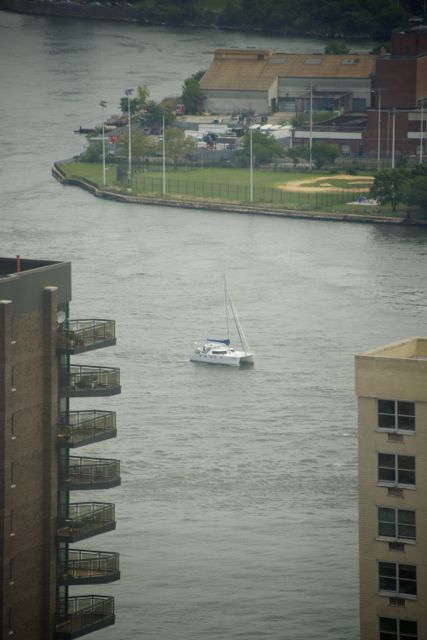
While walking back from the kitchen, eagle eye Gail saw what looked like an Antares sailing past our apartment.  There many more needles in a haystack than Antares sailboats on the ocean.  With the zoom lens I was able to confirm the impossible, it was an Antares.   The 43rd Antares has just splashed – the odds of spotting one of these hulls out of all of the boats sailing down the East River are truly slim.   Many Antares are in the Caribbean, some are in the Pacific, and two are still in South America.   However, this needle just sailed by our apartment.

Anyone know Antares hull #20 Cinderella?


Cinderella on East Rivers/v Cinderella


Read full story  · Comments { 4 }

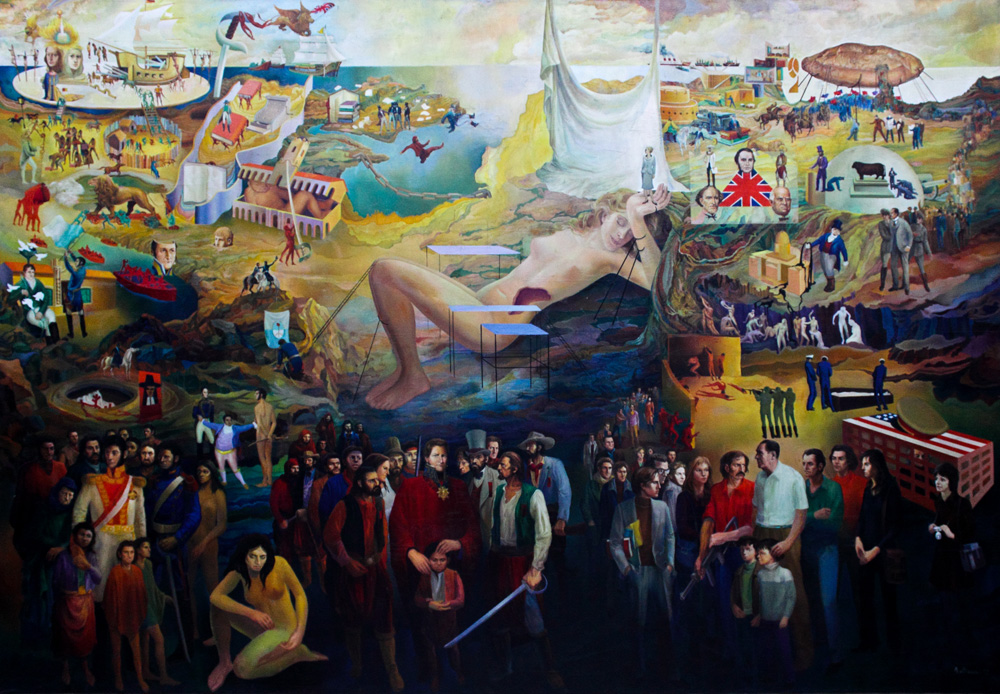
A single painting is an Argentine history primer – Artist Alfredo Bettanin


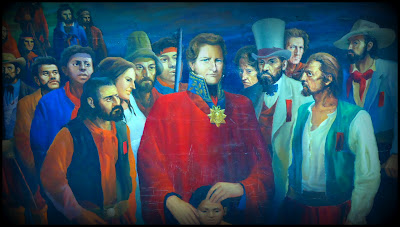
San Maratín, Rosas, Perón

San Martín, Rosas, Perón

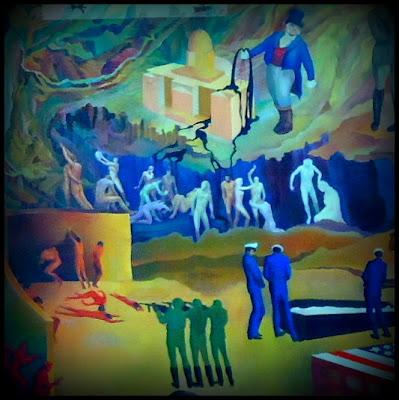
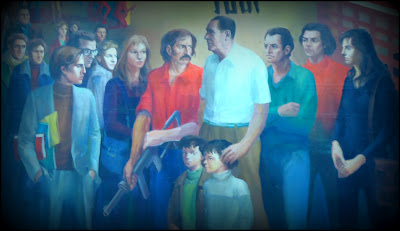
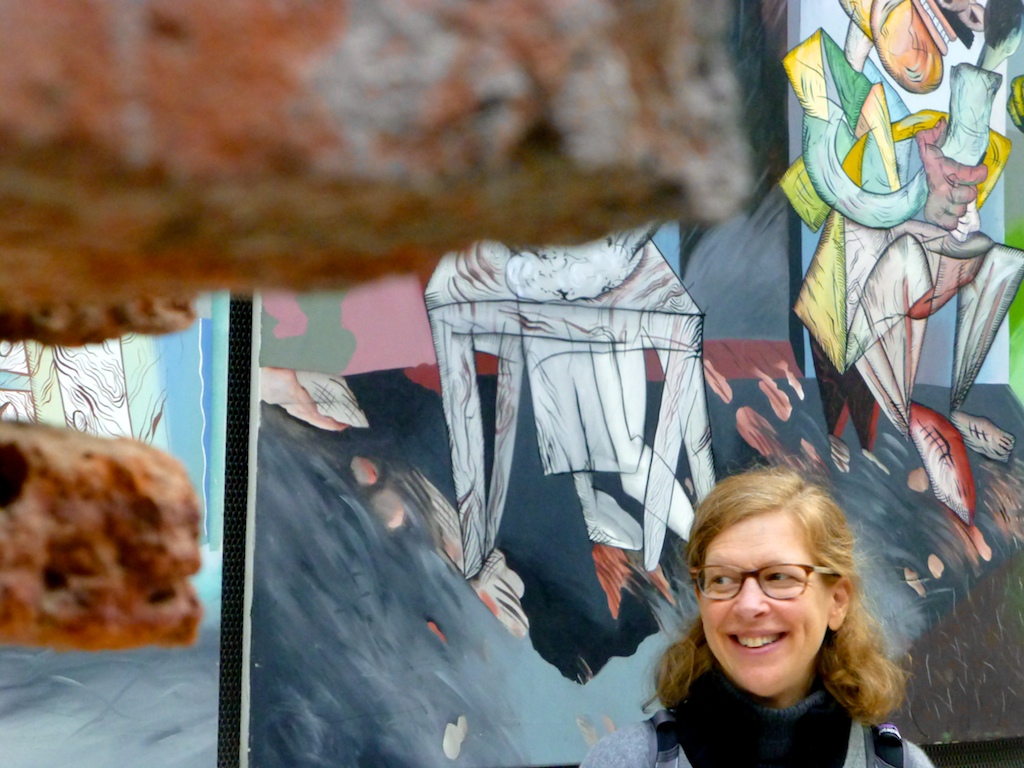
While visiting the Bicentenial Museum in Buenos Aires, I admired this painting that encapsulates the history of Argentina.   I have tried to research the painting, but much of my source material is in Spanish and translated by Google.  Eager to hear corrections from those who know better.

Queen Isabella

Queen Isabella

1510 – Arrival of the Spaniards in the Rio Plata – The upper left hand corner illustrates the arrival of the Europeans.   Queen Isabella and Columbus are depicted above the caravelle. However, neither one visited Argentina.  The corpses are of the  indigenous population to whom the European diseases were more potent than Spanish horses or swords.  This Revisionist view postulates that the arrival of the Europeans ruined the Americas.  It is easy to support this view as disease, war and other oppressions destroyed much of the original society.   One art critic disagreed  with revisionism. stating it discounts the benefits and progress of current Argentine society.  The critic asks revisionists “to wear a loin cloth of the pre-european days”.   I hear the art critic’s point but it seems rather out of touch and self-serving.  Furthermore, who knows how the cultures of the Rio Plata would have developed without European involvement?   Enough of my soapbox on a topic I know very little about.  Back to “reading” the painting.


Tupac Amaru

Tupac Amaru


1572 Tupac Amaru is killed – Further down along the left of the painting is a pilgrim-esque symbol which speaks to the connections the Spaniards had with some of the indigenous people (San Martin on horseback with the  Incan leader Tupac Amaru)   Túpac Amaru (Incan leader) was falsely convicted of murder and sentenced to a beheading.  Before his execution, Catholic clerics pleaded that the Incan be sent to Spain for a trial, instead of being executed.  Some have argued that Viceroy Toledo, in executing a head of state recognized by the Spanish as an independent King, exceeded his authority and committed a crime within the political ideas of his own time.

So far the painting is critical of the major figures in Argentine history, but I doubt any former colony would fair much better.


english lion

1807 English Lion and 1812 Flag Creator

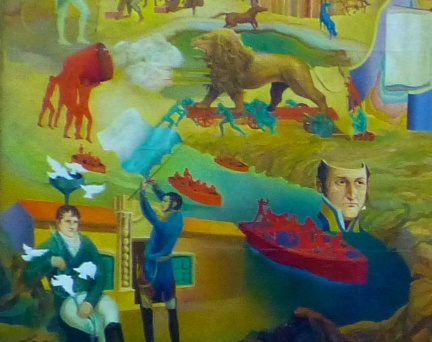
1807 English annex Buenos Aires –   The Lion symbolizes the British invasion, a turning point in Argentine history.   The British were repelled by Creole forces.    I thought Creole was a New Orleans bayoux culture, but in an Argentine context it refers to a person of 100% Spanish descent who was born in Argentina.   This is important to the story since the Spaniards (born in Spain) held more of the important positions in early Argentine society than the Creole.   When the Brits came to invade, the Spaniards fled but the home-born Creole stayed to fight.   After this win, much of the Spanish leadership was sent home and the colony garnered more independence.

1810  Revolution –  The painting now illustrates the 1810 May revolution.   Spain and France are at war and the French have taken control of much of Spain. This was the beginning of the war of independence for the entire South American continent.  I suppose the logic was something like this: Spain lost control of their own country to the French, so why should they continue to control South America?  Not bad logic in my opinion. You may see the avenue name 25 de Mayo, or Plaza de Mayo in BA and other towns. 25th Mayo, 1810 is the Día de la Revolución de Mayo, when Buenos Aires ousted the Spanish.

Naked San Martin

Naked San Martin

Near the center of the painting there is a naked guy next to a man in a blue suit.   Controversially, the artist painted San Martin, leader of an attack on Chile via the Andes,  naked to symbolize the lack of support Buenos Aires gave San Martin. San Martin is famous in Argentine history for his brave efforts to free the continent of the Spanish and for the “Crossing of the Andes” military campaign to out the Chilean royalists in 1817.

1812 Argentine Flag created –  On the left edge of the painting is man in a green jacket with peace birds on his head.   This is Manuel Belgrano who is credited with creating the Argentine flag (good job) and one of the main Libertadores of the country.  His full name if you ever needed to greet him formally is Manuel José Joaquín del Corazón de Jesús Belgrano.  I bet his friends called him Manny.  Another Libertadore leader,  San Martin, is painted nearby with a flag.  The pair are Argentine versions of Betsy Ross and George Washington. Another key date,  9th July, 1816, is when the Argentines declared independence from Spain; this is also commemorated in many towns with Avenida 9 de Julio.

DSC01548 (2)

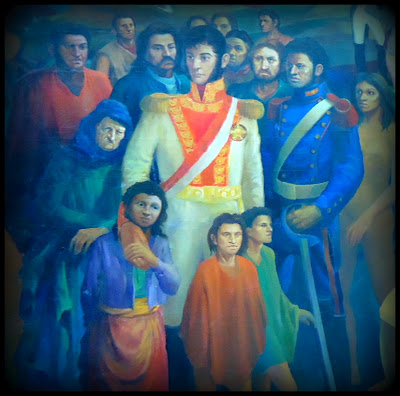
José de San Martín appears a third time in the painting, accompanied by a village.   I suppose that says he was either a man of the people or a village people?   San Martin receives much credit for leading troops to free large parts of Argentina from Spanish rule.


1833  British control Las Malvinas / Falklands  At the top of the painting the artist shows the British warships headed for an island which harkens clearly to the sensitive topic of the islands.  I will steer clear of this since both countries have been wonderful hosts to me in my travels.   I have no dog in this fight and less understanding of the long history.   But do have an interest in visiting the windswept islands.

Politics of Trade


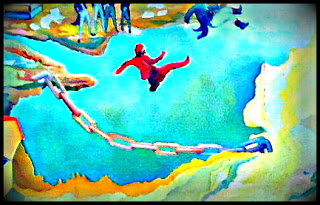
1845 Anglo-French Blockade of Argentina – Buenos Aires has grown because of its power as a port city.   Oddly, the Spanish originally decreed that all of the goods from their South American colonies should travel over the Andes via horseback to Lima and then from Lima to modern-day Panama by sea and finally over land again through Central America.   The goods waited in Cuba for a protected delivery to Spain.   This seemingly insane plan was needed to avoid looting by French and English ships.   Clearly, few goods followed this path and Buenos Aires became a smuggler’s paradise.   By the 1840s, BA’s role as a major port for silver, cow hides, and other products was well established.  Juan Manuel Rosas, leader of Argentina, had impossed protective tarriffs to enhance the fledgling Argentine economy.   Britain and France did not comply and began trading goods inside Argentine rivers.   This prompted  a 5-year blockade, which Argentina was able to survive. Eventually Britain and France signed an agreement acknowledging Argentine river sovereignty.  The chain in the painting is Argentina preventing European ships from sailing upriver and next to this is an Argentine soldier kicking an English merchant.   This is a rather nationalistic painting, but what else would you expect in a a country’s National museum?

Rosa with the lower classes

Rosa with the lower classes

Juan Manuel Rosas (1793-1877) was no small figure in Argentine history.   He controlled the country with a totalitarian fist.   Like any dictator he had a penchant for the dramatic.   The Argentine governor  mandated that the slogan “Death to the Savage Unitarians” be inscribed at the top of all official documents.  Anyone on the state payroll was obliged to wear a red badge with the inscription “Federation of Death”.  Every male was supposed to have a “federal look”, i.e., to sport a large mustache and sideburns. Many resorted to wearing false mustaches. The red color became omnipresent in the province of Buenos Aires. Soldiers wore red chiripás and their horses sported red accouterments. Civilian males wore a red waistcoat, red badge and red hatband while women wore red ribbons and children donned red school uniforms.  Building exteriors and interiors were also decorated in red.

20th Century - Oil

20th Century – Oil


Twentieth Century  –   This portion of the painting shows some famous moments from 1900 to 1940.   In 1929, Argentina was wealthy, but the prosperity ended with the worldwide Great Depression of 1929. In 1930, a military coup, supported by the Argentine Patriotic League, forced Hipólito Yrigoyen from power. Support for the coup was bolstered by the sagging Argentine economy, as well as a string of bomb attacks and shootings involving radical anarchists. The attacks alienated moderate elements of Argentine society and angered the conservative right, which had long been agitating for decisive action by the military forces.  The military coup initiated the period known as the “Infamous Decade”, characterised by electoral fraud, persecution of the political opposition and pervasive government corruption.   The most famous (and perhaps most symbollic of anarchism’s decay in Argentina at the time) action was the execution of Severino Di Giovanni, who was captured in late January 1931 and executed on the first of February of the same year.


President Peron

President Peron

Peron  1940-1974

Peron was elected President of Argentina three times, serving first from June 1946 until September 1955, when he was overthrown by a coup d’état, and then from October 1973 to July 1974.  During his first Presidential term, Perón was supported by his second wife, Eva Duarte (“Evita”), and the two were immensely popular among many Argentines. Eva died in 1952.   Peron lives on today via his politcal party known as Peronists.   I am still trying to understand Peron but it seems like he was part FDR.  He pushed the state to expand the social welfare net, but at some point the economy could not handle the burden and went into a severe contraction.   This has been an all too common outcome of good intentions.

State of Argentina
State of Argentina
The woman lying in the center of the painting is the State of Argentina.  She is wounded and staked down.  In her hand is Eva Peron.  Is Eva saving the state?   Why is the state missing part of her abdomen?   Lost territory, lost citizens?


Read full story  · Comments { 0 }

For Foodies

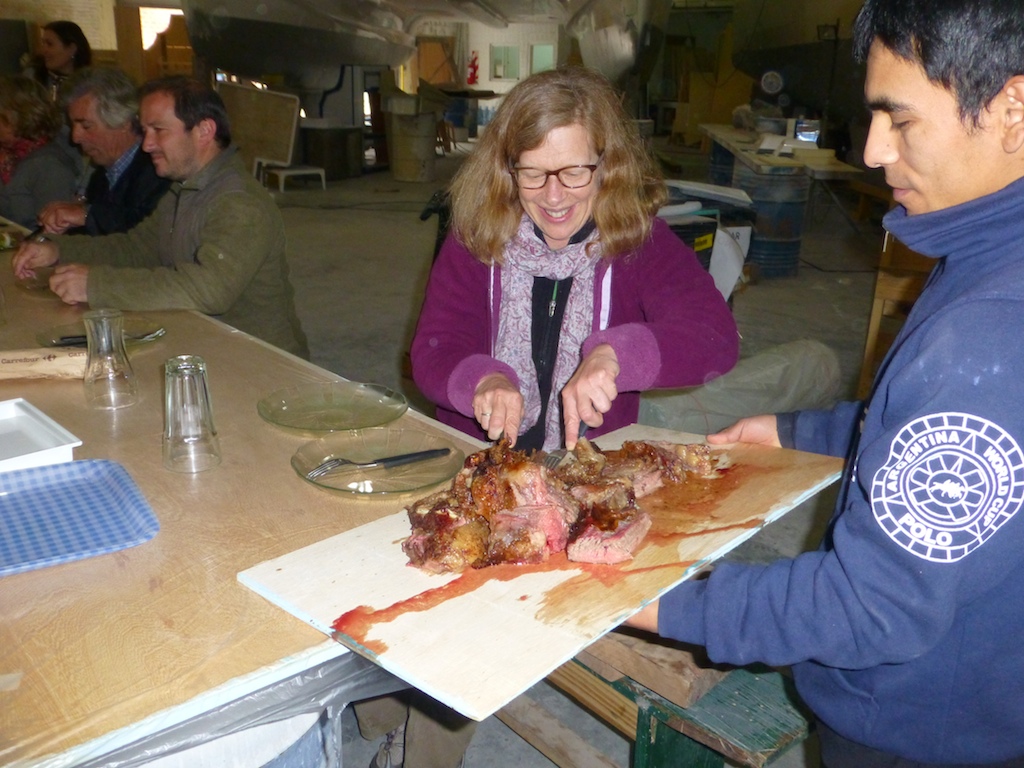
Gail attacks the meat


There have been all too many posts about sailing technology on this blog.   The entertainment value of the pros and cons of water pumps has its limits for most of our readers.  We, like many people, enjoy traveling and discovering different food.   We both enjoy trying new recipes; however, I prefer it if Gail acts as my taste tester.  Bit regal of me!


Argentine Food from Two Fish on Vimeo.


It is early days for a blog post on Argentine cuisine, but here is a list of highs and lows in San Fernando…

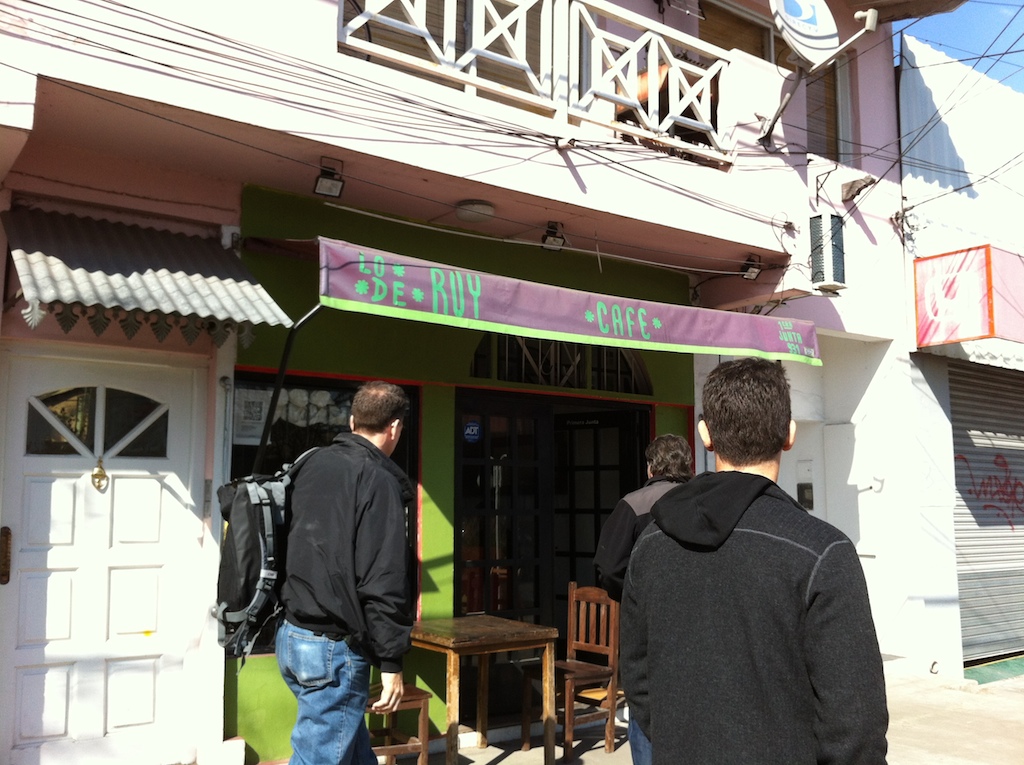
de lo Roy Cafe

de lo Roy Cafe

Best:   Cafe lo de Roy.  We had salads with chicken and brie and they were perfect.   Dressings ranged from lemon juice to the usual oil and vinegar and a garlic potion.   The service is great, as it is a family business.  Sons, daughters, brother-in-laws and such are making sure your time on the sunny patio results in a fantastic lunch.   The place exudes a home-like feeling, with a nice dose of humble, which is the perfect combination for a traveler far from home.  (Located on Primera Junta near Gaboto, San Isidro). Note to self: spotted nearby was a very nice looking fruit and vegetable store.

Runner up:  The Yacht Club Argentino (YCA) requires you to be with a member to get access, but if you do get in, it has a great feeling and a nice light lunch. On a particularly chilly day, we were given a tasty lentil soup amuse-bouche.   The walls are covered with great sailing shots from Optimists to big boats and the clients seem to be the connected businessmen of Buenos Aires.   Do not fill up on the bread, as the main course should be enough to keep you fueled for an afternoon tour of the factory.

High score:  Dutch Cafe near the Marina Nueva station serves a nice salad with your choice of salmon or chicken on top. Coffee folk: do order a Cortado after your meal. Dutch Cafe is closed on Mondays, but on other days you have a good chance of sighting upper management of 40 Degrees Sud (boat builder). The river view from the patio on summer days is a real bonus. Address: Arias 2400 Telephone: 4746-7044

Havanna Coffee House

Havanna Coffee House

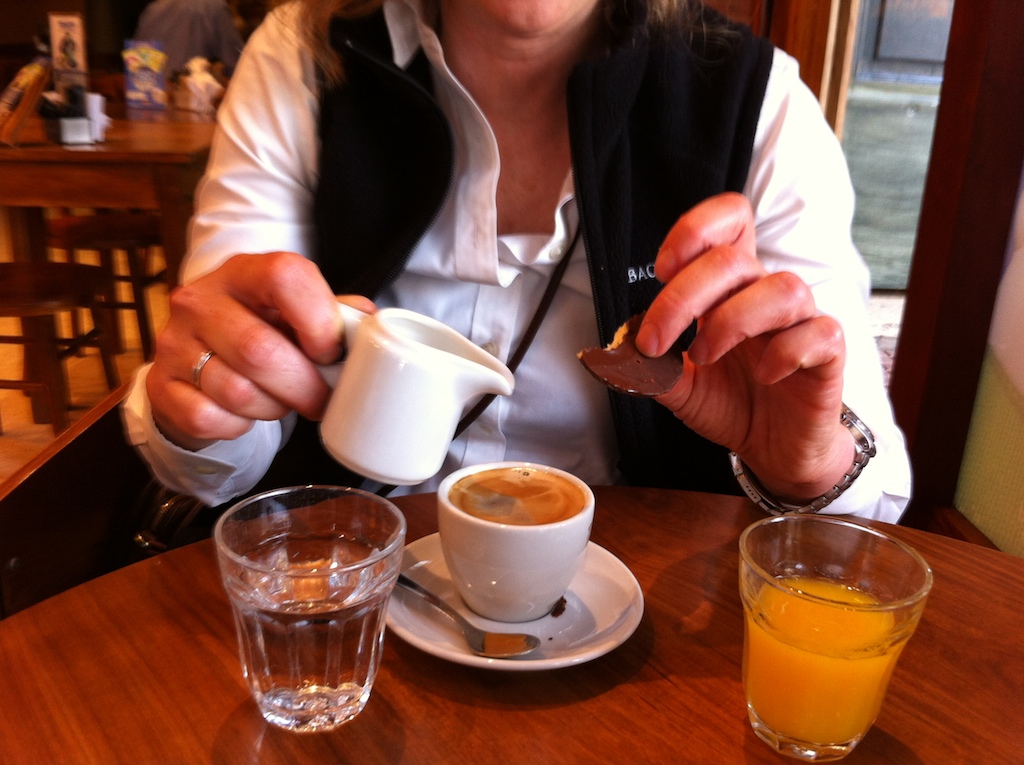
Medium High: Havanna is a coffee chain, so this is not a

Cortado with the trimmings

Cortado with the trimmings

diamond in the rough. However, they have a great way of serving their coffee – you get the coffee, a small glass of water, a small glass of fresh orange juice and an Alfajore, a traditional Argentine sandwich cookie with dulce de leche. The ones at Havanna are dipped in chocolate. What a civilized way to live. I am a bit concerned that Gail has developed a bit of a Havanna habit. Other Argentinean places serve coffee like this; when are the Americans going to learn? BTW, Gail drinks coffee but I got the same perks with a tea.

Medium:   Hotel Jacaranda serves an efficient and simple breakfast, included with the room.   Hits what I consider the high points.   OJ, tea, corn flakes, fruit, and some eggs if you ask nicely.   As dinner time rolls around (8pm) you will notice two things: the TV is left on, pumping out the latest Argentine news and the Americans (that would be us) are already seated.  The TV was engaging since the upcoming elections in Argentina are important.

Pompeii Restaurant

Low:  Downtown San Fernando is limited on a Sunday night and you most likely will end up at Pompeii. Not great pizza, breaded chicken with lots of cheese and chop suey that is left in the wok too long. Gail thinks it is not as bad as I make it out to be. Tip #1: the salad bar section of the menu means you order a custom mix from your waiter and he brings it. Not a bad salad.  Tip #2:  Pompeii offers free beer at certain times of the day. Unfortunately, the offer is a bit random so you will have to try your luck.

Lowest:  The Sports Bar in San Fernando serves a Caesar Salad that is about 30% mozzarella cheese and 20% croutons.   In some of the guide books, they have mentioned that vegetables and salads are not really an Argentine tradition.   So, to be fair, we may be poor food critics since steaks are not our thing.   Sorry Argentina to judge you on your salads. Tied for lowest on the salad scale was a restaurant that Gail wanted to try. From a distance it had a sign with Bio-organic on it. Combine that with the fact that someone told us it was a vegetarian place and our hopes were high. However, upon arriving, we realized they sell Deli meats and little else. Oh well. Until we splash, when in SF, we’ll stick to our top picks.


Read full story  · Comments { 2 }

Awesome Argentine Rock Band – ToniMontaña

We discovered ToniMontaña while walking the streets in San Telmo, Buenos Aires.   I have bought many a CD of street bands that seemed great at the time, only to have the experience be a flop when played at home. Untrue for ToniMontaña. Enjoy 60 seconds of their music cast to the sights of BA.   Not sure why you can not buy them on iTunes. Here is the only link I could find.


BA Street Fair from Two Fish on Vimeo.


 BA Streets in Photos


Nuss Hotel Buenos Aires Soho / Restaurant Review of Palermo, BA

Nuss Hotel Review:   Room was an 8 out of 10 on my very harsh rating scale.   Wonderful room came with large bed and a large day bed.  Modern bath and nice almond treat as a welcoming gift.   Food was good but only had breakfast.   Would stay here again as location is in the hip part of Palermo.

BA Dinner Review:   2 out of 10 on my generous rating scale.   Mexicana is so bad that I am sure they will be closed before you visit.   The best moment was while ordering. I asked for a a salad and three tacos.   “But sir, the tacos come with a salad are you sure you still want to order a salad?”, the waitress said. “Thanks,  I will pass then.”, I replied.   The salad with the taco was 1 mini leaf of lettuce.   Enough said. Do not go here even if starving.


Read full story  · Comments { 1 }

The Future is all about Catamarans

Fads are not productive in sailboat design – it is more important that your boat protect you during extreme weather.   For example, the bowline knot was used in 2580 BC and during the last 4,600 years no one has been able to invent an upgrade.  I am still working on the Jason Knot.  The appropriate skepticism of change by sailors has slowed down one movement that I think will expand rapidly following the America’s Cup in San Francisco. Catamarans will start to dominate new yacht sales for cruising boats and will expand in sport boats as well.   I pause briefly to allow the die hard sailing forum readers to recite the typical faults of catamarans (static stability, width in marinas and tenderness to being overloaded).   I will wait again while the catamaran proponents will come back with keels falling off  mono hulls and the rest of their typical routine.   This back and forth creates as many converts as the Mac-olytes and Windows worshipers.   I will not wade in, as my view is obvious.

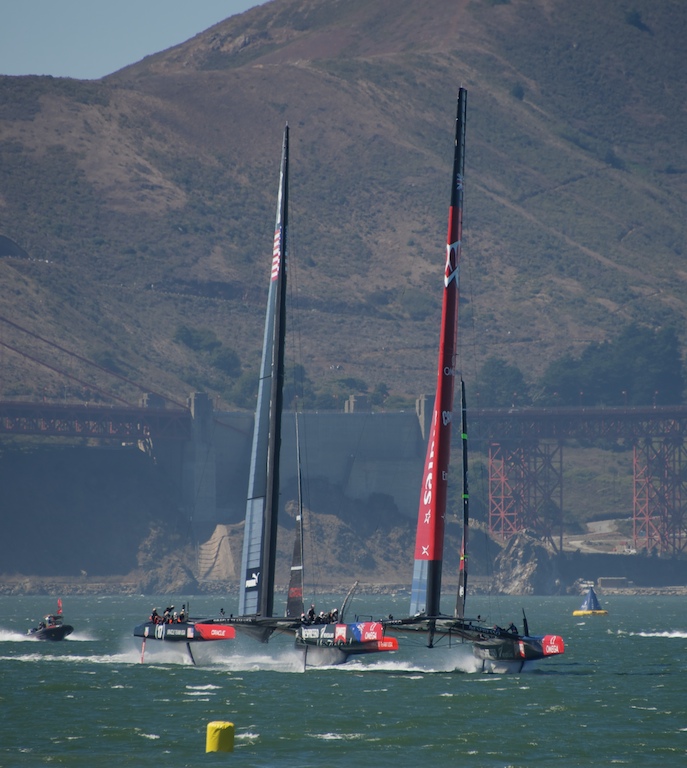
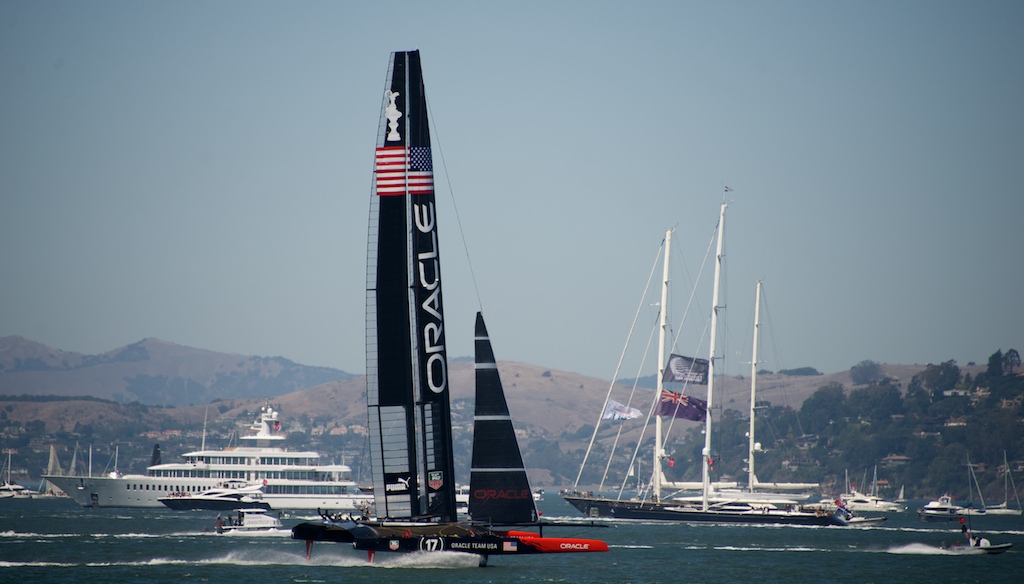
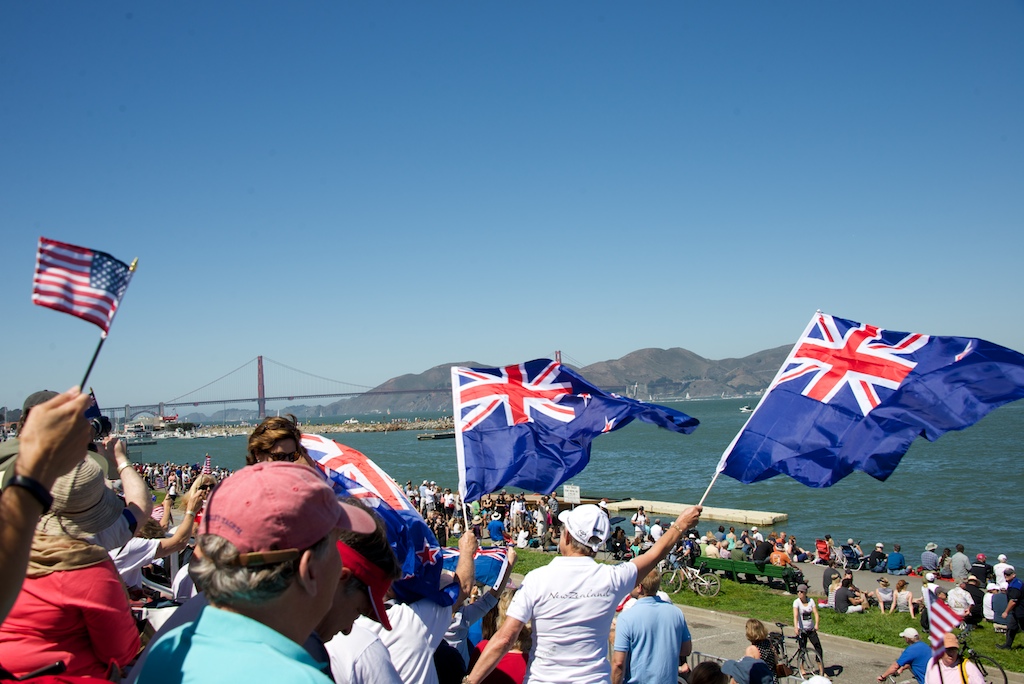
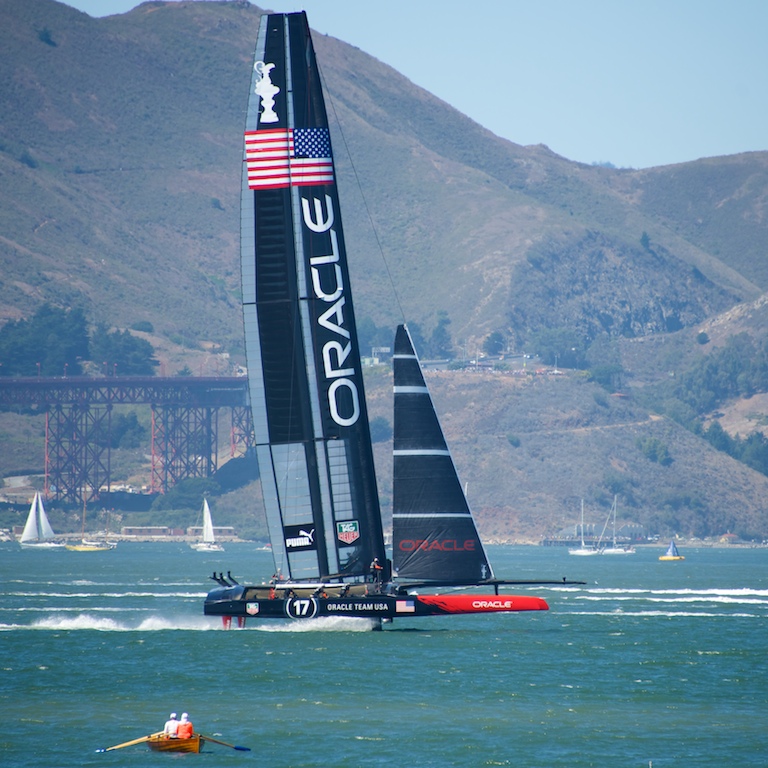
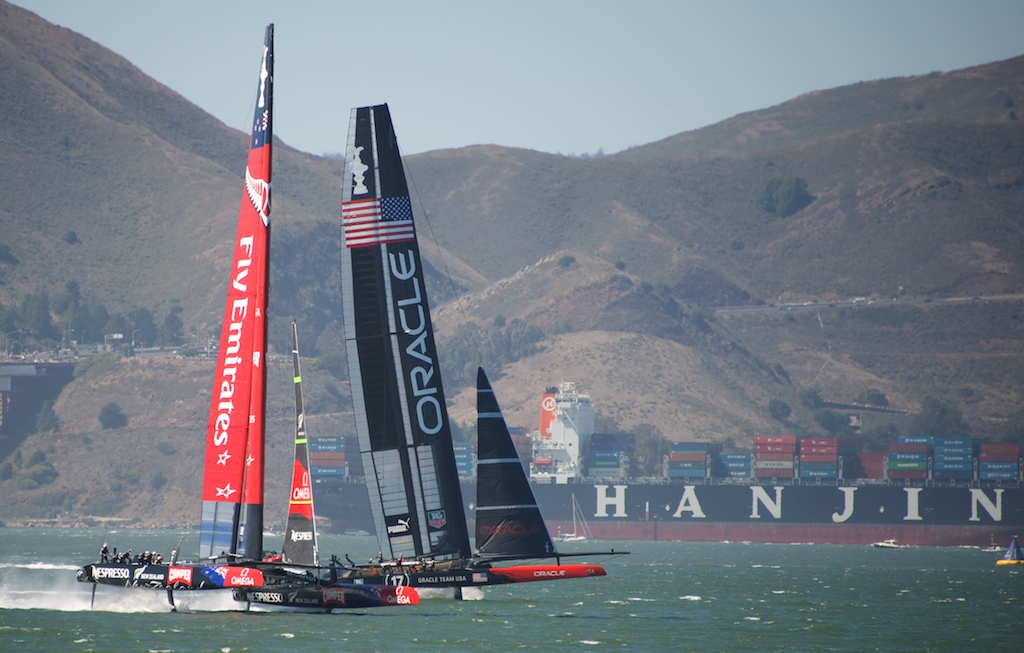
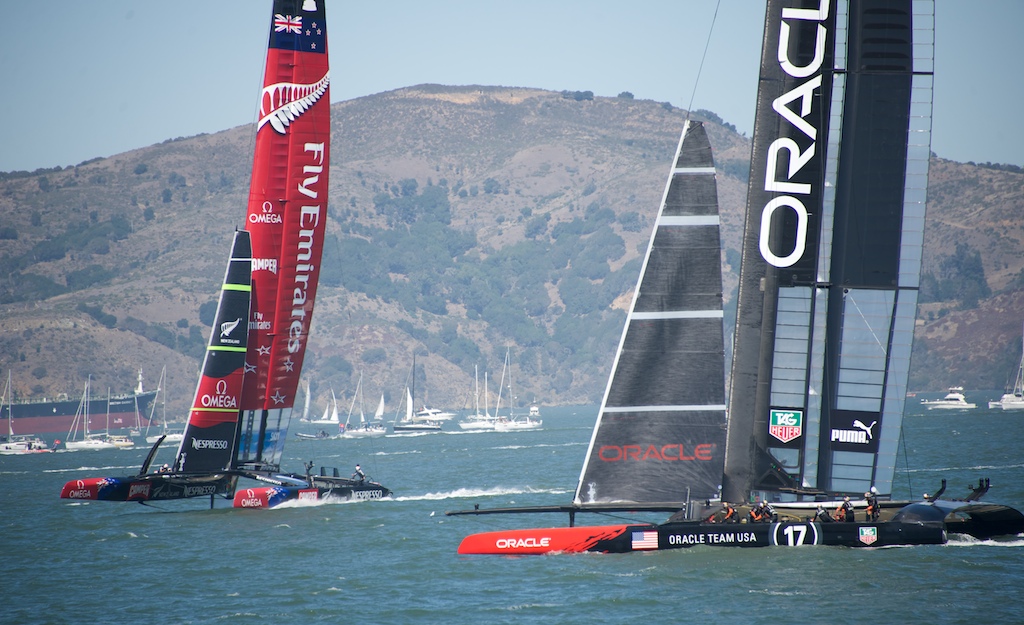
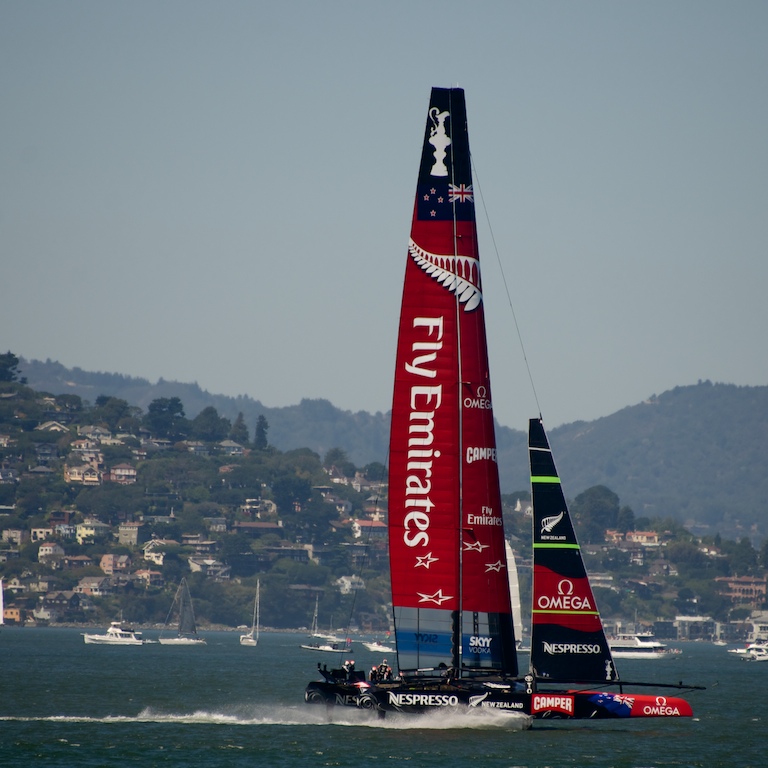
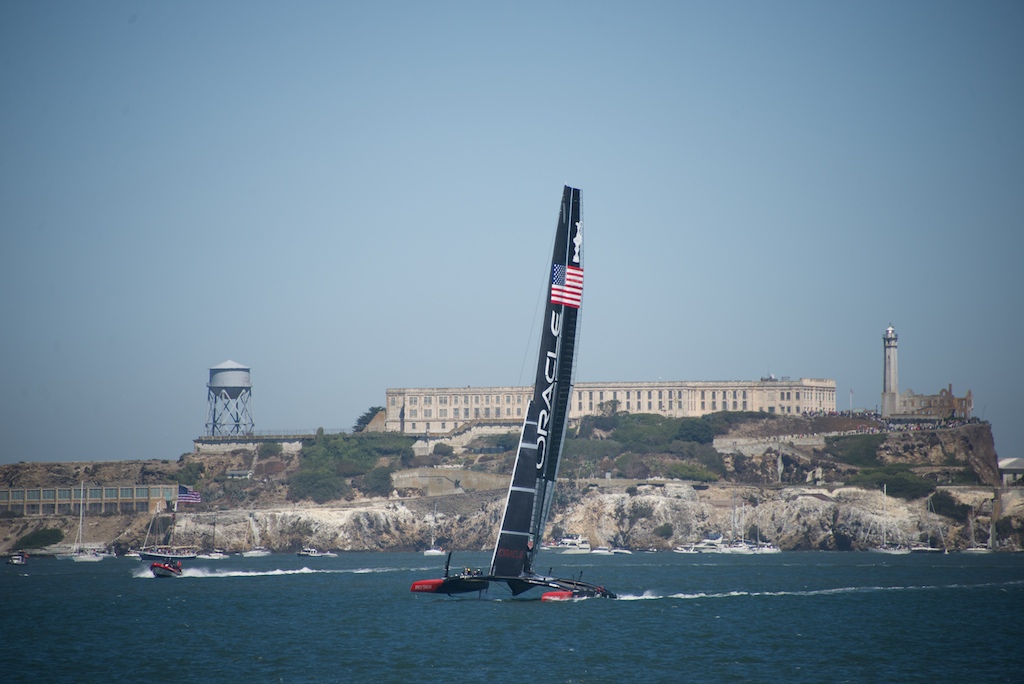
The entire audience watching race one of the America’s Cup from the shores of the San Francisco Bay were converted to the Catamaran religion.   By the end of race two, I was dismissive that  in 20 minutes these boats traveled the same course that used to take me 4 hours.   The boats fly above the water in excess of 50 miles per hour, often traveling faster than the cars on the nearby bridges.  The teams have spent in the neighborhood of 100 million dollars.   Two Fish cost a bit less but goes a bit slower.    SF has done a great job hosting the regatta.   I snapped a few photos from the shore-side stands located in the Marina neighborhood.   Congrats to the Kiwis on a strong first day.

Read full story  · Comments { 0 }

Shopping for TWO wheels


We have a history of riding bikes in far away lands.   In Cambodia my bike was more rust than metal and we had tons of  fun exploring the Cambodian back alleys.   Via Backroads we have visited Croatia, Slovakia, Hungary, France and many more countries.   So we wanted to continue the tradition of riding while aboard but realized our current bikes were too large for the boat.
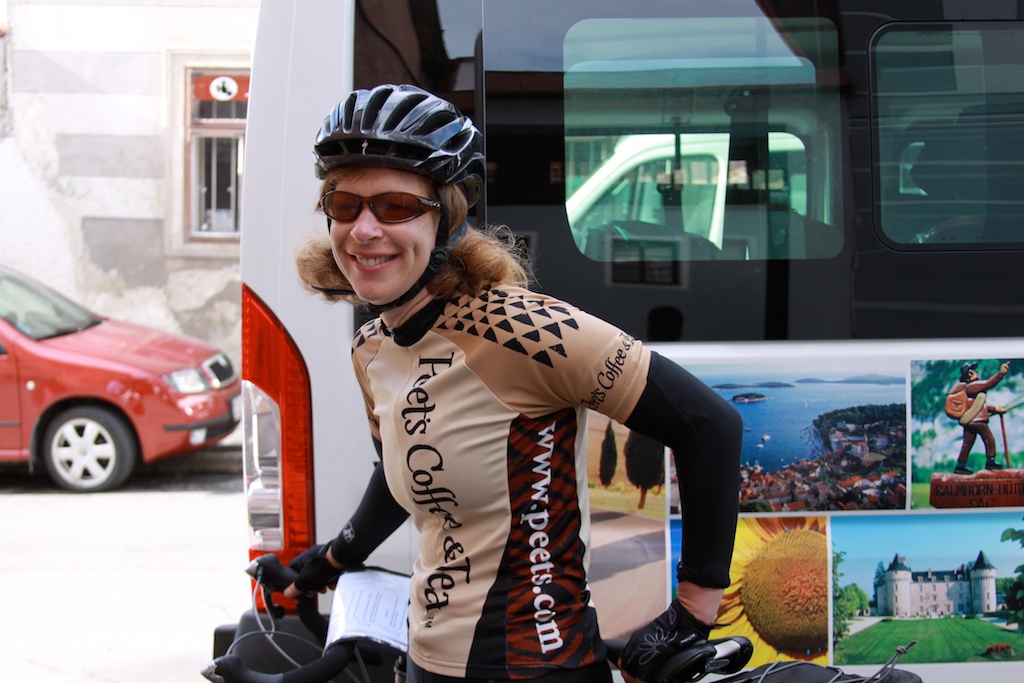
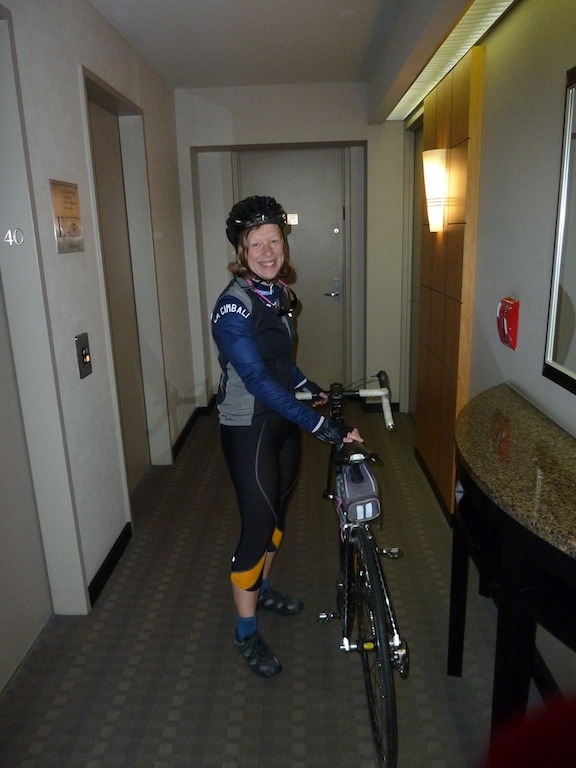
Backroads in Slovakia

Backroads in Slovakia

NYC ride in the "old" days

NYC ride in the “old” days

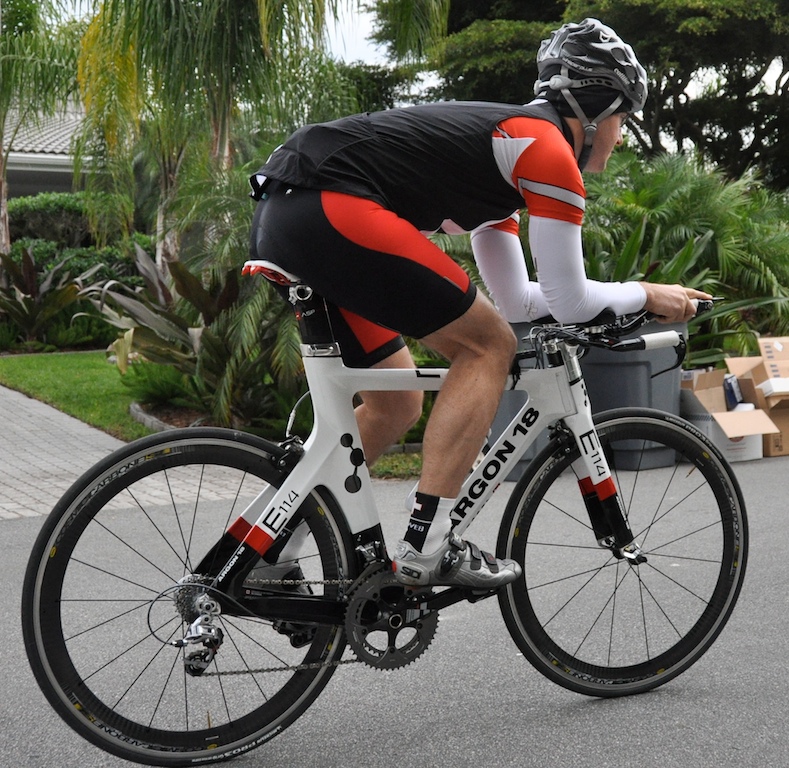
Jason riding Triathlon Bike

Jason riding Triathlon Bike


Another major life decision, a bike purchase, required spreadsheet organization to choose the proper ride.    The bike’s purpose is to be a road bike for exploratory rides on what will most likely be challenging road surfaces.   The bike should also be able to transport groceries because we were forced to leave our car back in NYC.   I thought they said catamarans had tons of space, but I could not fit the Prius in any of the lockers?    Lastly, the bike needs to fold down into a small space to fit into the lazerette and the dinghy for trips ashore.   We did not want the folding conversion to involve wrenches and other crazy maneuvers  as this would curtail bike riding.  Over 12 months of shopping, we changed our minds a few times on what was the perfect bike.   Here is the list of bikes we considered, starting with the first bike and ending with the one we bought.


Brompton

British Folding Bike

British Folding Bike

This ubiquitous London commuter bike is perfect for riding 10 miles, then folding up in 30 seconds to board the train.   It folds small enough that your fellow commuters will not avoid you in favor of sitting next to the smelly guy talking to himself.   Bromptons have a VW bug-like fan base that race the folding bikes while wearing suits.

Why we did not buy it:   Unique spare parts are not great for long distance cruisers.   The wheel size is a bit smaller, making the bike more likely to tumble after encountering a pothole.  By the way, the bike industry uses the euphemism  “wheel deflection” while it should be  “face plant” or “wipe out”.    The price of the Brompton also discouraged us.


Dahon on eBay

Gail tried to buy a used folding bike of any make or model but was outbid.   The eBay used price for Mariner Dahons got close enough to a new bike that she said no thank you.   Back to the drawing board.


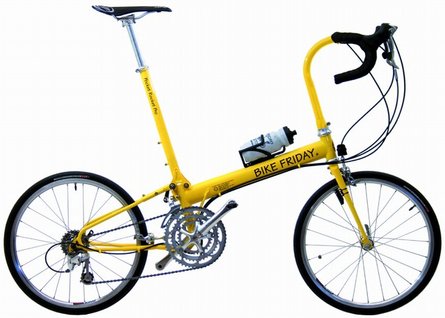
Bike Friday

Bike Friday

Bike Friday


I was told about Bike Friday by another Antares owner whose boat is behind Two Fish in the factory.   He also has a biking problem and has bought several Bike Friday creations.   Their build philosophy is to try to recreate a full size bike.   They use the standard off the shelf parts for high end bikes which means you can ride in comfort for hours as if on your normal road bike.   This is a great idea.  I can become one of those smug guys passing people on full size bikes while riding a folding bike.   But alas I pass few people on my road bike today so this smug feature would be tough to use.

Why we did not buy it:  These bikes get crazy expensive.   We started to become worried that bikes would not fit aboard and we would have to leave them in BA.   Later we have confirmed there is a nice place for the bikes in the central cockpit locker.   Not sure about where the rest of our stuff will go?  Two Fish is having a yard sale the day after we try to move our stuff aboard.  Secondly, the salt air will attack the bikes and I would likely replicate my Cambodian biking adventure by riding a rust bike.  Kind of hard to justify a costly rust bike.  Finally, I don’t like the Bike Friday font.   Okay, that is pretty fussy of me.

Test ride on the folding bikes from Two Fish on Vimeo.


Tern

We are at the end of the post, so this was the winner.  Tern has an usual history as it was started by the ex-wife of the CEO of Dahon.   That must be a bitter separation.   Tern have improved on a few things from the Dahon.  Smaller fold, nicer look and great attachment point for front bike bag.

His Tern D8

His Tern D8

Her pink Tern D8

Her pink Tern D8

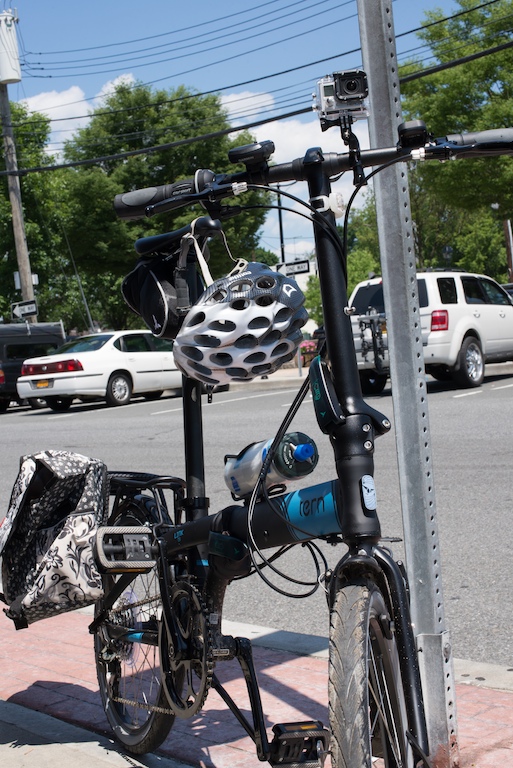
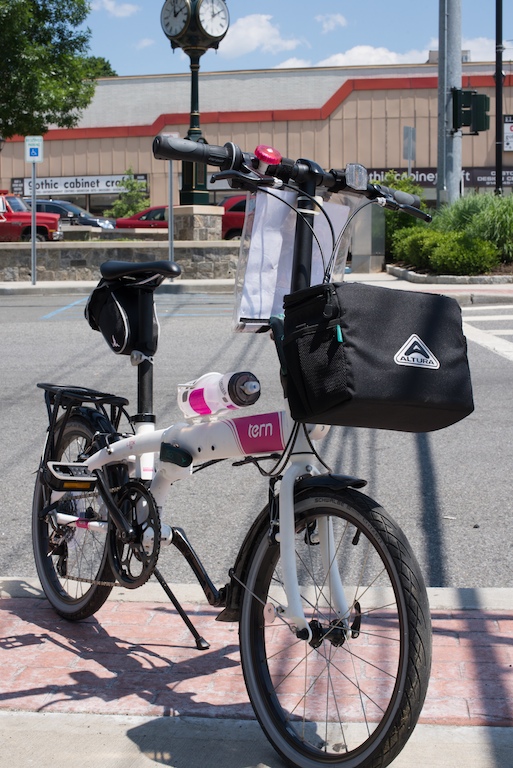
We enjoy 20 inch wheels because they offer a more stable ride and are easy to find since they are the BMX bike standard.   We chose a model with 8 gears in the rear derailleur which offers a very wide range of gearing.   More gears does not always mean more range – do the gearing math before buying.   We avoided having a front derailleur and will then save on future repairs.   All the bikes we looked at weigh in the range of 24-29 pounds.   The Tern is at the higher end of that range.   But the lighter bikes would not have luggage racks and fenders.   You can see from the photo that Gail has an easy on/off front bag and I have a classic pannier attached to the rear luggage rack.

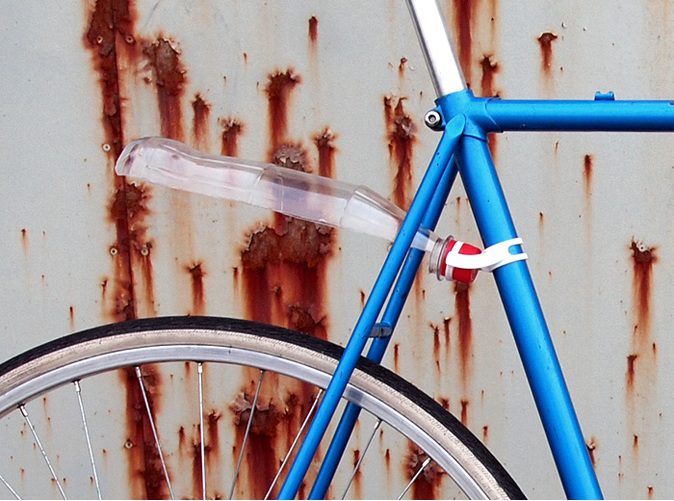
Water bottle bike fender

Water bottle  fender

We also added some custom features.   The black bike has a GoPro camera set up and the pink bike has more pink stuff such as a pink bell and pink water bottle.     I am still kicking myself for paying for a fender as an old 1 liter water bottle seems to work for the rest of the world.

How does the bike ride?

Speed:   15% slower than my carbon fiber road bike.  Both the wide tires and upright position slow the rider’s progress.   It is nimble and I do not feel tippy or worried about passing over uneven surfaces.   It is sort of halfway between my road bike and mountain bike on several ratings.   In traffic you feel confident as it is easy to look around and potholes are not deadly.    I have not tried a high speed descent yet, but I am legendary for wimping on descending, so no need to hear my review.

Build Quality?

Good but not perfect.  The fold handle needs motivation and the famous fenders became crooked.   The bike store that sold us the bike was not the greatest on service.

Transport to Argentina

The best way is to return to the bike store and ask for your bike to be repacked in the original box.   Should cost very little and you have cheap one way transport.   We were not quizzed by customs upon entry but the bike was used and had plenty of mud to prove it.

Accessories 

We already had one pannier from Gail’s mountain bike and one handlebar bag.   We bought a second handlebar bag.   We also bought a simple nylon cover that stores under the seat.   This will prevent the bike from damaging the dinghy and make it easier to stow.   Lights, water bottles and such were the other additions.   We did not bring custom pedals so we are biking with only sneakers.   That will take some getting used to.

We will post some of our more exciting bike rides as recorded by our Garmin bike computers.

Jason


Read full story  · Comments { 3 }

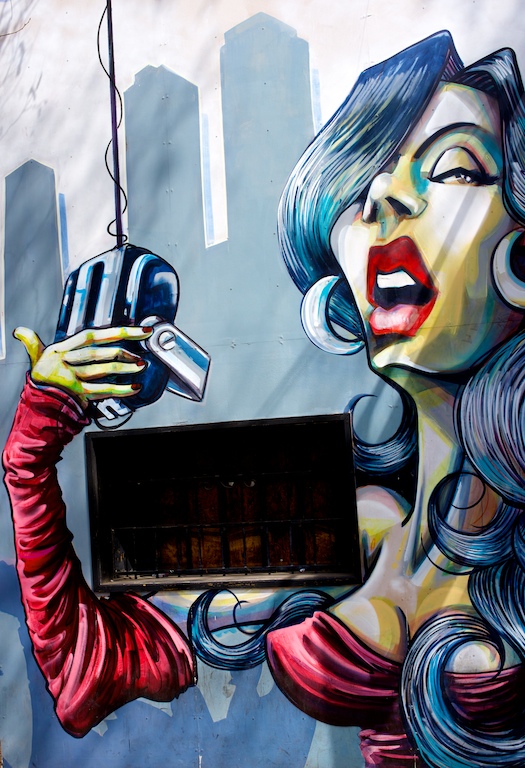
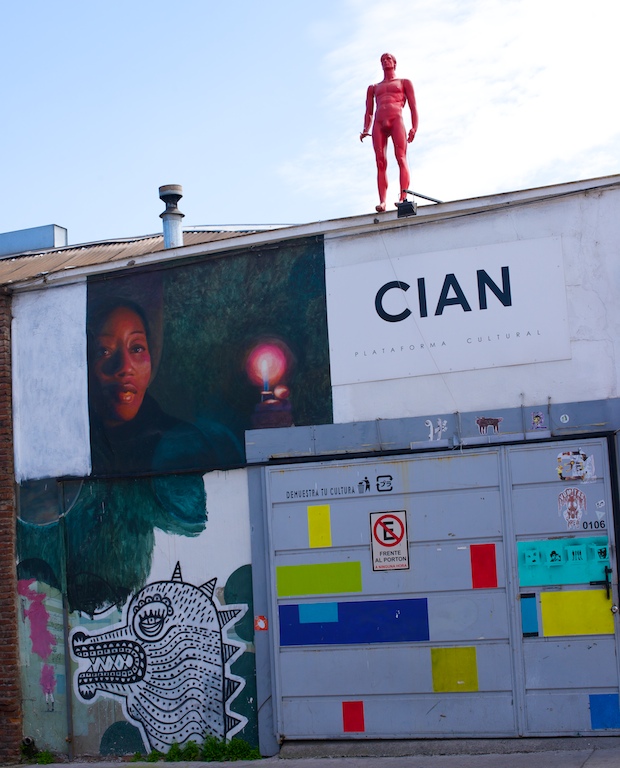
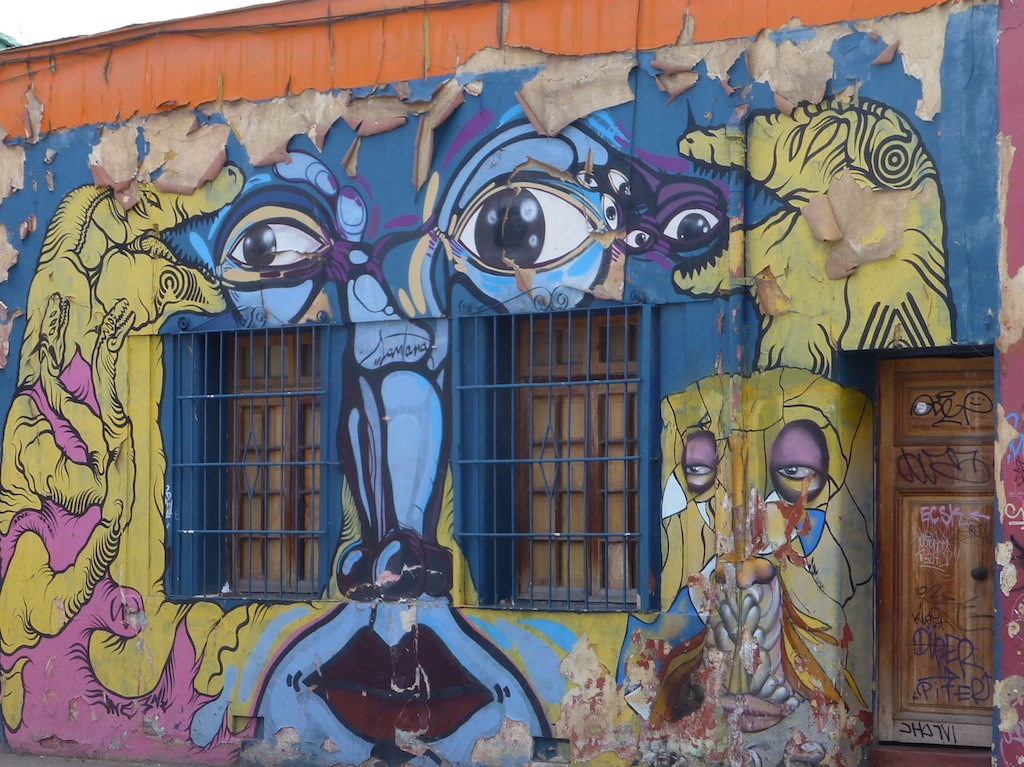
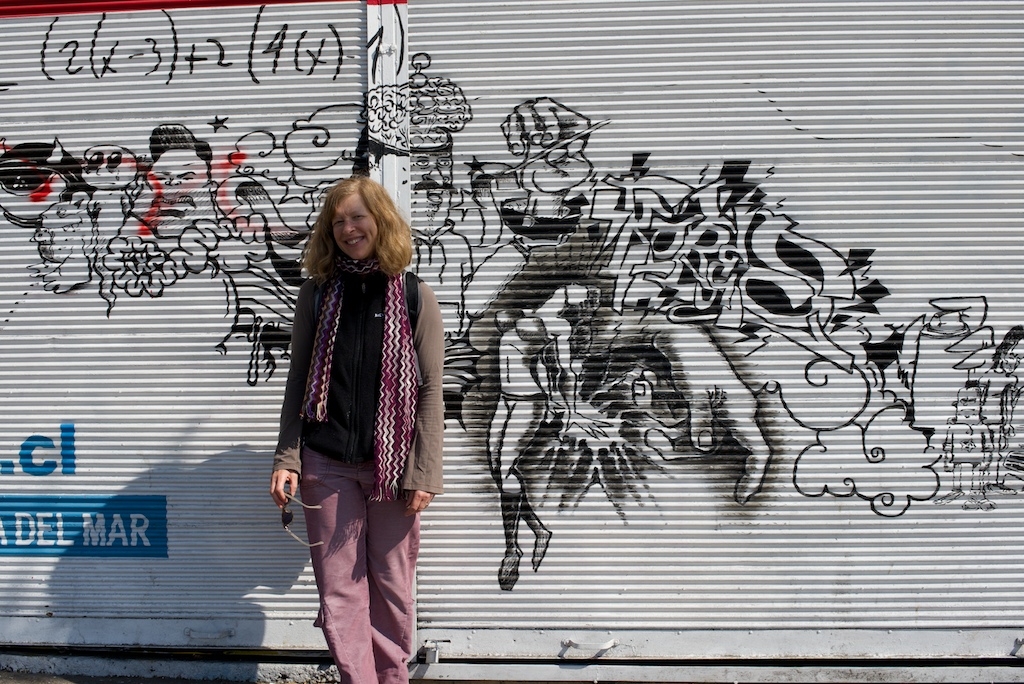
Graffiti – Chilean Street Art

This post is not about the words, but the images.  I am a fan of graffiti art.  Not the clever London based Banksy or the 80’s iconic Keith Haring.   No, I prefer the colorful art found in alleyways and on struggling bars and small businesses.  On the global graffiti scene it turns out that Chile ranks rather high in its reputation.   I learned this after my walk today in Santiago.   The web has told me that I have much to look forward to later this week in Valparaiso, which some think is at the top of the heap of street graffiti.  “Chile has historically been a center for radical propaganda painting.  As early as 1940, renowned Chilean and Mexican artists like David Alfaro Siqueiros, Fernando Marcos and Gregorio de la Fuente, were painting influential murals in Chile.  Today, Latin America is on the forefront of the street art explosion, and Chile is leading the innovation.

I like these paintings because they are bright, complex and push my eyelids back.  Banksy and Haring produce computer icons, not art that stirs me.  Most of these photos were taken in the Bellavista neighborhood of Santiago, Chile.

For now, I will let you enjoy the images I captured on today’s walk.


Read full story  · Comments { 5 }

Chilean Workers’ Struggle (1900s)

Revolution 1

Part one of River Bank Wall Art of the History of Chile

I found this wonderful graffiti painted on the wall of the main river in Santiago (Mapuche River).   My Spanish is dog poor and my knowledge of Chilean history is gleaned from recent readings.   However, the always-brave blog poster that I am, I will try to translate these pictures.  The graffiti covers the workers’ struggle for rights and the ensuing cruel actions of certain governments.

The text portion on the left is written by Noble Prize winning Chilean poet Pablo Neruda (1904-1973).   My poor Spanish tells me it is about brotherhood being permanent.  Next to this are protestors holding up signs saying to stop abuses.   Pablo Neruda’s house is a stop for most tourists and we marched in unison.

The next portion of the painting is about the 1907 Santa María School massacre in which the government killed striking miners and their families.   They were mining for the hot commodity of the day – saltpeter, better known as nitrate.  The government hid the massacre from the people so the number of dead is tough to know, but most estimates are about 2,000 dead.

I have no clue who is painted in a fedora.  Any Chilean readers wish to help me?  The final section is a reference to the 1904 “Meat” Massacre in Santiago. The workers revolted against the central government due to an increase in the price of meat and the general soaring cost of living. The government responded by sending in the army. Two more days of riots followed and hundreds of civilians were killed on the streets.

Second Panel

Second Panel

The initial white poster in the second panel refers to “The Century”, which is a Chilean Communist Party newspaper.  It struggled to keep publishing while right wing governments tried to close it in 1949 and 1973.  It can now be found on the web.   The guy with the cool black-framed glasses (We saw them at the national museum) is Salvador Allende.   He was involved in politics for 40 years and ran 3 failed presidential runs before being elected in 1970.   His “if you fail, try again” strategy did not end particularly well for him.   During his brief time in power, he pushed for nationalization. Eventually he was cornered by army troops in the Presidential Palace.  He shot himself.  After that, the army leader Pinochet brutally ruled the country for almost two decades.

I do not profess to understand Chilean history, but it seems the US often backs the wrong guy?   Chile was in a struggle between capital and labor.  Capital controlled the government giving labor little outlet.  Communism’s allure to the average Chilean was possible wealth distribution and a chance at a better life.  But this struggle was seen by Nixon as another Cuba – another chance for the USSR and the USA to decide which way a domino fell.  The problem was that the superpowers’ play for control hurt Chile.   The US helped Allende’s ouster and Chile was given 20 years of a cruel dictator who killed thousands of people.

The last half of this second panel shows the peace and prosperity during the Allende leadership.   Allende was not in office long enough for much economic change.

pinochet 3

Third Panel

The start of this last panel shows the burning of the Presidential palace and the eventual death of Allende.  Pinochet is given a fleeting reference as the black and white image.   The remainder of the wall is the various forms of protest from art, to marches, to songs, to more violent clashes.  Eventually the conflict came to a boil and in 1988 Pinochet ran a vote to see if there would need to be a vote.   Seems odd?   He thought he had it in the bag, but lost and thus began his slow release of power.

During this period of cruel leadership, Pinochet and Chile had become an experiment for the University of Chicago’s economics principles.   They copied the course of Thatcher in the UK.   This gave the Chilean economy a stronger footing than many of their neighbors.  But that came at the huge cost of the Pinochet regime.   Today some Chileans still feel the economy has plenty of room to improve, despite the country already being touted as the miracle of South America.


Read full story  · Comments { 6 }

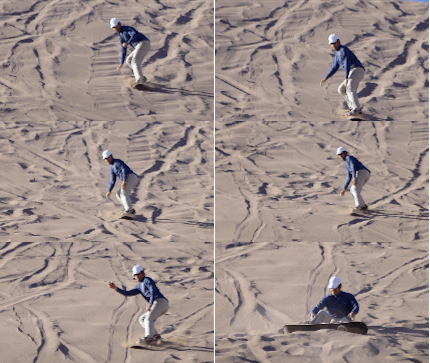
Sandboarding


Sandboarding

Sandboarding

We joined the hipster hostel crowd and tried our hand at snowboarding…oops … sandboarding.   The usual outside the US safety briefing was given before our first run – “You can not hurt yourself.”  So off we went.   With your feet strapped into a snow board you tilt in/out for turns and speed control.    However, if you don’t mind full speed, skip lesson one and you will enjoy a demonstration of gravity.  I can speak from first hand experience that full impact with the sand does not hurt.   Gail did a great S turn on her last run.   The only flaw is that before every run, you are required to hike up a large sand dune.   The hipsters were hanging out on the sand dune cheering for good runs and laughing at good crashes.


Read full story  · Comments { 4 }