Archive | Boat Systems and Gadgets RSS feed for this section

Boat building progress


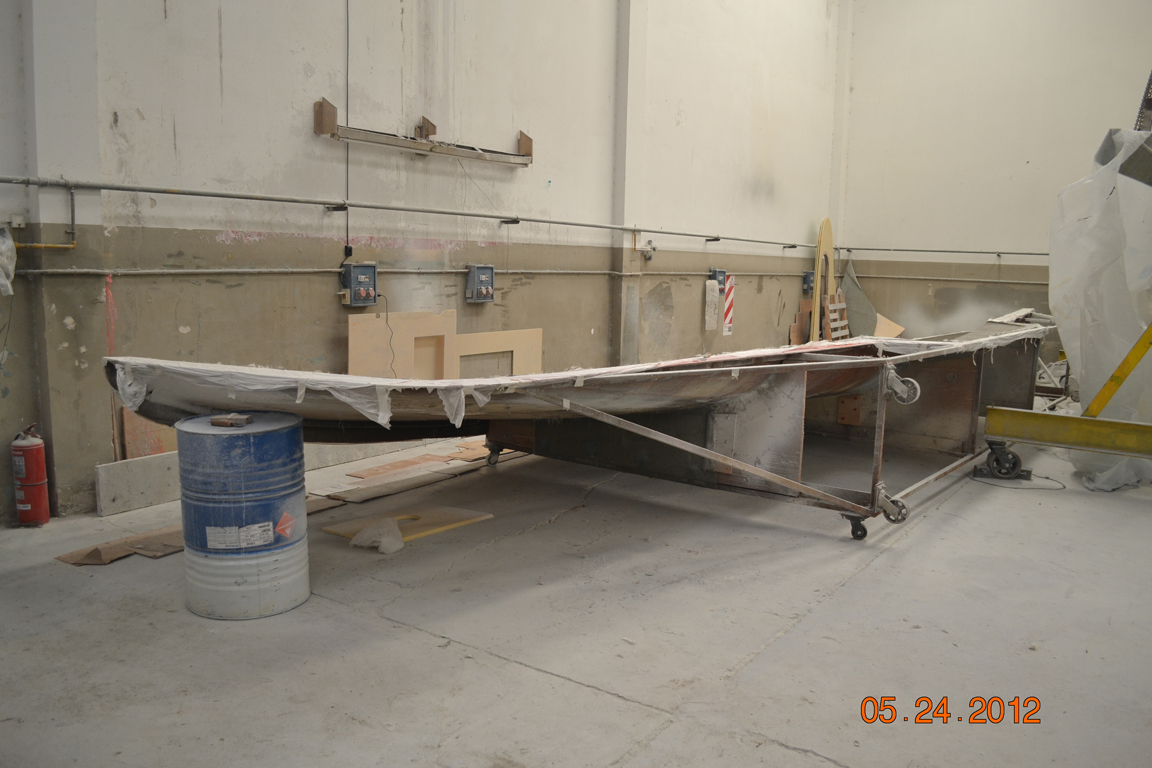
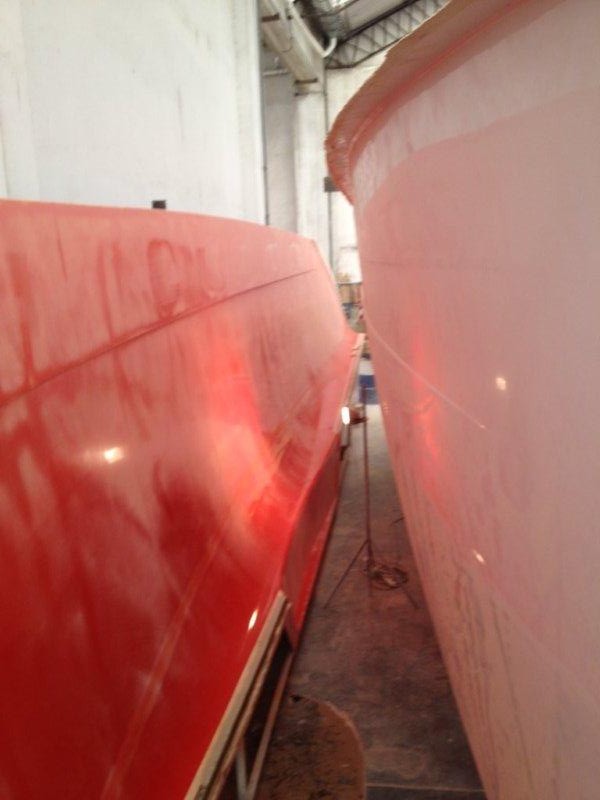
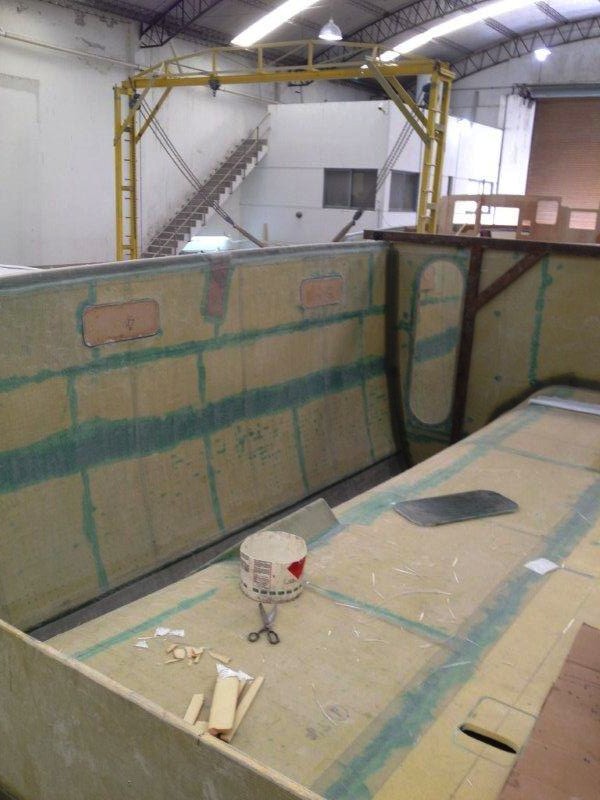
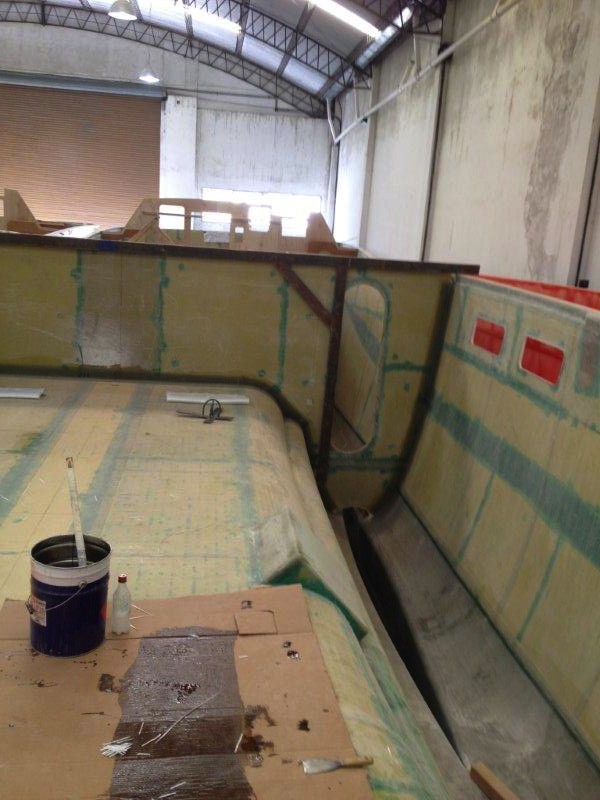
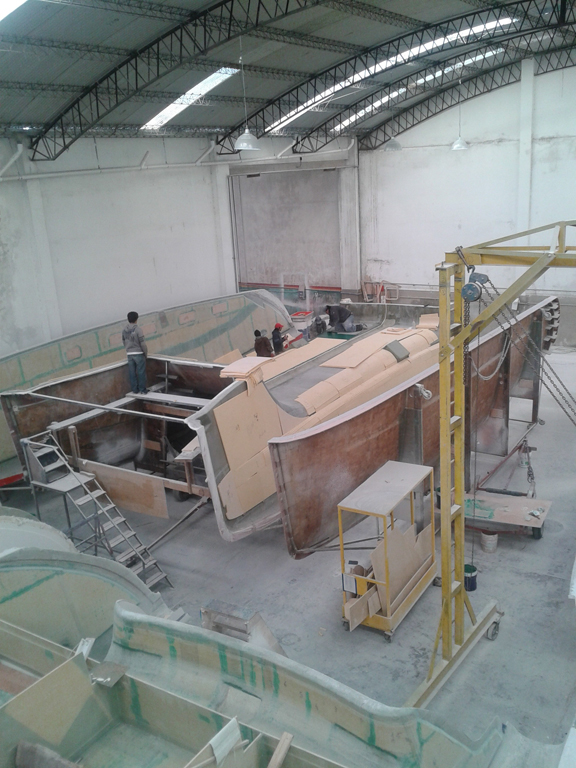
Molds being joined

Are you part of the 1%?  The rare minority that can visualize a house when it is only 2×4 timber.  Among the tools, materials, and trash, can you visualize the roaring fireplace in the winter time?   I am in the 99% that just look at the mess and make wildly wrong assumptions.   The living room is too small or the ceilings look too high.    My lack of visualization skills for half-built suburban homes extends to an inability to visualize half-built boats.

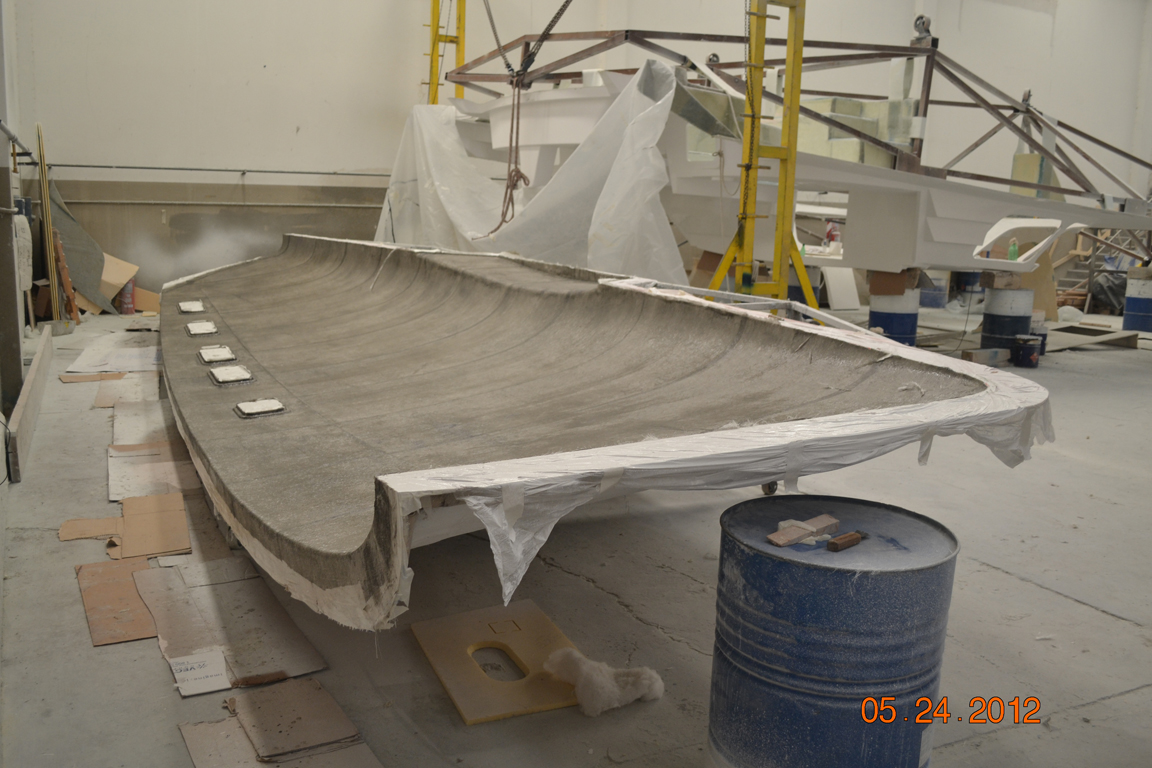
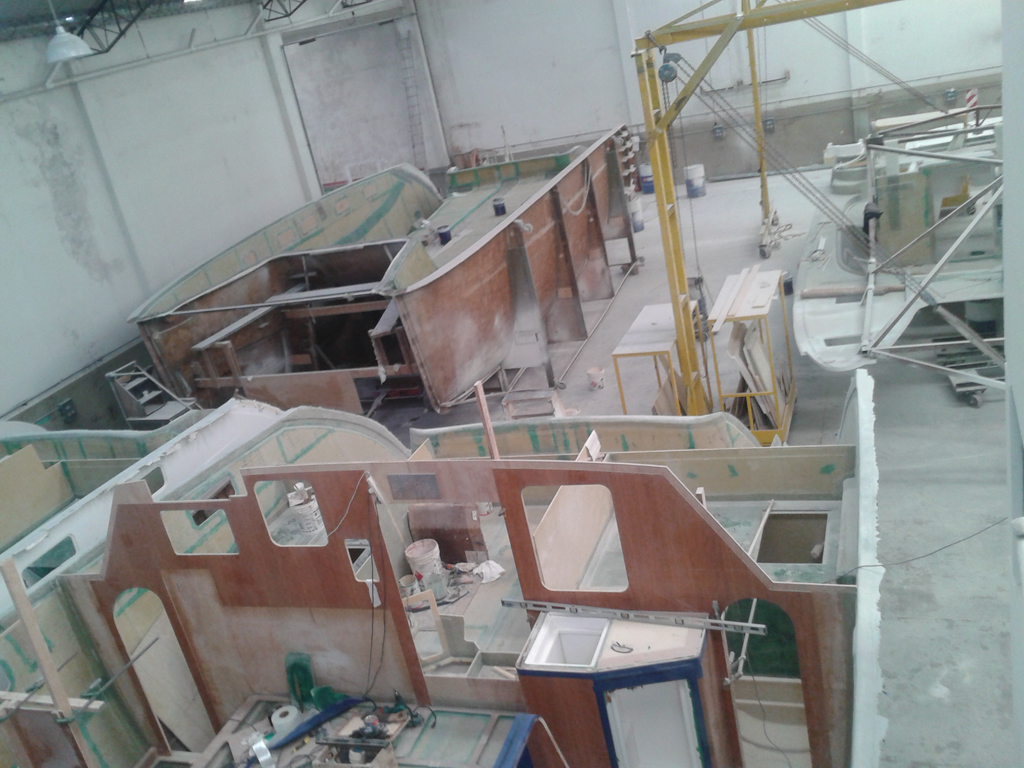
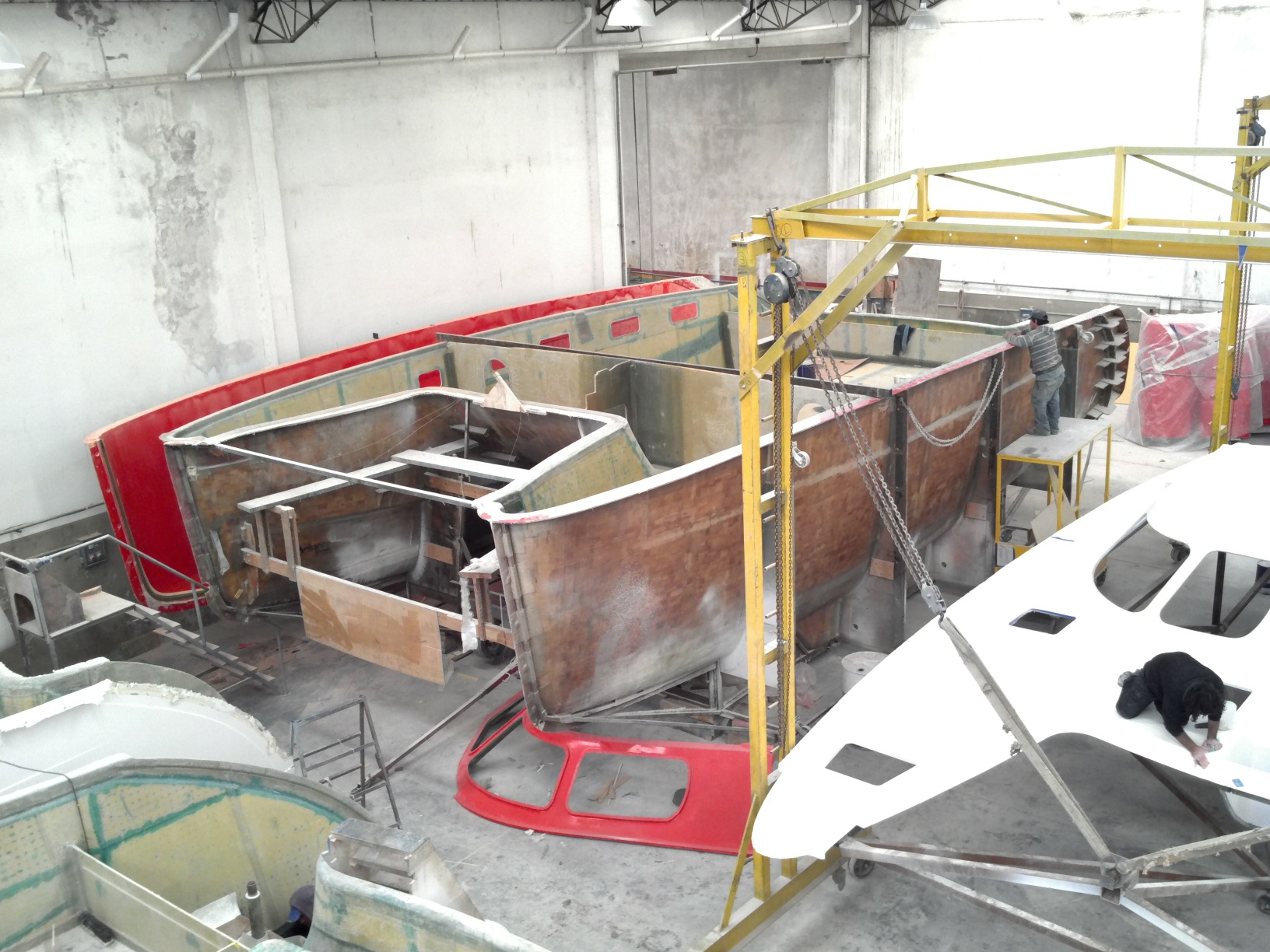
Here is my version of how they built an Antares-do not try this at home without adult supervision. It starts with the molds that are used on every boat.  The molds are based on the same technology as is used in the cupcake industry.  Pour in cupcake dough, bake, and out pops a cupcake.   The problem is that a catamaran is too complex a shape to use just one mold so it is more like a tiered layer cake.   Use a variety of molds to create a complex shape and bond it together with icing.   I sure hope they use something stronger than icing to bond together Hull #44.

The workers clean the molds and wax them so that the Boat (cupcake) pops out easily after baking.   The boat’s “paint job”  is installed first by applying gelcoat to the mold.   Then layers of fiberglass and foam core are installed via a complex process called vacuum bagging.   It is okay if you are confused since I have no idea what I am talking about.  I do know that if I see more  2 x4 ‘s, the splash date for my cupcake is coming soon.  Did I mix too many metaphors?

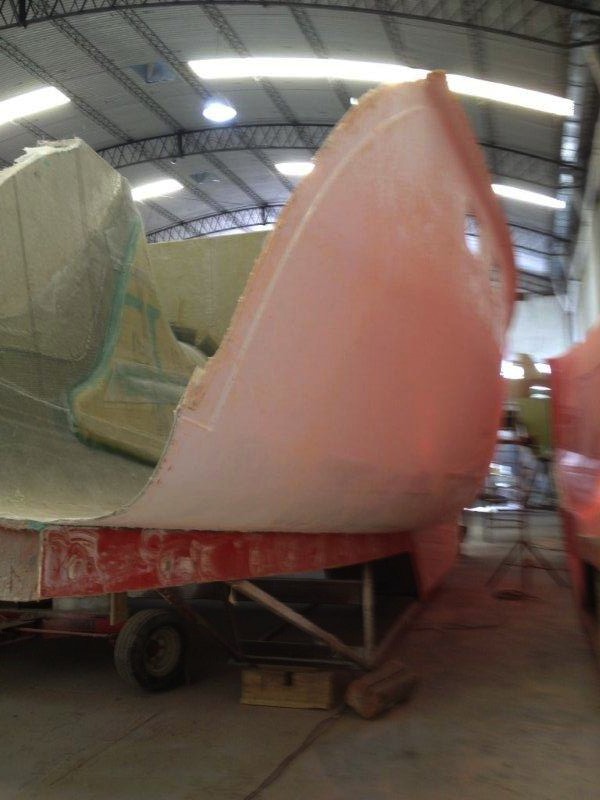
The splash date for the boat is a year away but there is plenty of variance in this estimate.   The first photo shows the hulls before the two mold pieces have been connected.  Go get the cake icing.  The sand color material is the foam core to the boat.   It is  better than the the commonly used alternative, balsa.  Balsa is inferior as a core since it can absorb water and is more complex to repair.

In one of the photos there is a more complete boat in the foreground which is owned by a gentleman from Malaysia.  He is looking for crew from Argentina to Malaysia.  Not a short trip but if you are interested and a real sailor suppose you should drop him a line. — Jason


Comments { 0 }

Ask your boat builder

I am about to write a note about boat maintainance and yacht design.    Before writing this note I wanted to describe my qualifications.  None.   The best advice I can give the reader is to go buy a book.    My impetus for writing this note was a great class Gail and I took in Hamble, UK on sailboat repair.   I can not sing enough praises for this course.  Its ideal for those that  know little and want to learn a framework for understand a bluewater cruising yacht.    During the 7 day class I took copious notes which then became an email which I sent TED, our boat builder.   He took the time for a detail reply full of time proven advice with a bit of his quirky humor.

The best part of the class for an Antares owner was that the teachers repeatedly laid out what they considered the most reliable design and it matched what Antares had installed.  There still was a bit of debate which makes the exchange a fun read.  May be some of our readers will join the debate?

TEACHER:  When motoring for a long period the water tank will be over pressurized.   There should be a pressure valve that dumps water in to the bilge.   If this bothers you then run a tap once and while to avoid the hot bilge.
TED:  The water system will never be overpressurized. The engine runs at 180deg F. internally and sends some hot coolant to circulate through the water tanks,unless the water boils for some reason, there is no source of ‘overpressure’. The coolant looses some heat on the way there and the tank itself looses some heat also, but presuming it didn’t, the water in the tank can never exceed the coolant’s temperature (180). The pressure relief valve also has a temperature relief function and is the standard design for every domestic water heater. In the event the engine overheats and is run long enough (a much more apparent issue), theoretically the water in the tank could also get overheated and release the valve.

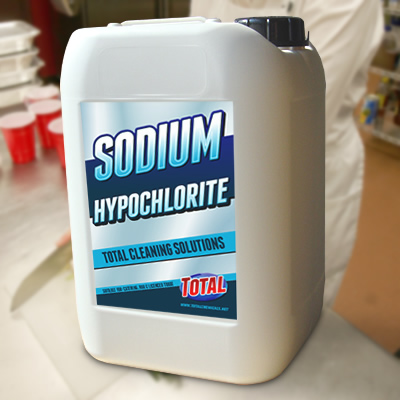
JASON:  Is it safe to use hyper chloride bleach in our fresh water system?

Sodium Hypochlorite

Sodium Hypochlorite

TED: I presume you mean sodium hypochlorite – (chlorine bleach or bleaching agent) or calcium hypochlorite (bleaching powder or swimming pool chlorination compound)? You are making a strong oxidizing agent when you dissolve this stuff in water so keep in mind you have aluminum tanks which will eventually reach some finite lifespan many years down the road, but no need to get there avoidably earlier. (BTW; pop cans,beer cans, beer kegs, milk trucks, water trucks, etc. are all made of aluminum, no need to get concerned on that account.) The amount of chemical you need for water purification is normally quite low, don’t go crazy, the water will be unpleasant in any case if you do. Occasional flushing or the use of specific water purification tabs may be a better idea than guessing at how many jugs of Clorox to dump in for good measure.

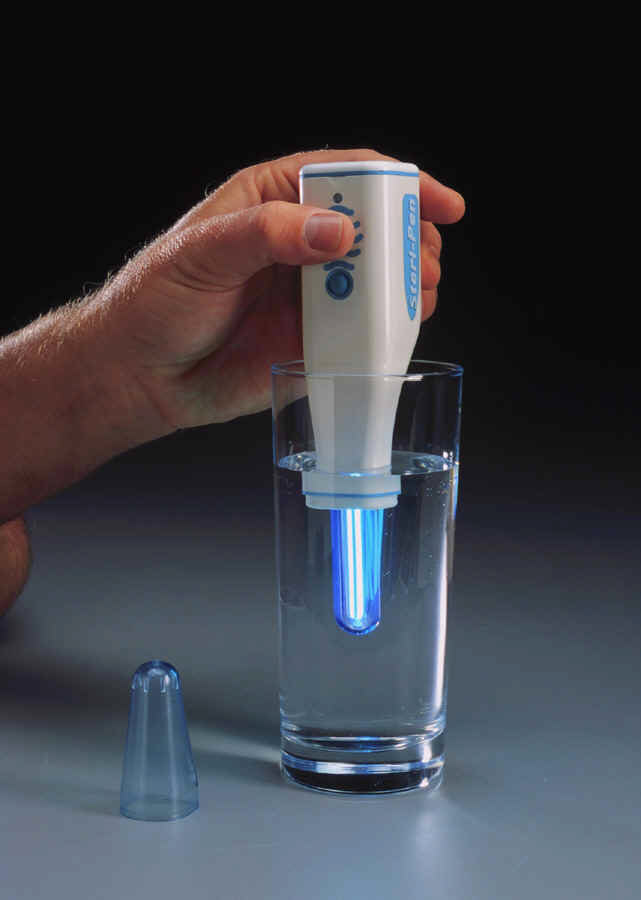
TEACHER:  You should have a UV filter in the water system.

UV Filter

UV Filter

TED: These are another power consumer on board, and yet more technology. I like the idea of keeping the water clean before it goes in as a policy, the watermaker is very good at this.

JASON:  Is the water filter also the accumulator for keeping smooth pressure in the water system?

TED:  No. An accumulator works by entraining a body of compressible air in the system, (fluids are not compresssible) to act as a pressure storage device. As the filters are filled with fluid, there is no compression taking place. For many years now marine fresh water pumps in our size range have been ‘smart’; they do not require accumulators and pressure switches, the decisions being made by internal pump electronics. On the whole this has worked out to avoid extra componentry but the pump itself has become more of a ‘replacement’ item rather than a serviceable one, thanks to the electronics.

TEACHER:  When leaving the boat for a while reduce the pressure in the water system to be kind to the system.

TED:  If you like. The pump should be off so you don’t inadvertently empty the tank but the equipment itself doesn’t appreciate ‘kindness” and it is designed for the duty in the first place.

TEACHER:  Clean your shower sump frequently especially if your wife has long blond hair.

TED:  Shower sumps are noted for their propensity to smell and require servicing, they are widely avoided in favour of directly connected pumps as per the 44 installation.  By this means, no stagnant water or accumulations entailed.  (I gotta ask; my wife has long dark hair, is that OK d’ya think?)

JASON:  Is there a filter for the air release from blackwater tank?
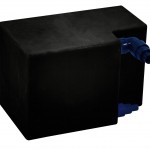
Blackwater Tank

Blackwater Tank

TED:  There is no filter. The tank vent is best left as unobstructed as possible to avoid inadvertently pressurizing the holding tank. The filters are rendered useless if you ever get them ‘wet’ with tank contents and certainly won’t pass any overpressurized contents. This may seem unlikely but procrastinating on emptying the tank is common as are the consequent vent blockages. Filters are used to avoid smells escaping when flushing, a problem greater on smaller boats and vent location specific. You can install them if you want, I wouldn’t unless I had an identifiable problem and it trumped the possibility of someone blowing a holding tank.  

TEACHER:  Dont trust your tank gauges.
TED: Holding tank guages are subject to extraordinary environmental hardships making them problematic, but usually fail ‘full’ rather than ’empty’. Even sight glasses get munged up eventually.  Part of boating joy.

TEACHER:  Good to have a check valve on the pump out pipe from the holding tank.
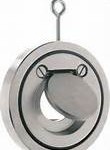
Check valve

Check valve

TED: No it isn’t. No check valve design is trouble free and that one would have no practical function other than creating another blockage and service point. It would also preclude shooting fresh flushng water back down into the tank when pumping out.  This is not standard practice nor any use that I can see, the industry applies Occams Razor to any hardware associated with turds.

TEACHER:  UK boat building law requires a flood test?   Is Antares required to do this test?

TED:  No, the bilge pumps are tested.  Universally, certified lifeboats are flood tested to confirm reserve buoyancy and rescue lifeboats are roll tested, perhaps this what is refered to. In North America, if a vessel is small enough to require ultimate reserve buoyancy (typically open recreational boats) then it is tested. I don’t know what bureaucracy has inflicted on harassed UK builders.
There is a reserve buoyacy calculation required by the CE for ocean going catamarans that was done for the 44 and in theory it floats about at deck level if completely flooded, not likely to be upright however by that time unless dismasted, (don’t try this at home).

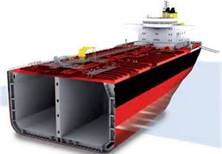
TEACHER:  A bunded boat is one where a spill of diesel is lower than the bilge so the bilge pump does not pump diesel into the harbor when your tank is leaking.  I think the Antares is bunded which may be EU law soon?
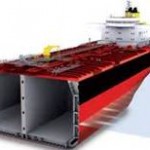
Double Hulled

Double Hulled

TED:  The bilge being the lowest part of the hull, I don’t see how you can be lower, some confusion here I think. Fuel barges in some locations have come into some recent regulation consideration, and that is the only reference to ‘bunding’ that I know of outside of marina operations that are required to have spill walls to contain boat washing and drainage operations. Double hulled tankers may be considered as bunded I suppose. By definition, bunding would require a containment system equal in volume to the potential container contents, a serious impracticallity in any boat I can conceive of as the fuel system itself is more likely to leak than a tank. However the battery is contained in such an arrangement and the engine has a separate sump under it that will contain leaked fluids up to a point before spilling over into the bilge. Oil floats on water and in the event you get a lot of water plus oil in the bilge, the water will be pumped off the bottom first, stop pumping if you see oil discharge. An automatic pump may be set ‘high’ to avoid pumping the last of the bilge contents overboard (oily stuff), but this is what you do for old slugs with chronic leaks.
Whole institutions exist to interpret existing EU boat ‘law’ (CE approval regs).  Rumours and misinformation abound, believe it when you see it.  

JASON:  Can our engine raw water pump be a bilge pump in an emergency?

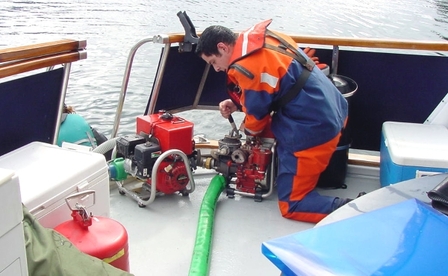
Emergency Pump

Emergency Pump

TED:  Not readily. Such an arrangement requires that the cooling water pump suction line be valved to permit a second draw point with a hose to the bilge. The engine cooling system is most vulnerable to problems in the suction circuit. The pump impeller will tolerate a lot of contamination if it is entrained with lubricating water but it will fry very quickly if dry (aeration and blockage). Fooling around sucking out bilge water in an emergency may quickly leave you with no engine and a flooded bilge. This may be an acceptable risk in some situations but when/how often will that occur to justify a permanent installation (I can think of no instance after 40yrs.)? The bilges are small in a catamaran and the Antares has a number of protective compartments making the imagined scenario rather remote but in the event you elected to give it a try, you could close the seacock and pull the hose off to let it lie in the bilge (make sure there is no debris or rags etc. floating around) then run the engine under while watching the exhaust water flow (probably not where you want to be). Some of these kinds of mechanical provisions are applied to boats that are not sensitive to excesses of equipment, weight or complications and are presumably monitored by watch engineers. You have to do a cost/benefit think and realize the ‘cost’ part isn’t just money but reliability and cluttering up otherwise servicable equpment installations. Simplicity is your real friend in a contingency situation, not complication.

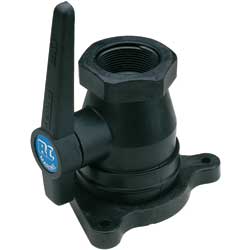
JASON:  Marlon seacocks are not allowed in EU boats, only metal ones.   However, I like the fact that our seacocks are exempt from electrolysis.   Are there special tips for these seacocks other that frequent operation?
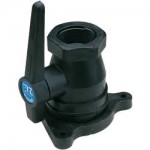
Marlon Seacock

Marlon Seacock

TED:  “Forespar is pleased to announce the ISO (International Marine Certification Institute) 9093-2 Certification on all Marelon integrated plumbing systems valves (’93’ Series). The Forespar Marelon Ball Valves and Thru-hull fittings meet and exceed the ABYC H-27 and ISO 9093-2 Standards as presently written in all respects.Note; ISO is the informing body for the CE approval system which regulates EU boats. ”   Blah blah
The vaste preponderance of problems I encountered in servicing boat seacocks was related to bronze construction which corroded, leaked, seized with great predictability and was very heavy.  Composite sea cocks and piping systems were a blessing gratefully received throughout the boat industry.  Nostalgia for the old stuff you could rain with hammer blows doesn’t convince me otherwise. 
The ‘seize rate’ for composite seacocks wouldn’t be anything more than that due to growth, at least corrosion isn’t a factor.  Forespar doesn’t recommend any lubricant as a requirement but I would probably smear something inoccuous like vaseline on them to give the sea creatures a tougher surface to grasp, for a few days anyway.  I am sure there is a plethora of opinion on the internet, but use your own judgement.

TEACHER: Watch out for a calcified escape valve on the water heater.  Kaboom.

TED:  There is no reason the water heater tank relief valve should be any more prone to problems than the one on your domestic water heater, which you last took apart and examined when? Has your boat or domestic water heater exploded recently? ever? 

TEACHER:  Have a bilge pump alarm.

TED:  The light shows on the switch panel when the bilge pump is running and you can probably hear it if you are sailing.  I presume the thought is for a bilge level alarms, which can be installed if you are worried.  CE regs are leaning that way but the vast majority of floating boats don’t have dedicated bilge level alarms so this is a precaution.
Dyform Wire

Dyform Wire

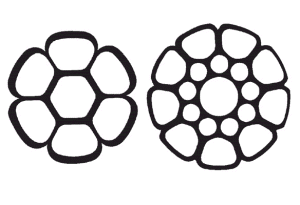
TEACHER:   Comments on rigging.  Use a bike helmet for climbing the rig.  For super safe climbing use a  bosuns chair and a descender on a second fixed halyard.  Ormiston seizing wire is great for mousing shackles closed.  Dyform wire is stronger than similar shaped traditional wire.

TED:  Antares shrouds are Dyform wire.  This is an engineering decision and not an arbitrary choice.

How do our shrouds attach to the mast?

TED:  The shroud connections are Selden’s engineering.  The systems used are common to all modern spars, this is Selden’s online catalogue which shows all the details of construction  .  The Antares main shrouds use T ball toggles.
TEACHER:   More rigging thoughts.  Place a wear washer on the connection of the boom vang to the tang on the mast to track wear.  Halyard exits on the mast should be metal not plastic.  Chromed bronze is best with stainless steel.  What metal is the shroud adjuster made of?  
TED:  Stainless ends with chrome plated bronze body is standard construction for cruising turnbuckles in our size range.  Stainless on stainless threads will gall and seize due to the plastic nature of the included nickel in the alloy.  When handling the rigging off the boat, don’t drag the turnbuckles along the ground as it will scratch the chrome plating on the body.  The forestay has a bronze/stainless threaded adjuster within the Furlex gear. 

Harken Rig Tune

Harken Rig Tune

JASON:  Digital Harken gauge for rig tension

TED:  Not neccessary, just tighten according to the Selden manual supplied.

TEACHER:  Do not stick a screw driver to adjust shroud adjusters, instead use a wrench.

TED:  In our size of vessel, you will need a 3′ lever rather than a screwdriver or wrench.  ‘Wrench’ is a vague term, lots of them of the toothed variety would destroy the turnbuckle body finish.  Use some judgement.

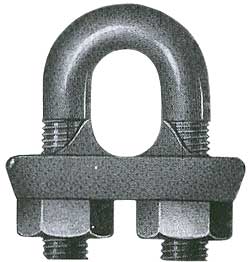
TEACHER: Bulldog grips and some extra rigging wire are a great back up.
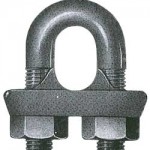
Bull dog grips

Bull dog grips

TED:  Can’t think of what for exactly.  The standing rigging is not a crude arrangement you can ‘patch’, the working loads are truely enormous and any failure of the standing rigging will not be repairable with bulldog clamps.  The proper cable ends are swaged under tremendous pressure for a reason.  You can’t practically handle an arbitrary length of 12mm Dyform, or justify the extra weight, just in case.  If you sense an imminent failure you are better to jurry rig some of the running rigging to support the mast then motor for port.   If you are tempted to use bulldog clamps, realize that if they manage any grip at all, they will permanently deform the lie of the wire and neccesitate its replacement in any case.

JASON:  A hacksaw is great for rig removal,  cutters will not work.

TED:  You should try to hacksaw through a piece of hard lay standing rigging wire some time.  Can’t even imagine trying to do it on a wave tossed deck in a storm. Maybe better to carry a cordless mini-grinder if you imagine you will be in a disastrous situation.  Commercially, cable is cut by hydraulic anvil cutter, ratchetting parrot-nose or grinder as far as I know.  If you really want to carry a tool you will very likely never use, I am sure you could go and see what the local rigging shop is using for 12mm Dyform, it won’t be a hacksaw.
You should have a hacksaw and extra blades on board in any case for more pratical purposes, so no loss there.  
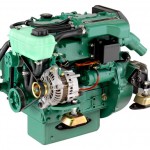
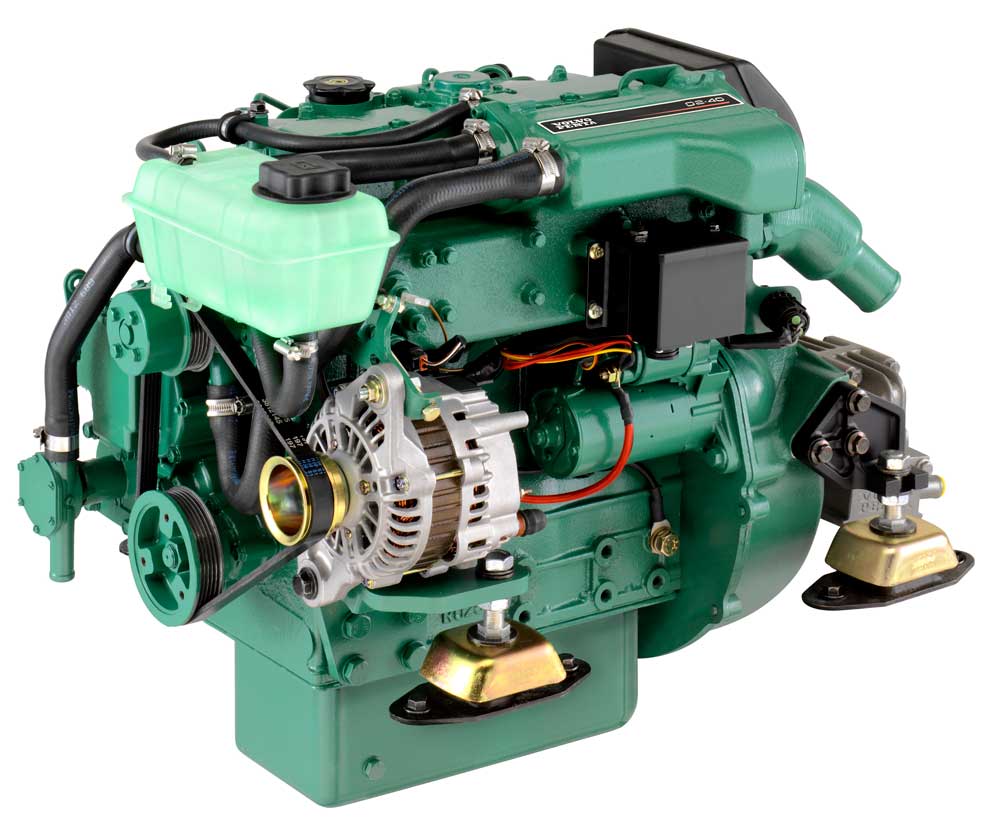
Volvo D2 40

Volvo D2 40

JASON:  Do we have direct or indirect fuel injection?  (indirect is less noisy)

TED:  T’aint that simple.  I am actually a certified diesel mechanic (shhh, former life), Some of the noisiest engines I ever worked on were indirect injection, they were also harder to start.  Yanmar or Volvo or whoever decide these things and we select based on performance, size, weight, serviceability. I would not make a decision based on second guessing the combustion engineer. However, from the parts diagrams and geometry apparent therein, I see no pre-combustion chambers in the Volvo D2-40 so I beliebve it to be direct injection, the combustion flame is propagated in the cylinder directly above the piston.
TEACHER:  A run away engine can be stopped by fire extinguisher.
TED:  In the very unlikely event, just stuff a plastic bag or a rag over the air intake.  Fire extinguisher chemical is very problematic and halon is poisonous when run through an engine.   Don’t lose any sleep over a ‘runaway engine’ unless you own a vintage 2 cycle Detroit Diesel, whence the concerns originated.  A diesel engine of our like has no throttle butterfly, modulation of power being purely by means of fuel control.  It is therefor remotely theoretically possible that ingested combustible fumes will run the engines uncontrollably, at no load.  Some very worn out VW Rabbit diesels were known to have ingested their own crankcase blowby oil fumes after overheating and stopping at the roadside, lots of myth here but a paucity of actual events.  Modern injection pump governors have been remarkably reliable for many many decades, but don’t try any DIY. 

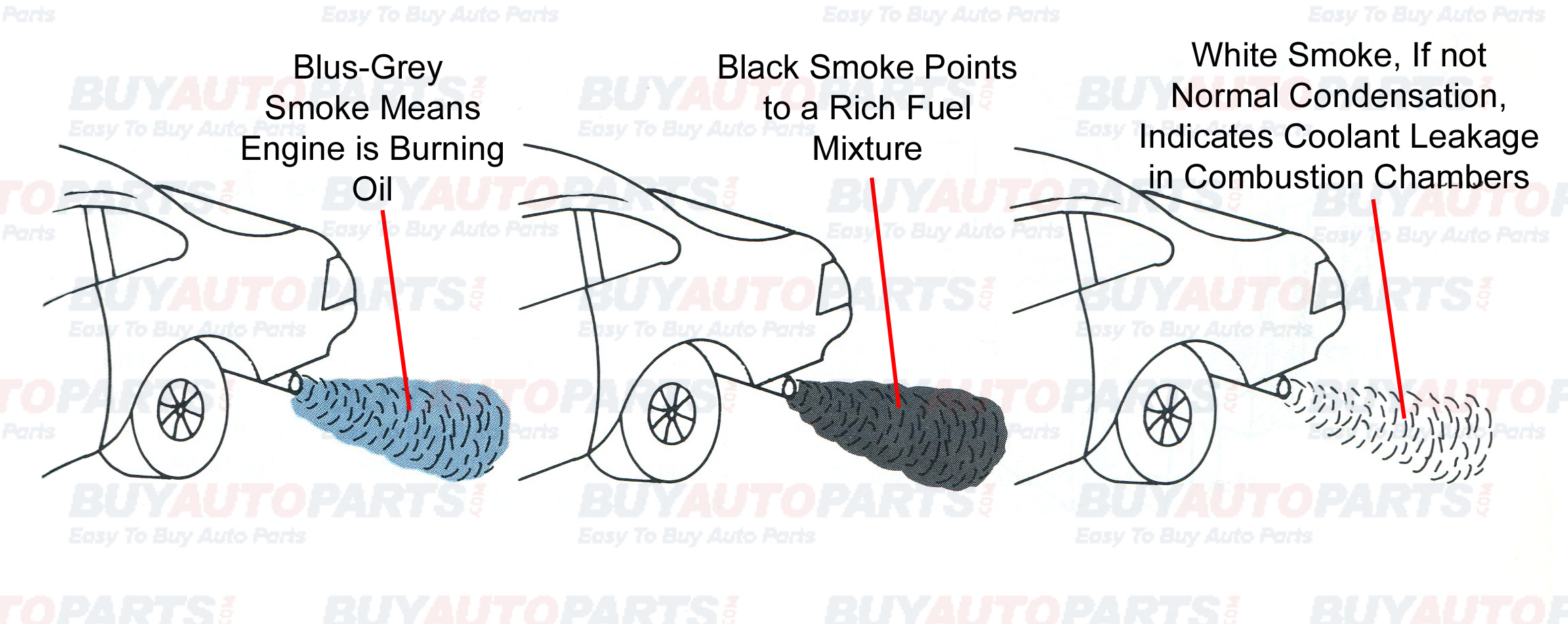
TEACHER:  Tip  blue smoke= oily burn,   black smoke too much fuel or not enough air,  while smoke= burning coolant
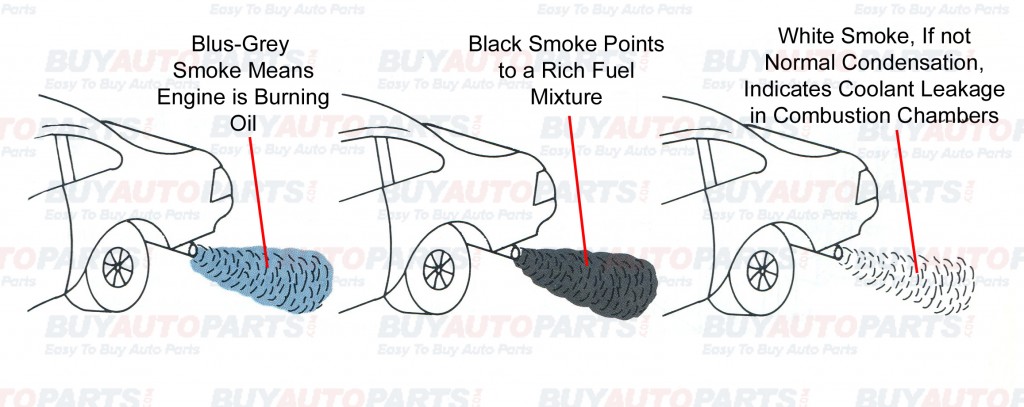
smoke colors

smoke colors

TED:  Sorta.  Unburnt diesel smoke will appear white and smell distinctly like diesel fuel.  Most white ‘smoke’ from a water cooled marine engine is harmless steam.  ‘Blue’ smoke may be engine oil if it smells like you are following a ’57 Chev.  Black smoke is hard hot burn stuff and indicates there is more fuel going in than there is air to burn it efficiently, this is overload or breathing inefficiencies due to restricted air intake or exhaust.  Overload can just be temporary acceleration or hard head sea conditions.  The condition is often accompanied by soot on the water and a smell like an old bus (Detroit Diesel again) has just pulled away from the stop.  If you have black smoke due to overload, usually it goes away if you back off on throttle a little. 
I don’t believe you could distinguish between coolant leaking into the combustion and the regular cooling water steam, it wouldn’t be ‘smoke’ in any case.  Antifreeze (the coolant) has that distinctive sweet smell that you get when your car’s heater core leaks or your ’57 Chev overheats.   
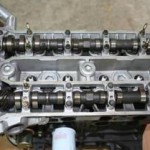
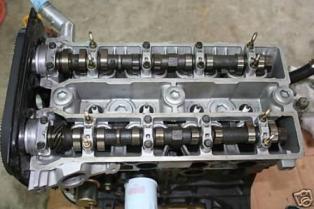
Overhead Cam

Overhead Cam

JASON:  Do we have an overhead cam with timing belt?

TED:  No thank god.  If a timing belt breaks, many engines with this arrangement will experience a conflict between their rising pistons and mistakenly open valves.  A brief dadadada and then the engine stops… 

JASON:  Do we have variable valve timing?

TED:  I can’t answer for you but my valve timing has always been impeccably regular. 
The Volvo D2-40 has fixed valve timing.  Such niceties as variable valve timing have been applied to electronic engines of larger size than what we contend with in the 44.  At some time in the future, the technologies currently impractical for little engines may work their way down, but you need a clearly defined substantial benefit to justify ther complications.  There is still a remote chance that you might be able to take your current small boat engine apart some winter in the future when the warranty runs out, and actually put it back together again reasonably successfully, unlike your modern car engine.

TEACHER:  Send oil samples away for analysis

TED:  Not neccessary unless you are a fleet owner.  The process relies on establishing baseline curves for deposits and contamination over an extended working life for the engine.  The benefit is primarily the reduction of expense by identifying non-speculative oil change intervals for engines that work non-stop and contain typically 10 gallons of oil $$$.  There is also a possibility of identifying any precipitous changes that would indicate arising internal problems, the benefit here being very dependent on fortuituos sample timing.  Engine applications such as ours just do not justify the process, but if you really wanted to participate, you would have to send in samples derived from a test cock on the engine (not there now and another real liability) from wherever you are in world.    

TEACHER:   Avoid oil  additives

Oil Additives

Oil Additives

The oil grade numbers are viscosity related and the W doesn’t mean much to us unless we are boating in the Arctic.  The other letters are additive designations.  Here is a ‘simple ‘ reference 

Just use oil specified for diesel use on the container, (C*-* something), the additives are appropriate for the type of deposits unique to diesel combustion.  Our engines are not turbocharged or even especially stressed but  we definitely want the appropriate additives; they are there to temper heat related viscosity changes, dissolve deposits, suspend particles for eventual entrapment by the filter, neutralize acids (carbonic and sulfuric) formed from combustion products, protect against corrosion etc.  Follow the engine owner’s manual recommendations.  There is no reason to second guess this stuff.
TEACHER:  After changing the impeller, add water to strainer and if no water coming out then hit revs to blow out air bubble.
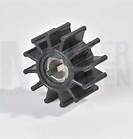
Impeller

Impeller

As mentioned before, the impeller will fry very quickly if it has no water, by the time you go to the back of the boat and have look then return and look at the strainer again then go out and rev the throttle, well.. You can always put your hand on the pump and feel for heat if you suspect the pump dry.  If you do fry an impeller, the blades will be torn off, you need to find them all and fish them out of the system before installing your spare.  The air bubble in te strainer will work its own way out if you see flow turbulence indicating pumping.  The lid seal has to be good to prevent air being drawn in, also an impeller impediment.

JASON:  Do we have gravity check (non return) valves to keep air bubbles in a define portion of the fuel system?

We have the fuel system as recommended by the equipment manufacturers and no installed check valves.  Fuel check valves are spring loaded and by their nature impede flow, both suction and pressre.  The most likely thing to stop your engine is an impediment to flow or aeration, both of which problems are exacerbated by check valves.  Some engines mounted high above their fuel tanks can draw air back up their return lines over a period of time and become hard to start, perhaps this is the source of this item, otherwise it makes little sense, the fuel system should be free of air bubbles on the suction side anyway.  Engine manufacturers include such flow control as they need in normal circumstances (us).  

JASON: Do we have baffle plates in the fuel tank

TED:  Yes, they are a structural neccessity.
 
JASON:  Can we see a core sample of our boat?
TED:  When you are in the yard, ask for a cutout from one of the hull openings or thruhulls.


JASON:  Have owners asked for an ultrasound?

TED:  No, I don’t know what they would be expecting to find in a new boat. 
TED:  Jason, all your questions are reasonable but I think you need to keep in mind that the pleasure boat industry is fraught with a surplus of enthusiasm for ‘opinion’ .  It lacks the hard definitions and financial rationale demanded by industrial endeavors so it tolerates a lot of half baked stuff, posturing, dubious advice and marketing bullshit.  For an ocean cruising boat we need to keep a skeptical turn of mind and and eye for what really counts, for our enjoyment and safety.  
All those notes…I’m thinking you should have been a marine mechanic maybe?  
Comments { 0 }

Audio Visual wiring for Two Fish

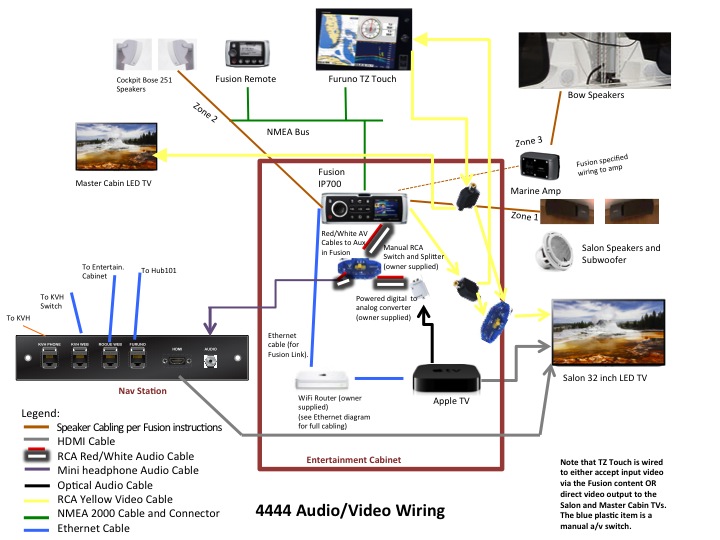
We know that one of the great joys of cruising is the ability to turn off the TV, but turning it on for a good movie at a nice anchorage can be a real joy.   Or, what about listening to your favorite music while steering on a long passage.  Or, my personal dream, having other cruisers over to watch a movie under the stars.  We will have a projector so we can watch movies on the bow at night using a screen hung off the forestay.  Please, bring your own popcorn as there is no concession stand.

To pull off this flexibility, we had to map out a few simple connections.   Now this system can play any music or video on the notebook, iPad, etc. on any screen.    I have entertained the idea of adding an inexpensive Karaoke (I just learned that this is a combination of the Japanese words for empty and orchestra) application for the iPad but am holding off since I do not want to hear myself sing.


Audio Visual wiring for Two Fish


Comments { 0 }

Internet and Telephony – Staying Connected

When we decided to move aboard, I did not want to move to the dark side of the moon.   I have already mentioned my obsession with converting our Movie collection to a digitized format. We also needed internet and phone for staying in touch with family and friends, updating the blog, and getting weather reports.

WiFi Extender

The Rogue Wave antenna allows the boat to pick up distant WiFi networks.  The only problem is mid-ocean generally lacks WiFi hotspots so this is an at anchor, near civilization strategy only.


Satellite dome and controller

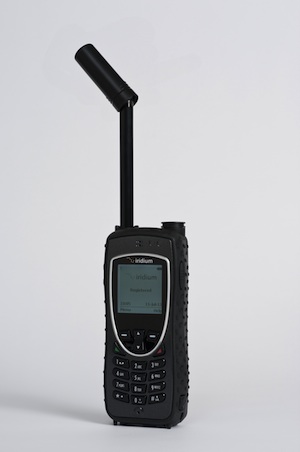
Satellite Phone with dish

The KVH V3 TracPhone is a great bit of technology.  It provides both internet access and a phone.  The install price is not cheap but the usage charges are not too bad. And the internet is the fastest small ship solution.   We bought a back up satellite phone because the TrackPhone has a limited coverage range (major holes in the Pacific ocean) and the phone is not portable, in case we need it for the life raft.


Sat Phone


Portable Satellite Phone

This phone also uses satellites so it works mid ocean.    Call us anytime to check in!   This phone is not the internet hot rod that the KVH is, but it works almost everywhere on mother earth and is easy to grab in an emergency.


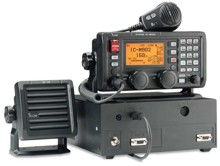
Single Side Band Radio

Single Side Band Radio (SSB)

This is one of the coolest usages of science.   This radio can transmit thousands of miles by using the ionosphere, a reflecting surface. A boat in the South Pacific can transmit to a station in Europe. Another boat can hold a conversation between the Carribean and Asia.    You get the idea – it can go a long way.   But too many sunspots and it might not work as the solar radiation can interfere with the signal.   The SSB (kind of a marine ham radio) can do a few great things for cruisers.  It can be a slow internet connection for retrieving weather forecasts, a great way to connect with other cruisers, and a way to get help in an emergency.


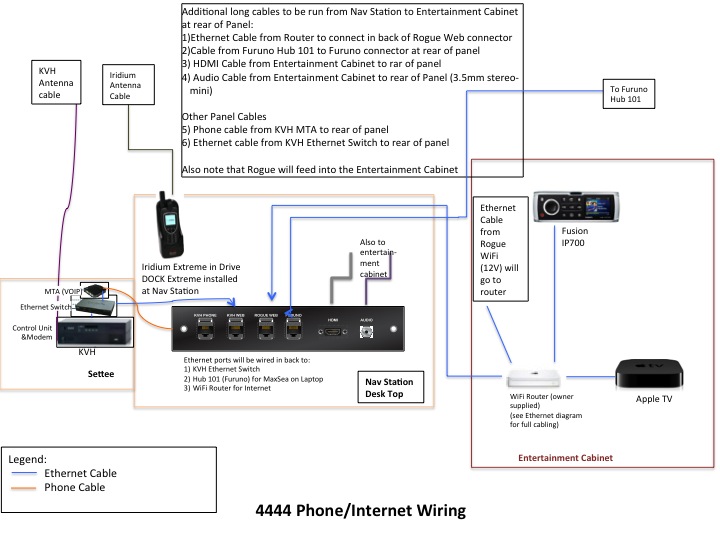
So how do you set up this huge phone and data network?   We got out a piece of paper and mapped it out slowly.   Gail’s artistic side came out in the below flow chart.   One great find was a wall plate that can hold 6 different inputs from phone to audio visual to radar. (Available at Ram Electronics).  Makes the navigation station look much cleaner.

Phone and Data Wiring Plan


Comments { 0 }

Family car is chosen

UPDATE – Argentina make life tricky
I was doing some research at the NY boat show and discovered that Yamaha has a line called “portable” and one called “midsize”. The 20 hp 4 stroke is the largest “portable” and weighs about 120 lbs. The 25 hp model is 170 lbs and is the smallest “midsize”. On physical inspection the 25 is a behemoth. We have switched to the 20hp model, of course.   Other owners have the 25 hp 2 stroke but we are getting the four stroke.   Two stroke is easier to maintain and lighter but the four stroke is the only electric start model they sell in BA.   Also the four stroke is more fuel efficient by a decent margin and I will smile being a bit greener than the two strokers.    Lets hope the cool center console does not get confused or lost when its being imported.   


Our Family Car

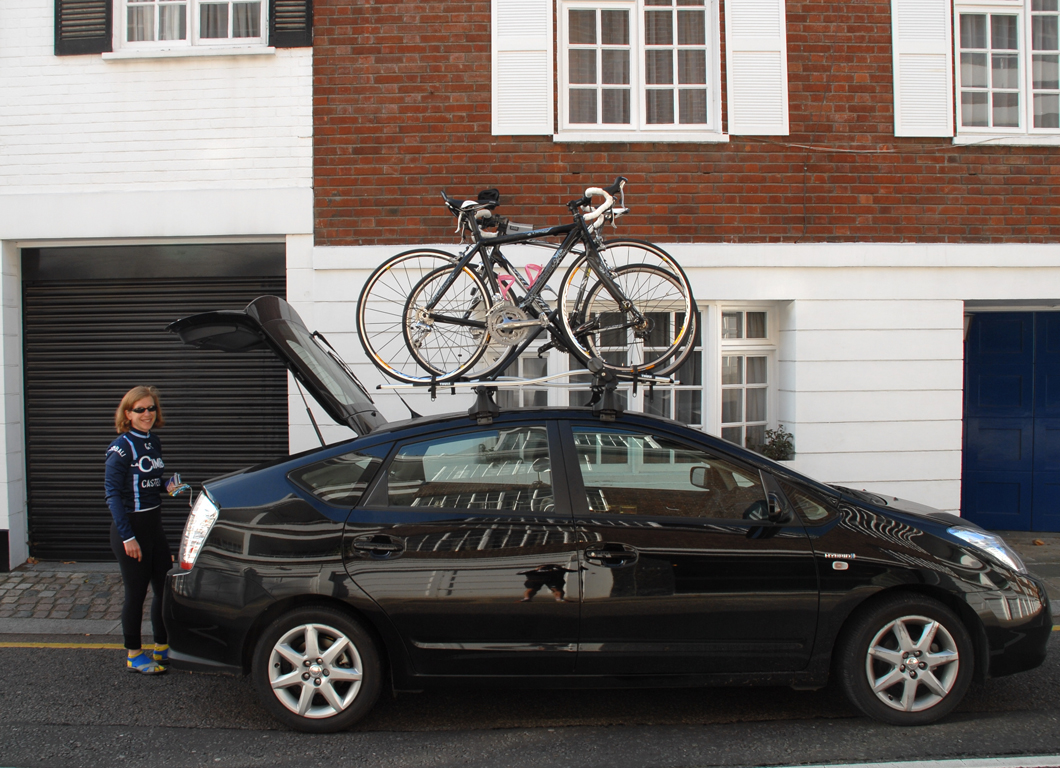
The dinghy is the cruiser’s car. It is used for milk runs, scuba trips and to take the crew out on the town for dinner. I am not really a car guy, I submit as evidence that my last two cars were Priuses (is that the plural of Prius?) and I think cars should last 20 years. Case closed – not a car guy.


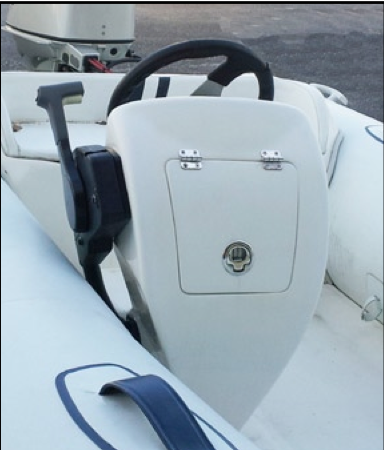
But I am a dinghy guy. I love some of the features on the larger dinghy’s such as integrated running lights, NEMA networks, pop-up cleats, teak floors and more. We will not have any of those extravagances but we did spring for a wheel rather than the tiller control. The tiller is usually just a stick attached to the out board. And a seat! Yes most dinghy’s have the crew sit on the tubes on the side which can get a bit wet. Part of me is more eager to be on the dinghy rather than on Two Fish.


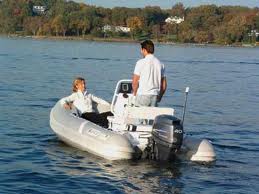
This less-tricked out dingy would work well. Heck a tiller is not so bad. Another advantage would be it’s less likely to get stolen. Our dingy may require a bunch of chain to make sure the dinghy does not float away when at dubious dinghy docks.

Simpler Dingy


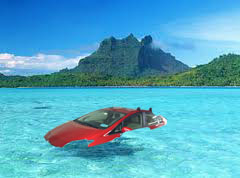
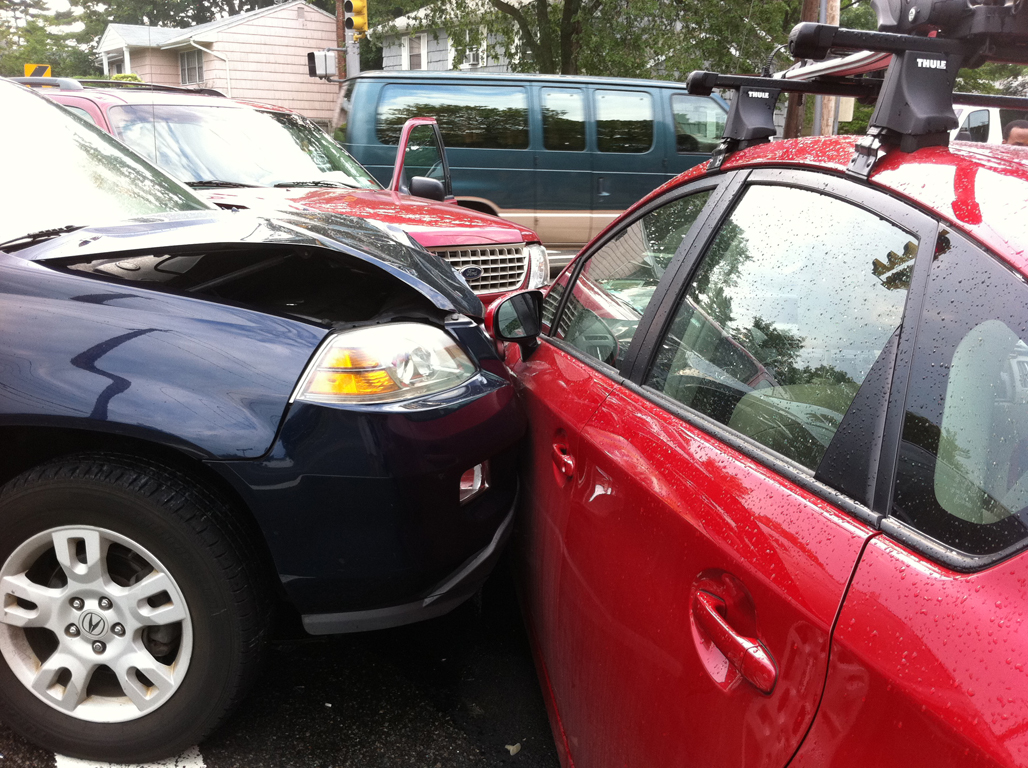
Some differences between the Dinghy and the Prius:

Snorkeling

Anchored for Snorkeling

Prius Snorkeling

Sunny Days

Sun Roof

No Sun Roof

Soft Sides

Rubber SIdes

Hard SIdes


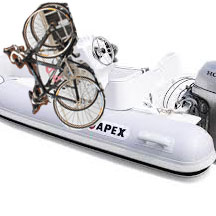
Bike Transport

Dinghy Bike Transport

Great for Bike Trips


Comments { 0 }

Vehicles on board the boat

How many forms of transport will we need in our new house?   You would think that the boat itself would be enough?
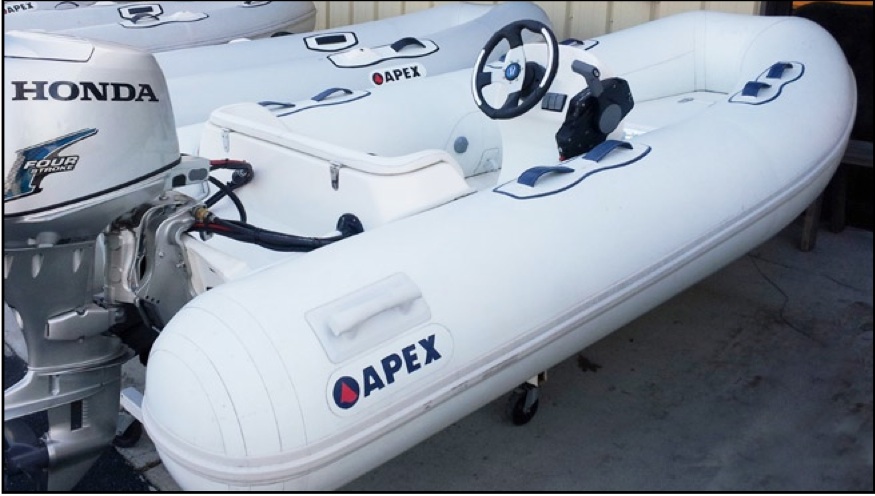
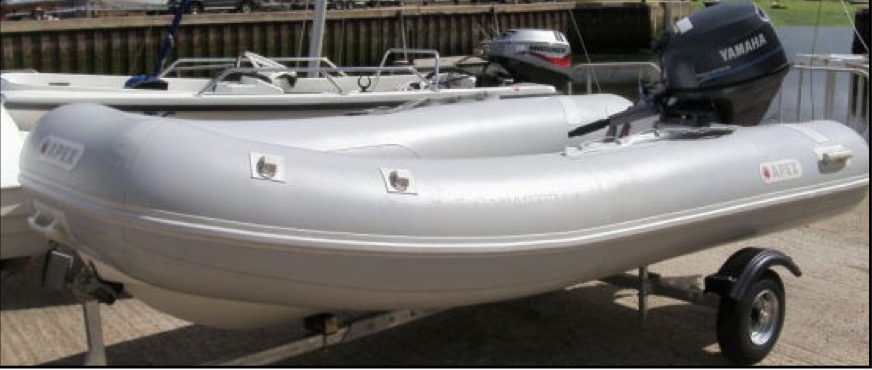
Actually, a boat this size needs a dinghy.   Two Fish is the house and the dinghy is kind of the car.  I am not into fancy cars onshore but my dinghy choice has consumed hours of my time.  The Argentines have made the process easier because they limit imports into the country.   So we think we will get spam, spam or spam as our dinghy.   We are limited to about 11 feet, otherwise the dinghy won’t stow properly on the stern.  (Kind of like a house with a small garage that won’t fit an Escalade.)   The simple choice is a dinghy with bench seats and a 25hp Yamaha engine to push it.     If you want to spend some more money, comfort can be your reward.   Electric start, steering wheel, built in running lights and a higher chance of having your dinghy walk off without your approval.   Also you might look like the guy in an Armani suit during a Grateful Dead concert.   No one will be offended, but there may be a few snickering comments when you are out of earshot.  The Argentine customs authorities will most likely make the final call.


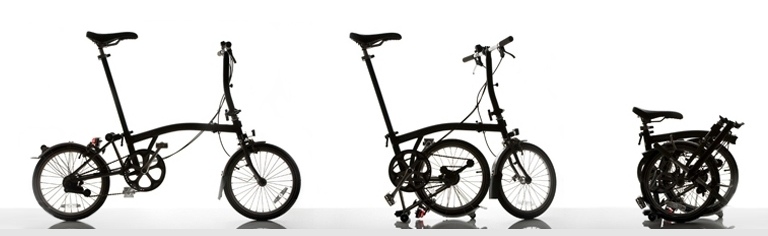
Our second vehicles will be folding bikes.   We have been all over the world on cycling vacations and wish to continue this in the future.  We have chosen Brompton bikes because they fold into a small space for stowing on-board and fit in the dingy for trips to shore.  LAST MINUTE EDIT!  Before posting this we discovered Bike Friday.   We have heard rave reviews their bikes.   So we have decided its Brompton or Bike Friday.  Stay tuned for a post in the future.


We don’t have full agreement on the next vessels yet.


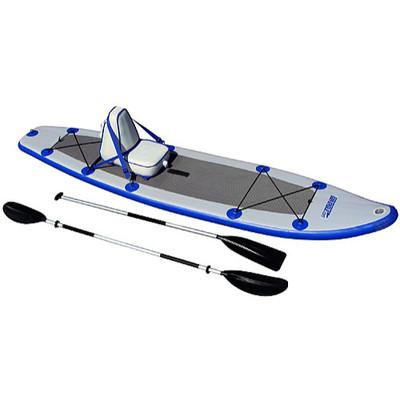
I enjoy going on long swims in lagoons and other bodies of water.  Often Gail kindly provides a life guard function by paddling near by.   This is more to protect me from speed boats than drowning and is a nice way for her to get on the water.    Historically, she has done this in a sea kayak.   But a kayak would need to be stored on deck which is a bit “hobo”  and not very seamanship like.   An alternative would be a inflatable model that is both kayak / stand  up paddle surf board.   Inflation would be easy since the compressor for the dive tanks should be able to do the work.   When going off to sea – deflate and stow in one of the forward lockers.


I have found a company that makes cool stand up paddle boards, ULI is their name.  Need to do more research but have a email chain on which model was best suited for our needs.

A kite surfer looks like a blast.   Never tried it so the plan is to take a few lessons before I buy one.    Advantage is easy stowage.   This way I don’t have to buy a surf board or a wind surfer.   Both are no fun to try to store.    Another idea left on the cutting room floor – a foldable

Foldable Tri

trimaran.   Maybe next time when I buy that 80 foot catamaran.

Comments { 2 }

Builder offers Simrad or Furuno electronics

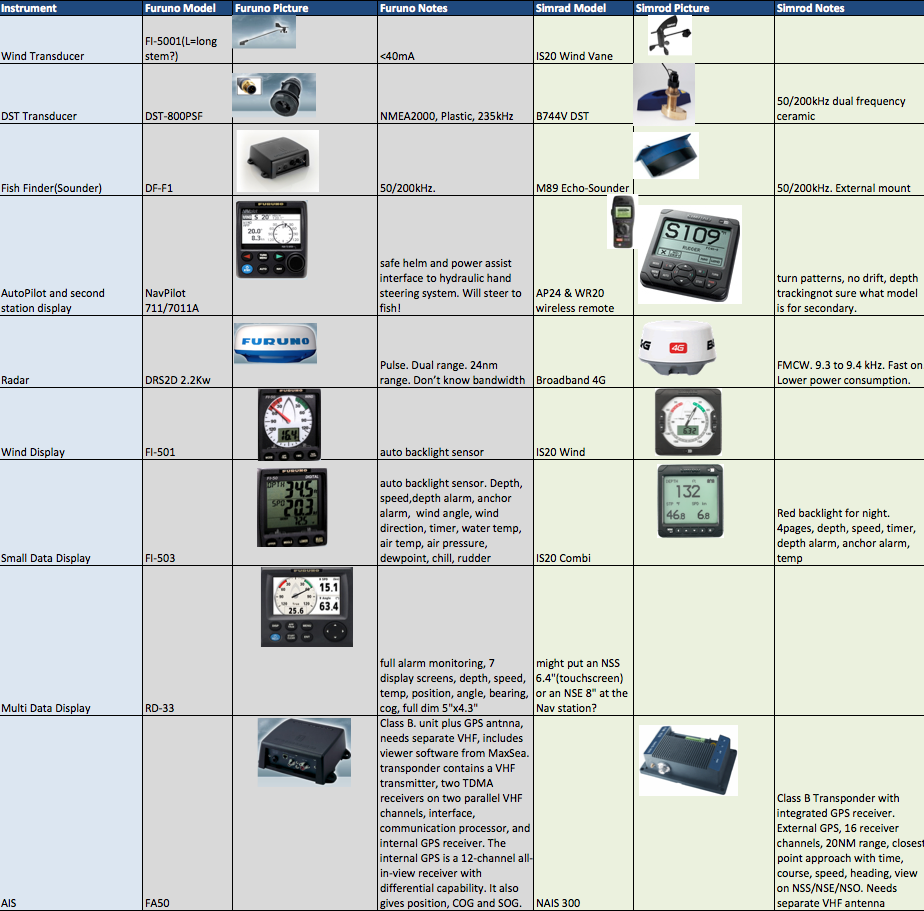
After talking about propellors for the past month, my head almost exploded when the builder told me they were thinking of changing the standard supplier of electronics.   Initially, I had thought that Furuno, a Japanese brand, with a strong reputation was my only and best choice.  But now Simrad has joined the discussion.   Here is what I am thinking after only a bit of research.   More detailed efforts will take place at the boat show.

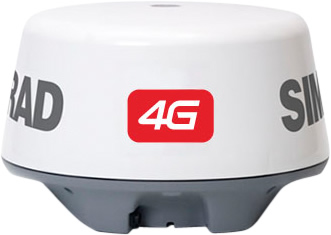
Radar

I prefer the “4G” radar from Simrad.  Pros:  Much better close range resolution  Cons: Does not pick up Racon. Furuno better for storm tracking.

Chartplotter

Simrad

It was hard not to be attracted to the upcoming TZ Touch 14 inch from Furuno. Gone were the clunky knobs. This sleek, flat, larger screen looked like a great option and we will scout it out at the Miami Boat Show.

Furuno

In the end, after a lot of time, more cruiser forum discussions and another spreadsheet produced by Gail, we still don’t know what to do. More research is definitely needed at the show.


Comments { 0 }

Propellor Whirlwind

The Antares is a great boat because the equipment is driven by customer feedback rather than a mass production mentality.   Some changes are obvious as new technology dominates old.   Some changes are driven by taste, such as rolling furling main vs traditional mainsail.  And some changes seem to be driven by Voodoo. These are the ones that get debated the most. Despite this being a sailing boat, the choice of propellors is critical when docking or motoring through huge calms.

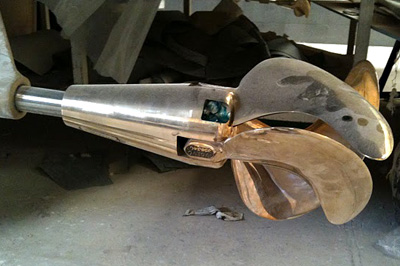
The boat has a default setting of Volvo folding props matched with the Volvo engines.   The builders did this to have a propulsion system from one manufacturer.   It is a good thought.   The problem is that the Volvos don’t bite enough in reverse.    As a novice docker of large boats I would rather have more control than less.   It was an easy decision for me to find a different option.   But as you can see from the email chains, it consumed many Antares owners’ time and thought.   It is really fun to think about every bolt on the boat as you wait for it to splash and as Gail says – the less data, the more talk.

Enjoy the sample of an e-mail chain on propellors.

Dear Ted (Chief Designer Antares),
Have not had the pleasure of your responses in some time, but I have talked to Jeff and he referred me to you for a discussion on the Volvo folding props. I am of course mainly concerned about the loss of thrust in reverse (60-70% less efficient than in forward), and that this could create some safety issues. The prop is clearly designed to function well in forward with good smooth efficiency with a minimum of vibration under power, and to provide the least resistance under sail. I understand all the arguments about the small amount of time reverse is needed, the improved sailing characteristics, keeping the blades from fouling on lines and fisherman’s nets and so forth. I get that, but this prop seems to really compromise reverse performance to the extreme. In tight quarters, with windage, sometimes a good reverse is needed. There is a video on YouTube which shows this prop moving into reverse which is very elucidating. It shows the prop collapsing to about 50% of its full diameter and cavitating under higher engine loads. It crumbles up like a spider in a hot frying pan! This explains a greater than 50% loss of reverse power and a drag coefficient that slows max engine RPM down to about 1800 at full throttle. I challenged myself to try and find another option between a feathering prop and the Volvo folding prop that would provide the sailing and forward performance without giving up reverse performance in tight places.

As I am one that likes his cake to have and to eat, I began looking around for a more evenly engineered option and found the GORI folding prop which also has a video demonstration on youtube. This is also a three blade folding design, but it rotates through fold then reverses the blade as they are redeployed allowing for equal thrust in forward and reverse. Moreover, the opposite leading edge has an increased pitch which can function as an overdrive during low demand cruising applications to maximize fuel economy. To good to be true? Well that is why I am asking the master. This seems like a superior design, at least in balance, and I was hoping to have your assessment and input into this rather important issue. Okay, time to shoot holes in my theory.

Mr X

===================================================

Mr X,

It is interesting to me to observe the changes in expectation that seem to have occurred since I started working on this stuff in the early 70’s.  At that time, sailboats generally had two blade props with blades as narrow as possible for low drag.  They worked so/so in forward or reverse at low boat speed, you had to plan your docking maneuvers well in advance regardless of which direction you were going, but at hull speed they were reasonably efficient.  Racing boats started to use simple two blade folders (Martec) which had less drag, less reverse thrust, more vibration, and a whole lot of mechanical issues associated with moving parts.  They were nonetheless widely used.  The exotic Maxprops became the thing for the high end racers and everyone was delighted with the thrust, in both directions, at low boat speed, and nobody cared if they were efficient or not, only having to get the boat to the course.  Gori then came on the scene with geared blade props otherwise similar to the Martecs, thereby solving their severe problem ‘of one blade out/one blade in’ (really).  This was what was practically available by 1980 or so and nothing much has changed beyond refinements.

Meanwhile, cruising boats stayed with fixed blade props and when a lot of along shore work was envisioned, they were frequently full three blade powerboat types which get better static thrust due to the blade area ratio but drag a lot when sailing.

There is really nothing fundamentally new on offer but there has been a change of values for cruising boats. The Maxprop changed expectations for maneuvering power though the bulk of opinion will have been be generated by sailors of limited voyaging experience. The faster sailing cats perhaps slant cruising parameters more towards what was race practice but their opportunity for extended power propulsion suggests efficiency should also be more important; a bit of a dilemma.

The fixed prop appears to have gone by the wayside for boats like the Antares so we are faced with evaluating a set of compromises in a very confused feathering/folding prop market.

The video of the Volvo prop is unfortunately meaningless, as would a video of any prop be without defined parameters.  There are also liberties taken with the interpretation of what is actually demonstrated, such as the identification of ‘cavitation’, which could be the case but could also be evidence of tip aeration.  The circumstances are much too complicated, subject to the vagaries of the installation and prevailing conditions, to draw any generalized conclusions about this prop or any other.  For example,  we do not know what the relationship is between the engine, reduction gear, prop diameter, prop pitch, designed boat speed, speed of boat through the water (in reverse), attained rpm, effective thrust at various rpm.  The blades may be expected to partially fold in reverse as they rely on centrifugal force to extend them while reverse thrust tries to fold them.  The folding is therefore actually a demonstration of reverse thrust.  The boat is most likely tied to the dock, which renders the function unrealistic as pitch effectiveness is related to boat speed, whatever it may be in relation to shaft rpm, (which we also don’t know).

There is also a video posted of a Gori prop running in conditions it which produces ‘cavitation’ in the opinion of its owner, bobbing about alongside. (http://www.youtube.com/watch?v=GYAQLwe-Dks).  If it is in fact cavitation that is being observed, that would be expected with a prop operating at less than the designed boat speed.

I consider this kind of video potentially of interest but the concomitant ‘conclusions’ are a most unfortunate and confusing occurrence. 100 yrs. of prop design development appear to be made irrelevant by the internet.  I would observe the video, but then imagine myself in the company of a dozen lads in white coats, with degrees in fluid dynamics, employed by Volvo, Gori, Maxprop, whoever, and then try to just listen.  Every company will have a marketing department that is setting the real targets in response to what is identifies as its particular customer expectations.

The Volvo prop has skewed blades (extended sweep curves to the trailing edges) which follow modern design practice to produce efficient and quiet thrust.  They are also readily serviced by a front line engine manufacturer with world wide parts support in virtually every port, which is no small matter.  They do suffer from compromised reverse thrust as do most other props.

Gori Prop

The Gori prop would appear to have addressed some issues that we have identified, some limited blade twist (absent from the Maxprop), and better reverse thrust than that associated with folding and fixed props.  There is always a price to pay and the blades have to be less than ideally shaped to pass each other at mid swing.  As a result there can be no blade skew whatsoever which is not ideal.  The ‘overdrive’ thing sounds like a lot smoke and mirrors, it would seem the blades just lodge in a particular state of partial deployment according to conditions.  It may work.  Equalized blades (Maxprop, Gori), by design compromise some forward thrust to benefit reverse thrust.

All the manufacturers claim to have the best stuff.  We chose to offer the Volvo prop for a number of reasons related to generalities, by necessity, but for your personal application something else may be more satisfactory.

Max Prop

All these low drag props are compromised one way or another, I see no reason you shouldn’t ‘pick your poison’.  The attached comparisons may help you with a decision.  You may see that they are not particularly conclusive and no manufacturer’s claims appear to 100% supported.  It is a tough call.  They will all work one way or another. This is your boat and trying on some ideas of your own is appropriate.

I have no particular favourite and would probably revert to a fixed blade dinosaur just out of pique and nostalgia, and suffer the consequences no doubt. (Curiously, nobody seems to slag their fixed props on the internet.)

Regards,

Ted


Comments { 5 }

Annapolis Boat Show 2011

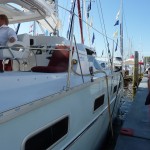
Antares 44 “Blue”

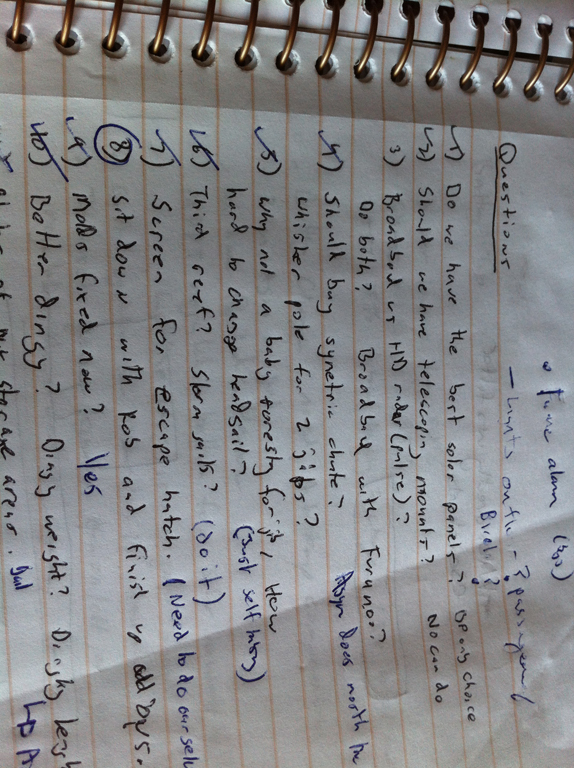
Notebook full of questions

When buying a house, the first visit to your eventual home is uneventful. It is not until the second or third trip, when you are pretty sure that this is the one, that the detailed examination starts.   This was also true for our choice of the Antares.   The first time we saw her was at the Miami boat show. The second time was at the Barefeet Party in Rhode Island, where we were focused on the speech that Erin and Chris  were giving. Now in Annapolis, the third  time was our chance to really get to know her. We had studied all the photos on the web 100 times but there is nothing like seeing a boat in person.  We had many pages of questions for the builders, the owners and the boat.  After 3 days, people had learned to avoid Jason and Gail because they will ask you a question of some odd boating sort.

In the 1960s chrome sold cars,  in the 1990s drink holders sold cars but what sells boats to the crew of Two Fish?  Let’s see some of the features that caught our eyes.


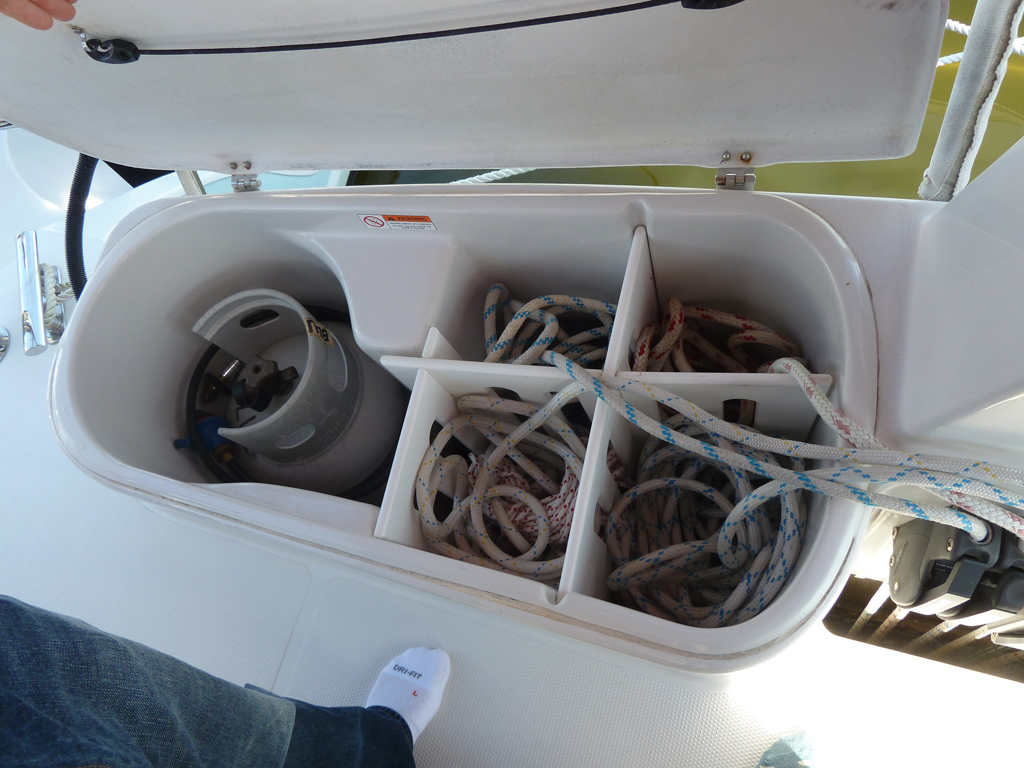
Storage for gas and halyards

#1 I hate piles of line lying around the deck. If you are like me, the storage spots will make you heart sing.   I am not sure if this passes seamanship exams as the lines will develop kinks, but, what the heck, this is cruising.

As an added bonus, the locker is a great place to store the cooking gas with proper ventilation, thus avoiding a BOOM.  Propane gas is heavier than air so you need to have vents underneath.  Not easy in a boat, right?

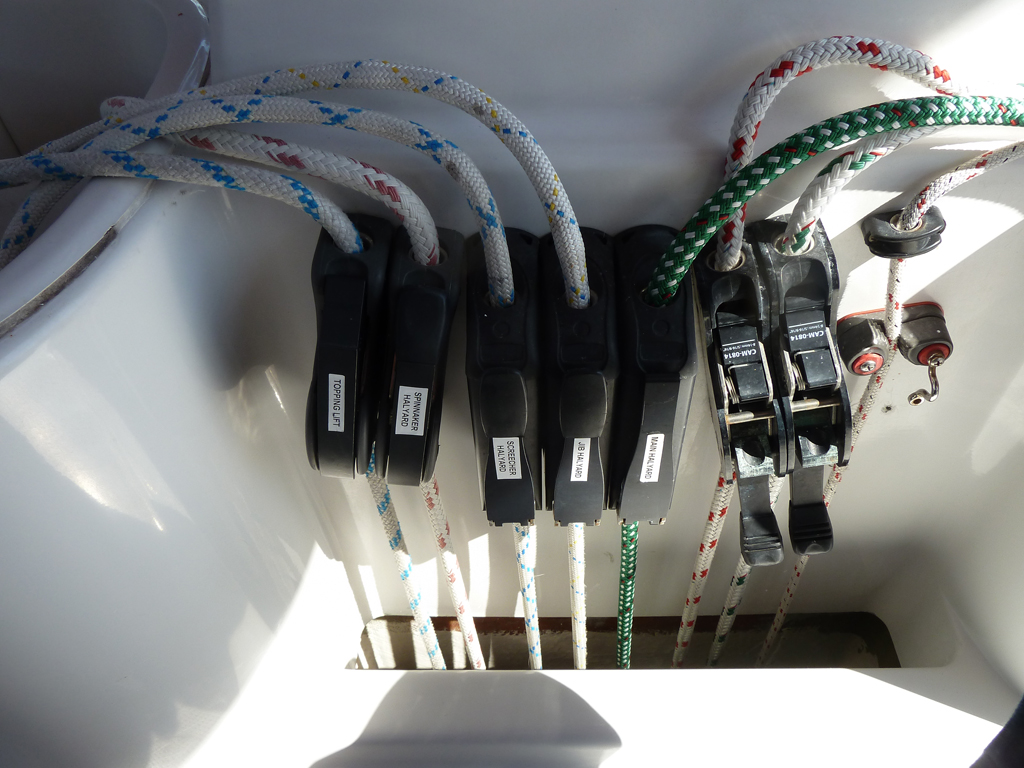
Rope Jammers for the Halyards


#2  I like to be organized and, more importantly, not send crew forward to the mast in a storm.  Because in the Antares every line leads to the cockpit, this should prevent anyone going swimming when reefing the mainsail or other maneuvers.    Right beside this collection of jammers is a powered winch, eliminating any excuses for reefing early.


Electrical Panel

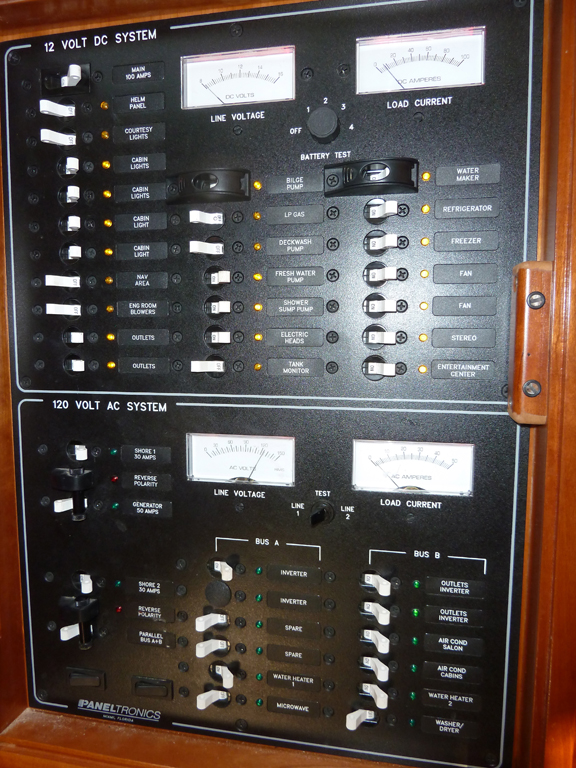
#3  We have become accustomed to electricity, just like the caveman became hooked on fire.   After the popularity of fire every caveman had to find a cave with decent ventilation.   The electricity junkie Two Fish crew had to find a boat that had evolved beyond the 12 volt battery.   This system can create and manage both 110 and 12 volt.   There is a huge focus on safety with properly labeled and protected wiring.   It is daunting at first, but required if one wants that long list of things from that company in Cupertino, an ice maker, air conditioning, the navigation equipment of an aircraft carrier and underwater lights to watch the fish swim by at night.   No joke.


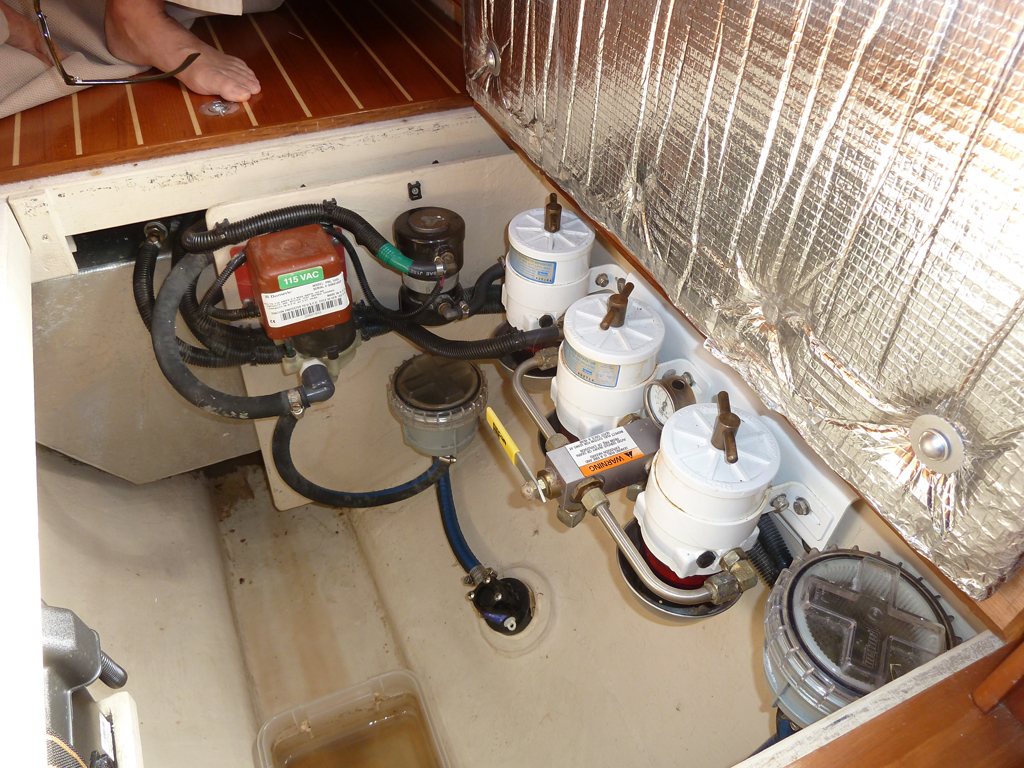
Twin Raycor Fuel Filters


#4 I have read one too many articles about the merits of clean fuel.   They even have created a fancy name for cleaning fuel, fuel polishing.  This term confused Gail for many months so don’t try to make sense out of it. Bad fuel can have water, sand or metal to name a few things.   It can also provide a home for fuel bugs.  These bugs live in the layer between fuel and water.  And for breakfast, lunch and dinner they eat diesel.  This yummy diet can sustain generations of the family and as the elders pass on they get sucked into the engine.   Bugs are not good for engines and one discovers this while in tight quarters with a stalled engine.  So to avoid this terrifying situation, we are going out of our way to have clean fuel.  The Antares comes standard with twin Racor fuel filters to keep the engine running.


Antares Family (Craig, Salwa, Laurie)


#5  The folks that build the boats and the people that own them are good folk.  They want to collaborate and create the best full-time live-aboard catamaran.   It is the opposite of a mega-corporation and owners and builders are all working towards the same goal.


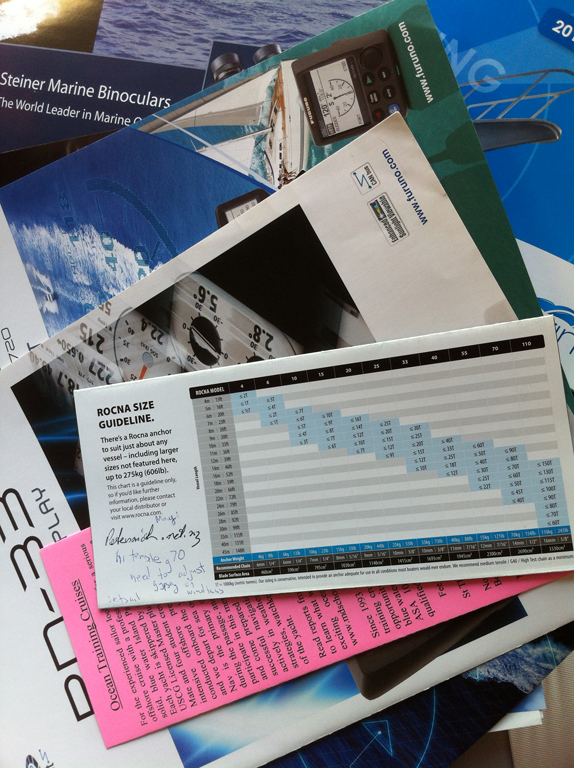
The Annapolis boat show was a huge success for us.   We affirmed that this was the right boat for us and began to understand many of her strong features.  We scoured the show to learn more about our systems and choices, continuing the process of deciding some of the elements of our work order.   We came home with a few pamphlets and ideas and looked forward to many more lengthy discussions.

Future reading material


Comments { 0 }

Boat Work Order

Work Order

Imagine you are sitting down at a classic pizzeria and you are very hungry.   This particular pizzeria has 55 choices of toppings spanning all of your favorites and many you have never tried.   That is how we felt when putting together our work order.   Everything sounded great but if we didn’t watch out the ‘toppings’ would cost more than the boat, probably wouldn’t work well together, and, even worse, we would never make up our minds. We needed to control our enthusiasm and make some choices.   We do not have experience as our guide so we surfed the internet for advice.   Most free advice is priced correctly.   After plenty of research our stomachs began to rumble and we scheduled a call with Rob the builder.   Rob was patient with us as we flip-flopped on our choices.   Unlike a pizza order, the boat order has required many 1 hour phone calls.   I am sure the calls would be shorter if I could stay on topic, but who wants to when it’s a chance to dream about being on the boat.


The standard Antares build includes many options so one might assume that we just sign the contract and then wait for splash date.   That assumption would be dead wrong. Because this will eventually be our full-time home, we have spent many hours researching and discussing all of the items. Okay, maybe we are also gadget-heads and detail freaks. Current and past owners were very helpful in giving their thoughts on what they loved about the boat and what they wish they had installed.

Standard Equipment list: (full pdf click)

Some of the standard comforts for landlubbers are: water maker, air conditioning, heating, VHF Radio,  TV, hot water heater, outdoor shower, solar panels, generator, washer/dryer, outdoor grill, microwave, traditional oven, and all LED lighting.

One of the big decisions was whether to have a traditional mainsail (raised up the mast for sailing), or a furling main (winds inside the mast when not sailing). We went with the traditional mainsail because we like the extra sail area for a bit more speed. We also chose to include an asymmetric spinnaker for Gail’s favorite point of sail.

Other building decisions were to have a bias for storage over bunks, more solar capacity, higher capacity water maker and an integrated scuba compressor. Watch out fish, Jason will be taking lots of photos.

On the electronics front, we will have two chart plotters, a KVH tracphone, SSB (Single SIde band) and AIS (Automatic Identification System). We were still far from our splash date and the contract wasn’t even signed but we tried to get as much specificity into the work order as possible.

Comments { 2 }