Archive | Boat Systems and Gadgets RSS feed for this section

A decision is made, maybe?

The crucial offshore sailing gear decision is almost completed and it will be an Epson.   Yes, we are getting an Epson printer and now are equipped to cross the seven seas.  A scanner / printer is key when dealing with paperwork in foreign ports.  On decisions probably more critical to the performance of a blue water cruiser I have barely turned my head away from the crossword puzzle, but the $79 printer decision has become an odyssey.  The first set back was when we discovered that the printer space under the settee was smaller than our existing printer.  After 2 hours on hp.com, some prospect printers were chosen.  I do not trust the specifications online so brought the tape measure to Staples and Best Buy.   My distrust of the online specifications was warranted since the printers were slightly smaller in person.   The measurement confusion created the need for a second round of visits, a second round of web surfing and a trip to a west side store with Jason.   A skilled diesel mechanic could have changed a head gasket with all the time I have spent on the quest for the printer.

So why have I gone over the top on this simple printer while being a passenger on some more critical boat decisions?   I’ve always tried to follow this mantra at work – focus on the things that you can influence and try not to get too bothered by the things that are out of your control. If there is a corollary to this, it may be “focus on what you know”. I realized last week that I have taken that to extremes.  Because I know the parameters needed for the printer decision, I have focused on it. There are lots of core decisions to make on the boat – navigation systems, charts, and sails. Fortunately, Antares has already made most of these for us and we are happy with their choices.  I’m not sure that I know the parameters of those decisions yet.

So what printer have we decided on after the many hours?   Well, it is not fully locked down but it will be either the Epson 400 or 600 Small-in-One. I think I’ll wait until my next boat visit to make the final call.
Comments { 5 }

Build Progress Update

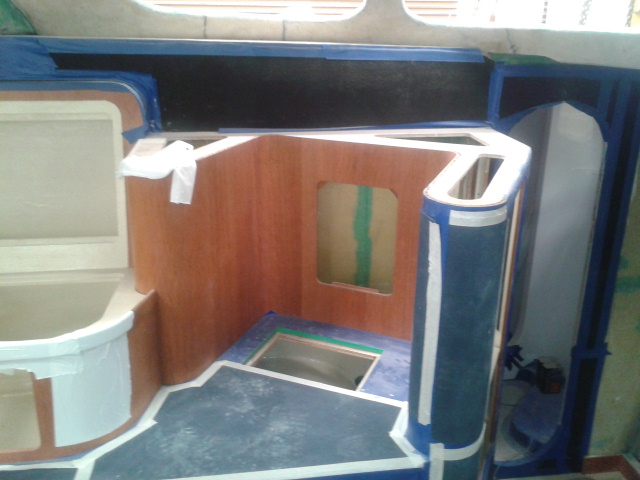
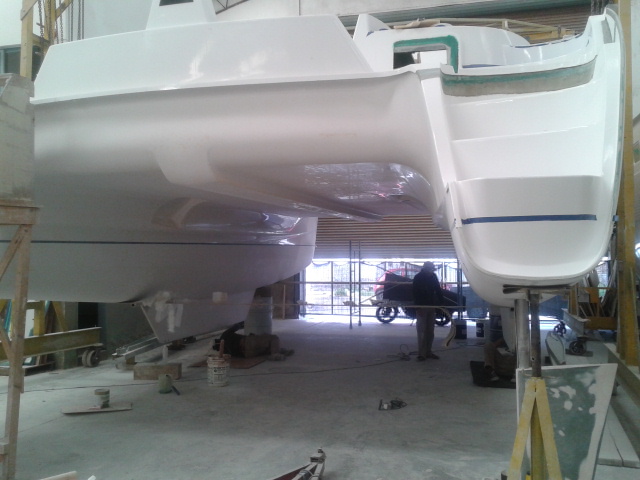
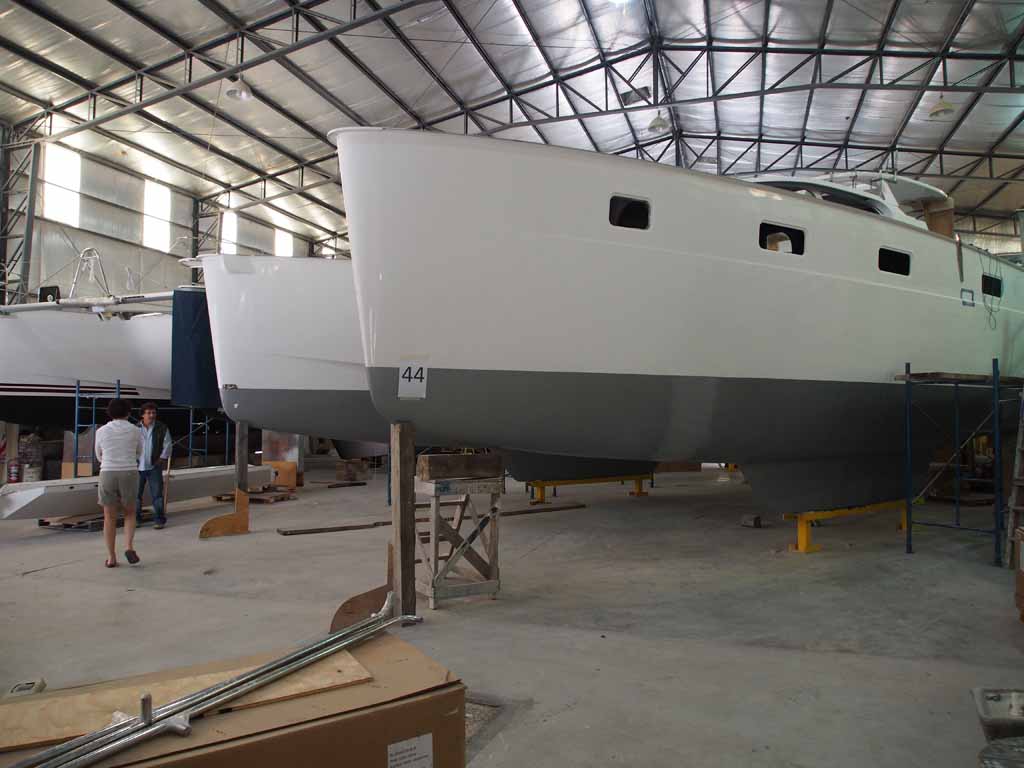
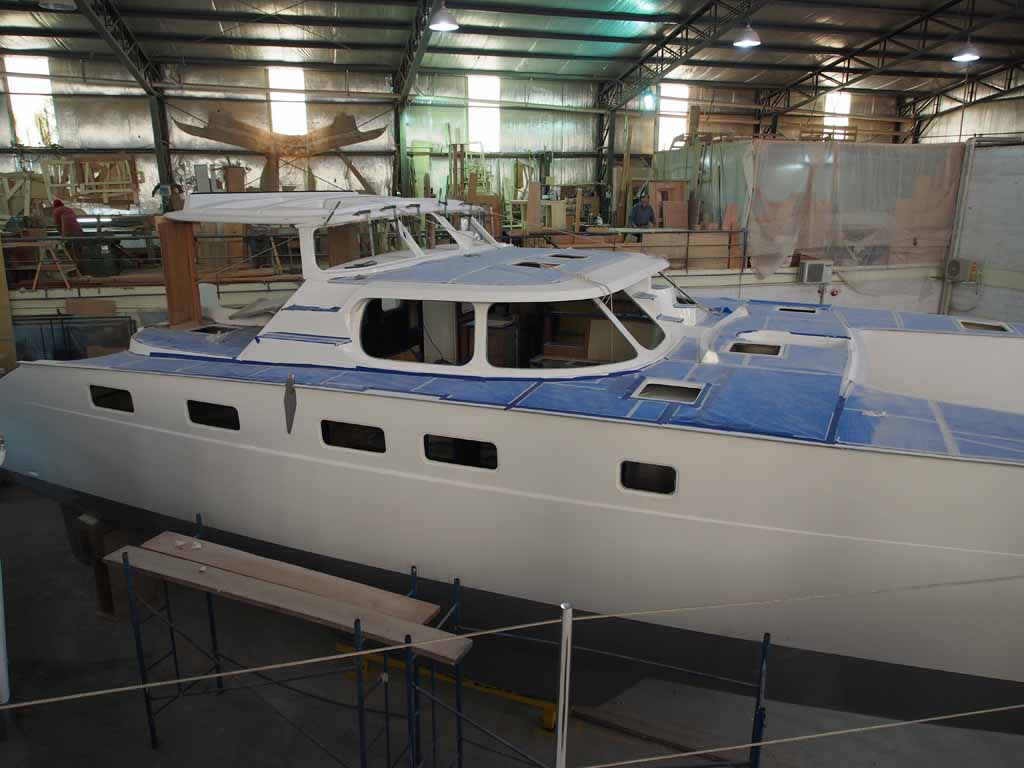
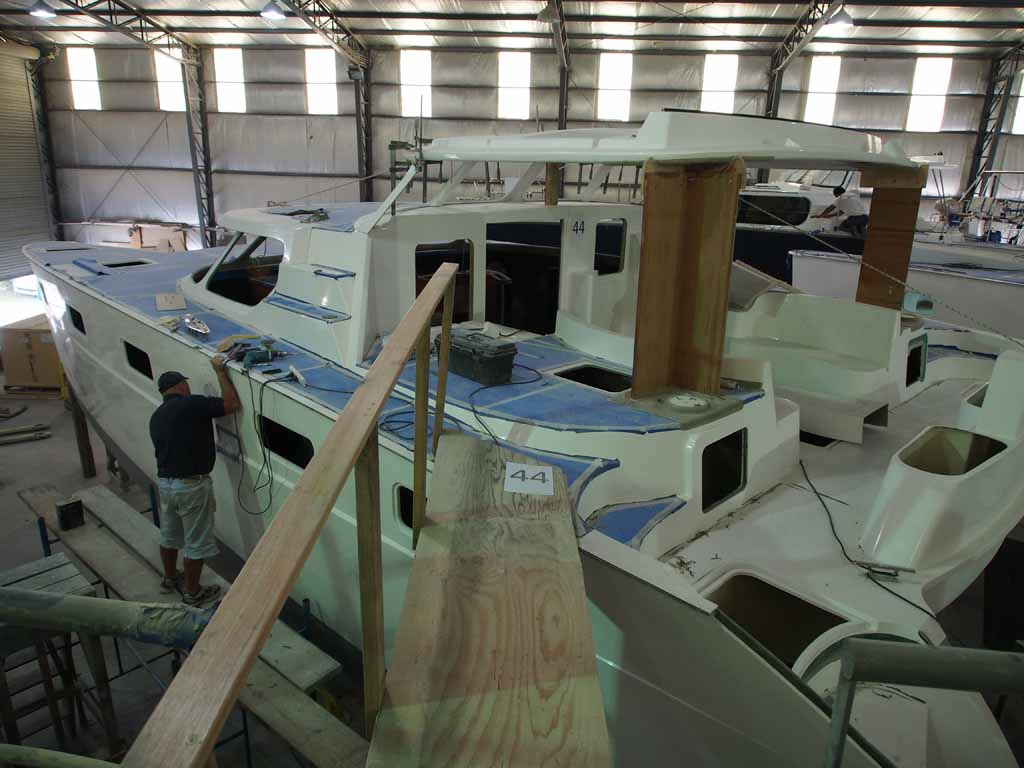
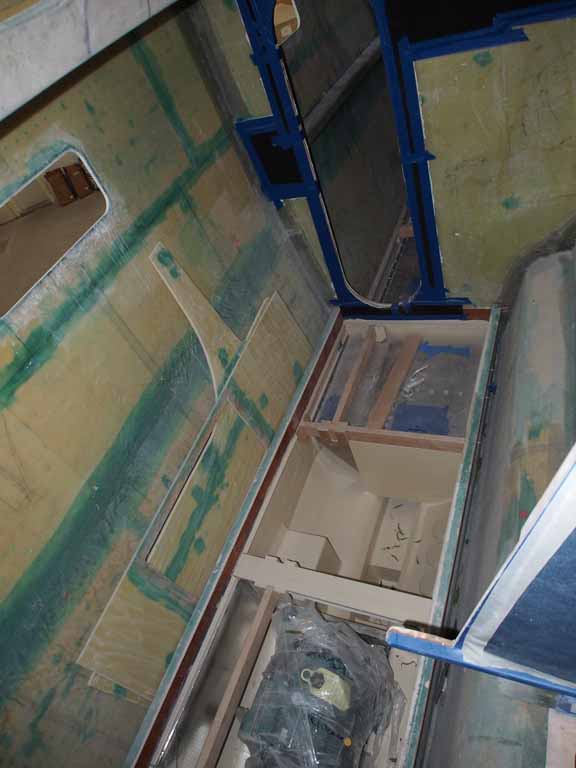
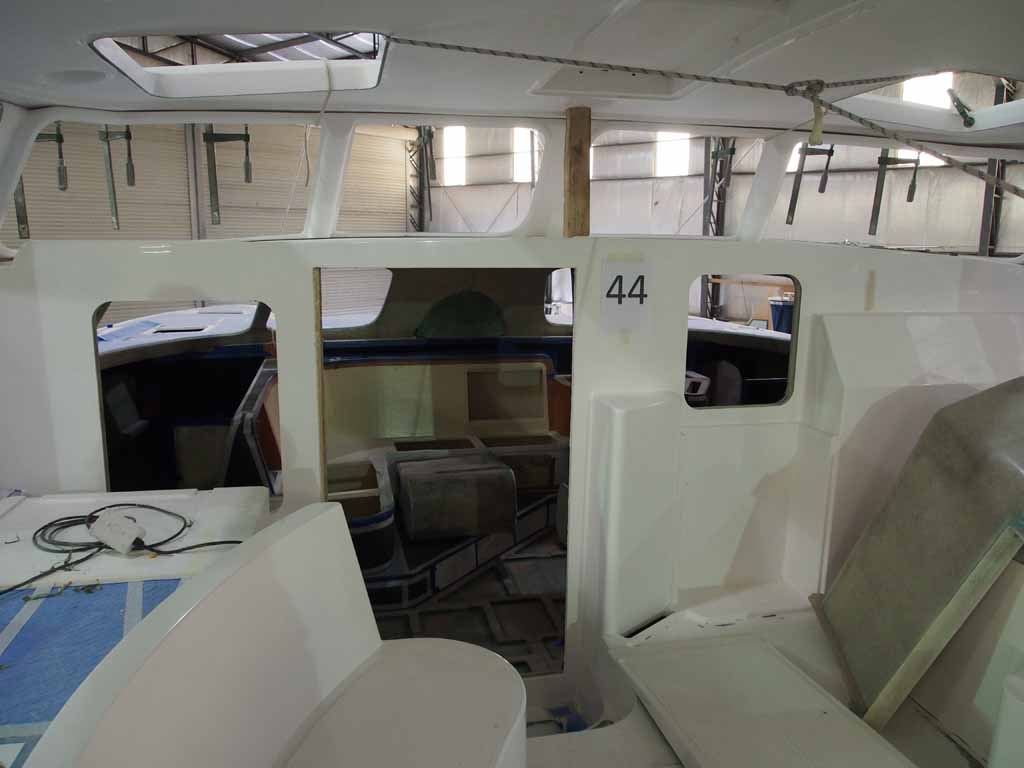
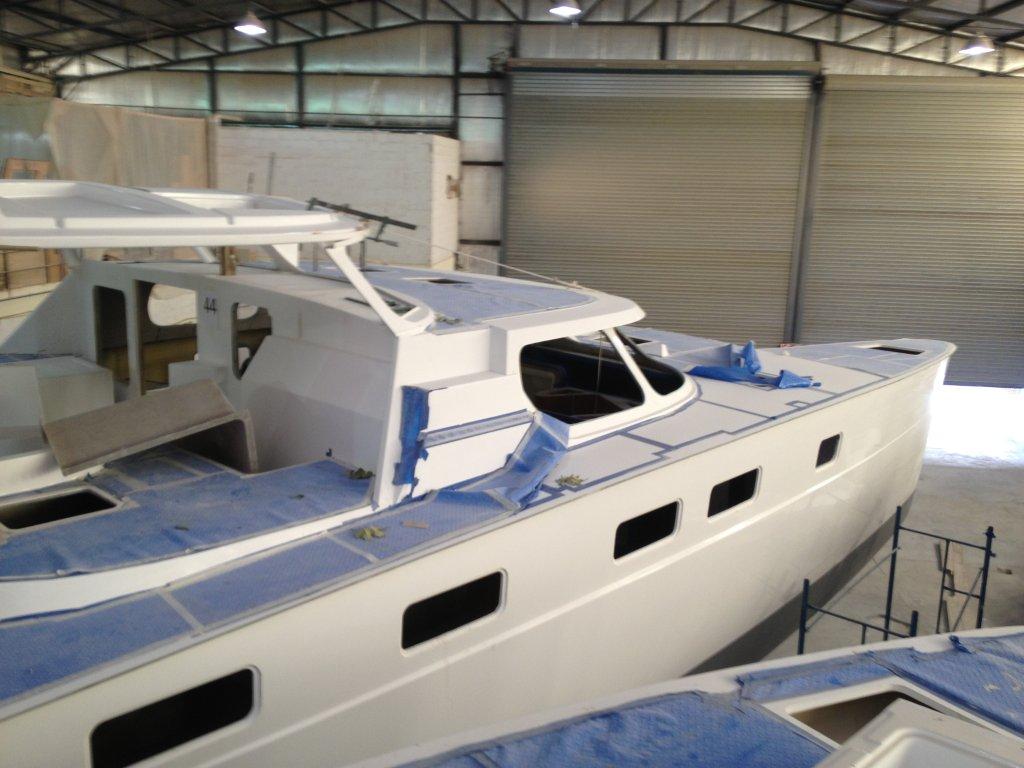
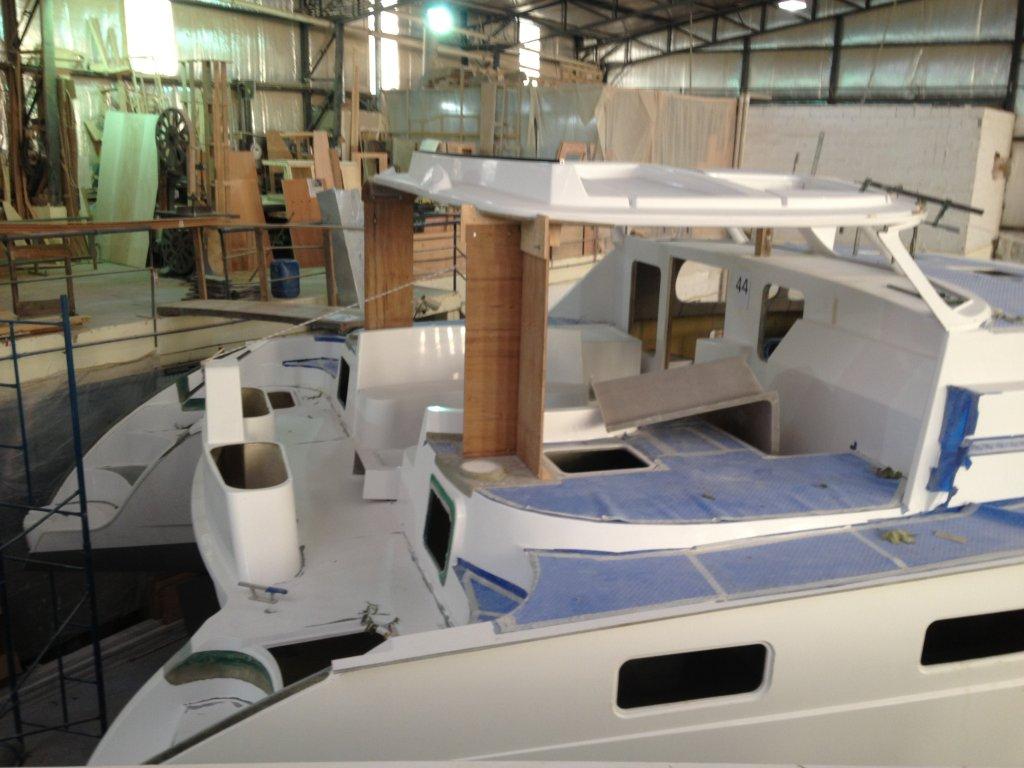
Factory friends sent us a few photos on the progress of the building of Two Fish. I will cede the 1,000 words to the photos. The big steps are done.   The deck and the rear stairs are attached to the hull. Before the deck was put on, all of the large items needed to be installed.   The engines, heads, water tanks and settees are too large to be brought into the boat through the door.  Now that the deck is installed, if any of these items need to be replaced it will be like building a ship in a bottle.  On some boats, if the engine needs to be replaced, a hole must be cut in the deck.   Hope the engines last for decades.

UPDATE, Thanks to the crew of hull #48 we have some great progress shots from mid march. Thanks Peter and Sally.

Comments { 6 }

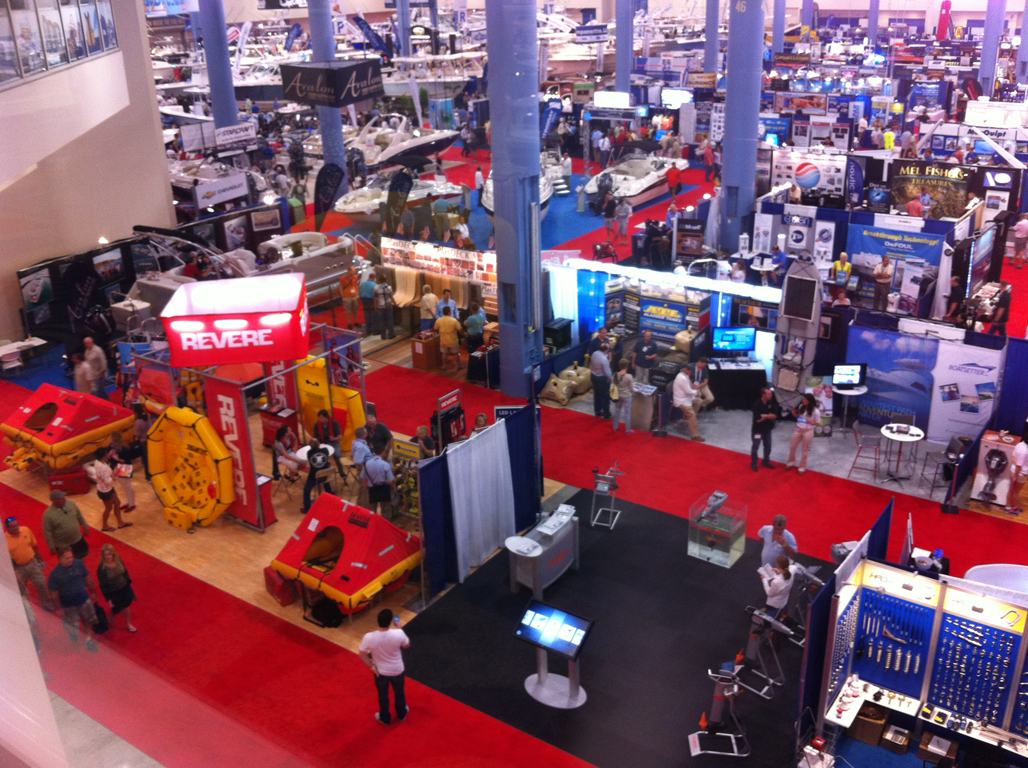
Miami Boat Show 2013

This is the last time we will use the line at the boat show,” we do not have a boat”.   This line works great to drive away aggressive salespeople hawking miracle cures for boat problems.

Martian

Martian

While we are on this topic ,I have an idea for a company.   First, the company creates a fake boat concern.   For example,  “Boat are often attacked by Martians with ray guns”.   Next, the company will spend time with new boaters  (read Two Fish) and create fears of Martians boarding Two Fish with ray guns.  The next step is to sell the solution.  The best part of the new company business plan is that  your solution does not have to work, since the problem will never occur to test your claims.   “Sir,  if you wear a purple rubber hat made of special materials then you will not be hurt by Martian ray guns”.   Now the final step,  take the new boat owners’ money.

So with this in mind we fight off the best efforts of the fear mongers.    “Lightning, pirates, whales, submerged containers and poisonous fish are some of the introductions we hear”.     Now that I wrote this, it will be our luck that Two Fish will have first contact with ray gun toting Martians.   Where do I buy that rubber hat?

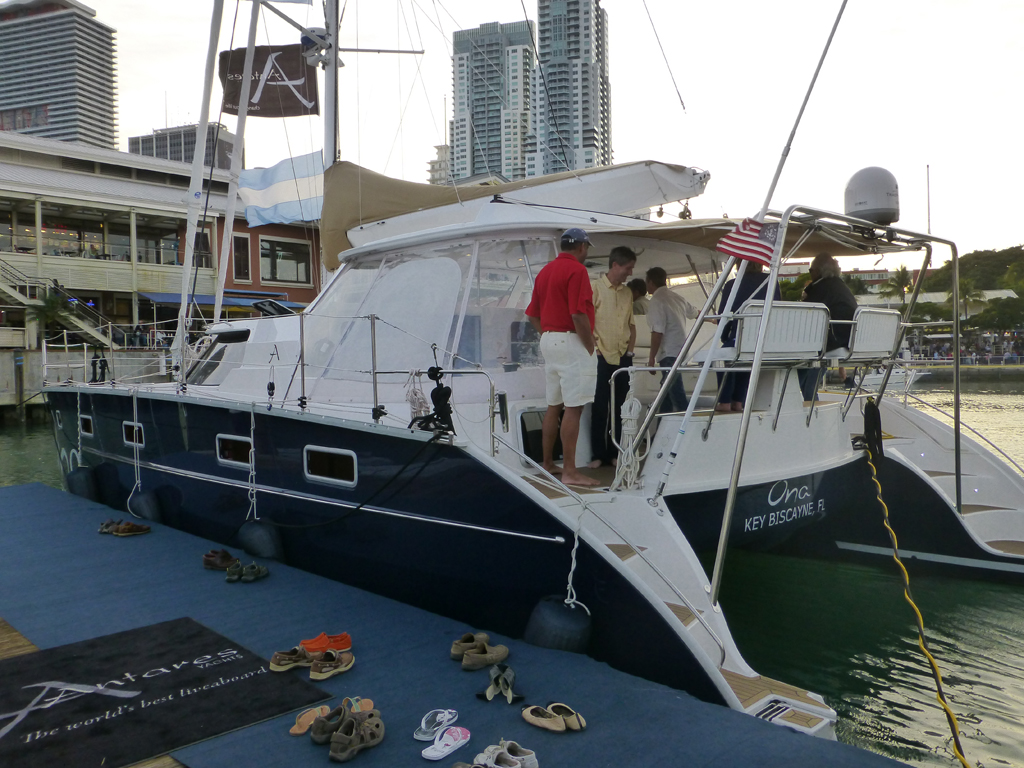
In previous shows we saw the boat for the first time, decided to buy the boat, and learned about the subsystems.   Returning for the third year in a row, we came mostly to catch up with the other Antares owners.    We have made the bulk of our decisions but still enjoyed learning about the latest gadgets in the marine industry.

Underwater Lights

Underwater Lights by Lumishore

I had some buyer’s regret when Lumishore told me about the new control head.   Our underwater light manufacturer has made it possible to display different colors on the port and startboard lights.   This does sound like someone complaining about the champagne they were served in first class.  At least I am not like the guy in the above photo.   To get four colors he bought four boats!

557 HP Outboard

557 HP Outboard

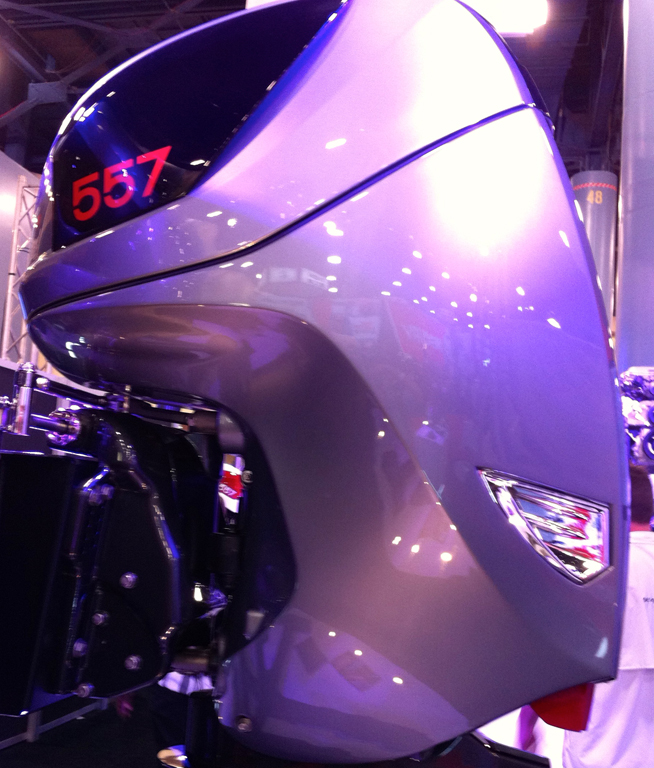
The most powerful outboard on Earth was on display.  A 557 horsepower engine.   I bet that that engine needs a bunch of hay to keep all those horses pulling.   As a comparison,  it is the same power as 28 of our dinghy outboards.   If it was attached to our dinghy, the boat and engine would head directly to visit Davey Jones.

The most perverse boat we saw was a hybrid between a stand up paddle board and kayak.   It has a small motor and was designed as a fishing platform.  The TAG 60 was the sexiest boat at the show.    It is a high performance catamaran that eases the sheets automatically when a  puff comes.    More suited for a richer captain and crew greater than for Two Fish.


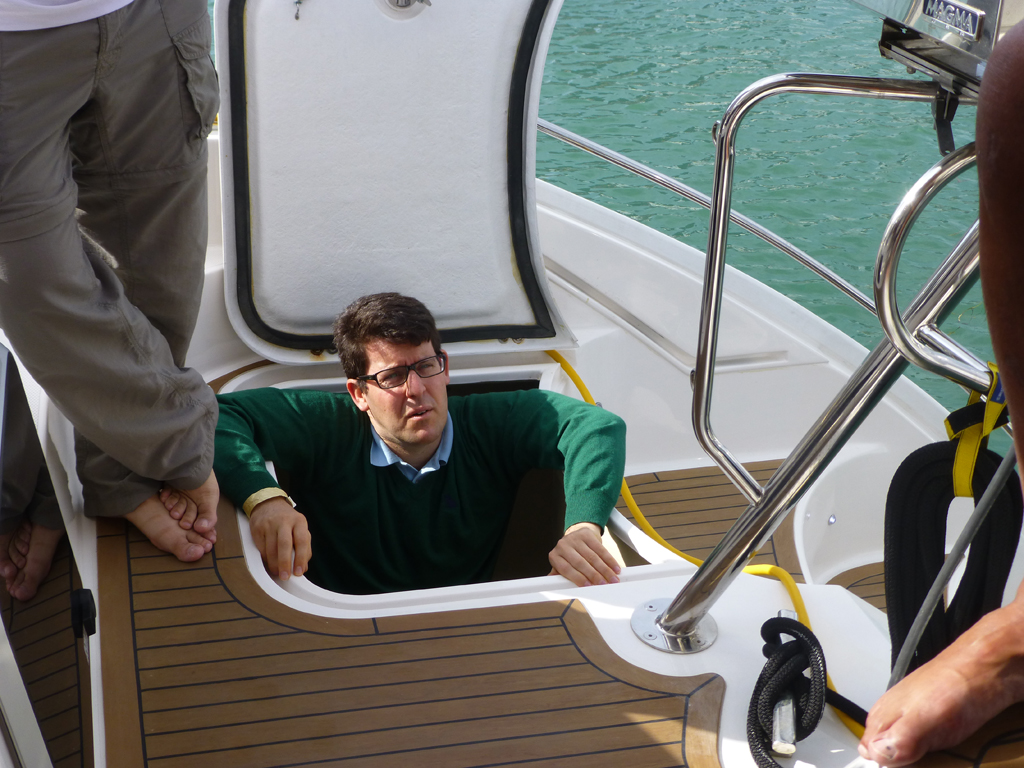
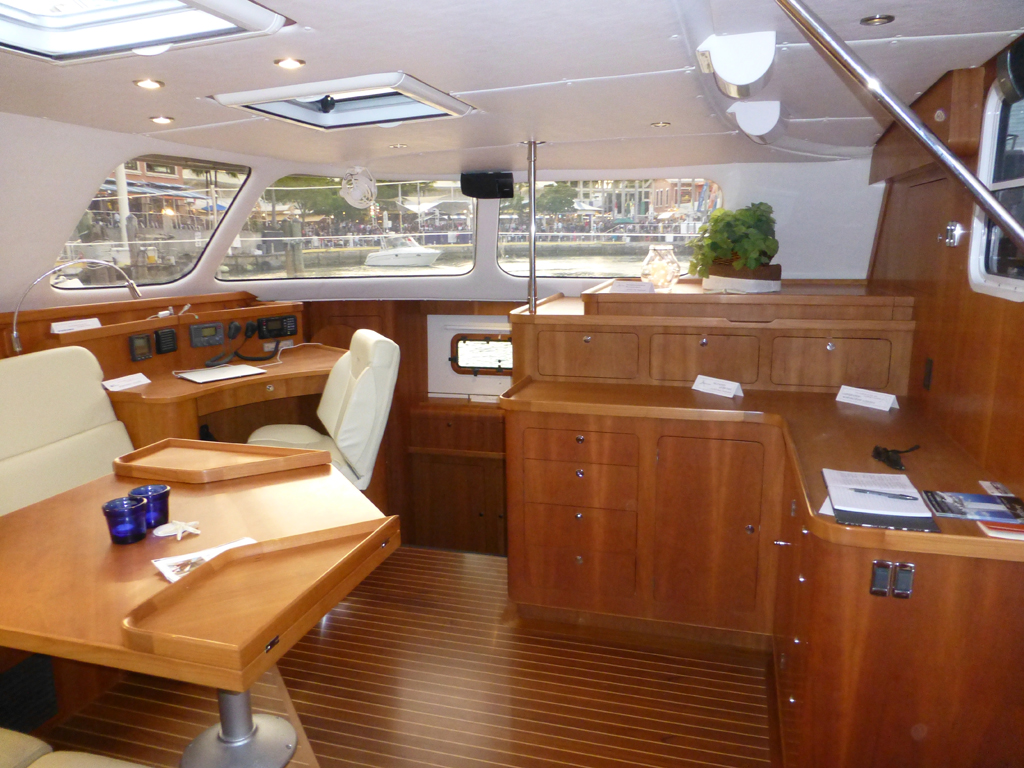
We are concerned where all the stuff we have brought to Argentina will fit in the boat.   Yes, the Antares is legendary for its storage but it still has much less space than our current abode and we are aware that we need to be vigilent in controlling the wave of stuff that could sneak aboard.    This is a short video of me crawling in the lockers to better understand the space.


During the show we got lessons on taking care of the air conditioning, genset and  water maker.    The A/C is pretty much a black box operation as non licensed folks are not allowed to service the units in fear they will leak ozone-destroying gasses.   I don’t have a view as to whether this is useful legislation or some form of  job protection legislation.   Either way I am happy to wait for a pro to fix the units as the tools need to fix A/C’s are costly and bulky.   Also I can live just fine without A/C.   The genset is just another diesel engine so we will follow the process for the other two on board.   They did mention that waiting 2 minutes for warm up and 2 minutes for cool down was a good idea.   The water maker is more complex.   Water makers convert ocean water into drinking water by pushing water through an expansive membrane.  This creates two issues with the system.   Firstly, the water must be under high pressure – this can be finicky.   Secondly, the membrane must get regular attention.   It is best to use the water maker weekly.   If the water maker will not be used for a month it must be fresh washed 4 times and if left for 2 months it must be pickled.   Is this more martian ray gun or do I have to climb into the locker weekly to maintain the water maker membrane?

The dive compressor has one filter which needs replacement every 10 hours or 30 tanks. It’s 80 bucks.  The final bit of maintenance advice was from flexi-teak.   They make the cockpit flooring and advised that after a particularly bloody fish killing, a bit and soap and water should clean up the evidence in advance of aquaman’s arrival.
Nigel Calder

Nigel Calder

We spent a half-day in Nigel Calder’s class on boat electrical systems.  He is a bit of a boating legend for his multiple books and articles.  We own a few of the books.  It was a thoughtful class despite some of it being territory we had covered in previous classes.   A few things stuck with me after the class.   1)  Solar is just fantastic and you can’t have enough.  2)  Living on the hook is troublesome because you can’t get that marina trickle charge to take the batteries from 80 to 100 percent.   No one is going to run their genset for hours to get from 80 to 100.   Batteries that never make it to 100 live much shorter lives.   Well we will just have to see how much juice we consume while on the hook.   3)   Voltmeters and Ohm meters will bring hours of fun to Gail’s life.   If she is bad I may take her voltmeter away like teenagers lose iPhone privileges?

Comments { 0 }

AIS – Could not go the easy way

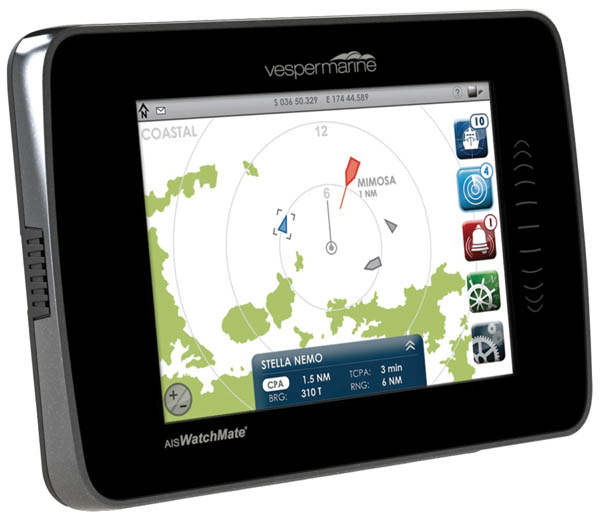
The easy solution for AIS would be to buy the Furuno AIS.   But we chose to blaze another trail.  Vesper Marine offers a better mousetrap.   We added difficulty by ordering the unreleased model.

Pros:   Looks very cool,   has filtering to block non threatening boats filling up the screen,  did I mention it looks cool? It also integrates with iPads.

Cons:   Does not exist.   Seems the boys at Vesper have a marketing machine a bit out in front of the production line.   Second con is that the unit has to make it to Argentina via the complex importation process.

Most recent update is that the unit will be available at the end of February.  Let’s see where it ends up.  Recent Recent Update…. builder has bought the unit and it’s heading to Argentina to be installed.

Vesper Vision

Vesper Vision

Comments { 0 }

Storing Clothes Onboard

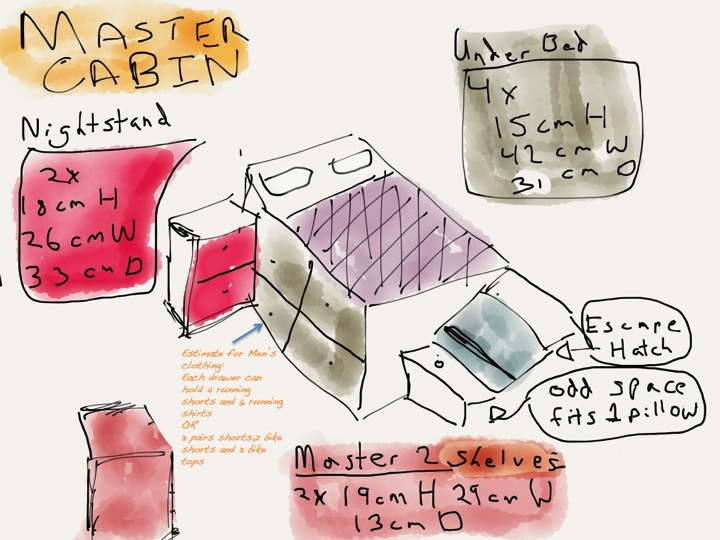
So just throw a few T-shirts in a bag and you are ready to live aboard for months at a time?   I will need a lifestyle change to prepare for living aboard when it comes to paring down my collection of clothing.   (This is being written by Jason – don’t assume clothing reduction is only an issue for women.)   I am not much of a clothing guy, but have enjoyed having many of the same items to prevent having to think.   30 French cuff shirts (mostly white) are paired in my closet with half as many dark suits.    Obviously no need for any of that on board Two Fish.   But plenty of fleece, running gear, swimming trunks, shoes for all sports and before you know it the boat is full.   So we decided to measure the space for clothes in both the master cabin and the starboard hull.   Once we had recreated the space in my NY closet, we were able to figure out how much would fit.  Looks like I only get to keep 3 pairs of running shorts!   This will be a change.

Master Cabin Storage

Master Cabin Storage

Starboard Hull Storage

Starboard Hull Storage

Comments { 1 }

After Market Modification

Fridge Thermometer

Fridge Thermometer


Wind Power

Wind Power


Antares owners want the best and thats how they ended up buying this boat.  But with that comes a group of owners that are fidgeters and optimizers.   Here are some of the after-market items owners have recently added to pimp their rides.  No chance for a low rider and blinged rims but similarly cool stuff for boat owners.

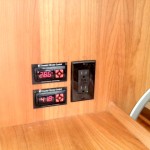
Digital Thermometer for the fridge to more accurately control the temp of beer.   May be a good idea but also may be more stuff to break.  Two Fish decided to hold off until later.


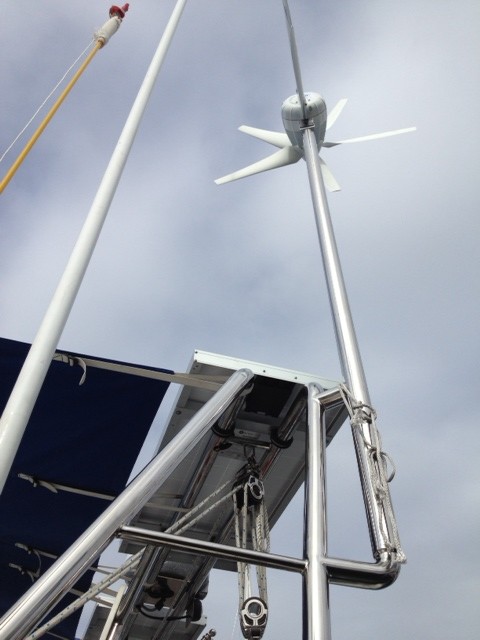
Wind Generators  have been installed on many Antares but again we thought to hold off because of Gail’s fear that the fan blade will convert flying fish to sushi.   I would like to hold off until we understand our usage and how much can be offset by the solar panels and light usage of the gen set.  D400 and Superwind 350 are some of the brands others have installed.   Too early for real feedback.

Carpet is another after market add on that some owners have added.

Our plan is to keep it simple (sort of) and after being on the boat for an extended period of time we can tweak the important stuff.   We just don’t know enough to make an informed decision.


Comments { 1 }

Sails – the true engine on Two Fish

My sail selection experience is from one design boats where the conversation with the sailmaker is “Can I have a new set of class legal sails please”.   There is no choice of size or material since that is dictated by the class rules.   But on a cruising cat you can fly anything your heart desires off the mast head from screechers to grand pa’s old underpants.


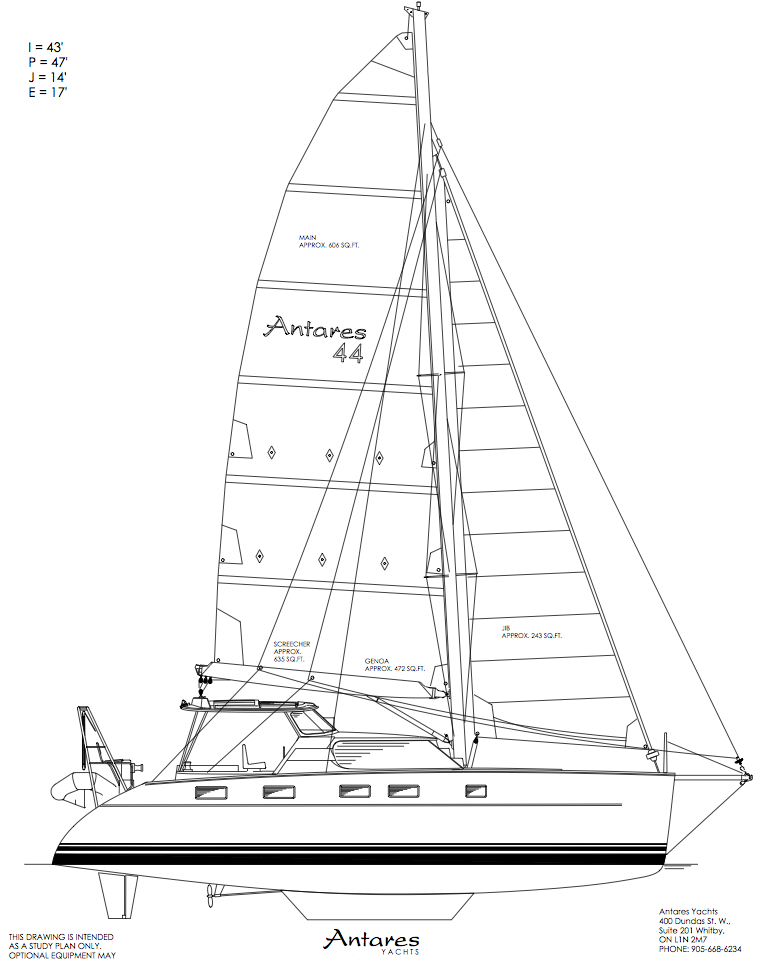
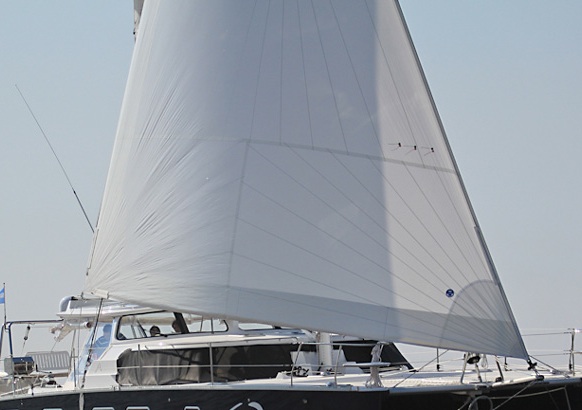
Main Sail 606 sq ft :   We added two reefing blocks sewn into the leech of the main to reduce friction and make reefing the main easier.  This will work very well with the in-boom reefing system that comes standard on the boat.  You can see them if you look closely at the mainsail on 4439.  They are a bit pricey but look to be very useful when reefing alone.    Sailcloth choice is the trade off between speed, durability and how much abuse the sail can take.   Typically laminate sails are considered faster out of the bag since they can hold a shape better than a classic dacron sail.   The Antares main is now standard in NORLAM and we stayed with the standard.

Genoa 472 sq ft:  Older laminate sails were more susceptible to mold growing between the two laminations.   The ugly brown stains look like dirty sails but no manner of scrubbing will remove the spots as its a suburban mold family living in the middle of the sail.   They will laugh as you scrub.   To prevent this, one can make sure the sails dry properly after use and use chemical sprays.   So the downside of laminate  is mold and the upside is maybe better sail shape.   We chose the laminate for reasons of vanity.   Two grey sails will look cool but now we have to fret about a moldy genoa.    I have blogged this so I can come back to rue this choice.

Antares Sail Plan

Antares Sail Plan

JIB 243 sq ft:   We did deviate from the standards for the self taking jib.   It is made from Nordac a non laminate dacron sail.  Bullet proof.

Screecher

Screecher


Screecher 635 sq ft:  Again no change to the factory standard.   Was advised by North Sails that this sail should be stowed when expecting rough weather as it can unfurl at the wrong times.   Also it should be stowed when sitting at anchor for long periods to protect it against sun damage.   Many owners have not followed this advice for 5 years and have been just fine.   I plan on taking heed but it is nice to know that the sail is so well built.   Damage to  the screecher can occur when flying it in stronger winds while close to the wind.   The following is a table which Antares produces as a guide.

Sail Selection Table

Sail Selection Table


Chute Logo

Chute Logo


Asymmetric Spinaker:  Antares owners before have gone with three choices.   No chute,  Asym by North or a Parasailor from a South African company.    We chose the 1,200 sq foot asymmetric to keep it simple stupid.    Out chute will be hot pink with a Two Blue Fish logo  (see left).   The luff of the sail will be built with a heavier cloth to assist carrying the sail a few degrees too hot.

Plenty of owners enjoy the Parasailor and it is impossible for me to comment since I have not tried flying this new type of chute.  Its selling point is a vented wing in the middle of the chute that aids in flying and acts as a release valve.   I stuck with old school.   I can tell you the name needs improvement as it sounds like an almost-sail and Google searches give you plenty of places to go parasailing behind a motor boat.

Comments { 2 }

Black box for the boat?

Maetron Black Box

Maretron Black Box


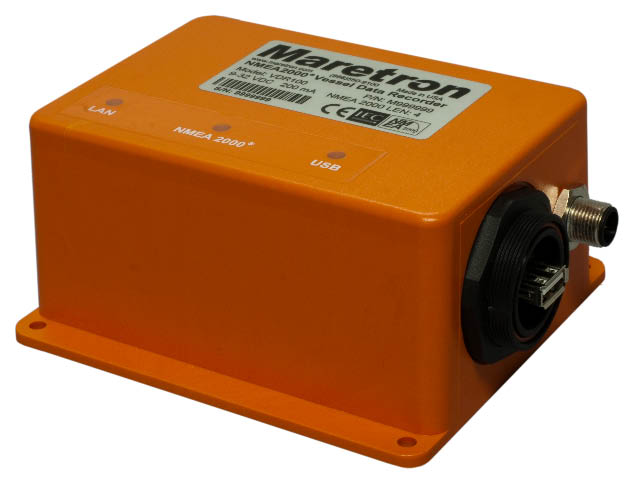
All of the data about boat speed, wind angle, wind speed and more, travel from the sensors across the NMEA network to the various displays.   But how do you record this data?      Just write a nice sized check to Maretron and they will send you an orange box that is no more than a thumb drive.   It listens to the NMEA network with all the boat telemetry data and stores this data on the internal memory.   After a 1 month voyage you can then upload the data to Excel or their special PC application.

But why would you want this data?  This data can help understand the optimal performance of the boat by wind angle and wind speed.   It can also be the source of data for blog posts.   Sailor’s blogs seemed jammed with “it was 35 knots on the nose” and “puffs over 50 knots”.   But what is the wind really like over a period of 6 months, only the true data can tell you.   Maybe that will ruin the romance of the dramatic blog post?  We do not plan on buying this day one but I can hear the sirens of the chandleries singing my name.

Comments { 0 }

The Ice Maker

WARNING! Unless you are building a boat or have a lot of time to waste, please move on to the next post.

The Ice maker

You are still here? Don’t say I didn’t warn you.
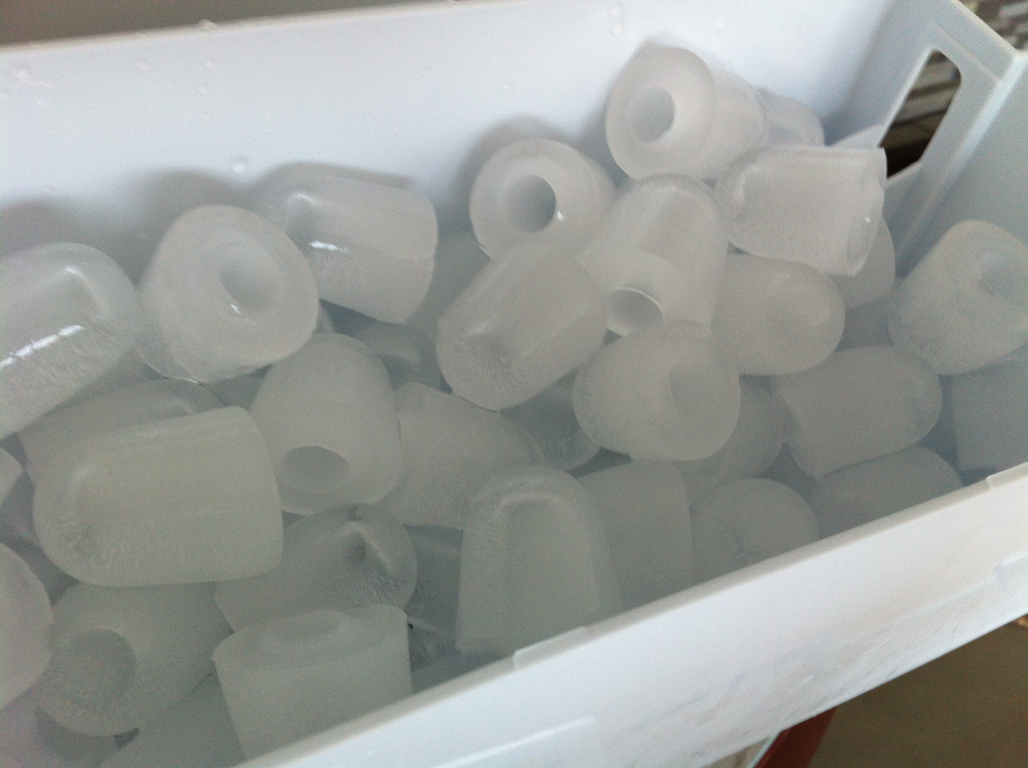
If you have read any of our other posts, you already know that Two Fish is a bit luxurious. Some might even say that it is our American life on two hulls. It may surprise you that we didn’t set out to recreate all of our luxuries on the water, it just sort of happened that way. In fact, we really have tried not to do that. Case in point was the icemaker. While we said yes to the options of Air-Conditioning (If you don’t choose A/C, you don’t get heat either) and to the Washing Machine (we aren’t really counting on it working forever), we drew the line at the built-in ice maker. Ice makers are notoriously hard to maintain and expensive so we decided that we would just buy a inexpensive portable ice maker at Target and use it once in a while.

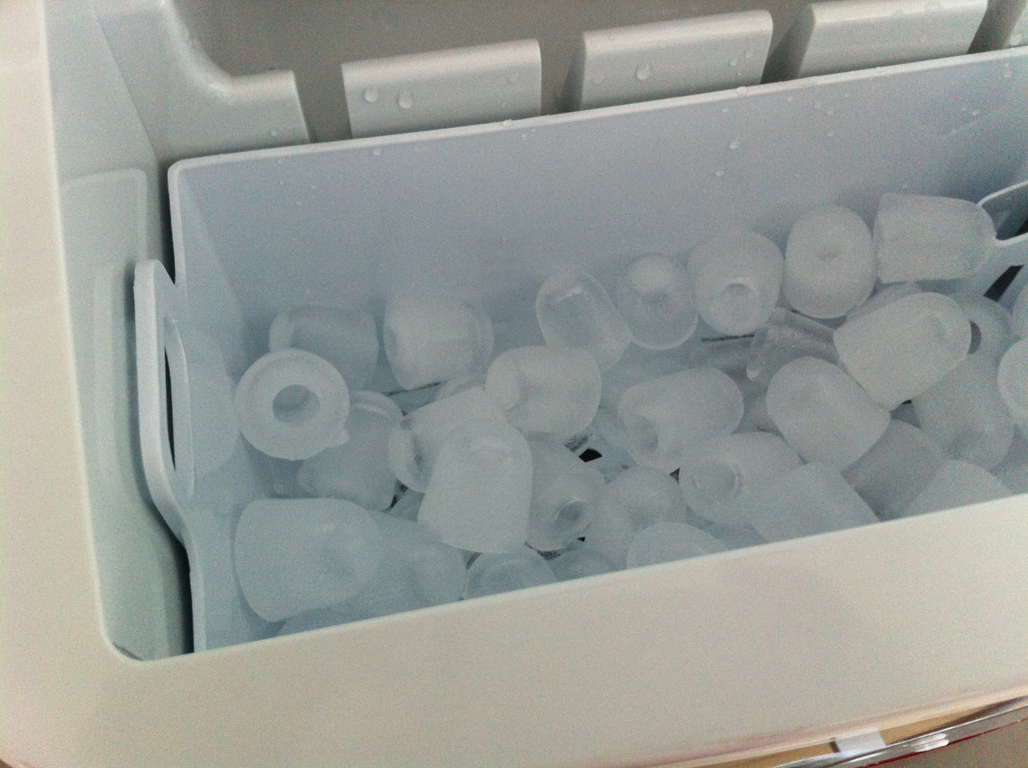
Enter the NewAir AI-100R Countertop Portable Ice Maker. Advertised as able to make up to 28 pounds of ice per day, it seemed like a dream. Forget the fact that when we bought it, I didn’t really know what 28 pounds of ice really was. (Now I know that the bag you buy at stores is 10 pounds). The biggest calculation that I missed was that since these run off of 120V power, the most we would get in a day would be 90 minutes or 1.75 pounds. Chew on that.

Maybe I have given away the punchline. I eagerly plugged it in and awaited my first cubes of ice.

More Ice Later

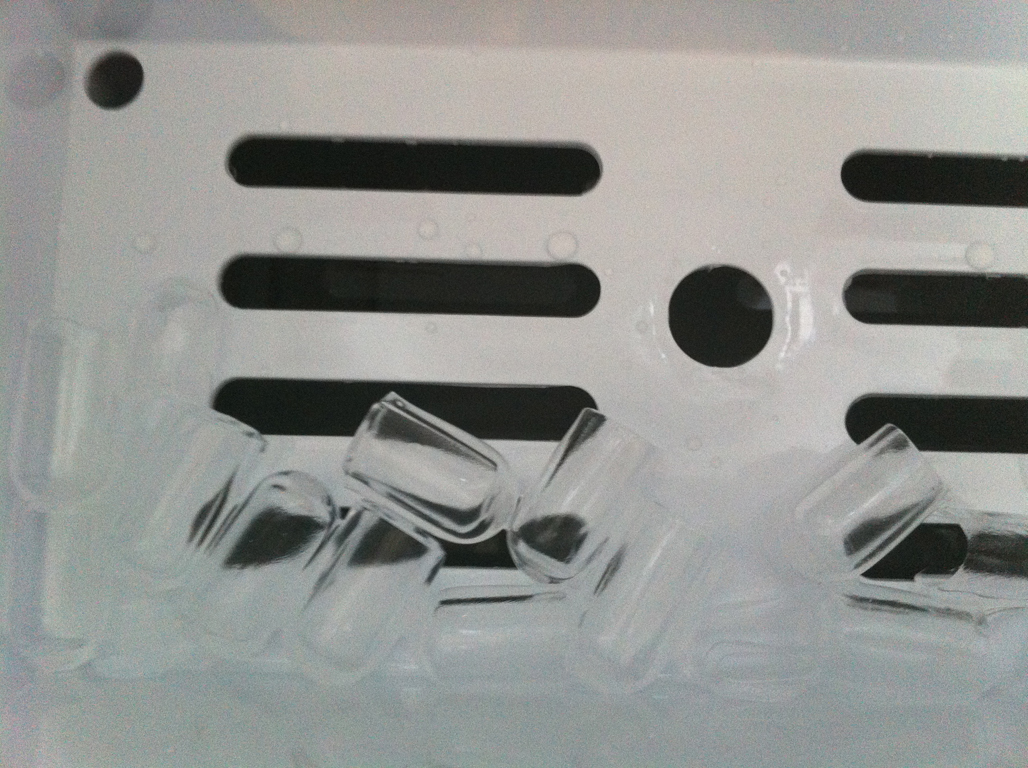
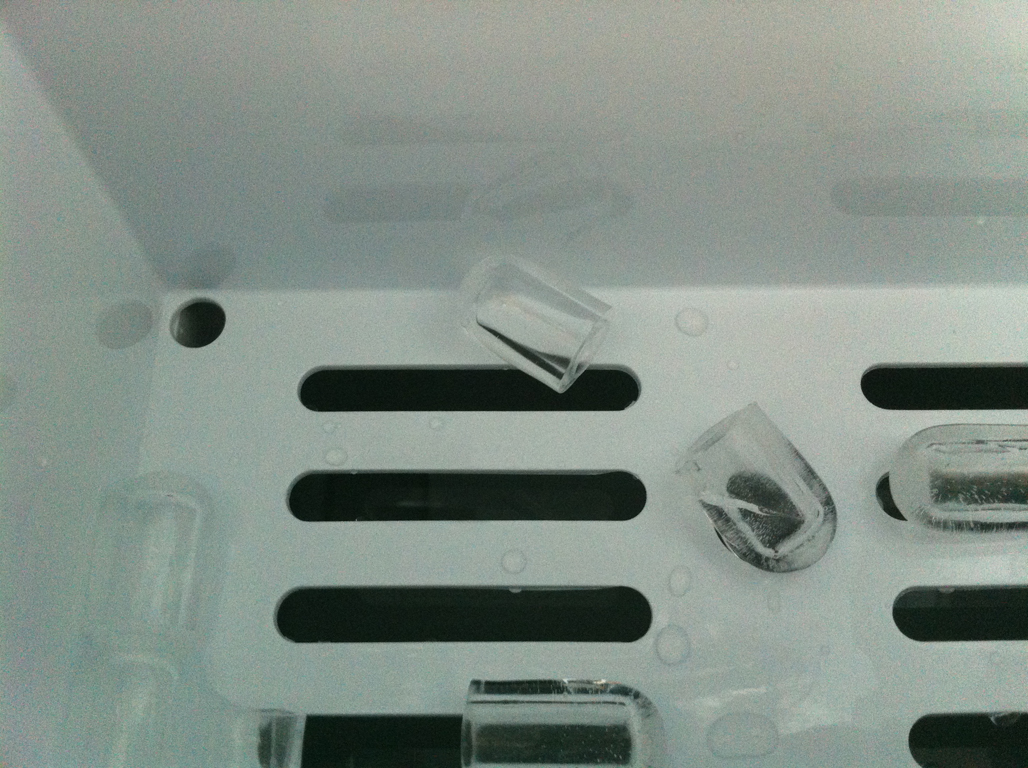
First Cubes

Pretty dismal. I waited a bit longer and it looked a little more promising but it still didn’t seem like a lot. I reported back to Jason that I wasn’t really sure whether this icemaker thing was going to work out. He wanted more specifics. “Why don’t you be scientific about it?”, was his comment.

So, I set out to follow his advice – there is a first time for everything in this world.

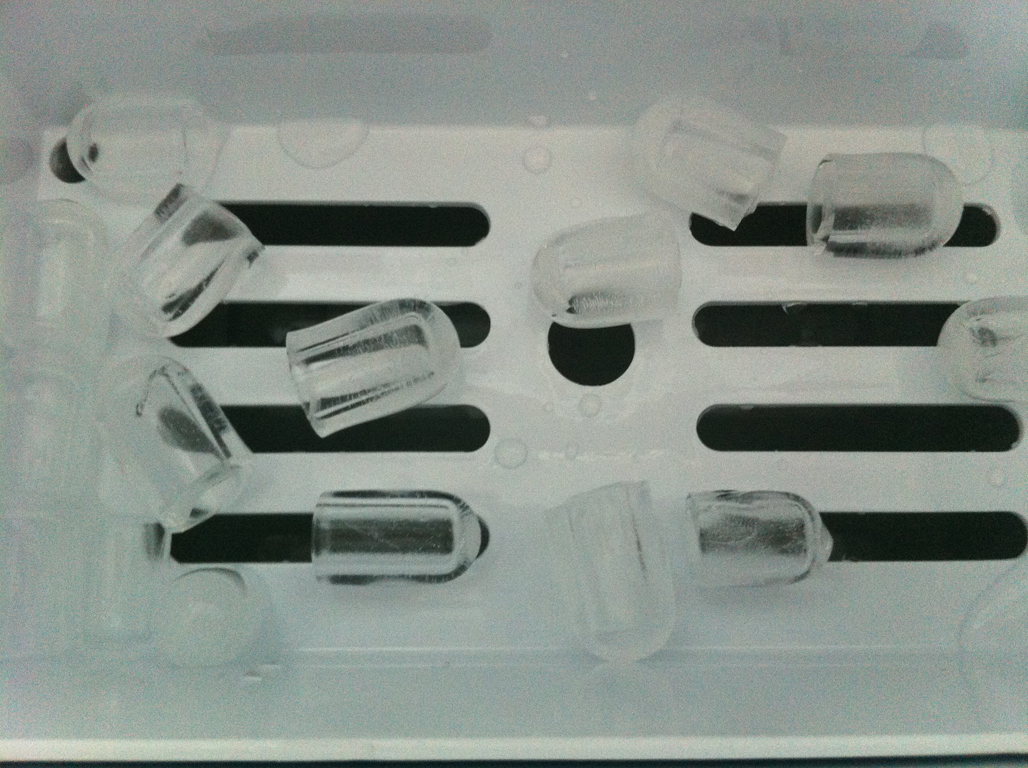
Starting time was 1:31pm on Tuesday, September 25. I plugged in the ice maker. The first 9 cubes were produced at 1:42.

The ice maker timing was very regular. Every 11 minutes, another 9 cubes were deposited in the tray.

1:42

1:53

2:04

2:37

2:59

3:32


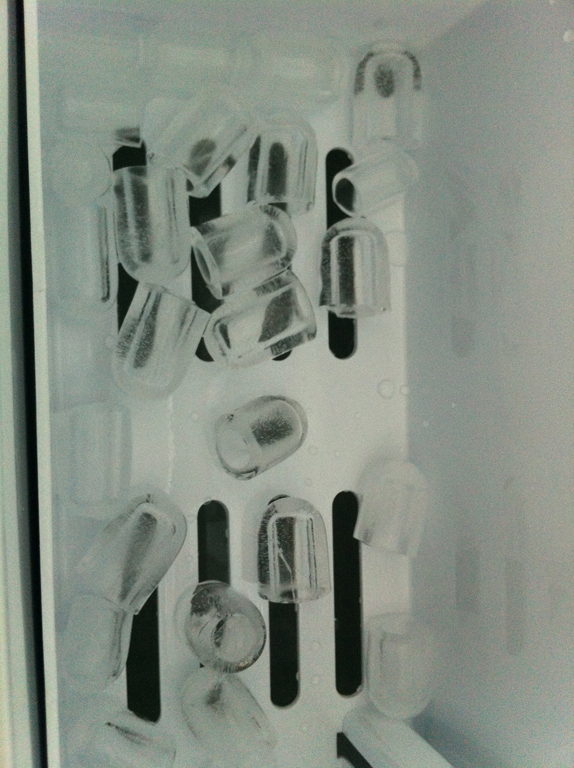
I weighed the 27 cubes at 2:04. They weighed 144 grams.

Question:  “What does a refrigerator tray of ice weigh?”

Answer: “16 cubes = 467 grams”.

Next Question: “How long will it take to reach that weight with the ice maker?”

Answer: “Approximately 99 minutes, or, one day’s worth of generator time.”.

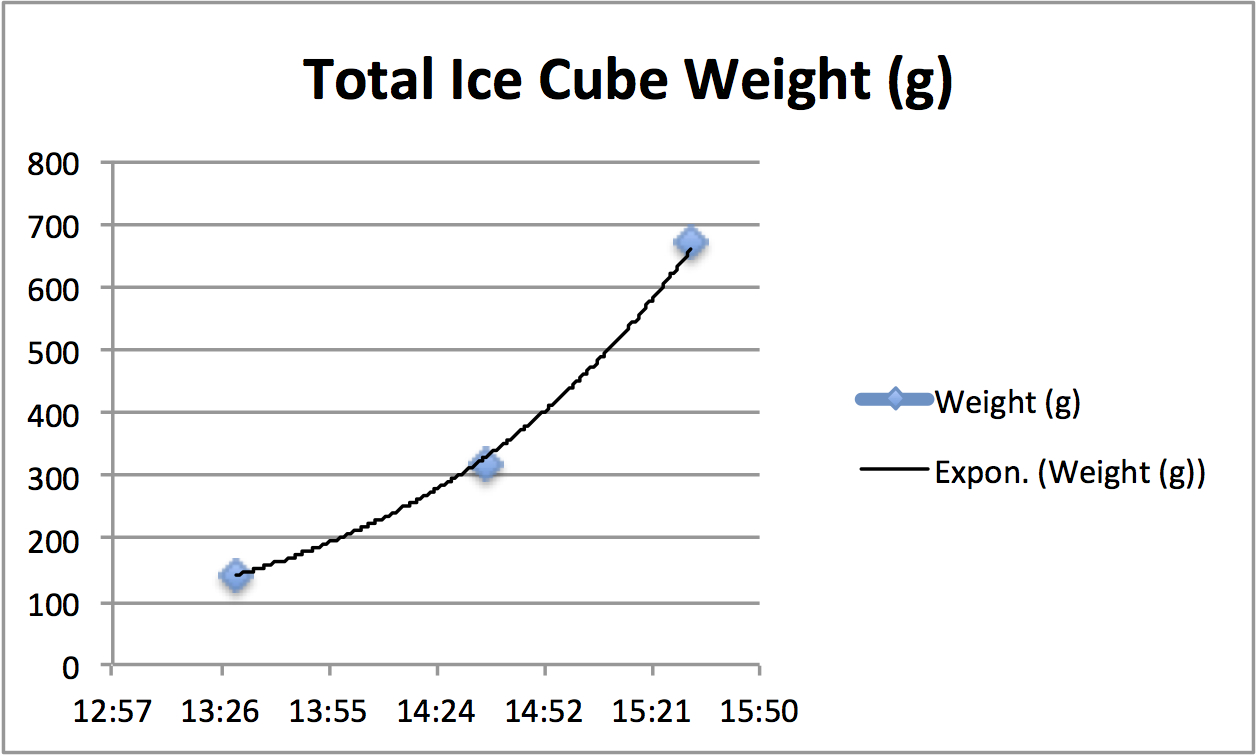
Ice Cube Graph

In fact, after running the ice maker for 2 hours, I reached a total weight of 672 grams. The other interesting empirical data is that the ice maker became more efficient as time elapsed. Our first 27 cubes weighed 144 grams, the next 9 weighted 175 grams. By restarting it each time we produced cubes, we would be running it at its most inefficient point.

A tray of ice in our freezer (0 degrees) takes about 3 hours to form. Our freezer on the boat would be on most of the time. I decided that  2 trays of ice would be a better strategy. I packed up the ice maker and sent it back.


In case you are curious as to how the magical cubes are produced, here is a 24 second clip.


My advice. Try the ice tray. Don’t fool yourself by looking for a better portable. They all look the same even if they have a different brand name. Somewhere out in manufacturingville, they are producing these and sticking different brand names on the same machine.

Plus, if we all start making our own ice, what will happen to the Marina iceman?


Comments { 7 }

Tools for boat repair

After graduating from our boat repair class in the UK we decided it was time to dive in and buy some tools.   The shocking part is how little we know about tools.  The nomenclature of socket wrenches and electric drills is mystifying.   After a bit of web surfing I learned that a driving drill pulsates like a hammer and is good for placing bolts into concrete.   Hopefully the boat is not made with concrete so we passed on the driving drill.  If your plan to learn about tools is to go to Home Depot and have the staff tutor you then you should work on your plan B right away.  The Long Island branch reps are not like the ones in the commercials but in the end we were able to buy many tools from our list.  We got a great list to start with from   s/v Field Trip and s/v Escapade.   Click on what to buy for an Antares to download the excel file.   We then added to the list some items we had been told about in our maintenance classes.    Craig from s/v Alberta Crewed advised us on our Sears purchase when he was staying with us in NYC.

Before ordering we looked at our current supply of tools. As we are long time Manhattanites, this consisted of a hammer with flowers on the the handle (Thanks Mom), a screwdriver and a number for a handyman.    We grabbed the credit card and hopped on the Sears website.   I will give the short version of the story which lasted 2 hours.   It was hell after the credit card was rejected for “our protection”.   I am not sure whether to be angry at Sears or American Express, I settled on being angry at both. I had to ask Gail to leave the room since she was about to travel through the phone and wring some necks.

We set up a a Bento Database to track all of our purchases.  When the list is complete, we will post a PDF of everything that came aboard.  This supply mission is something the US Army would be proud of.   Tools and other items  will have to travel a complex supply chain from store, to apartment, to rubbermaid box, to plane, to storage facility in Buenos Aires, to Two Fish and finally to a the proper storage locker.

Now lets highlight a few tools:

Puller


Impeller Puller:   Impellers are used in engines to promote the flow of coolant (typically sea water).   These little rubber paddle wheels need to be changed and checked on as when they fail they can send debris into the heat exchanger.    Buy the right tool and a tough job becomes easy.


Protection:  We bought gloves, eye protection and even a full bunny suit for messy jobs.


Bosun’s Chair


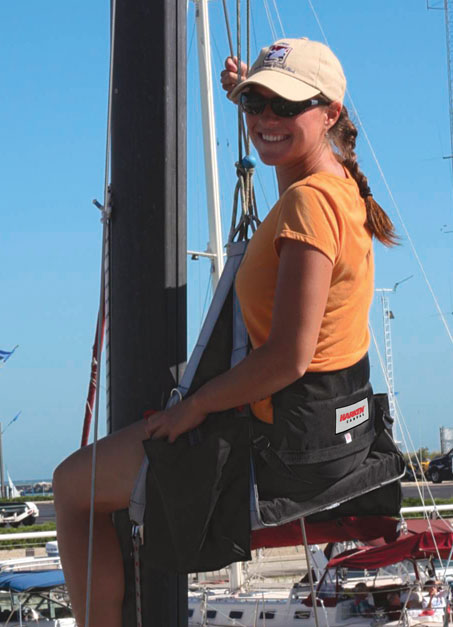
Bosuns Chair:  This chair can be renamed Gail’s aerial throne and will be used for sending Gail up the mast for fixing broken anemometers, installing chafing sheaves,  taking aerial photos and for quiet time.


Multimeter

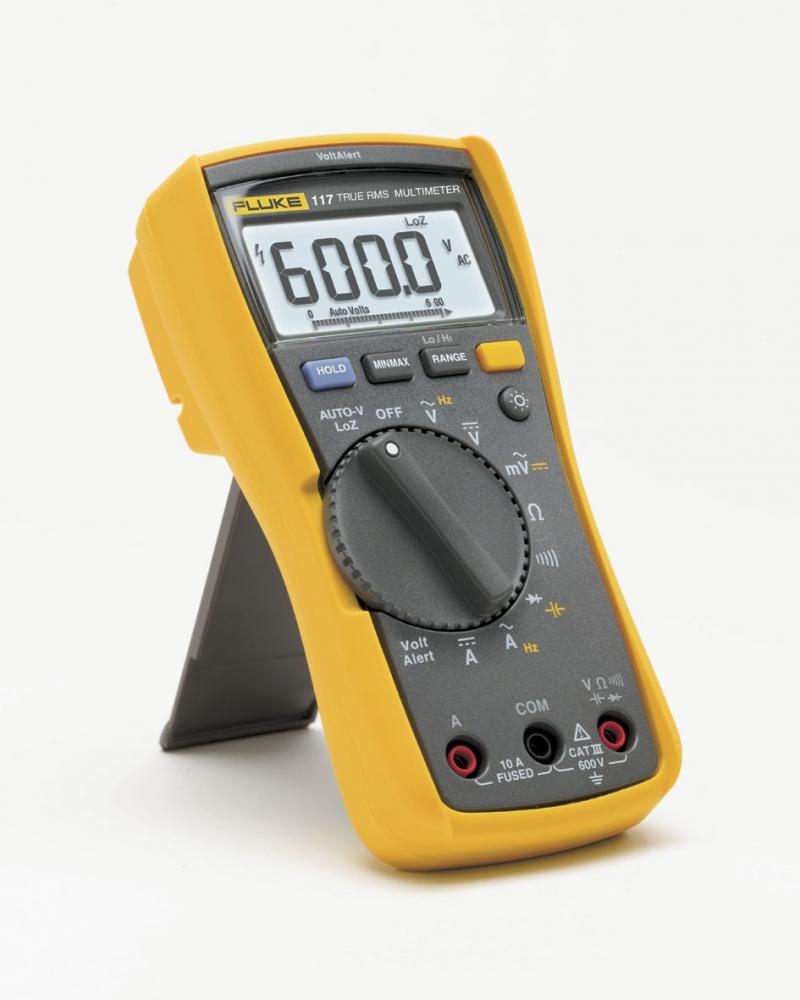
MultiMeter:   Gail will very much enjoy this tool.   It is the first step in tracking down issues with the 12 volt system.  12 volt is too weak to kill you unless you try hard while 110 is fairly dangerous.   So amateurs are encouraged to stick to the weak stuff.  Same advice works at bars by the way.   Coors light is 12 volt and dry martini is 110 volt.  The multimeter we chose is the Fluke model number 117. It can measure voltage drops and a other metrics to confirm that your system is healthy or to diagnose that dead switch


—Jason

Comments { 2 }